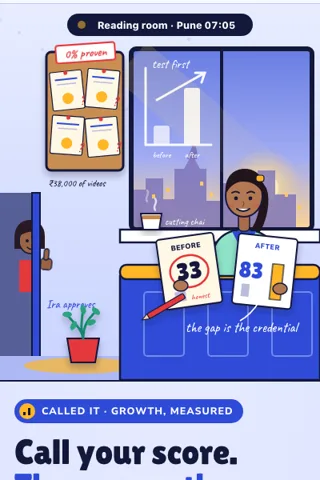
 LIVE DEMO
Called It
Log what you expect to learn before a course, then prove how much you actually grew.
Reserve · refundable deposit
$149Base · Optimism
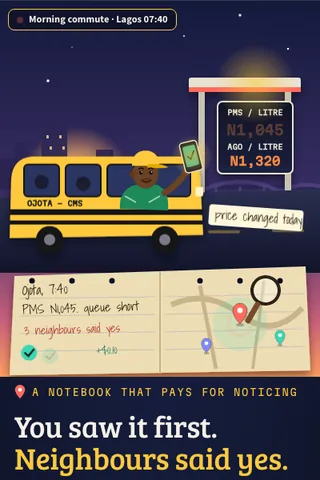 Try it live
Get paid for what you notice: local prices, queue times, shop openings, verified by others nearby.
Try it live, freeAde notices fuel prices daily on his commute. Field Notes pays small USDC rewards for observations that nearby users confirm, building a trusted local data feed.
Mobile web capture, geo verification by peers, reward pool, public feed
Reshape it entirely: new features, your flows, your brand end to end, integrations you need. We scope it with you.
Peer-verified local reporting exists; paying reporters in stablecoins is the uncommon part.
PouchScout and Drop crowdsource local prices and wait times with peer confirmation but pay only XP; GasBuddy has no cash payouts and DePIN apps need hardware.
Checked with web searches in October 2026. A search is not proof that nothing similar exists, and the market moves fast, so we recheck before every build.
Existing projects OK
Existing work allowed if disclosed
The complete Field Notes app: people post what they notice locally, neighbours confirm it, confirmed notes earn small USDC rewards and become a verified feed, with a paywall, owner console and verifier agent built in.
Every buyer gets the same finished app. Basic branding and copy changes come through a quick form.
Your admin side: revenue, paywall editor, users, rules and the agent log.
Referral and growth mechanics, switched on when you are ready to grow.
Noticers post and confirm free and earn small rewards from a pool funded by buyers. Local businesses, delivery apps, researchers and NGOs pay monthly for the verified feed, and noticers can add Plus.
Rewards are paid from buyer funded pools; amounts are small and never guaranteed. Payout gas on Base, Celo or Solana is a few dollars a month.
Prices are yours to set. Illustrative, not a promise of income.
Get paid for what you notice: local prices, queue times and shop openings, verified by others nearby.
Problem: Prices, queues and openings change hourly in fast cities, official data lags by weeks, and crowd reports are easy to fake.
Solution: People post short notes that neighbours in the same 500 metre cell confirm. Confirmed notes earn small USDC rewards from buyer funded pools and feed a verified local dataset sold by API.
Why now: Cheap payouts on Base, Celo and Solana make ten cent rewards practical, and buyers need fresher ground truth than surveys provide.
Market: Delivery and mobility apps, food price and humanitarian NGOs, researchers and local businesses in fast growing cities.
The ask: Pilot partners: one delivery app and one food price NGO in Lagos, plus Celo and public goods grants.
Funding is never guaranteed. Check each program's rules.
Many hackathons require code written at the event. See the Regatta Boardfor each race's rule.
Custom work from $1,500: your own topics and cells, a buyer dashboard, USSD support or a city specific deployment. Scoped on a call.
Useful local facts change every day: what petrol costs at a given station, whether a pharmacy is open, how long a queue is. People who pass these places notice them and share them in group chats for free, where they vanish. Anyone who needs that information has no feed they can trust, and the people doing the noticing are never paid.
Crowdsourced local reporting already exists. PouchScout and Drop let people report local prices and wait times with peer confirmation, but they reward with points or XP, not money. GasBuddy collects fuel prices without cash payouts, and DePIN networks that pay for data usually need dedicated hardware. Research verdict: rare, medium novelty. What is new here is narrower: small stablecoin rewards paid only after nearby people confirm a note, with the confirmations recorded so the resulting feed can show why each fact is trusted. It is a payment and verification layer on a known idea, not a new kind of app.
Notes people post (topic, short text, an optional photo, a location rounded to a roughly 500 m cell, a timestamp), yes or no answers from confirmers in the same cell, each account's history of confirmed and contradicted notes, linked wallet signals used to spot rings, and the monthly reward pool funded by the feed's buyers. Exact coordinates and photos stay off chain.
Pay people for the useful things they already notice, and give every neighbourhood a local feed that is checked by the people who live there.
Money for something you saw anyway A fuel price you passed on the bus becomes a small USDC reward minutes later, once neighbours agree.
Your neighbours back you Each confirmed note shows how many people nearby said yes. Being right in public feels good, and it builds a trust score.
A route, not a chore A morning nudge lists the gaps on your usual route, so noticing turns into a short daily streak.
Capture: A mobile web app with a Privy embedded wallet. A note is a topic, a line of text and an optional photo. The phone's location is rounded to a cell before upload.
Confirm: The server pings people seen in that cell on several days of the past week. They answer yes, no or not near. Linked wallets count as one voice.
Record: When the threshold is met, an attestation (EAS on Base) records the note hash, the cell, the verdict and the count of confirmers, without names or coordinates.
Pay: A reward pool contract on Base pays the reporter and each confirmer in USDC. Gas can be sponsored by a paymaster. Celo and Solana versions use the same flow with their native USDC.
Feed: Confirmed notes go into a public feed and a paid API. Buyers (delivery fleets, newsletters, local apps) pay monthly or per call, for example over x402, and that money refills the pool.
Assist: A small model (for example Claude Haiku tier) tidies note text, flags duplicates and writes the morning route nudge. It never decides truth; people do.
Each settled note costs about one attestation plus one batched payout on Base, usually a fraction of a cent in gas. A small model call to tidy a note and draft nudges is roughly $0.0005 per note. Rewards are the real cost: at $0.10 to the reporter and $0.02 to each of 3 confirmers, a confirmed note costs $0.16. Example month in one city: 20,000 confirmed notes is about $3,200 in rewards, under $60 in gas and model costs, and about $50 for hosting and push notifications. The pool only pays what buyers fund.
Every confirmation request reaches someone nearby who has not posted yet, and they get paid for checking. Shared notes in group chats link back to the feed. Buyers who rely on the feed fund bigger pools, which pull in more reporters in the next neighbourhood.
Fake notes and rings: Location can be spoofed and friends can confirm each other. Guardrails: confirmers must have a presence history in the cell, linked wallets count once, and contradicted accounts need extra confirmations.
Privacy: Regular routes reveal where people live and work. Only cells are stored, never coordinates, and confirmers are never shown to each other or to buyers.
Rewards can dry up: The pool depends on buyers. The app must say plainly that rewards change and are never guaranteed income.
Safety: Nobody should stop in traffic or a dangerous place to post. Notes can be posted later from memory within a time window, and the app never asks people to go somewhere.
Defamation and harm: Notes about named small businesses can hurt them if wrong. Topics are limited to observable facts, and owners can respond to notes about their premises.
Regulation: Paying people may raise tax or payments rules in some countries. Owners should check local rules before launching in a new market.
Costs and tools are estimates at the time of writing. General information only, not legal or financial advice.
Nine routes from one vessel. Tap a port to open its chart.
Field Notes pays people small USDC rewards for local observations, like fuel prices or queue times, once nearby users confirm them. When you own it, the data feed, the reward pool and the trusted local network belong to you, and you choose who buys access. It turns your neighbourhood's everyday noticing into a feed you control.
DEPLOYR deploys it from your wallet. You run it from admin: choose categories, set reward sizes, fund the pool, review disputes.
At first, you fund a small pool yourself. Over time, businesses and researchers who want the data pay for access, and that refills the pool. Do not promise contributors any income level.
Rewards only pay once nearby users confirm. Start in one area where you know people, keep rewards small, and remove repeat offenders. No system is perfect, so watch the first weeks closely.
Yes. The contract and reward pool sit on your wallet. Data buyers pay you directly.
Observations are about places, not people. Never collect faces, plates or personal details. Check local rules on data before selling access, and keep a simple privacy note on your site.
Contributors earn small rewards for confirmed observations; the owner sells access to the verified feed to local businesses, delivery apps, researchers and NGOs by monthly plan. About $1M a year is a target, not a promise.
Illustrative stages, not a forecast. Results depend on you and the market; nothing here is guaranteed.
LIVE DEMOLog what you expect to learn before a course, then prove how much you actually grew.
 LIVE DEMO
Pose a hard question, stake a bounty, and pay the crowd by how much each answer moved the final consensus.
 LIVE DEMO
Turn what you are learning into spaced repetition decks that prove your streak and mastery onchain.
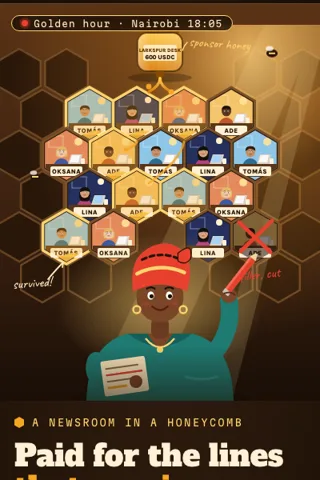 LIVE DEMO
A group writes one living briefing together and everyone is paid by the lines that survive edits.
 LIVE DEMO
Your highlights and annotations on any article become a collectible, tippable layer others can subscribe to.
 LIVE DEMO
Keep a private log of what you read and watch, then sell anonymized slices only when you choose.
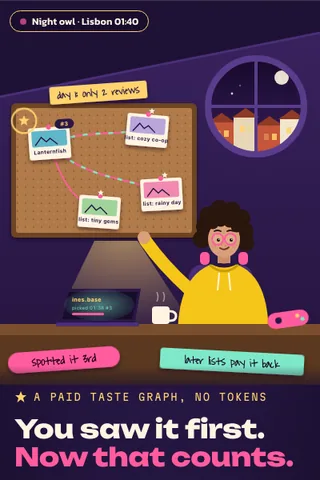 LIVE DEMO
Curate a list early, and earn a share when the things you picked go on to be loved.
 LIVE DEMO
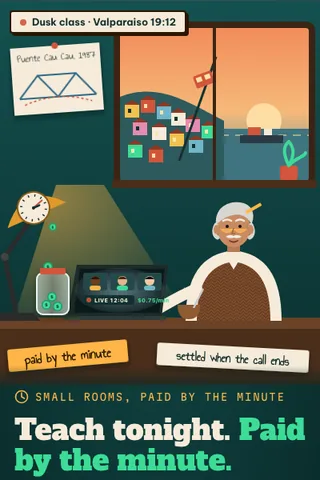
Teach live in small rooms where students pay per minute and you get paid the second the call ends.