 LIVE DEMO
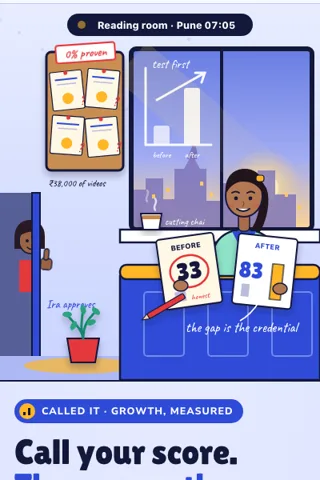
Called It
Log what you expect to learn before a course, then prove how much you actually grew.
Reserve · refundable deposit
$149Base · Optimism
 Try it live
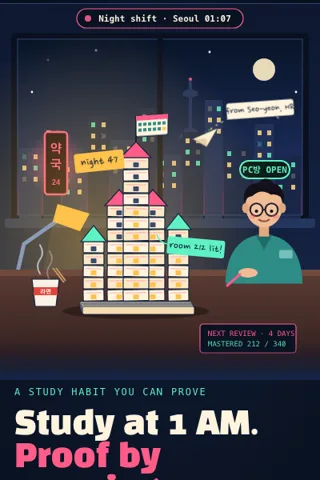
Turn what you are learning into spaced repetition decks that prove your streak and mastery onchain.
Try it live, freeJun studies Solidity nightly. Memory Palace logs mastered cards and streaks, and lets him sell his polished deck to others.
Deck editor, spaced repetition engine, mastery proofs, deck marketplace
Reshape it entirely: new features, your flows, your brand end to end, integrations you need. We scope it with you.
No live product found that records spaced repetition streaks or mastery onchain.
Kernel V2 once paired spaced repetition with an Ethereum token model but never shipped tracking; Anki and Repeti are offchain.
Checked with web searches in October 2026. A search is not proof that nothing similar exists, and the market moves fast, so we recheck before every build.
Existing projects OK
The complete Memory Palace app: learners turn their notes and mistakes into spaced repetition decks, prove their streak and delayed-recall mastery onchain, and sell the decks they polish, with a paywall and deck market built in.
Every buyer gets the same finished app. Basic branding and copy changes come through a quick form.
Your admin side: revenue, paywall editor, users, rules and the agent log.
Referral and growth mechanics, switched on when you are ready to grow.
Scholar subscriptions in USDC plus an app share of every deck sale, split onchain between author and owner. Reviewing and proving stays free.
The owner sets the app share of deck sales (5 to 20 percent) and whether weekly proof gas is sponsored.
Prices are yours to set. Illustrative, not a promise of income.
Spaced repetition that proves your streak and mastery onchain, and pays you for the decks you polish.
Problem: Self-taught learners put in hundreds of quiet hours nobody can see or trust, and the good decks they build die on their laptops.
Solution: A palace of flashcards with a delayed-recall mastery rule, weekly onchain proofs of the review log, a live quiz for verifiers, and a deck market with an onchain author split.
Why now: Cheap small models can write cards from a learner's own mistakes, and attestations on Base cost under a cent, so a tamper-evident learning record is finally practical.
Market: Self-taught developers, language exam takers and medical students, a niche where learners already pay for decks and courses.
The ask: Pilot with one study community and two deck authors to prove retention and first deck sales.
Funding is never guaranteed. Check each program's rules.
Many hackathons require code written at the event. See the Regatta Boardfor each race's rule.
Custom work covers new subjects and card formats, your own branding and copy, other chains, school or bootcamp integrations and features beyond the roadmap, scoped on a call from $1,200.
Self-taught learners put in hundreds of quiet hours that nobody can see or trust, and the good study decks they build die on their laptops.
Anki and Repeti already do spaced repetition well, offchain. Kernel V2 once paired spaced repetition with an Ethereum token model but never shipped tracking. We found no live product that records spaced repetition streaks or mastery onchain. What is new here is narrow: a tamper-evident review log with a delayed-recall mastery rule, plus a deck marketplace where the author earns and buyers start their own streak.
The learner's own notes and mistakes, the cards, a local review log (card id, grade, timestamp, interval), weekly Merkle roots of that log, and deck purchase records. Answers and notes stay offchain.
Make the quiet work of learning visible, honest and worth something to the person who did it.
The palace grows Each mastered topic lights a room. People return for the room they almost finished.
Proof that cramming cannot fake Mastery only counts after a correct recall 21 days later, so the record means something to a recruiter.
Your deck earns A polished deck can be sold, and buyers still have to earn their own mastery.
Wallet: Privy embedded wallet on Base or Solana, created at sign up with email. No seed phrase for the learner.
Review engine: FSRS or SM-2 scheduler running on device. The review log is stored locally and synced encrypted to the app server.
Card agent: A small model tier (for example Claude Haiku 4.5 or an equivalent OpenRouter model) turns highlighted mistakes into one-fact cloze cards. A larger model is used only for weekly deck cleanup.
Mastery attestations: Once a week the app posts an EAS attestation on Base (or a compressed record on Solana) with streak, mastered count, grace nights and the Merkle root of the log.
Deck marketplace: Decks are versioned files with a content hash. Purchases in USDC go through a split contract: 90% author, 10% app.
Public page and quiz: A share page reads the attestations through an indexer and offers a live 5 card quiz so viewers can check the knowledge, not just the log.
Notifications: One nudge per night at the learner's chosen time via push or Telegram. Never a second nudge.
Card generation with a small model is about 1,500 input and 400 output tokens per 10 cards, roughly $0.003 at Haiku class pricing ($1 per million input, $5 per million output). A weekly attestation on Base costs well under $0.01 in gas at typical fees. For 1,000 active learners: about $40 a month in model calls, under $40 in gas, plus hosting around $25. Roughly $100 a month total.
Every public page and share card links to the deck behind it. Buyers start their own palace, become authors in their subject, and their pages bring the next learners. Study groups get a shared wing that only lights when every member keeps their streak.
Fake mastery: Someone could still look up answers. Mitigation: the delayed-recall rule, timing checks, and the live quiz on the public page. The page says plainly that the log proves consistency, the quiz proves knowledge.
Copyright in decks: Decks built from textbooks or course material may infringe. Authors confirm rights, takedown process, and the card agent works from the learner's own notes.
Privacy: Only hashes and counts go onchain. A learner can keep the streak private. Nothing about wrong answers is ever public.
Burnout and guilt: Streak apps can punish people. Grace nights are built in and shown honestly, and the nudge never repeats.
Low-quality decks: Marketplace ranking uses learner retention on the deck, not sales, and refunds within 48 hours.
Costs and tools are estimates at the time of writing. General information only, not legal or financial advice.
Nine routes from one vessel. Tap a port to open its chart.
Anki keeps your streak on one device and your best decks earn you nothing. Memory Palace runs on your own deployment, logs your mastery and streaks onchain under your wallet, and lets you sell polished decks with payment going straight to you. You own the study platform, the learners and the proof that you actually know your stuff.
The deck editor, spaced repetition engine and marketplace come ready. The guide covers deploy, wallet connect and adding your first deck.
Only if they solve a specific exam or skill gap. Build one deck for a test people pay to pass, and see if ten people buy it before making more.
It proves you reviewed and passed cards on a schedule over time. It does not prove deep understanding, so pair it with real work. Be honest about that with learners.
Yes. Deployed from your wallet, code in your git, payments to your address.
Only sell decks you wrote or have rights to. Do not copy textbook text. This is not legal advice.
Learners pay for premium decks (you take a marketplace cut on others' decks) and for a Pro plan with mastery certificates and cohort streaks. Schools and bootcamps pay for group plans.
Illustrative stages, not a forecast. Results depend on you and the market; nothing here is guaranteed.
LIVE DEMOLog what you expect to learn before a course, then prove how much you actually grew.
 LIVE DEMO
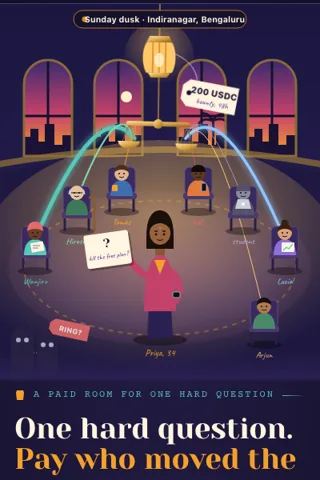
Pose a hard question, stake a bounty, and pay the crowd by how much each answer moved the final consensus.
 LIVE DEMO
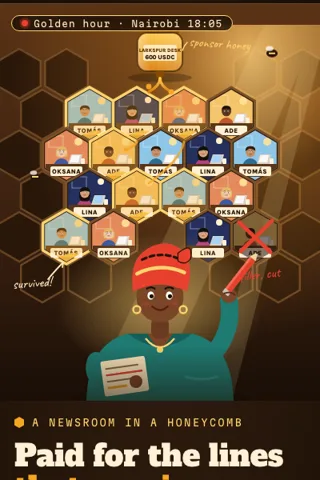
A group writes one living briefing together and everyone is paid by the lines that survive edits.
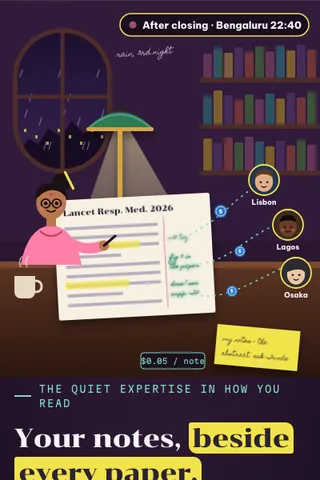 LIVE DEMO
Your highlights and annotations on any article become a collectible, tippable layer others can subscribe to.
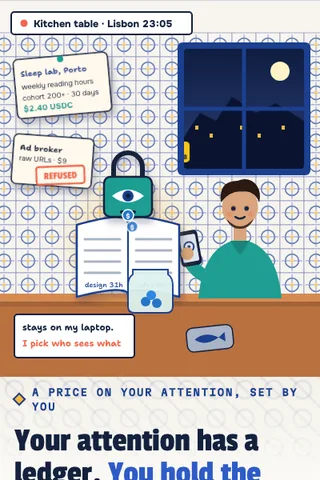 LIVE DEMO
Keep a private log of what you read and watch, then sell anonymized slices only when you choose.
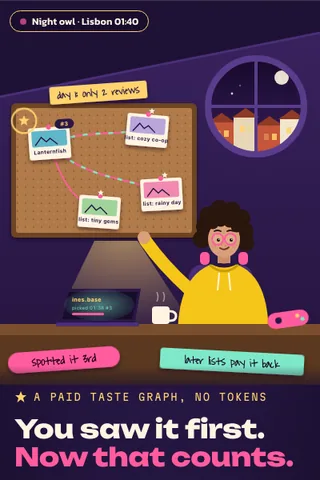 LIVE DEMO
Curate a list early, and earn a share when the things you picked go on to be loved.
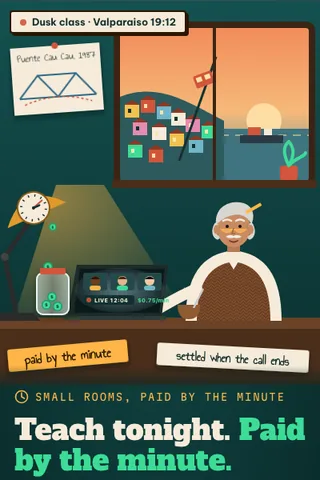 LIVE DEMO
Teach live in small rooms where students pay per minute and you get paid the second the call ends.
 LIVE DEMO
Write letters to the future that unlock for named people at a date or when you stop checking in.