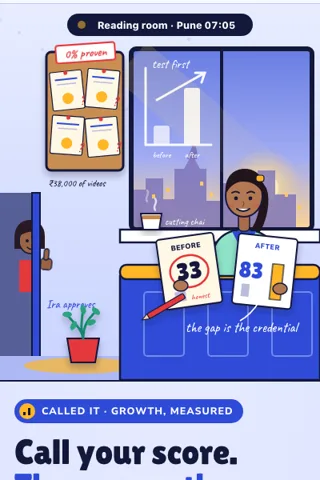
 LIVE DEMO
Called It
Log what you expect to learn before a course, then prove how much you actually grew.
Reserve · refundable deposit
$149Base · Optimism
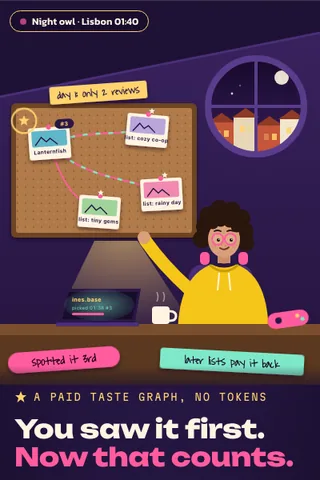 Try it live
Curate a list early, and earn a share when the things you picked go on to be loved.
Try it live, freeInes found five indie games before they blew up. Taste Graph timestamps her picks; when later curators add them, a slice of their list fees flows back to early spotters like her.
List builder, pick timestamping, discovery order fee splitter, curator profiles
Reshape it entirely: new features, your flows, your brand end to end, integrations you need. We scope it with you.
Curation rewards exist; tokenless fee share by discovery order is an uncommon variant.
The Graph pays curators query fees via curation shares, CurateDAO rewards board curators in AVAX, and Zora uses per-item mint tokens; none found paying by discovery order without item tokens.
Checked with web searches in October 2026. A search is not proof that nothing similar exists, and the market moves fast, so we recheck before every build.
Consumer app; eligibility unknown
Existing work allowed if new progress is disclosed
The complete Taste Graph app: spotters timestamp picks on Base, later paid lists pay a slice back by discovery order, with First Light digests, item matching, receipts and a Curator paywall built in.
Every buyer gets the same finished app. Basic branding and copy changes come through a quick form.
Your admin side: revenue, paywall editor, users, rules and the agent log.
Referral and growth mechanics, switched on when you are ready to grow.
Spotting and splits are free. The app keeps a fee on paid list subscriptions, curators pay for paid list tools, and communities pay for their own branded taste graph.
10% app fee on list subscriptions (owner adjustable). A spotter slice, 15% by default, of every list fee goes to early spotters. Pick attestations cost well under $0.01 each on Base.
Prices are yours to set. Illustrative, not a promise of income.
A paid taste graph: spot things early, and later paid lists pass a slice back to you in discovery order. No tokens.
Problem: People with a good eye find games, music and books long before lists and algorithms do, and get nothing for it, often not even credit.
Solution: Every pick is timestamped on Base with a spotter number. When later curators add the same item to paid lists, a slice of reader fees flows back to earlier spotters, weighted by order.
Why now: Cheap attestations on Base, embedded email wallets, USDC subscriptions and small models for item matching make tokenless curation rewards practical.
Market: Indie game, music and book communities, list curators and newsletter writers, and studios and labels that want early signal.
The ask: Pilot curators with paying audiences, one indie game community for a Community graph, and hackathon tracks on Base and Solana.
Funding is never guaranteed. Check each program's rules.
Many hackathons require code written at the event. See the Regatta Boardfor each race's rule.
Custom work from $1,500: new item types and matchers, your own split curves, community branding, integrations with Discord or a newsletter platform. Scoped on a call.
People with a good eye find games, music, books and tools long before lists and algorithms do, and get nothing for it, often not even credit. Curators who come later and monetise those picks owe nothing to the person who spotted them first.
Curation rewards already exist: The Graph pays curators query fees through curation shares, CurateDAO rewarded board curators in AVAX, and Zora lets people collect per-item mint tokens. Research found none that pays by plain discovery order without creating a token per item. Research verdict: rare, medium novelty; curation rewards themselves are not new, the tokenless discovery order fee share is the uncommon part.
Timestamped picks (item, list, curator, block time) attested on Base, an item matching table (store page and developer), list subscriptions as totals per list, and monthly split results. Who subscribes to which list stays private.
Being early on something good should leave a record, and the people who later profit from that discovery should pass a little back to whoever saw it first.
On the record Every pick gets a timestamp and a spotter number. You can finally prove you found it first.
Later lists pay you back When paid lists add a game you spotted early, a slice of their fees flows back by discovery order, every month.
First Light on Sundays A weekly digest of five small things with under ten spotters. Pin one, write one line, keep your streak.
Wallets: Privy embedded wallets on Base (or Solana for an owner who prefers it). Curators sign in with email; no seed phrase.
Pick attestations: Each pick is an EAS attestation on Base with the item id, list id and curator. Block time sets discovery order; removals are new attestations, never edits.
Item matching: An indexer normalises items by store page and developer. A small model tier (for example a Haiku class model via OpenRouter) resolves ambiguous names and asks the curator below 90% confidence.
Subscriptions: Readers subscribe to lists in USDC on Base (monthly pull via a subscription contract or a card on ramp that settles in USDC).
Splitter: A monthly job computes each list's spotter slice, weights earlier spotters by the chosen curve, and pays through a splitter contract. Only lists with paying subscribers and older than 14 days count.
Notifications: Email and web push for monthly payouts and the Sunday First Light digest.
Per pick: one EAS attestation on Base, typically well under $0.01 in gas. Matching: a small model call on about 1 in 10 picks, roughly $0.0005 each. Monthly split: one batched payout transaction per list, a few cents. Example: 5,000 curators making 60,000 picks a month and 2,000 paid lists cost roughly $300 to $600 a month in gas, models and hosting.
Every payout is a shareable proof: spotter #3, 41 days early. Curators who join to monetise lists bring readers, and early spotters bring the picks those lists need. The Sunday digest gives people a reason to return before anyone else notices a thing.
Sybil rings: Fake lists adding an item to boost it. Guardrail: only lists with paying subscribers and at least 14 days old count, and patterns are flagged.
Flipping: Adding trending items, collecting, and removing them. Guardrail: a 30 day hold before a pick counts.
Small payouts: Most picks pay little or nothing. The app says so plainly and never presents spotting as income to rely on.
Mismatched items: Two items with the same name can send credit to the wrong people. Guardrail: matching by store page and developer, curator confirmation, corrections as new attestations.
Legal and tax: Fee sharing may count as income for spotters and needs clear terms; the owner should check local rules on payouts and sanctions screening.
Costs and tools are estimates at the time of writing. General information only, not legal or financial advice.
Nine routes from one vessel. Tap a port to open its chart.
On someone else's curation platform, your early picks build their audience and their brand, and you get a like. When you own Taste Graph, your lists are timestamped from your wallet, the fee split that pays early spotters runs on your contract, and the curators you attract are your community. Your eye becomes a record you own and a small income you control.
Only if later curators pay list fees, and early on they will be small. Be honest with your community that payouts start tiny and grow only if the niche grows. The timestamped record of who spotted what first has value from day one; the money comes later, if at all.
You do not need to. Lists, timestamps and the fee splitter come built. Your job is choosing the niche, seeding the first lists and inviting curators with taste.
Set a list size limit and a small fee to add picks, so spraying hundreds of items costs money. Payouts flow only when later curators include the same item, so spam picks that nobody else adds earn nothing.
Taste Graph pays from list fees for a service, with no tokens sold as investments, which keeps it simpler. Rules still vary by country, so do not market it as an investment or promise returns. If you plan to scale large, talk to a lawyer about your specific setup.
Start with a niche where taste already has social status, such as indie games, small bands or new recipes. Ten curators who already argue about who found something first is the right starting group.
Curators pay a small fee to publish or join a list, part of each fee flows to earlier spotters, and you keep a platform cut. Add paid sponsored discovery slots and paid data reports for studios and labels who want to know what early curators are spotting.
Illustrative stages, not a forecast. Results depend on you and the market; nothing here is guaranteed.
LIVE DEMOLog what you expect to learn before a course, then prove how much you actually grew.
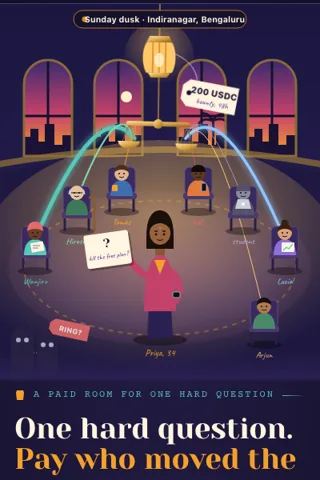 LIVE DEMO
Pose a hard question, stake a bounty, and pay the crowd by how much each answer moved the final consensus.
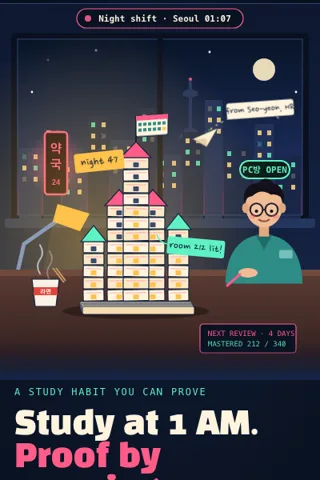 LIVE DEMO
Turn what you are learning into spaced repetition decks that prove your streak and mastery onchain.
 LIVE DEMO
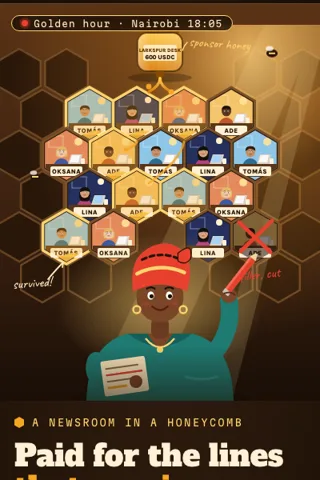
A group writes one living briefing together and everyone is paid by the lines that survive edits.
 LIVE DEMO
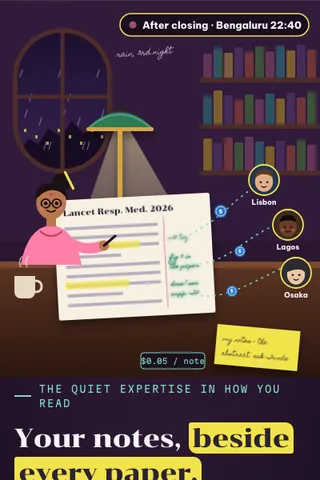
Your highlights and annotations on any article become a collectible, tippable layer others can subscribe to.
 LIVE DEMO
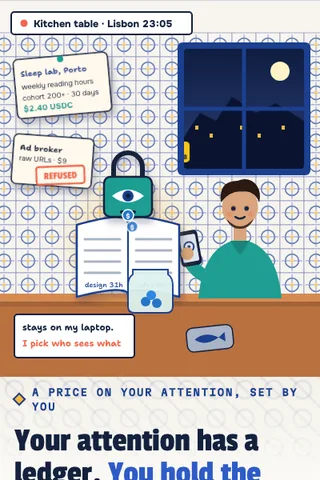
Keep a private log of what you read and watch, then sell anonymized slices only when you choose.
 LIVE DEMO
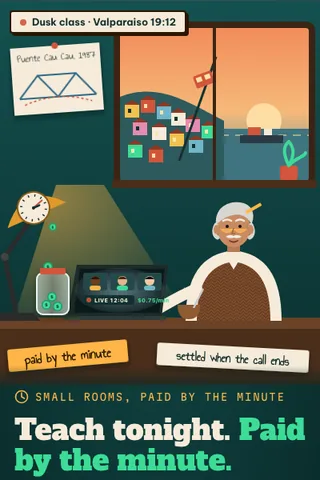
Teach live in small rooms where students pay per minute and you get paid the second the call ends.
 LIVE DEMO
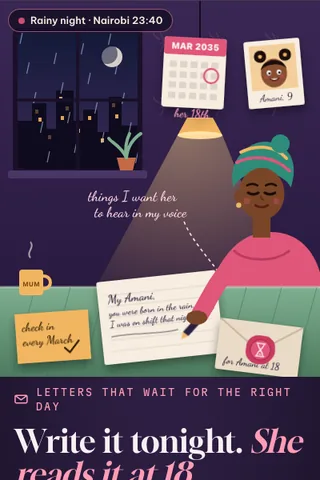
Write letters to the future that unlock for named people at a date or when you stop checking in.