 LIVE DEMO
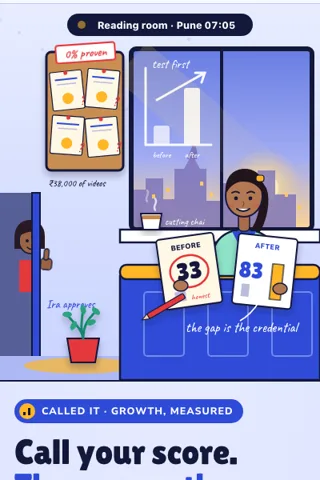
Called It
Log what you expect to learn before a course, then prove how much you actually grew.
Reserve · refundable deposit
$149Base · Optimism
 Try it live
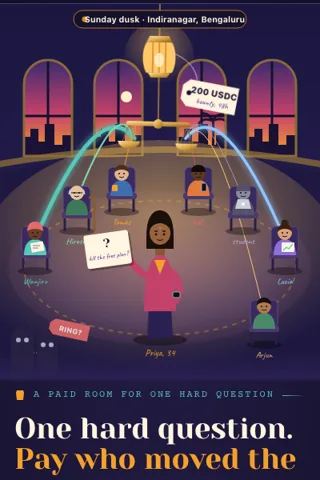
Pose a hard question, stake a bounty, and pay the crowd by how much each answer moved the final consensus.
Try it live, freeA founder needs to know if a feature will flop. She posts it with 200 USDC, experts answer and rate each other, and payouts flow to those whose reasoning shaped the final answer.
Question bounties, peer rating, influence scoring, USDC escrow and payouts
Reshape it entirely: new features, your flows, your brand end to end, integrations you need. We scope it with you.
No product found that pays contributors by their measured influence on a consensus answer.
Bountycaster, Gitcoin and Railway bounties pay an accepted answer or approved work; none found splitting a bounty by each answer's influence on the final consensus.
Checked with web searches in October 2026. A search is not proof that nothing similar exists, and the market moves fast, so we recheck before every build.
Existing projects allowed
Existing projects OK
The complete Ask The Room app: anyone posts one hard question with a USDC bounty, experts answer and rate each other, and the bounty pays out by how much each answer moved the decision, with a paywall and room agent built in.
Every buyer gets the same finished app. Basic branding and copy changes come through a quick form.
Your admin side: revenue, paywall editor, users, rules and the agent log.
Referral and growth mechanics, switched on when you are ready to grow.
A fee on public room bounties, plus Team and Fund subscriptions in USDC for private rooms and expert benches.
Owner sets the room fee on public rooms, 5% by default.
Prices are yours to set. Illustrative, not a promise of income.
Rent the best thinking in the room for one hard question, and pay only for judgment that moved the answer.
Problem: Founders and DAOs pay for advice by the hour or by volume, not by whether it changed the decision.
Solution: A USDC bounty in escrow, hidden answers, peer ratings and leave one out influence scoring, with ring detection and calibration.
Why now: Cheap escrow on L2s and cheap screening models make small expert rooms practical.
Market: Founders, startup teams, DAOs and funds, from public rooms to $400 a month private rooms.
The ask: Run 10 rooms for founders you know, then sell Team plans.
Funding is never guaranteed. Check each program's rules.
Many hackathons require code written at the event. See the Regatta Boardfor each race's rule.
Custom scoring, token gated rooms, new chains and branded research pages, scoped on a call from $1,000.
Founders and small teams face hard calls with no good way to buy judgment. Friends give free opinions, consultants are expensive, and bounty platforms reward the first or the accepted answer, not the reasoning that actually changed the decision. Experts who think carefully rarely get paid for one good paragraph.
Closest existing: Bountycaster, Gitcoin and Railway bounties pay for an accepted answer or approved work, and prediction markets pay for being right on a resolvable event. We did not find a product that splits one bounty by how much each answer moved a weighted consensus. Peer prediction and influence scoring are known research ideas; the new part is packaging them as a simple paid room with USDC escrow. Not a new science.
The question and its resolution rule, the written answers with a percentage, peer ratings, the asker's one boost, wallet history of each participant, and calibration scores from earlier rooms. Answers and ratings stay off chain; only escrow, payouts and a hash of the score table are on chain.
Pay people for judgment that actually moves a decision, and let anyone with a hard question rent the best thinking in the room for the price of a dinner.
Being the one who changed it Seeing your paragraph move the room from 64% to 52% is a rare, screenshot worthy kind of credit.
Resolve day Weeks later the question resolves and everyone learns who was right. People return just to see their score.
The Sunday Room A weekly set of paid questions in your topics, with the bounty up front, makes it a ritual instead of a chore.
Wallets: Embedded wallets via Privy or a smart wallet, on Base, Arbitrum or Solana, with sponsored gas. Askers can fund by card through an onramp.
Escrow: A room contract holds the bounty, the open window and the fee percent. At close it pays out from a posted score table and keeps a hash of it so anyone can recompute.
Scoring: Consensus is a rating weighted average of answers. Each answer's influence is leave one out: how far the final number moves without it. A floor share pays every answer rated 2.5 or higher.
Room agent: A Flash or mini class model via OpenRouter screens low effort answers, and a stronger model tier summarises the room for the asker. A graph check on ratings and wallet funding catches reciprocal rating rings.
Identity and calibration: Optional proof of personhood or reputation attestations (EAS) reduce sock puppets. Calibration from resolved rooms sets starting weight in the next.
Notifications: Push and email for new rooms in your topics, close, payout and resolve day.
Per room of about 8 answers: screening with a Flash class model costs well under $0.01, and a summary with a stronger model roughly $0.01 to $0.05. Escrow deposit plus one batched payout on Base is typically a few cents or less. Example month: 400 rooms cost roughly $20 to $40 to run, while a 5% room fee on 400 bounties of 200 USDC would be 4,000 USDC in fees.
Every resolved room produces share cards for the experts who moved it, which recruit new experts. Strong calibration ranks pull in askers who want those people. Askers who got a useful answer post the next hard question, often with a bigger bounty.
Sybil and collusion: Rings of fake accounts can rate each other up. Graph checks, wallet funding analysis and personhood attestations reduce it, but never fully remove it.
Gambling and securities rules: Paying for answers on future outcomes can resemble betting in some places. Pay for reasoning and influence, not for the outcome, avoid financial asset questions, and get legal advice per region.
Bad advice: A confident room can still be wrong. Show uncertainty, say clearly it is not professional advice, and keep regulated topics out.
Confidentiality: Askers reveal internal numbers. Offer private rooms and keep question text off chain.
Scoring disputes: People will contest influence math. Publish the formula and the hashed score table so any payout can be recomputed.
Costs and tools are estimates at the time of writing. General information only, not legal or financial advice.
Nine routes from one vessel. Tap a port to open its chart.
Ask The Room lets a founder post a hard question with a USDC bounty and pays the experts whose reasoning actually moved the final answer. On someone else's platform, the experts you attract, the question archive and the fee all belong to them. Own it and your expert network, your brand and every bounty fee stay with you, onchain and portable.
You do not need to. It ships with question bounties, peer rating, influence scoring and USDC escrow and payouts. You choose the chain, name, logo and color.
That is the real risk, so do not wait for strangers. Post the first three questions yourself with small bounties, or ask three founders you know to post theirs. A room with three good answered questions sells itself.
Some will try, through rating rings or copying top answers. Keep early rooms invite only, watch for accounts that only rate each other, and make the scoring rules public. Be honest that no scoring is perfect.
The contract holds the bounty and pays out by rule; you are not banking anyone. Paying people for answers can still have tax or reporting angles in some countries, so check local rules before you run large rooms, and do not call bounties investments.
Yes. It deploys from your wallet, under your domain. The fee setting, the expert list and the question archive belong to your instance.
You take a fee on each bounty, sell monthly plans to teams that post questions often, and charge communities for a private branded room. The ladder below is a target, not a promise.
Illustrative stages, not a forecast. Results depend on you and the market; nothing here is guaranteed.
LIVE DEMOLog what you expect to learn before a course, then prove how much you actually grew.
 LIVE DEMO
Turn what you are learning into spaced repetition decks that prove your streak and mastery onchain.
 LIVE DEMO
A group writes one living briefing together and everyone is paid by the lines that survive edits.
 LIVE DEMO
Your highlights and annotations on any article become a collectible, tippable layer others can subscribe to.
 LIVE DEMO
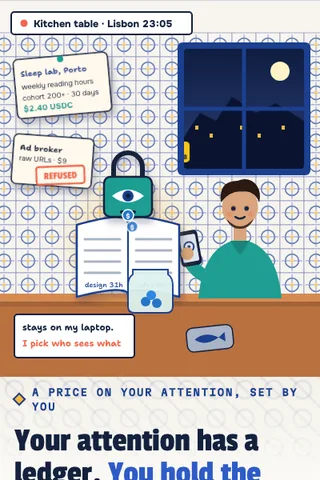
Keep a private log of what you read and watch, then sell anonymized slices only when you choose.
 LIVE DEMO
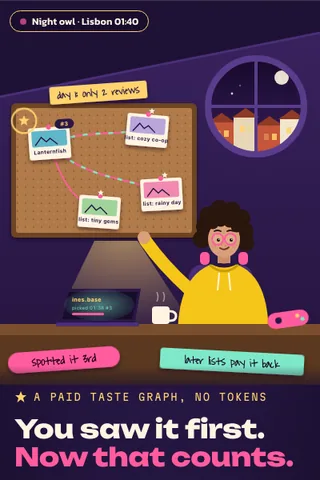
Curate a list early, and earn a share when the things you picked go on to be loved.
 LIVE DEMO
Teach live in small rooms where students pay per minute and you get paid the second the call ends.
 LIVE DEMO
Write letters to the future that unlock for named people at a date or when you stop checking in.