 LIVE DEMO
Called It
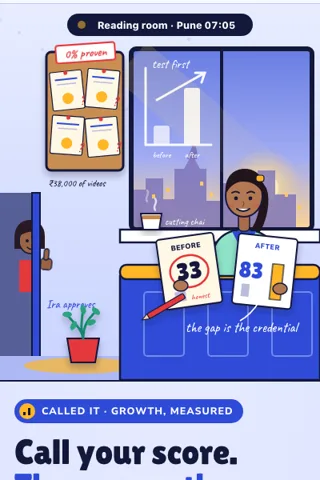
Log what you expect to learn before a course, then prove how much you actually grew.
Reserve · refundable deposit
$149Base · Optimism
 Try it live
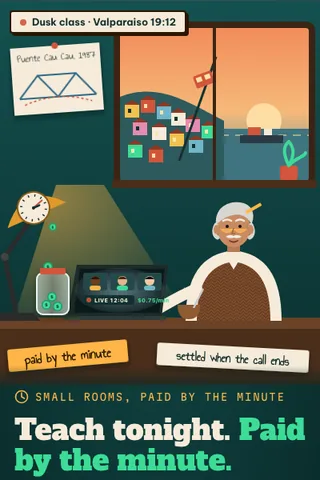
Teach live in small rooms where students pay per minute and you get paid the second the call ends.
Try it live, freeA retired engineer wants to mentor without platforms taking 30 percent. Office Hours streams USDC per minute during calls and issues attendance proofs both sides keep.
Booking page, video room embed, per-minute USDC metering, session proofs
Reshape it entirely: new features, your flows, your brand end to end, integrations you need. We scope it with you.
Per-minute paid mentor calls with crypto payouts are live; the session attestation is a small addition.
Kurobi (Solana) hosts paid video calls in USDC, MentorCalls and Mynameis charge per minute with crypto payouts, and SmartSync supports per-minute crypto billing.
Checked with web searches in October 2026. A search is not proof that nothing similar exists, and the market moves fast, so we recheck before every build.
USDC payments; eligibility unknown
Eligibility unknown
The complete Office Hours app: mentors teach in small live rooms, students pay per minute up to a cap they approve, mentors are paid the second the call ends, and both sides keep an attendance proof.
Every buyer gets the same finished app. Basic branding and copy changes come through a quick form.
Your admin side: revenue, paywall editor, users, rules and the agent log.
Referral and growth mechanics, switched on when you are ready to grow.
No monthly fee to start: the owner keeps a small share of each session. Studio mentors pay monthly for a lower share and more tools, and schools pay for many mentors under one brand.
Per session share set by the owner (default 5 percent free plan, 3 percent paid). Video costs about $0.004 per participant minute; settlement gas is about a cent.
Prices are yours to set. Illustrative, not a promise of income.
Teach live in small rooms where students pay per minute and you are paid the second the call ends.
Problem: Experienced people who want to mentor lose up to 30 percent to platforms, wait weeks for payouts, and students pay for whole hours they cannot use.
Solution: Per minute USDC metering backed by two sided heartbeats, a student approved cap, per student settlement at call end, and attendance proofs both sides keep.
Why now: Stablecoin settlement on Base costs a cent, embedded wallets remove onboarding friction, and WebRTC rooms are cheap to embed.
Market: Retired professionals, senior engineers and tutors who want direct income, and the students and schools who need them.
The ask: Pilot with 50 mentors from one professional alumni network and two engineering schools.
Funding is never guaranteed. Check each program's rules.
Many hackathons require code written at the event. See the Regatta Boardfor each race's rule.
Custom work from $1,200: your video provider, a school branded deployment, accounting exports, or calendar integrations. Scoped on a call.
Retired engineers, nurses, teachers and tradespeople have decades of know-how and students who want it, but tutoring platforms take a large cut, pay out monthly, and charge students for whole blocks of time they do not use.
This already exists in close forms: Kurobi on Solana hosts paid video calls settled in USDC, MentorCalls and Mynameis charge per minute with crypto payouts, and SmartSync supports per-minute crypto billing. What this adds is small: a heartbeat-verified meter, settlement seconds after the call, and an attendance proof (an EAS attestation) that both mentor and student keep. Research verdict: exists, low novelty. It is a well-made, ownable version of a known product, not a new category.
Bookings, each student's approved cap, minute by minute heartbeats from both devices, settlement transactions, and one attendance attestation per session. Video and audio are never recorded or stored.
Anyone with hard-won experience can teach a small room tonight and be paid fairly, by the minute, the moment the call ends.
Paid before you close the laptop Settlement lands seconds after the call, not at the end of the month.
Students pay only for minutes used A cap they approve up front, grace minutes at the start, and unused cap returned automatically.
Thursday bench A recurring small group room with a topic vote, a streak, and a series proof after four sessions.
Wallets: Privy embedded wallets on Base (or Circle's Arc network where the owner prefers it). Students can fund with a card through an onramp that settles in USDC.
Caps: Before a call, each student signs a USDC spending cap to a metering contract (Permit2 style allowance), so nothing is held by the mentor in advance.
Video room: An embedded WebRTC room from an existing provider (for example Daily or LiveKit). The app never records audio or video.
Meter: Both devices send a heartbeat every 15 seconds. A minute counts only when both are present; no heartbeat for 30 seconds pauses the meter.
Settlement: When the call ends, the contract pulls each student's billable minutes separately, pays the mentor minus a 5% fee, and leaves the rest of the cap untouched.
Attendance proofs: An EAS attestation on Base per session with mentor, student, minutes and topic hash. Both sides can show it; no-shows are recorded too.
Reminders: Email and push for bookings, an 80% cap warning during calls, and the weekly bench topic vote.
Per session: one settlement transaction per student and one attestation on Base, typically a cent or less combined. Video: roughly $0.004 per participant minute with common WebRTC providers, so about $0.50 for a 30 minute room of four. Example: 450 sessions a month averaging 30 minutes and two students costs roughly $60 to $120 in video, gas and hosting.
Every session leaves both people with a proof they can share: a student shows the hours they learned from a named expert, a mentor shows a record of sessions and no-shows. Benches turn one-off calls into a weekly habit, and students bring classmates into open seats.
Billing disputes: Frozen video or dropped connections can bill wrongly. Guardrail: two-sided heartbeats, grace minutes and one-tap refunds within 48 hours.
Safety: Live calls can be misused, including with minors. Guardrail: age gate, report button in every room, mentor verification for paid listing.
Privacy: Calls are never recorded; attestations hold only hashes of topic and identities the user chose to link.
Payments and tax: Mentors are paid as individuals; the owner should check local rules on payments, tax reporting and sanctions screening, and stablecoin access in each country.
No-shows: A missed session releases caps automatically and stays on the mentor's public record.
Costs and tools are estimates at the time of writing. General information only, not legal or financial advice.
Nine routes from one vessel. Tap a port to open its chart.
Office Hours lets you teach and mentor in small rooms where students pay per minute in USDC and you are paid the moment the call ends. Mentoring platforms keep around 30 percent and own your student list; on your own Office Hours the rate, the students and every attendance proof are yours. Your experience becomes a direct income stream under your own name.
Maybe not at first, and that is normal. Start with one narrow topic you have solved for yourself, like getting a first engineering job, and a low rate. Ten minutes at a dollar a minute is an easy yes for someone who is stuck.
Many will not. Send them a short guide to getting USDC on Base through a wallet with card top-up, and keep the first session short so the setup feels worth it. Over time, focus on audiences who already hold stablecoins.
You set a rate, connect your calendar and share a booking link. The video room, metering and payout are built in. DEPLOYR ships it configured.
Yes. Payments settle to your wallet and the session proofs are issued from your contract. You can move your students to any frontend later.
Probably, like any income. Keep the session records Office Hours gives you and ask a local accountant how stablecoin income is treated where you live.
Office Hours earns from your own per-minute sessions first, then from group rooms where many students pay a lower rate at once, and finally from hosting other mentors on your platform for a small cut. This is a target to aim at, not a promise.
Illustrative stages, not a forecast. Results depend on you and the market; nothing here is guaranteed.
LIVE DEMOLog what you expect to learn before a course, then prove how much you actually grew.
 LIVE DEMO
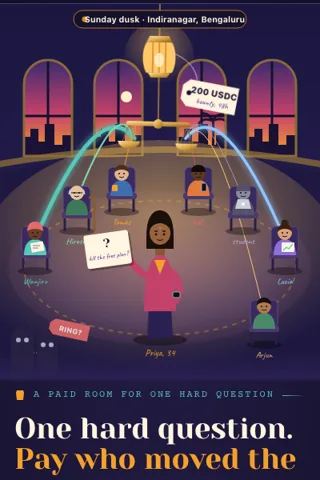
Pose a hard question, stake a bounty, and pay the crowd by how much each answer moved the final consensus.
 LIVE DEMO
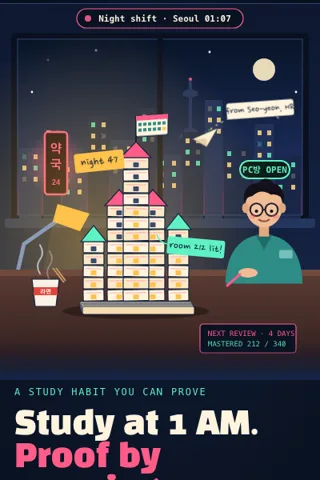
Turn what you are learning into spaced repetition decks that prove your streak and mastery onchain.
 LIVE DEMO
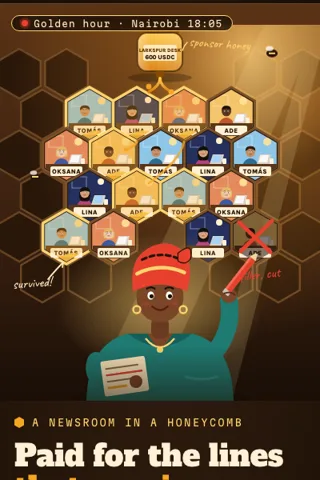
A group writes one living briefing together and everyone is paid by the lines that survive edits.
 LIVE DEMO
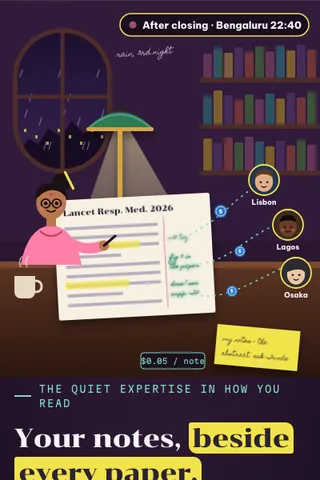
Your highlights and annotations on any article become a collectible, tippable layer others can subscribe to.
 LIVE DEMO
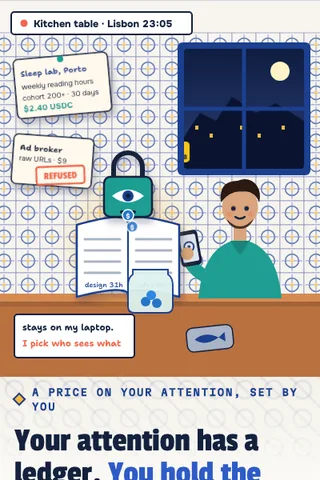
Keep a private log of what you read and watch, then sell anonymized slices only when you choose.
 LIVE DEMO
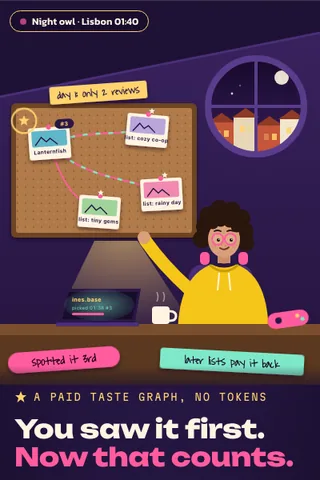
Curate a list early, and earn a share when the things you picked go on to be loved.
 LIVE DEMO
Write letters to the future that unlock for named people at a date or when you stop checking in.