Margin Notes, first screen of the live demoTry it live
Live demo with sample data. No wallet needed.
Reserve · refundable depositMINE YOUR HUMAN

Margin Notes

Your highlights and annotations on any article become a collectible, tippable layer others can subscribe to.

Try it live, free
$179one time, base tier
Built on order. Reserve it today for a $45 refundable deposit, pay the balance when it is delivered. Delivery: 1 to 2 days after the base build exists.
Reserve for $45Want it fully custom? From $1,200 · talk to us
PortsBase · Arbitrum · Optimism
KindMind
OwnerYou, on your wallet and git
Picture this

Who it is for

Priya reads 40 papers a month and her margin notes are better than the abstracts. Margin Notes lets her publish annotations as an onchain layer over any URL, and readers pay a few cents in USDC to see her notes appear beside the text.

Two ways to own it

What you get

Base$179
$45 deposit to reserve

Browser overlay web app, annotation registry contract, USDC micro-unlocks, annotator profile page

  • You choose: chain
  • You choose: name and logo
  • You choose: accent color
  • You choose: unlock price default
Customfrom $1,200
Built around you

Reshape it entirely: new features, your flows, your brand end to end, integrations you need. We scope it with you.

  • Everything in Base
  • Custom features and design
  • Priority build
Why it is new

What exists today, and what this does differently

What is new

Onchain annotation exists as a prototype; paid subscriptions to an annotator's layer were not found.

Closest things out there

Hypothesis and Glasp handle web annotation without payouts, and Public Annotation Network (HackFS) stored annotations on Ethereum and IPFS without tipping or subscriptions.

Checked with web searches in October 2026. A search is not proof that nothing similar exists, and the market moves fast, so we recheck before every build.

What it unlocks

The human in it

Unlocks the quiet expertise in how you read.
The Regatta Board

Races it can enter

grant · Base · rolling
Base Builder Grants
rolling, retroactive
Official page ↗

Fits once shipped on Base; retroactive grants need a live app

Their rule on existing code: Existing shipped projects OK (retroactive)
grant · Gitcoin · upcoming
Gitcoin Grants rounds
quarterly-ish rounds; next round dates unknown
Official page ↗

Fits if the annotation registry is open source

Their rule on existing code: Existing open-source projects OK (generally required)
What you own

The whole app, not a starter kit.

The complete Margin Notes app: careful readers publish their highlights and margin notes as a layer beside any paper, prove they were first, and get paid in USDC per unlock, with a paywall, owner console and anchor agent built in.

Base price · $179

The user app, complete

Every buyer gets the same finished app. Basic branding and copy changes come through a quick form.

Three step onboardingHome
Shown once: your margin is the good part, pinned to the sentence, your name provably first.
Progress and next actionHome
Layer, unlocked, re-anchored and subscribers, with one clear next step and recent activity.
Layer builderLayer
Price per note, free preview notes and chain, with a live preview of what readers see.
Publish to the registryLayer
A registry entry with URL hash and notes hash; note text never goes on chain.
Reader unlock flowReaders
A reader pays cents in USDC and the notes appear beside the publisher's page, with a receipt.
First author claimsReaders
A copycat layer is compared on a timeline and a claim is filed with the earlier entry.
Paper version re-anchoringReaders
When a paper changes the agent re-anchors notes and asks before moving one it is unsure of.
Sunday digestInbox
Send subscribers the week's papers and notes. Gated behind Annotator Pro.
Question inboxInbox
Subscribers ask one question a week, answered as a margin note. Gated behind Annotator Pro.
Earnings and withdrawalsWallet
Balance from unlocks and subscriptions, a withdrawal sheet and a six month income view.
Onchain receiptsWallet
What is on chain (annotator, hashes, version) and what never is (note text, who read what).
Plans and profileMe
Pricing from the owner paywall with crypto checkout, a gated public profile page, settings and share card.
Open the full app demo
Add-on

Owner console

Your admin side: revenue, paywall editor, users, rules and the agent log.

Revenue and paywall editorRevenue
Unlock fees, Pro MRR, payouts, incoming USDC, payment methods, and live editing of the Pro name, price, fee and gates.
Claims review queueClaims
Similarity bars against the owner's line, mark duplicate or dismiss; nothing is ever deleted.
Rules, agent log and roadmapRules
Re-anchor confidence, duplicate line, free preview and ask before move; plus the Agent log and priced Roadmap.
Top-up

Growth and referrals

Referral and growth mechanics, switched on when you are ready to grow.

Journal club weeks and referralsGrowth
Run a club week, see growth loops and simulate annotator referrals.
The money path, built in

How it earns for you

Publishing is free. The owner keeps a small fee on every reader unlock, and annotators who want subscriptions, the digest and the question inbox pay a monthly Pro plan.

Free reader$0Read free preview notes on any paper
Pay per paper5% of each unlockReaders unlock one paper's notes for cents. Publishing is free
Annotator Pro$6 a monthCustom profile, subscriptions, the Sunday digest and question inbox

The unlock fee is set by the owner (5% by default). Gas on Base is typically well under $0.01 per unlock.

Prices are yours to set. Illustrative, not a promise of income.

Growth loops, built in

How it spreads

  • The annotator's name and a subscribe button beside every unlocked paper
  • Journal club weeks that bring a whole group to one layer
  • Other annotators shown on the same paper
  • The Sunday digest that brings readers back
  • Annotator to annotator referral codes worth a free Pro month
Roadmap · build the next phase with us

Where it goes next

v1 included
The full annotation app
  • Layers over any URL or PDF with quote anchors
  • Registry contract and USDC micro unlocks
  • Anchor agent with ask before move
  • Duplicate claims and reviewer queue
  • Paywall, subscriptions, digest, inbox
Included
v2
Browser extension and group seats
  • Chrome and Firefox extension
  • Journal club and class seats
  • Zotero and Mendeley import
  • x402 pay per request for agents
Add-on from $400
v3
Institutions and citations
  • Library and department licences
  • Citable layer DOIs
  • Peer review overlays for journals
  • Annotator reputation across papers
Add-on from $900
For investors and grant reviewers

The pitch, ready

Publish your margin notes as a paid layer beside any paper, with your name provably first.

Problem: Researchers, clinicians and analysts leave their best thinking in margins nobody else sees. Colleagues would pay a little to read a paper with those notes beside it, but there is no way to publish, prove authorship or get paid.

Solution: Notes anchor to quoted text on any URL or PDF. A small registry contract records annotator, URL hash and notes hash; the text stays encrypted. Readers unlock for cents in USDC and an anchor agent keeps notes in place when papers change.

Why now: Cheap stablecoin payments on Base, embedded email wallets and small models that can re-anchor text make micro priced expertise practical.

Market: Researchers, clinicians, analysts and students who read papers daily, and the journal clubs, classes and libraries around them.

The ask: Pilot with three journal clubs and a university library, and grant support from public goods rounds for open science.

Funding is never guaranteed. Check each program's rules.

For hackathons and demo days

Your 2 minute demo

  1. Home: meet Priya in Bengaluru, 40 papers a month and notes better than the abstracts.
  2. Layer: one free note, five cents for the rest, publish on Base.
  3. Readers: Mateo in Lisbon unlocks at 3 AM and the receipt shows the split.
  4. Readers: the paper changes, the agent holds one note and Priya moves it.
  5. Readers: a copycat layer appears, file a first author claim.
  6. Inbox: hit the Annotator Pro paywall, pay in USDC, send the Sunday digest and answer a question.
  7. Owner Revenue and Claims: change the Pro price and fee, then mark a duplicate.
  8. Owner Growth and Roadmap: run a journal club week, then request the browser extension.

Many hackathons require code written at the event. See the Regatta Boardfor each race's rule.

Make it entirely yours

Custom work from $1,200: integrations with a reference manager or LMS, institution SSO, a different chain, or a field specific layer format. Scoped on a call.

Custom from $1,200
BLUEPRINT

Why it matters and how it really works

The need

Careful readers (researchers, clinicians, analysts, students) leave their best thinking in margins that nobody else ever sees. Their colleagues would pay a little to read a paper with those notes beside it, but today the notes live on paper or in private apps, with no way to publish, prove authorship or get paid.

What exists and what is new

Web annotation is well served: Hypothesis and Glasp let people highlight and annotate any page, without payouts. Public Annotation Network, an ETHGlobal HackFS project, stored annotations on Ethereum and IPFS but had no tipping or subscriptions. What we did not find is a paid layer: readers unlocking or subscribing to one annotator's notes over any URL, with a registry entry that shows who annotated first. The paid layer is the uncommon part; annotation itself is not new.

The data it runs on

Note text, highlighted quotes and their surrounding words (for re-anchoring), a hash of each page version, the annotator's wallet, and payment events. Note text is encrypted and served by the app to paying readers. Only the layer hash, URL hash, timestamps and payments are onchain.

1.The mission

Let the quiet expertise in how people read become something others can find, trust and pay for, with the reader's name kept on it.

2.Why people can't resist it

Your notes, finally seen The first time a stranger in another country unlocks your notes on a paper, the work you were doing anyway becomes visible.

Cents, not paywalls Readers pay a few cents for one paper's notes. Low enough to try, and a subscription follows once they trust how you read.

Sunday digest and questions Subscribers get a weekly digest of new notes and can ask one question, which the annotator answers as a new note. It keeps both sides coming back.

3.How it works for real

Browser overlay: A web app and browser extension that shows the layer beside the publisher's own page or a PDF. Notes anchor with the W3C Web Annotation text quote and position selectors.

Wallet and sign in: Privy embedded wallets on Base (or Arbitrum, Optimism) so readers sign in with email and pay in USDC without managing keys.

Annotation registry contract: A small contract records each layer: annotator, URL hash, notes hash, version. It never stores note text. Later versions link to earlier ones.

USDC micro unlocks: Per-paper unlocks and monthly subscriptions in USDC. Unlocks can use x402 style pay per request; subscriptions use a simple allowance renewed monthly.

Anchor agent: When a page changes, a small model such as Claude Haiku 4.5 re-anchors notes by fuzzy quote and section, and asks the annotator when confidence is below 0.9.

Encrypted note storage: Notes stored encrypted in the app database or IPFS, with keys released to paying readers by the server.

Duplicate check: Embedding similarity flags layers that copy another layer on the same URL, and files a claim showing the earlier registry entry.

4.Cost per use and pricing

Per unlock on Base: gas typically well under $0.01. Re-anchoring a changed paper with a small model: roughly 3,000 tokens, under $0.01 at Claude Haiku 4.5 prices ($1 per million input tokens). Example month for an annotator with 50 subscribers and 500 unlocks: about $3 in gas and model costs, plus $20 to $40 for hosting.

Free reader $0
Read free preview notes on any paper.
Pay per paper 5% of each unlock
Readers unlock one paper's notes for cents. The owner keeps a 5% fee.
Annotator Pro $6 a month
Custom profile, subscriptions, the Sunday digest and question inbox.

5.Growth loop

Every unlocked layer shows the annotator's name and a subscribe button next to the paper. Annotators share their profile with journal clubs and classes; each new reader sees other annotators on the same paper.

6.Risks and guardrails

Copyright: Notes may quote the source. Keep quotes short, show notes beside the publisher's own page, and never re-host the paper.

Copycat layers: Others may reword and resell notes. The registry shows who was first; the app hides disputed duplicates but cannot delete onchain entries.

Wrong advice: Notes on medical or legal material can be wrong. Show a clear label that notes are personal opinion, not professional advice.

Anchor drift: Changed pages can move notes to the wrong sentence. The agent holds low confidence matches for the annotator instead of guessing.

Small income: Most annotators will earn little. Say so plainly; never promise income.

7.Build order

  1. Overlay that shows notes beside any web page
  2. Text quote anchoring and a re-anchor agent
  3. Registry contract on Base
  4. USDC per-paper unlock
  5. Annotator profile page with subscribe
  6. Weekly digest email

8.Where this is going

  1. Now
    One annotator publishes paid notes on the papers she already reads.
  2. Next
    Journal clubs and classes subscribe to a few trusted readers.
  3. Later
    Every paper has a shelf of layers, ranked by readers who paid for them.
  4. The big one
    How well you read becomes a portable, provable reputation, and careful reading becomes paid work.

Costs and tools are estimates at the time of writing. General information only, not legal or financial advice.

OWNER PLAYBOOK

Own it, then chart your voyage

NRevenueVentureBuilder statusHackathonsProductivityInspire othersPartnershipsPortfolioAgencyMARGIN NOTES

Nine routes from one vessel. Tap a port to open its chart.

Why own Margin Notes

Margin Notes lets sharp readers publish their highlights and annotations as a layer over any article, and readers pay a few cents in USDC to see them. Owning it means the annotators, the subscribers and the payment rails are on your deployment and your wallet. You are building the home for a kind of expertise that no big platform pays for today.

What’s stopping you?

“I can't code.”

You run Margin Notes from an admin screen: invite annotators, set default prices, moderate notes. DEPLOYR handles the deploy from your wallet.

“What if nobody pays a few cents for notes?”

Most won't at first. People pay for notes from someone they already trust in a niche, like a clinician on medical papers or an analyst on filings. Start with one niche and one or two respected annotators.

“Is it legal to annotate other people's articles?”

Notes sit beside the text, they do not copy it. Set a clear rule: quote only short phrases, never full paragraphs, and remove notes if a publisher asks. If in doubt, get local advice.

“Is it really mine?”

Yes. The contracts are deployed from your wallet and fees route to it. You can see every payment on a block explorer.

“What if it breaks?”

Bugs happen. Keep a status post pinned, tell users honestly, and contact DEPLOYR support. Payments already made stay onchain.

The million-dollar ladder

Readers pay per note layer or subscribe to annotators; the owner keeps a platform fee on each payment and charges teams for private shared layers. About $1M a year is a target to work toward, not a promise.

$40
$1,600
$4,500
$85,000
First annotators
10 subscribers
$4/mo
Niche fit
400 subscribers
$4/mo
Research teams
150 teams
$30/mo
Firms and schools
850 orgs
$100/mo
  • A platform fee on every paid note view
  • Private team layers for labs, newsrooms and study groups
  • Featured annotator pages that pull in subscribers
  • Bundles that combine several annotators in one niche

Illustrative stages, not a forecast. Results depend on you and the market; nothing here is guaranteed.

Pick your destination

Grow it to a million-dollar app
A few cents per view adds up when a trusted annotator covers papers people must read anyway. Your fee on each payment scales with them.ARRIVE: 3 annotators with at least 30 paying readers between them within 60 days.5 moves · first one within the hour →
Raise for it
Margin Notes sits in a category (knowledge and creator income) that ecosystem funds openly say they want: real people doing real things onchain. Owning the contract and the user list gives you something concrete to show a program, not just an idea.ARRIVE: Three applications submitted to grant or accelerator programs, each with live usage numbers, within 30 days. Funding is never guaranteed; the goal is a strong, honest application.4 moves · first one within the hour →
Become a real builder on a chain
Deploying Margin Notes from your own wallet gives you an onchain builder record on Base, Arbitrum or Optimism that is yours forever. That record is useful for grants, jobs and reputation. Some ecosystems have rewarded active builders in the past, but airdrops are never guaranteed and should not be the reason you do this.ARRIVE: A verified contract deployed from your wallet, a public builder profile linking to it, and at least 25 real transactions from people other than you.5 moves · first one within the hour →
Win with it at hackathons
Hackathons reward working demos with real users. Margin Notes is already live, so you can spend the event building one sharp new feature instead of starting from zero.ARRIVE: One hackathon entry submitted with a live demo, a two minute video and a clear note on what was built during the event.5 moves · first one within the hour →
Run your own work on it
Run Margin Notes for your own reading. Publishing your notes makes you read more carefully and gives you a searchable record of what you thought.ARRIVE: 20 articles annotated in 30 days and a personal note layer you can search later.5 moves · first one within the hour →
Get your people moving
People who see someone like them running Margin Notes start to believe they can own something too. Your story is the most persuasive thing you have.ARRIVE: Three public posts and one talk or call where you share your journey owning Margin Notes, with at least one person telling you they started something because of it.4 moves · first one within the hour →
Partner with founders and projects
Journal clubs, newsletters and study groups already share notes in messy docs. Margin Notes gives them a clean shared layer and a way to reward their best annotators.ARRIVE: One signed or written partnership with a named organisation using Margin Notes, with a clear split of who does what.4 moves · first one within the hour →
Prove your skills with it
An app you own, with real users and a verified contract, says more than any CV line. Margin Notes shows you can ship, support users and handle money responsibly.ARRIVE: A public case study page on Margin Notes with your role, numbers and lessons, linked from your CV, LinkedIn and builder profile.4 moves · first one within the hour →
Sell it as a service
Newsletters and research groups want a paid annotation layer but will not run one. You can set it up and run it for them.ARRIVE: Two paid setup clients in 60 days.4 moves · first one within the hour →
No budget yet? Be a CEO anyway at CEOism, then come back for your vessel. ceoism.com ↗
Moored nearby

Related vessels

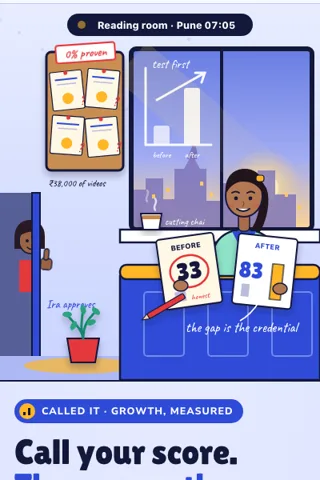
Called It, first screen of the live demoLIVE DEMO

Called It

Log what you expect to learn before a course, then prove how much you actually grew.

Reserve · refundable deposit
$149Base · Optimism

Ask The Room, first screen of the live demoLIVE DEMO

Ask The Room

Pose a hard question, stake a bounty, and pay the crowd by how much each answer moved the final consensus.

Reserve · refundable deposit
$299Base · Arbitrum +1
Memory Palace, first screen of the live demoLIVE DEMO

Memory Palace

Turn what you are learning into spaced repetition decks that prove your streak and mastery onchain.
Reserve · refundable deposit
$159Base · Solana
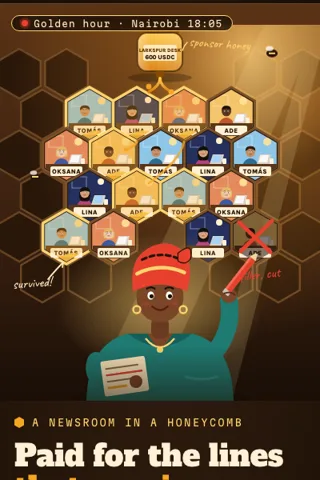
Hive Brief, first screen of the live demoLIVE DEMO

Hive Brief

A group writes one living briefing together and everyone is paid by the lines that survive edits.
Reserve · refundable deposit
$279Base · Optimism
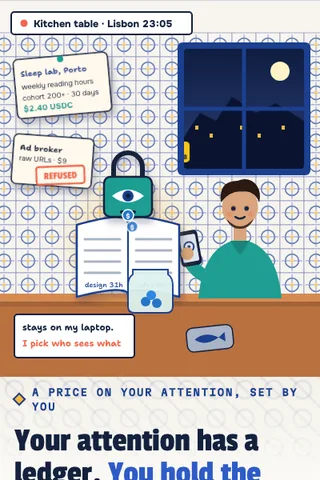
Attention Ledger, first screen of the live demoLIVE DEMO

Attention Ledger

Keep a private log of what you read and watch, then sell anonymized slices only when you choose.
Reserve · refundable deposit
$349Base · NEAR +1
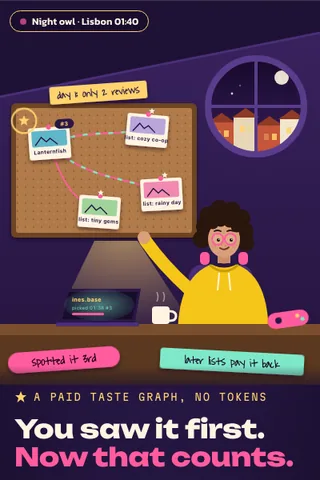
Taste Graph, first screen of the live demoLIVE DEMO

Taste Graph

Curate a list early, and earn a share when the things you picked go on to be loved.
Reserve · refundable deposit
$199Base · Solana
Office Hours, first screen of the live demoLIVE DEMO

Office Hours

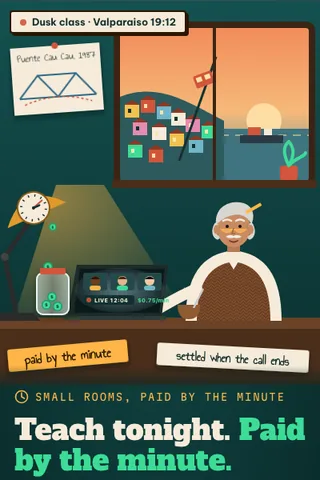
Teach live in small rooms where students pay per minute and you get paid the second the call ends.

Reserve · refundable deposit
$169Base · Arc
Last Letter, first screen of the live demoLIVE DEMO

Last Letter

Write letters to the future that unlock for named people at a date or when you stop checking in.

Reserve · refundable deposit
$189Base · Arbitrum
Contact us