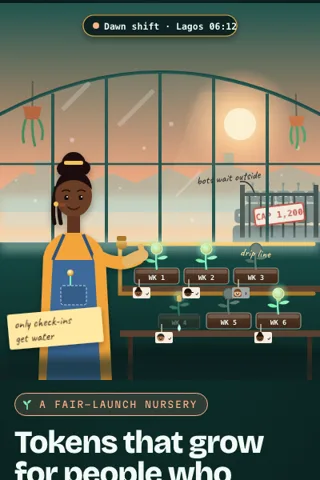
 LIVE DEMO
Slow Mint
A fair-launch token pad where supply unlocks only as real holders keep showing up, week after week.
Reserve · refundable deposit
$149Base · Solana +2
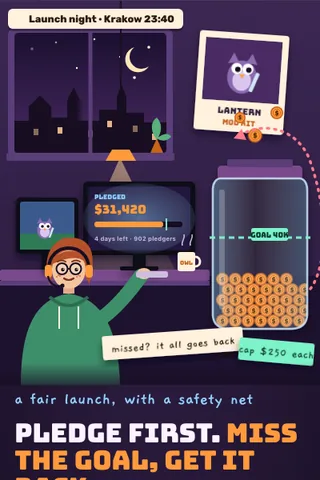 Try it live
A fair launch where buyers pledge first and refunds are automatic if the goal is missed.
Try it live, freeA game studio raises for a mod token. If the goal fails, every pledger is refunded by contract.
Pledge contract, auto refund, cap, LP lock.
Reshape it entirely: new features, your flows, your brand end to end, integrations you need. We scope it with you.
An established all-or-nothing launch pattern already live on Solana.
Metaplex Genesis launch pools refund deposits if the graduation minimum is missed and lock liquidity, and Juicebox and classic crowdfund contracts do refund-on-miss.
Checked with web searches in October 2026. A search is not proof that nothing similar exists, and the market moves fast, so we recheck before every build.
A complete pledge pad you own: backers pledge into capped jars and get an automatic refund when a goal is missed, teams pay you when a goal is met or for a plan, and your console runs approvals, pricing, growth and the launch helper.
Every buyer gets the same finished app. Basic branding and copy changes come through a quick form.
Your admin side: revenue, paywall editor, users, rules and the agent log.
Referral and growth mechanics, switched on when you are ready to grow.
Teams open jars free and pay a success fee only when the goal is met, or buy a Studio plan per launch or a Launchpad subscription. Backers never pay a fee and missed jars cost nobody anything.
Success fee of 0 to 5 percent of a met goal (default 1.5 percent), set in the console and shown to teams before they open a jar.
Prices are yours to set. Illustrative, not a promise of income.
A fair launch where backers pledge first and get every cent back by contract if the goal is missed.
Problem: Small teams ask communities to send money before anything exists. When a raise falls short, backers depend on the team's honesty to get it back, and communities that got burned once stop showing up.
Solution: A pledge jar with a goal, deadline, per-wallet cap and LP lock fixed in the contract, one-tap refunds when a goal is missed, and a launch helper that only reports facts.
Why now: Cheap L2 gas, embedded wallets and USDC on Base make a pledge and a refund cost about a cent, so refund-on-miss works for people with no crypto experience.
Market: Indie game studios, creators and small communities raising for a launch; refund-on-miss exists in Metaplex Genesis and classic crowdfund contracts, but not as a ready, branded pad a community can own.
The ask: Success fees and team plans from day one; seeking grant support (Base Builder Grants and similar) to audit the escrow and ship milestone jars.
Funding is never guaranteed. Check each program's rules.
Many hackathons require code written at the event. See the Regatta Boardfor each race's rule.
Your brand, chain choice, jar defaults and extra integrations such as Discord roles, milestone escrow, KYC regions or a white label domain are scoped and priced together.
Small teams launching a token or a community raise ask people to send money before anything exists. When the raise falls short, backers usually depend on the team's honesty to get it back, and too often they do not. Communities that got burned once stop showing up.
This pattern already exists and works. Metaplex Genesis launch pools on Solana refund deposits if the graduation minimum is missed and lock liquidity, and Juicebox and classic all-or-nothing crowdfund contracts refund on a miss. Research verdict: exists, low novelty. What this app adds is packaging, not invention: a ready-to-run pledge jar on Base, Monad or Berachain with a per-wallet cap, an LP lock, a one-tap refund page, and an honest launch helper that only reports facts.
Contract parameters (goal, deadline, per-wallet cap, LP lock length), pledges and refunds onchain, funding-source heuristics computed offchain for the team's eyes only, and the studio's own update posts.
Make it safe for a community to back something before it exists, because a missed goal costs nobody anything.
Failure is cheap Backers know a missed goal means one tap to get their money back. That lowers the fear that stops first-time backers.
The jar fills in public A live jar with a goal line makes every pledge visible progress and gives backers a reason to share.
Friday build diary After a successful launch, a weekly diary and a holder vote keep backers watching the work, not just the price.
Wallets: Privy embedded wallets or any injected wallet. Pledges in USDC on Base by default, with Monad or Berachain as options.
Pledge contract: A small audited-pattern escrow: pledge(), finalize() after the deadline, claimRefund() if the goal was missed. Per-wallet cap and deadline are immutable once opened. The team cannot withdraw a missed jar.
Launch on success: On finalize() with the goal met, the contract mints the token pro rata to pledgers, sends the agreed share to the team, and pairs the rest as liquidity on a DEX with the LP tokens sent to a time lock.
Launch helper agent: A small model tier (for example Claude Haiku or a comparable tier via OpenRouter) writes factual status posts from indexed contract state and flags wallet clusters by funding source. It may call finalize() after the deadline, which anyone can do.
Indexer and jar page: An indexer (for example Ponder or a hosted subgraph) powers the live jar, the refund page and the share cards.
Notifications: Email or Telegram alerts to pledgers at milestones, at the deadline, and when refunds open.
Per pledge on Base: an approve plus a pledge call, typically well under 5 cents in gas at normal fees. A refund claim is a single call, around a cent or two. The helper's status posts cost a fraction of a cent each on a small model tier. Example month: one 14 day launch with 1,200 pledgers costs the owner roughly 20 to 40 dollars for indexing, hosting and model calls, plus one-time contract deployment of a few dollars.
Each pledger gets a share card that says what happens if the goal is missed. Friends see a low-risk ask and pledge too. Teams whose jars missed honestly come back for a smaller second try, and their backers come with them.
Securities and legal: Selling a token to the public can be a regulated offering in many countries. The owner must get local legal advice, restrict regions where needed, and never market returns.
Contract bugs: An escrow holding pledges is a target. Use a well reviewed pattern, keep it small, get an audit before large goals, and cap the jar size early on.
Sybils and whales: A per-wallet cap can be split across many wallets. The cap still raises the cost, and cluster notes help the team see it, but it is not proof of personhood.
Success is not safety: A met goal and locked liquidity do not mean the token will hold value. The app must say so plainly and never forecast prices.
Helper overreach: The agent may only report facts and call public functions. It cannot change parameters, move funds, or promise outcomes.
Costs and tools are estimates at the time of writing. General information only, not legal or financial advice.
Nine routes from one vessel. Tap a port to open its chart.
Fair launches keep failing the same way: people buy in, the goal is missed, and the money is gone. Own Pledge Curve and you run the launchpad where refunds are automatic by contract, under your brand, from your wallet. The fees, the creators and the track record of launches that kept their word are yours.
Rules differ a lot by country. Launch tools are not the same as selling securities, but the creator launching a token needs their own legal read. Never promise pledgers returns.
Pledge Curve protects the 'goal missed' case. For the after case, require a liquidity lock and a public roadmap, and say plainly what the contract does and does not cover.
You do not need to. Pledge Curve arrives working, deployed from your own wallet with a written guide for every step. You will click, paste and fill in names. If you ever want a change you cannot make, the custom option or a freelancer can handle it, but the first launch needs no code.
Yes. The contract is deployed from your wallet on Base, the code sits in your own git repo, and the name and brand are yours. DEPLOYR does not hold your keys or take a cut of what Pledge Curve earns. If you stop paying anyone tomorrow, the app keeps running on your wallet.
That is the most likely early outcome, and it is fixable. The paths below start with you as the first user, then ten real indie game studios, creators and small communities raising for a launch you can name today. If ten people you message do not care after you have shown it to them, you have learned something useful in a week instead of a year.
A percentage fee (around 2 to 3 percent) on successful raises, with a minimum setup fee per campaign. This ladder is a target, not a promise.
Illustrative stages, not a forecast. Results depend on you and the market; nothing here is guaranteed.
LIVE DEMOA fair-launch token pad where supply unlocks only as real holders keep showing up, week after week.
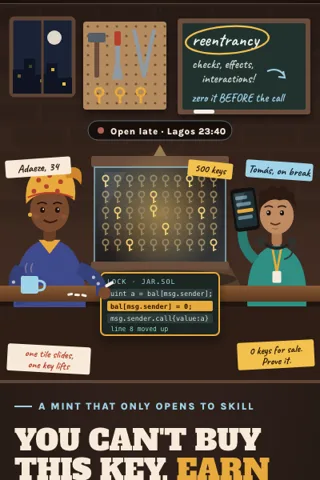 LIVE DEMO
Launch an NFT collection where each piece can only be minted by proving you can do the thing.
 LIVE DEMO
Founders publicly vow their own token lockups and get a shareable trust score that grows with time kept.
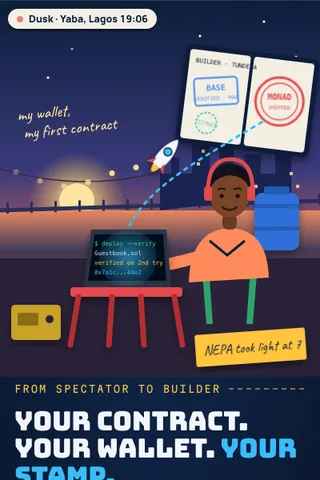 LIVE DEMO
Your own verified contract live on a new chain in ten minutes, with a public builder page to prove it.
 LIVE DEMO
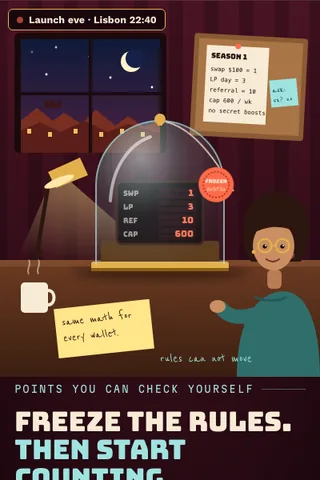
A points program where the formula, caps and conversion odds are public and frozen before day one.
 LIVE DEMO
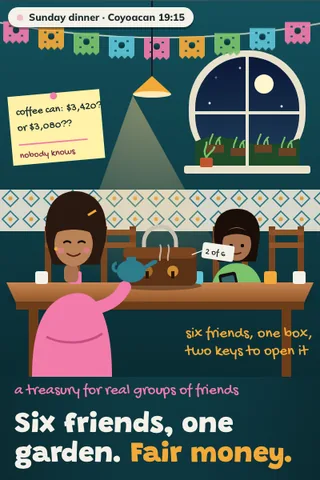
A DAO starter kit for small real groups: treasury, votes and roles in plain language.
 LIVE DEMO
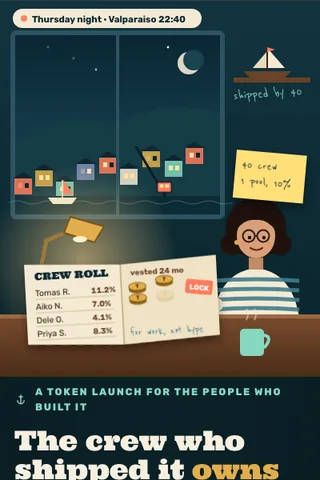
Launch a token that only your verified contributors can receive, weighted by work they actually shipped.
 LIVE DEMO
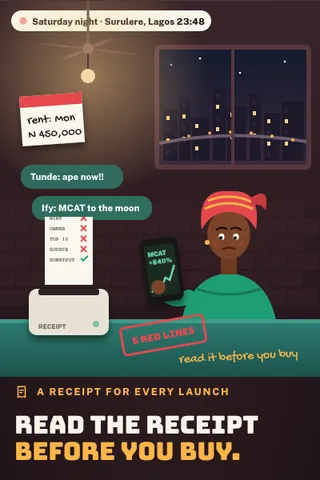
Every launch gets a printable safety receipt: locks, caps, owner keys, all checked live.