 LIVE DEMO
Slow Mint
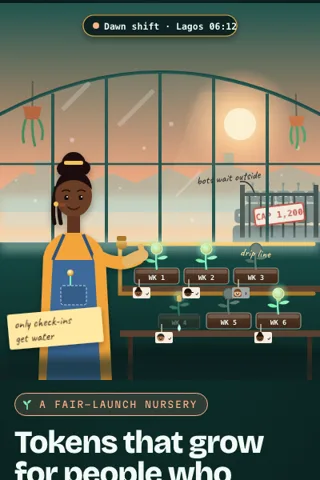
A fair-launch token pad where supply unlocks only as real holders keep showing up, week after week.
Reserve · refundable deposit
$149Base · Solana +2
 Try it live
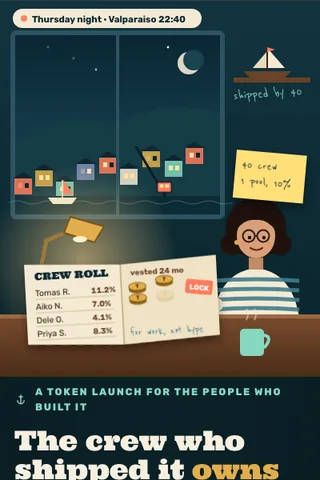
Launch a token that only your verified contributors can receive, weighted by work they actually shipped.
Try it live, freeAn open-source maintainer wants to reward 40 contributors. Crew Launch reads their merged work, proposes allocations, and vests them with locked liquidity.
Contribution import, allocation editor, vested token, LP lock.
Reshape it entirely: new features, your flows, your brand end to end, integrations you need. We scope it with you.
Contribution-weighted vested launches have been done by hand; packaging it as a product is uncommon.
Developer DAO allocated $CODE from Coordinape contribution data with vesting, and Mangrove and Morpho vested contributor tokens, but these were one-off allocations, not a reusable launch product.
Checked with web searches in October 2026. A search is not proof that nothing similar exists, and the market moves fast, so we recheck before every build.
Retroactive; needs measurable impact.
Existing open-source projects OK.
The complete Crew Launch app: maintainers turn merged work into a weighted, vested token launch for the people who shipped it, with a reason next to every name, disputes, a farming filter, a USDC paywall and receipts built in.
Every buyer gets the same finished app. Basic branding and copy changes come through a quick form.
Your admin side: revenue, paywall editor, users, rules and the agent log.
Referral and growth mechanics, switched on when you are ready to grow.
A flat fee per launch plus a monthly plan for living projects that run recurring crew rolls. The owner never takes a share of anyone's token.
Launch gas can be sponsored by the owner, usually under $5 on Base. Payments arrive in USDC on Base, other chains or by card on-ramp.
Prices are yours to set. Illustrative, not a promise of income.
Launch a token that only your verified contributors can receive, weighted by the work they actually shipped.
Problem: Open source tokens are allocated in spreadsheets or by raffle. Reviewers, docs writers and triagers get missed, farmed accounts get paid, and nothing vests.
Solution: Import the repo, get a weighted crew roll with a reason per name and a farming filter, answer disputes, sign, then deploy a vested token with locked liquidity and a monthly roll.
Why now: Cheap L2 gas, signed wallet links and small models that can explain a share in plain words make a fair, reusable launch product possible for any maintainer.
Market: Thousands of active open source projects and developer communities on Base, Arbitrum and Optimism, plus foundations running retroactive rewards.
The ask: Pilot launches with 10 open source maintainers, and introductions to dev communities that already run bounties.
Funding is never guaranteed. Check each program's rules.
Many hackathons require code written at the event. See the Regatta Boardfor each race's rule.
Custom work covers new importers, bespoke scoring formulas, Safe and governance integrations, branding and audits of your own contracts, scoped on a call from $2,000.
Open source projects that launch a token usually allocate it by hand in a spreadsheet, or by raffle and snapshot. Quiet contributors such as reviewers, docs writers and issue triagers get missed, farmed accounts with dozens of trivial PRs get paid, and recipients sell on day one because nothing vests.
This has been done before, by hand. Developer DAO allocated $CODE to early contributors using Coordinape contribution data with vesting, and Mangrove and Morpho vested tokens to core contributors through governance proposals. Those were one off allocations run by each team. What is new here is packaging it as a reusable launch product: import a repo, get a weighted crew roll with a reason per name, a farming filter, maintainer approval, then vesting and a liquidity lock in one flow. Research verdict: rare, medium novelty.
Public repository history: merged pull request authors and size, Co-authored-by trailers, approving reviews, docs changes and issue triage. Wallet links signed by each contributor. The maintainer's chosen weights and terms. Private messages and closed repos are never read.
When people build something together, ownership should follow the work they actually shipped, not who arrived loudest at launch.
A reason next to every name Each contributor sees their share and exactly which work earned it, so the roll can be argued with and fixed before it is final.
The quiet work counts Reviews, docs and triage carry weight, so the person who read every change is not left at a fraction of a percent.
A monthly roll New merged work joins the next epoch, so contributing keeps earning a place instead of ending at a snapshot.
Import: GitHub App with read only access to public repo data. An indexer pulls merged PRs, reviews, trailers, docs paths and issue labels into Postgres.
Score and explain: A deterministic scoring formula the maintainer configures does the math. A small model such as Claude Haiku writes the plain reason per contributor and flags patterns like bursts of tiny PRs from new accounts. A larger model is only used on flagged cases.
Link wallets: Contributors sign in with Privy and sign a message proving they control both the GitHub handle and the wallet. The link is stored privately; only the wallet goes into the roll.
Approve: The maintainer reviews flags and disputes, then signs the roll from a Safe. Nothing deploys without that signature.
Deploy: An ERC-20 on Base, Arbitrum or Optimism, a Merkle root of the crew roll, linear vesting streams with an optional cliff, and the liquidity position sent to a time locked contract.
Attest and notify: An EAS attestation records the roll hash and scoring formula version. Contributors get an email with their share, reason and claim link. Each monthly epoch posts a new root.
Scoring a 40 person repo with six years of history is about 2,000 PRs and 4,000 reviews. Reasons with a small model run roughly 300k input and 40k output tokens, under $1. On Base, deploying the token, vesting and lock is a few transactions, usually well under $5 in gas at normal fees; claims are paid by each contributor and typically cost cents. Example month for an owner running 10 launches plus monthly epochs: about $40 to $80 in model and gas costs, plus hosting.
Every contributor email and share card names the project and the tool. Maintainers who are paid in a crew roll tend to run one for their own projects, and each public roll links back to the formula it used.
Securities and tax: Tokens given for work can be treated as income or securities depending on the country. The product gives no legal advice, shows a clear warning, and owners should get local counsel before launching.
Gaming the metric: Any formula can be farmed. Tiny PR collapsing, new account holds and maintainer approval reduce it but do not remove it, which is why a human signs every roll.
Unfair weights: The maintainer picks the weights and could favour friends. Weights, formula version and reasons are published so the crew can see and dispute them.
Privacy: Linking a GitHub handle to a wallet can deanonymise people. Links stay private by default and contributors can opt out of the roll entirely.
Contract risk: Vesting and lock contracts must be audited, well known implementations. A bug could freeze or release tokens early.
No promised value: The token may be worth nothing. The app never shows price predictions and never presents the allocation as income.
Costs and tools are estimates at the time of writing. General information only, not legal or financial advice.
Nine routes from one vessel. Tap a port to open its chart.
When projects reward contributors, the tokens usually end up with farmers and insiders. Own Crew Launch and you run the launch tool that reads merged work and vests tokens to the people who built the thing, from your wallet and your brand. The launch fees, the maintainer relationships and the onchain record of every fair launch are yours.
It depends on where you and the project are, and on what the token does. Crew Launch is a tool; the project launching the token should get its own legal read. You should not promise holders any value.
They will. The allocation editor shows the raw data and lets the maintainer adjust with a public note. Make a dispute window part of every launch.
You do not need to. Crew Launch arrives working, deployed from your own wallet with a written guide for every step. You will click, paste and fill in names. If you ever want a change you cannot make, the custom option or a freelancer can handle it, but the first launch needs no code.
Yes. The contract is deployed from your wallet on Base, the code sits in your own git repo, and the name and brand are yours. DEPLOYR does not hold your keys or take a cut of what Crew Launch earns. If you stop paying anyone tomorrow, the app keeps running on your wallet.
That is the most likely early outcome, and it is fixable. The paths below start with you as the first user, then ten real open source maintainers and project leads you can name today. If ten people you message do not care after you have shown it to them, you have learned something useful in a week instead of a year.
A flat setup fee per launch plus an optional monthly plan for projects that run recurring contributor rewards. This ladder is a target, not a promise.
Illustrative stages, not a forecast. Results depend on you and the market; nothing here is guaranteed.
LIVE DEMOA fair-launch token pad where supply unlocks only as real holders keep showing up, week after week.
 LIVE DEMO
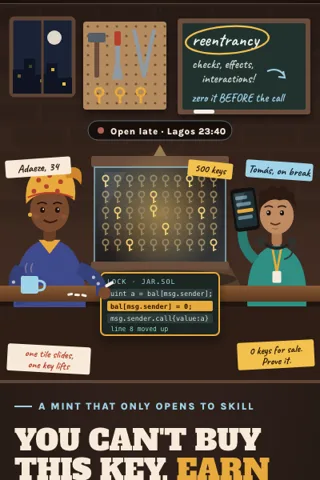
Launch an NFT collection where each piece can only be minted by proving you can do the thing.
 LIVE DEMO
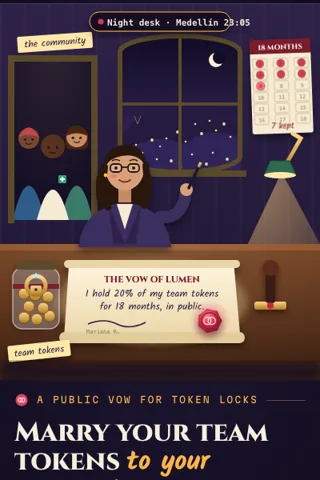
Founders publicly vow their own token lockups and get a shareable trust score that grows with time kept.
 LIVE DEMO
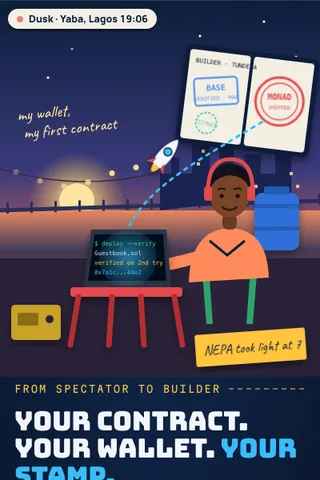
Your own verified contract live on a new chain in ten minutes, with a public builder page to prove it.
 LIVE DEMO
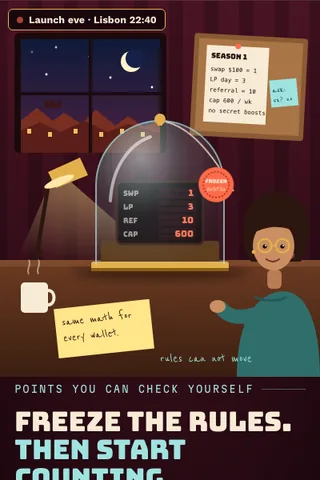
A points program where the formula, caps and conversion odds are public and frozen before day one.
 LIVE DEMO
A DAO starter kit for small real groups: treasury, votes and roles in plain language.
 LIVE DEMO
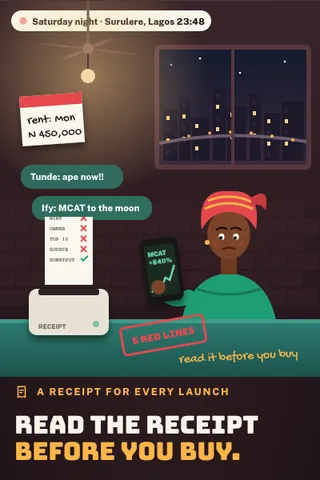
Every launch gets a printable safety receipt: locks, caps, owner keys, all checked live.
 LIVE DEMO
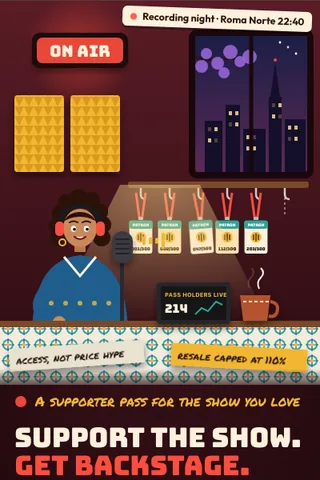
Launch a supporter pass where holders earn real access, not price promises.