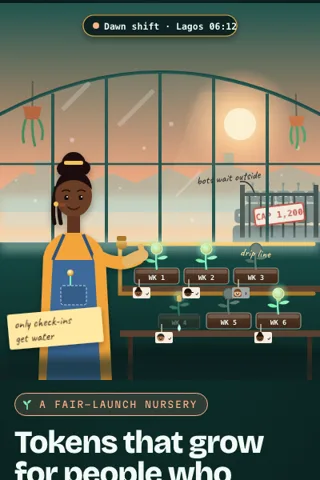
 LIVE DEMO
Slow Mint
A fair-launch token pad where supply unlocks only as real holders keep showing up, week after week.
Reserve · refundable deposit
$149Base · Solana +2
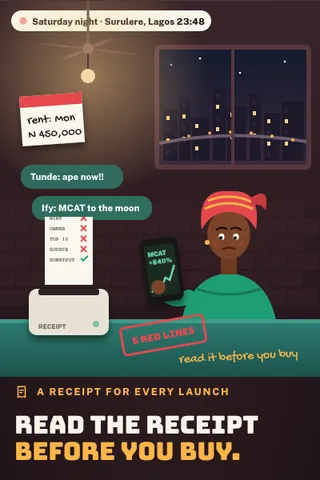 Try it live
Every launch gets a printable safety receipt: locks, caps, owner keys, all checked live.
Try it live, freeBefore buying a new token, Kemi pastes the address and gets a plain receipt of what is locked, who can mint and how long. Projects can embed it to earn trust.
Scanner page, embeddable receipt widget, chain checks.
Reshape it entirely: new features, your flows, your brand end to end, integrations you need. We scope it with you.
A printable, embeddable presentation of checks existing scanners already run.
Birdeye security reports, Mobula's token security API, and an OpenSea-listed token safety checker already return live lock, ownership and verdict checks, some with shareable verdict cards.
Checked with web searches in October 2026. A search is not proof that nothing similar exists, and the market moves fast, so we recheck before every build.
The complete Launch Receipt app: buyers paste a token address and get a plain, printable receipt of what is locked, who can mint and for how long, checked live onchain against their own red lines, with watchlists, project embeds and a built-in paywall.
Every buyer gets the same finished app. Basic branding and copy changes come through a quick form.
Your admin side: revenue, paywall editor, users, rules and the agent log.
Referral and growth mechanics, switched on when you are ready to grow.
Reading a receipt is free. Buyers pay monthly to watch tokens and get alerts, projects pay per embedded token for a live receipt they cannot edit, and wallets or launchpads pay per API receipt.
API receipts for wallets and launchpads at $0.01 each. Paying never changes what a receipt says.
Prices are yours to set. Illustrative, not a promise of income.
A plain, printable receipt of what is locked, who can mint and for how long, before you buy a new token.
Problem: People buy new tokens on the word of a group chat, at night, under pressure. The facts that matter sit in contract code most buyers cannot read, and scanners answer with a score or a wall of jargon.
Solution: Paste an address and get one line per fact with its source call and block, marked against red lines the buyer set while calm. Unknown prints as unknown. Projects embed a live receipt they cannot edit.
Why now: Cheap RPC, fork simulation and small models make a ten second, sourced receipt affordable across Base, Solana, Monad and Berachain, while launch volume keeps rising.
Market: Retail buyers of new tokens, the group chats they trade in, honest projects that want to show their facts, and wallets and launchpads that want a receipt at the moment of purchase.
The ask: Pilot partners: two chat communities and three launching projects, and a wallet or launchpad to trial the receipt API.
Funding is never guaranteed. Check each program's rules.
Many hackathons require code written at the event. See the Regatta Boardfor each race's rule.
Custom work from $1,000: extra chains, your own check types, a branded scanner for a launchpad or community, or a direct wallet integration. Scoped on a call.
People buy new tokens on the word of a group chat, at night, under pressure. The facts that matter most, whether liquidity is locked, who can mint, what the owner can change and how concentrated the holders are, sit in contract code most buyers cannot read. Scanners exist, but their output is a score or a wall of jargon, not something you can read in ten seconds or hand to a friend.
The checks themselves already exist. Birdeye security reports, Mobula's token security API and token safety checkers return live lock, ownership and verdict data, and some offer shareable verdict cards. Research verdict: this exists, low novelty. What Launch Receipt adds is presentation and posture: a plain printable receipt where every line names its source call and block, user set red lines instead of a universal score, unknown printed as unknown, a re-checking embed projects cannot edit, and a watchlist that reprints when a line changes.
Public chain state only: contract code and verification status, mint and freeze authorities, owner and role functions, LP token holders and locker contract code, top holder snapshots excluding pools, and a simulated sell on a fork. Users' rules and watchlists are stored on their device.
Give every buyer the plain facts about a launch before they decide, and give honest projects a way to show theirs.
Ten second read One line per fact, a green check or a red cross, and where it came from. Readable at midnight with the chat shouting.
Your red lines, not ours Users decide their own thresholds while calm, so the receipt reflects their rules rather than a black box score.
The receipt reprints Watched tokens get a new receipt when anything changes, like a lock nearing its end or a tax being raised.
Read chain state: RPC providers for Base, Solana, Monad and Berachain. EVM checks read bytecode, owner and role functions and LP holders; Solana checks read mint and freeze authorities and LP token accounts.
Check lockers by code: Known locker contracts are matched by verified bytecode, not name. Any withdraw path available to an owner prints as a red line; unknown lockers print as unverified.
Simulate a sell: A forked simulation (for example with an EVM simulation API or a local fork) tries a small buy and sell to catch honeypots and extreme taxes.
Explain: A small model such as Claude Haiku turns each finding into one plain sentence. The verdict itself is never model generated; it comes from the user's rules.
Embed and attest: Projects embed a script that re-checks every 10 minutes. On request, the receipt hash is attested with EAS on Base so anyone can verify what it said at a given block.
Watch: A worker re-runs watched tokens and sends web push or email when any line changes.
One receipt is about 15 to 30 RPC calls plus one simulation, roughly $0.001 to $0.004 on paid RPC tiers, plus about $0.0005 of small model tokens for the plain sentences. 10,000 receipts a month cost around $20 to $45. Embeds re-checking every 10 minutes are about 4,300 checks per token per month, roughly $5 to $15 per embedded token. EAS attestations on Base usually cost under one cent each.
Receipts are made to be shared into group chats, and every receipt carries the app name. Embeds put a live receipt on project homepages, which sends both buyers and other projects back to the scanner.
False comfort: A receipt with no red lines can still be a bad buy. Every receipt says facts, not advice, and the app never says buy, sell or safe.
Wrong reads: Novel lockers, proxies and upgradeable contracts can fool checks. Unknowns print as unknown, every line links to its source call, and users can report errors.
Legal: Labelling a project could draw complaints. Lines state verifiable chain facts with block numbers rather than opinions, and the app avoids words like scam.
Gaming embeds: A project could fake the widget image. The embed loads live from the service and the attested hash lets anyone verify it.
RPC outages: Missing data could look like a pass. Failed checks always print as could not verify.
Costs and tools are estimates at the time of writing. General information only, not legal or financial advice.
Nine routes from one vessel. Tap a port to open its chart.
Launch Receipt gives anyone a plain, printable safety receipt for a token: what is locked, who can mint, what the owner keys can do, all checked live. When you rely on someone else's scanner, their brand gets the trust and their site gets the traffic from every worried buyer. Own it, and every receipt, every embed on a project's site and every 'checked by' link points to you.
This is the big one. A receipt checks specific things, like locks and mint rights, at a point in time. It cannot see off-chain scams or future intentions. Say exactly that on every receipt, never use the word 'safe', and list what was not checked.
The scanner, the receipt page and the embed widget come built for Base, Solana, Monad and Berachain. You brand it and share it. New checks later need a developer.
Some will. The receipt shows facts from the chain, not opinions. Keep it neutral and give projects a way to add context. Good projects will embed it because it helps them.
Yes. Your domain, your git, your brand. The checks read public chain data.
Keep checking free for buyers. Charge projects for a verified embed, launchpads for bulk checks, and communities for alerts.
Free receipts for buyers bring traffic. Projects pay to embed a live receipt on their site, launchpads pay for bulk checks, and trading communities pay for alerts when something changes. This is a target, not a promise.
Illustrative stages, not a forecast. Results depend on you and the market; nothing here is guaranteed.
LIVE DEMOA fair-launch token pad where supply unlocks only as real holders keep showing up, week after week.
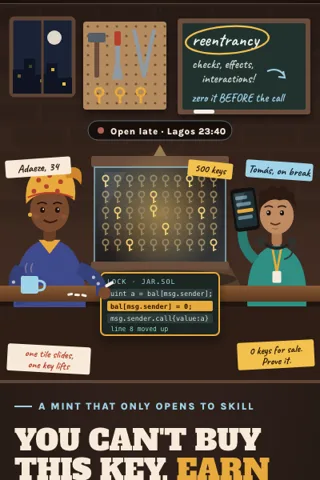 LIVE DEMO
Launch an NFT collection where each piece can only be minted by proving you can do the thing.
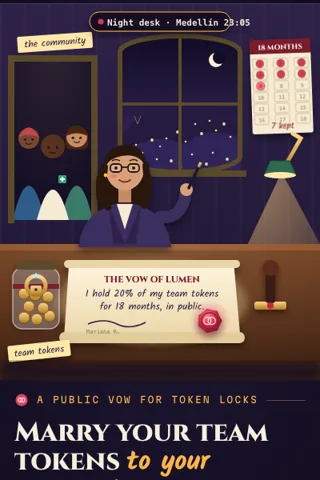 LIVE DEMO
Founders publicly vow their own token lockups and get a shareable trust score that grows with time kept.
 LIVE DEMO
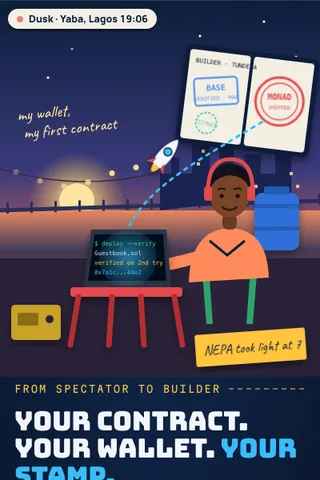
Your own verified contract live on a new chain in ten minutes, with a public builder page to prove it.
 LIVE DEMO
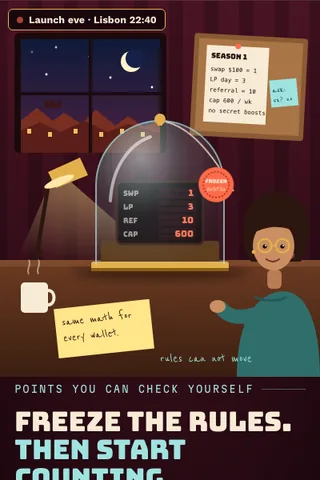
A points program where the formula, caps and conversion odds are public and frozen before day one.
 LIVE DEMO
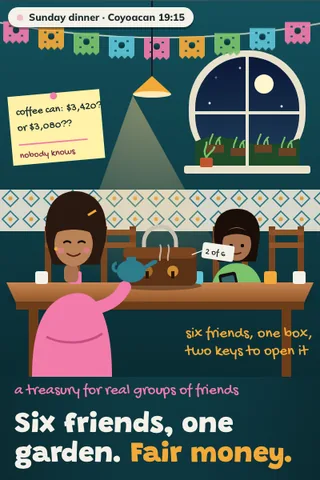
A DAO starter kit for small real groups: treasury, votes and roles in plain language.
 LIVE DEMO
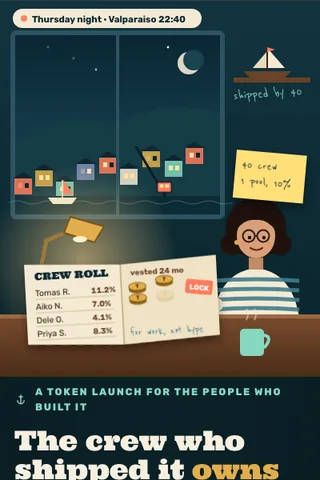
Launch a token that only your verified contributors can receive, weighted by work they actually shipped.
 LIVE DEMO
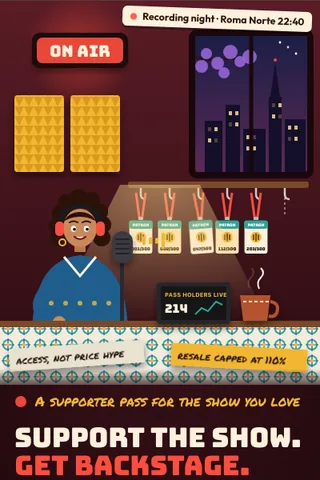
Launch a supporter pass where holders earn real access, not price promises.