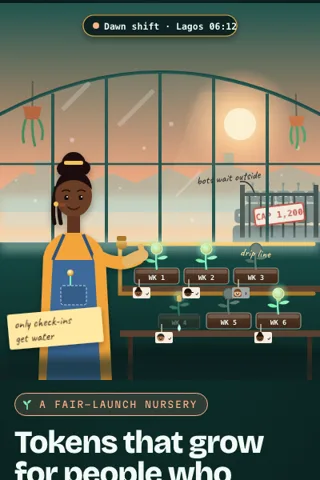
 LIVE DEMO
Slow Mint
A fair-launch token pad where supply unlocks only as real holders keep showing up, week after week.
Reserve · refundable deposit
$149Base · Solana +2
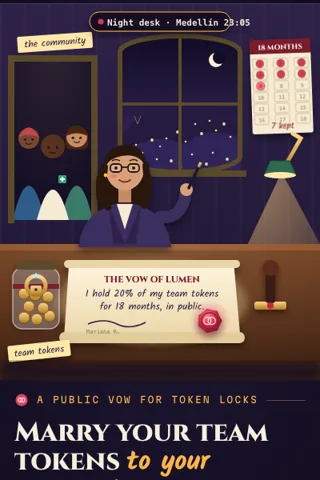 Try it live
Founders publicly vow their own token lockups and get a shareable trust score that grows with time kept.
Try it live, freeA founder launching on Solana locks her team tokens and publishes a vow page. Every month she keeps it, her trust card updates, and buyers can verify it in one click.
Lock contract, vow page, trust card, history across launches.
Reshape it entirely: new features, your flows, your brand end to end, integrations you need. We scope it with you.
Combining public founder locks with a reputation score that grows over time was not found as a single product.
Lockers like Team Finance, Streamflow and Hedgey, and reputation layers like Ethos, exist separately. No product found that converts kept founder locks into a portable trust score.
Checked with web searches in October 2026. A search is not proof that nothing similar exists, and the market moves fast, so we recheck before every build.
Existing projects allowed.
Existing projects OK.
The complete Vow app: founders vow their own token locks in public, a watcher stamps every month kept, and anyone checks the live trust card in one tap, with plans and USDC checkout built in.
Every buyer gets the same finished app. Basic branding and copy changes come through a quick form.
Your admin side: revenue, paywall editor, users, rules and the agent log.
Referral and growth mechanics, switched on when you are ready to grow.
Vowing and being checked is free for one launch. Founders pay monthly for tracing and holder tools, launchpads pay for the seal on every listing. Scores are never for sale.
Attestation fees are under a cent per vow per month and can be sponsored by the owner. No fee can ever change a score.
Prices are yours to set. Illustrative, not a promise of income.
A public vow for founder token locks that anyone can check in one tap, month after month.
Problem: Buyers cannot tell if a founder's tokens are locked is true, will stay true, or whether a co-founder is selling from a side wallet. Honest founders have no simple way to prove integrity over time.
Solution: Founders lock with an audited lock program and vow it in words. A watcher traces vowed wallets, writes a monthly attestation, and an open score grows only with time kept. Slips get 48 hours for an answer before anything posts.
Why now: Cheap attestations on Solana and Base, webhook indexers and small models make monthly tracing and plain summaries cost cents per vow.
Market: Token launches on Solana, Base and Sui, the launchpads that list them, and the buyers who want proof instead of screenshots.
The ask: Launchpad pilot partners and ecosystem grants such as Solana Foundation and Colosseum Eternal.
Funding is never guaranteed. Check each program's rules.
Many hackathons require code written at the event. See the Regatta Boardfor each race's rule.
Custom work from $900: your own lock programs or chains, launchpad or wallet integrations, branded cards, extra languages. Scoped on a call.
Buyers cannot tell if a founder's 'tokens are locked' is true, whether it will stay true, or whether a co-founder is quietly selling from a side wallet. Honest founders have no simple way to prove integrity over time.
What exists: token lockers like Team Finance, Streamflow and Hedgey enforce locks, and reputation layers like Ethos score wallets. They live separately. What we did not find: a single product that turns kept founder locks into a portable trust score that grows month by month and travels across launches. Locking itself is not new; the public vow, monthly attestations and the score are the new part. Verdict from research: rare, medium novelty.
Onchain: lock program state, vowed wallet balances and outflows, the vow text hash, monthly attestations. Offchain: the vow page, founder notes, notification lists, the watcher's trace notes for cross-chain movements.
Make a founder's integrity something anyone can check in one tap, instead of something they have to trust.
A score that only time builds Nobody can buy months kept. Founders return each month to watch the seal fill.
One tap to verify Buyers check a live card instead of a screenshot. It is easy to forward to a skeptical relative.
Fair when life happens A slip gets 48 hours for an explanation before it posts, so honest founders are not destroyed by one mistake.
Lock: Founder tokens go into an existing audited lock program (Streamflow on Solana, Hedgey or a minimal timelock on Base, a Move vesting object on Sui). Vow does not hold funds.
Vow record: The vow text is hashed and written with the lock reference. On Base and Sui this is an EAS-style attestation; on Solana a small account written by the Vow program.
Watcher: A worker reads vowed wallets daily through Helius webhooks on Solana and an indexer on Base, and follows outflows two hops, including across major bridges via their public messages.
Summaries: A small model (Claude Haiku tier via OpenRouter) turns traces into one plain sentence for the founder and the page. A larger model is used only when a possible break needs a careful write-up.
Monthly attestation: On the first of each month the watcher writes an attestation: kept, slipped and explained, or broken. The trust score is computed from these, openly.
Trust card and page: A public page and share image show the seal, months kept, history across launches and any notes. Notifications go out by email and Telegram.
Per vow per month: one attestation on Solana costs a small fraction of a cent in fees plus account rent paid once; on Base usually under a cent. Watcher reads through a webhook provider fit within low tier plans. Summaries: a few thousand tokens on a small model, about 1 cent a month, plus occasional larger model write-ups. Example month for 200 active vows: under 10 USD in fees and attestations, about 5 USD in model calls, and 50 to 100 USD for RPC, webhooks and hosting.
Every trust card is a shareable link. Buyers who check one ask the next founder 'where is your vow?', which pulls founders in. History carries across launches, so returning founders start with earned trust.
False sense of safety: A kept lock does not mean a good project. Cards say plainly that Vow checks one promise only and is not investment advice.
Missed side doors: Founders can sell through wallets they never vowed or obscure bridges. Vow only scores named wallets and says so; tracing is best effort.
Defamation and false flags: A wrongly posted break harms a real person. The 48 hour explanation window, human review for breaks and a public correction log reduce this.
Privacy: Linking wallets to a named founder is permanent. Only founders who opt in are listed, and notes stay editable offchain.
Legal: Token launches can be regulated. Vow never promotes tokens or prices and leaves legal compliance to the founder.
Costs and tools are estimates at the time of writing. General information only, not legal or financial advice.
Nine routes from one vessel. Tap a port to open its chart.
Vow lets founders publicly commit to their own token lockups and earn a trust score that grows each month the promise is kept. If you own the app, the vow pages, the trust cards and the verified record of every founder who used it live under your brand and your wallet, not a launchpad that can change the rules. In a market full of rug fears, being the place where integrity is provable is a real position to hold.
You do not need to. DEPLOYR ships Vow ready to deploy on Solana, Base or Sui. You set your brand, your fee wallet and your supported chains. The vow and trust card pages are already built.
Only some will, and that is fine. The founders who want to prove they are serious are exactly the ones who will. Start with five you know personally, and let their trust cards do the selling.
Then the record shows it, and that is the point. Vow does not lock tokens by force unless the founder uses an onchain lock; it publishes and verifies. Be clear on your site that a trust score is a record of behavior, not an endorsement or investment advice.
Yes. The deployment, the domain, the fee wallet and the founder relationships are yours. DEPLOYR does not take a cut of your fees or own your users.
Possibly, if you present scores as investment advice. Keep the copy factual: this founder vowed X, the chain shows Y. Add a plain disclaimer and talk to a lawyer before you charge large projects.
Founders pay a one time fee to publish a vow page, plus an optional monthly fee for a verified trust card badge and embed. Launchpads and communities can pay for a bulk listing. A $1M a year run rate is a target, not a promise, and depends on becoming a trusted name in one ecosystem first.
Illustrative stages, not a forecast. Results depend on you and the market; nothing here is guaranteed.
LIVE DEMOA fair-launch token pad where supply unlocks only as real holders keep showing up, week after week.
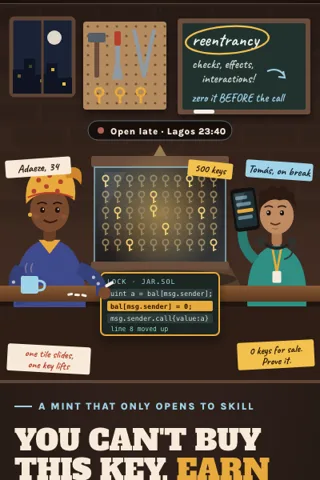 LIVE DEMO
Launch an NFT collection where each piece can only be minted by proving you can do the thing.
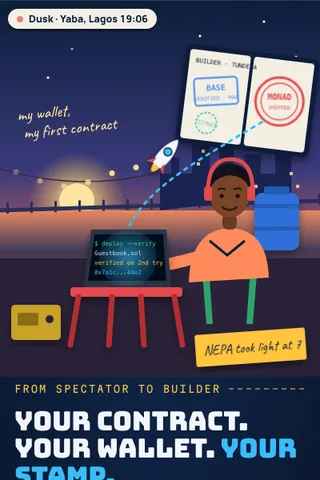 LIVE DEMO
Your own verified contract live on a new chain in ten minutes, with a public builder page to prove it.
 LIVE DEMO
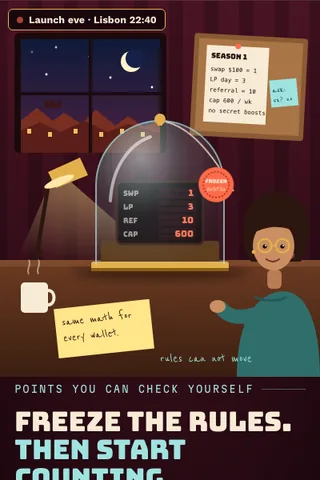
A points program where the formula, caps and conversion odds are public and frozen before day one.
 LIVE DEMO
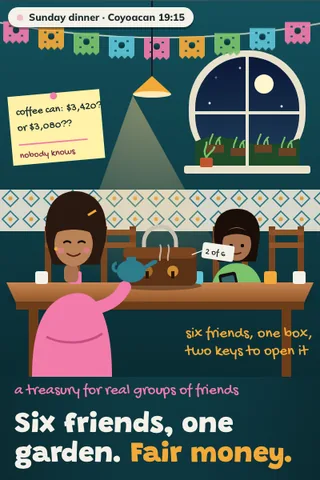
A DAO starter kit for small real groups: treasury, votes and roles in plain language.
 LIVE DEMO
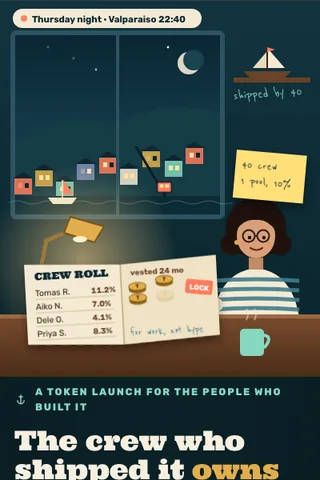
Launch a token that only your verified contributors can receive, weighted by work they actually shipped.
 LIVE DEMO
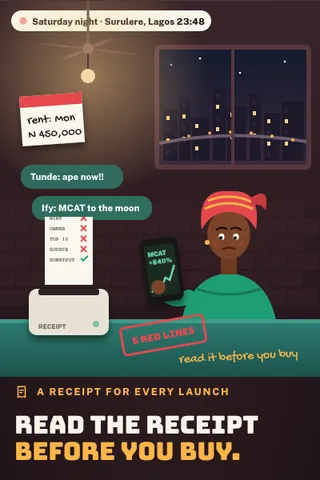
Every launch gets a printable safety receipt: locks, caps, owner keys, all checked live.
 LIVE DEMO
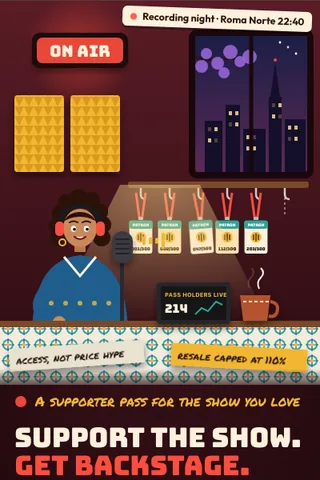
Launch a supporter pass where holders earn real access, not price promises.