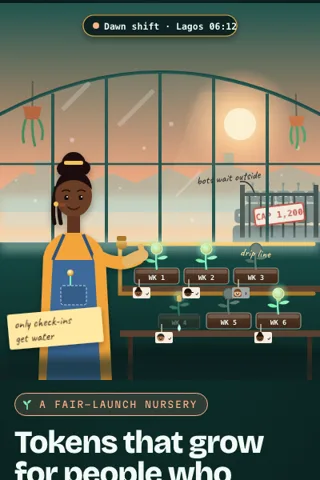
 LIVE DEMO
Slow Mint
A fair-launch token pad where supply unlocks only as real holders keep showing up, week after week.
Reserve · refundable deposit
$149Base · Solana +2
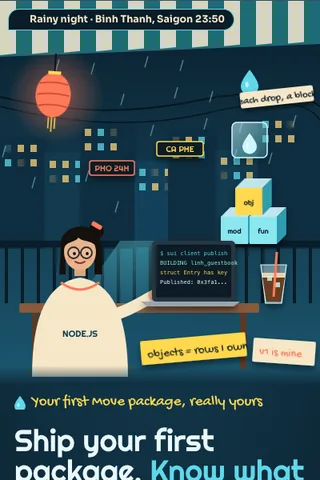 Try it live
Your own Move package live on Sui with a guided first object, and a builder badge.
Try it live, freeA web2 dev wants into Sui. Move Starter deploys a real package from his wallet and explains what he shipped.
Package template, deploy guide, builder page.
Reshape it entirely: new features, your flows, your brand end to end, integrations you need. We scope it with you.
A productized combination of existing Sui onboarding and completion badges.
Official Sui first-package guides walk through a first publish, and Metaschool's Sui track issues an NFT credential on completion.
Checked with web searches in October 2026. A search is not proof that nothing similar exists, and the market moves fast, so we recheck before every build.
Existing projects OK.
Existing projects OK.
The complete Move Starter app: developers ship their first Move package on Sui or Aptos from their own wallet, understand every line, and earn a badge only for code they changed, with a paywall built in.
Every buyer gets the same finished app. Basic branding and copy changes come through a quick form.
Your admin side: revenue, paywall editor, users, rules and the agent log.
Referral and growth mechanics, switched on when you are ready to grow.
The first package, testnet publish and badge are free forever. Learners pay monthly for more templates, mainnet guidance and the weekly kata; bootcamps and ecosystem programs pay per cohort.
Gas is paid by each learner from their own wallet. Model costs run about one to three cents per explanation.
Prices are yours to set. Illustrative, not a promise of income.
Ship your first Move package from your own wallet, and know what you shipped.
Problem: Web2 developers want to build on Sui and Aptos, but tutorials let them copy and publish code they cannot explain, and completion badges prove attendance rather than skill.
Solution: A small template the learner must change, errors explained in the language they already code in, a publish they sign themselves, and a badge that only mints when the diff and a test pass.
Why now: Move chains are recruiting developers, zkLogin and keyless wallets remove sign up friction, and mid tier models can explain compiler errors cheaply and well.
Market: Backend and web developers moving onchain, plus bootcamps, universities and chain ecosystem programs that need proof of real skill.
The ask: Pilot partners: one bootcamp and one chain ecosystem program, and grant funding from developer education rounds.
Funding is never guaranteed. Check each program's rules.
Many hackathons require code written at the event. See the Regatta Boardfor each race's rule.
Custom work from $1,000: your own templates and chains, a branded academy for an ecosystem program, LMS or GitHub Classroom integration, extra languages. Scoped on a call.
Web2 developers want to build on Move chains like Sui and Aptos, but tutorials let them copy and publish code they cannot explain, and completion badges often prove attendance rather than skill.
This already exists in parts. Official Sui first-package guides walk through a first publish, and Metaschool's Sui track issues an NFT credential on completion. Research verdict: exists, low novelty. This app is a productized combination: a guided first deploy from the learner's own wallet, error explanations mapped to the language they already use, and a badge that only mints when the package differs from the template and a test passes.
The learner's template choice and diff, build and test output, the package id and first object id, quiz answers about their own package (private), and the badge record linking package, diff hash and test run.
Help developers make their first real step onto a new chain, and leave them understanding what they shipped.
Friday kata A 15 minute upgrade to your own package each week, with a visible block streak.
Explained in your language Errors are explained with Node, SQL or Python comparisons, whichever you already know.
A badge that means something It links to your package, your diff and your test run, so anyone can check it.
Learner wallet: The learner's own Sui or Aptos wallet (Slush or Petra, or a zkLogin or keyless sign-in). The app never holds keys; the learner signs every publish.
Templates and CLI: Small Move templates (guestbook, shared counter, stamp card) run with the official sui or aptos CLI, testnet first with faucet funds.
Diff and test check: A build service compares the package to the template and runs its unit tests before the badge can mint.
Guide model: A mid tier model (for example Claude Sonnet via OpenRouter) explains compiler errors using the learner's background; a small tier model writes quiz questions about their package.
Badge: A soulbound badge object on Sui (or a non-transferable token on Aptos) recording package id, diff hash and test result.
Builder page: A public page listing the learner's packages and badges, read from chain via the public RPC or an indexer.
A small package publish on Sui mainnet costs a few hundredths of a SUI, and testnet is free with faucet funds. Guide explanations run around one to three cents per error on a mid tier model. Example month for 200 learners: about $40 to $120 in model costs, and gas is paid by each learner from their own wallet.
Builder pages and share cards travel to job posts and hackathon applications. Bootcamps and chain ecosystem programs can bring cohorts.
Overclaiming: A badge is not a certification, and it never implies a job, grant or reward. The page says so.
Key safety: The app must never ask for or store a seed phrase. All signing happens in the learner's wallet.
Gaming the badge: Trivial diffs can slip through. The check requires a new field or function plus a passing test, and reviewers can flag copies.
Wrong explanations: The guide can be wrong. It links to official docs for each error and learners can report bad answers.
Chain changes: Move and CLI versions change. Templates are pinned and tested on each release.
Costs and tools are estimates at the time of writing. General information only, not legal or financial advice.
Nine routes from one vessel. Tap a port to open its chart.
Move is a different language from Solidity, and most web2 developers bounce off the first package publish. Move Starter gets a real package live on Sui from the developer's own wallet, explains the objects they just created, and hands them a builder badge. Owning it makes you the go to on ramp into Move for your community, with your name on the flow, your wallet on the deploys and the fees from every cohort.
Yes, and you will learn by running it. The package template, deploy guide and builder page are built. Publish your own package first using the guide, read the explanation it gives, and you will understand more Move than most of the people you help on day one.
Free docs suit people who already know what they are doing. Your buyers are developers who tried the docs and stalled, bootcamps that want a ready flow, and communities that want a branded path. You sell speed, clarity and a person to ask.
Never promise that. Publishing builds real skill and a verifiable record of shipping on Sui or Aptos. Airdrops are never guaranteed and you should say so on the page.
It can happen. Test a publish on each supported network every month, pin the toolchain version in your guide, and post a status note when something changes.
Yes. The app runs on your account and repo, deploys from your wallet, and builder badges are issued under your name.
Developers pay a small fee for the guided first package and builder badge, and bootcamps, university clubs and Move communities pay per learner for branded cohorts. Later, paid follow on modules (second object, a coin, a simple marketplace) lift revenue per learner.
Illustrative stages, not a forecast. Results depend on you and the market; nothing here is guaranteed.
LIVE DEMOA fair-launch token pad where supply unlocks only as real holders keep showing up, week after week.
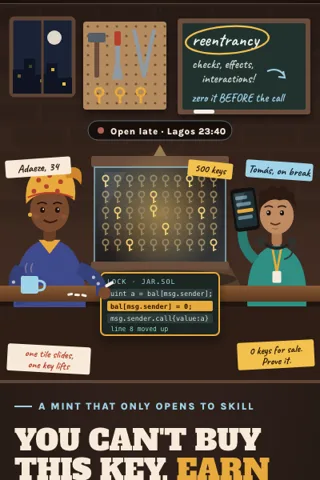 LIVE DEMO
Launch an NFT collection where each piece can only be minted by proving you can do the thing.
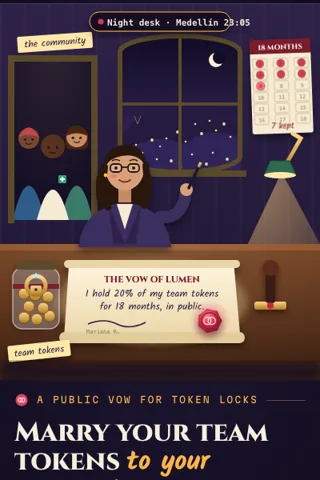 LIVE DEMO
Founders publicly vow their own token lockups and get a shareable trust score that grows with time kept.
 LIVE DEMO
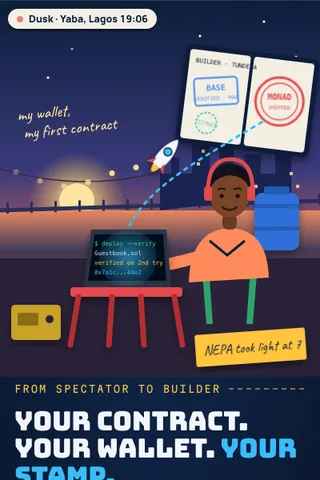
Your own verified contract live on a new chain in ten minutes, with a public builder page to prove it.
 LIVE DEMO
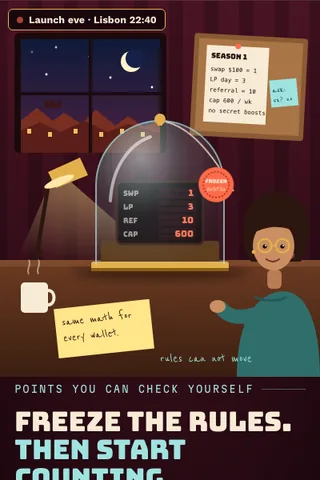
A points program where the formula, caps and conversion odds are public and frozen before day one.
 LIVE DEMO
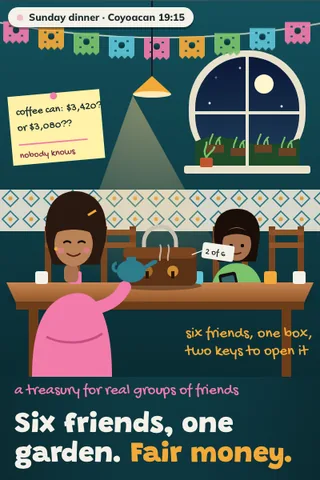
A DAO starter kit for small real groups: treasury, votes and roles in plain language.
 LIVE DEMO
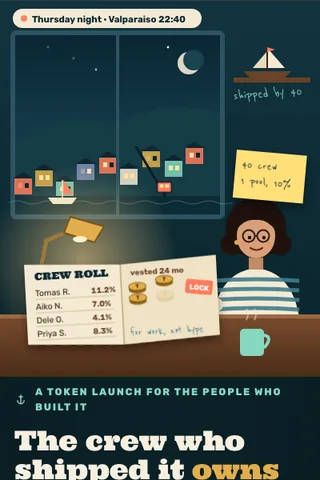
Launch a token that only your verified contributors can receive, weighted by work they actually shipped.
 LIVE DEMO
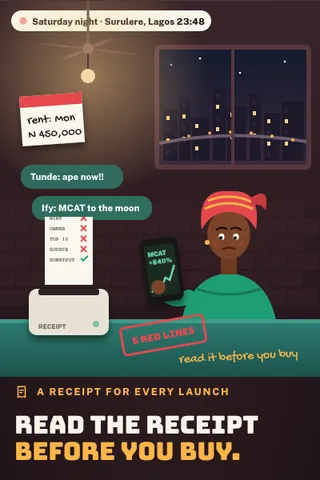
Every launch gets a printable safety receipt: locks, caps, owner keys, all checked live.