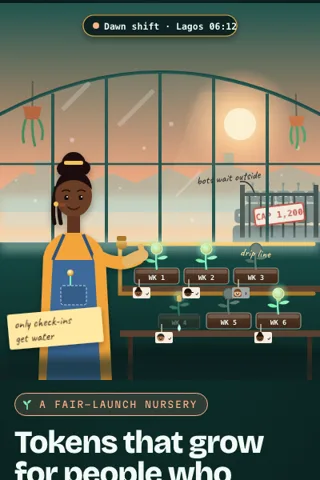
 LIVE DEMO
Slow Mint
A fair-launch token pad where supply unlocks only as real holders keep showing up, week after week.
Reserve · refundable deposit
$149Base · Solana +2
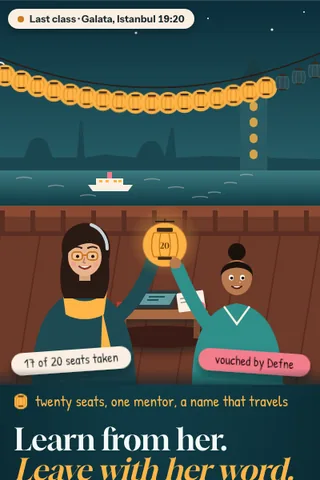 Try it live
Mentors launch a capped cohort pass; graduates get a vouched credential.
Try it live, freeA senior dev runs a 20 person cohort. Graduates get a vouch onchain from her.
Cohort pass, vouch credential, roster.
Reshape it entirely: new features, your flows, your brand end to end, integrations you need. We scope it with you.
Cohort credentials exist; mentor attestation tied to a capped cohort pass was not found.
AttenSys manages bootcamps with NFT certificates, MeritMint issues soulbound certificates, and Unlock Protocol offers certification NFTs, but none combine a capped cohort pass with mentor-vouched graduate credentials.
Checked with web searches in October 2026. A search is not proof that nothing similar exists, and the market moves fast, so we recheck before every build.
The complete Apprentice Line app: mentors sell a capped cohort pass, review capstones with a helper, and sign an onchain vouch for graduates who meet their written bar, with plans and USDC checkout built in.
Every buyer gets the same finished app. Basic branding and copy changes come through a quick form.
Your admin side: revenue, paywall editor, users, rules and the agent log.
Referral and growth mechanics, switched on when you are ready to grow.
Mentors start free and the platform takes a small cut of each pass. Studio and Academy plans lower the cut and add alumni and lineage tools. A vouch can never be bought.
Pass cut set per tier by the owner. Gas, a few cents per pass and about a cent per vouch, can be sponsored.
Prices are yours to set. Illustrative, not a promise of income.
Capped cohort passes with a vouch the mentor personally signs onchain for graduates who meet her bar.
Problem: A respected practitioner's word gets people hired, but it lives in DMs and referral emails, does not scale, and anyone can claim they learned from someone.
Solution: Mentors sell a fixed number of seats as a token, a helper prepares each capstone case, and only the mentor signs a vouch attestation that any employer can check without a wallet.
Why now: Cheap attestations on Base, email wallets and small models that read commit history make a personal, checkable credential practical for non crypto mentors and students.
Market: Independent mentors and cohort course creators, bootcamps and schools, plus the employers and recruiters who want a trusted signal beyond degrees.
The ask: Pilot mentors with an existing audience, one coding school for the Academy tier, and grants from public goods rounds.
Funding is never guaranteed. Check each program's rules.
Many hackathons require code written at the event. See the Regatta Boardfor each race's rule.
Custom work from $900: your own bars and attestation schema, integrations with GitHub Classroom or an LMS, extra languages, or a school branded deployment. Scoped on a call.
Experienced practitioners can mentor a small group well, and their personal word is what gets students hired. But that word lives in DMs and referral emails, it does not scale, and anyone can claim they learned from someone.
Cohort and course credentials already exist: AttenSys manages bootcamps with NFT certificates, MeritMint issues soulbound certificates, and Unlock Protocol offers certification NFTs. Research verdict: rare, medium novelty. We did not find a product that combines a capped cohort pass with a credential the mentor personally signs for each graduate who meets a stated bar, plus a visible lineage when graduates start their own cohorts.
The pass contract (seat cap, price, roster), the mentor's stated bar, private progress signals from the cohort helper (commits, reviews, attendance), and the mentor's signed vouch attestation. Student code and reviews stay on their own platforms.
Let the people who teach well put their name behind the people they taught, and let that name travel further than an inbox.
A word you cannot buy The pass buys a seat, never the vouch. Because the mentor declines some, the vouch means something.
A fair, visible roster A hard seat cap and a public roster make the cohort feel scarce and honest. No backdoor seats.
Thursday lantern hour Alumni review the next cohort's code and can start their own line, so the network keeps growing week after week.
Wallets: Privy embedded wallets with email login for students and mentors on Base, with Solana as an option. No seed phrases.
Cohort pass: An ERC-721 pass with a fixed supply per cohort, price in USDC, a resale window that closes at a week the mentor sets, and rollover to the next cohort.
Vouch attestation: Ethereum Attestation Service (EAS) on Base: a schema with cohort, bar met, and the mentor as attester. Only the mentor's key can issue it. Revocable by the mentor with a reason.
Cohort helper agent: A small model tier (for example Claude Haiku via OpenRouter) handles reminders per time zone and scheduling; a mid tier (for example Claude Sonnet) summarizes capstone evidence from the GitHub API: commit history, tests, reviews. It prepares cases and flags; it never issues a vouch.
Verify page: A public page per graduate that shows the vouch, the bar and the mentor's lineage, readable by any employer without a wallet.
Payouts: Pass revenue splits on sale: mentor share and platform fee, paid in USDC to the mentor's wallet, with an optional offramp.
Per pass mint on Base: typically a few cents in gas. Per vouch attestation: about a cent or two. Helper costs: reminders and scheduling under a cent per student per week on a small tier, and a capstone summary of a few thousand tokens on a mid tier is roughly 2 to 5 cents. Example month: one 20 seat cohort costs the owner roughly 10 to 25 dollars in model, gas and hosting.
Every vouch has a public verify link that graduates share in job applications. Employers who check it see the mentor and the next open cohort. Graduates who start their own lines bring their mentor's lineage with them.
Weak vouches: If a mentor vouches for everyone, the credential loses meaning. Show each mentor's vouch rate and declined count on their page.
Privacy: Student progress, code and flags stay private. Only the vouch and the bar go onchain. A student can hide their verify page.
Unfair flags: The helper can be wrong about copied work. Flags go only to the mentor, never to the public, and the student always gets a chance to explain or redo.
Consumer protection: Selling a course pass can carry refund duties in some regions. The owner should publish a clear refund and rollover policy and follow local rules.
No job guarantee: A vouch is not a promise of employment. The app must never imply hiring outcomes.
Costs and tools are estimates at the time of writing. General information only, not legal or financial advice.
Nine routes from one vessel. Tap a port to open its chart.
Apprentice Line lets a mentor sell a capped cohort pass and give each graduate an onchain vouch that says 'I trained this person and stand behind them'. On a course marketplace, the platform takes a cut, owns the student list and decides who sees your cohort. Own it, and the pass sales land in your wallet, the roster is yours, and every vouch carries your name as the signer.
You set the cohort size, price and dates, then share the link. The pass, roster and vouch credential come built. You will sign vouches with your wallet, which is a button press.
Start with people who already ask you for help. A cohort of five paying people is a real start. Cap it small so it sells out, which makes the next one easier.
Only vouch for graduates who completed the work you set. Your vouch is your reputation, so keep the bar clear and written. You can choose not to vouch.
Yes. The pass and vouch contracts deploy from your wallet on Base or Solana, and the student list exports any time.
No. You need to be one step ahead of your students and willing to show up. Many small cohorts are run by people with under 1,000 followers.
Mentors sell cohort passes; you can run your own cohorts or license the platform to other mentors for a monthly fee plus a small cut of pass sales. This is a target, not a promise.
Illustrative stages, not a forecast. Results depend on you and the market; nothing here is guaranteed.
LIVE DEMOA fair-launch token pad where supply unlocks only as real holders keep showing up, week after week.
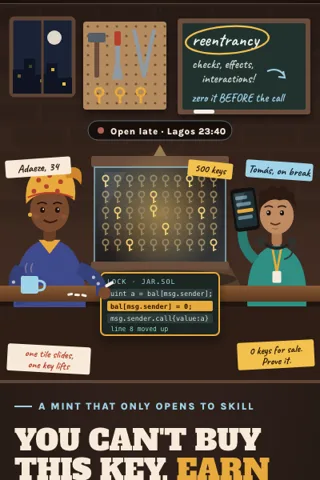 LIVE DEMO
Launch an NFT collection where each piece can only be minted by proving you can do the thing.
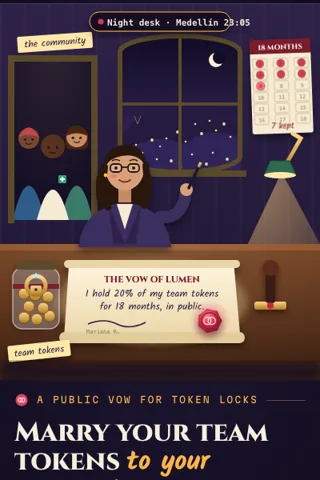 LIVE DEMO
Founders publicly vow their own token lockups and get a shareable trust score that grows with time kept.
 LIVE DEMO
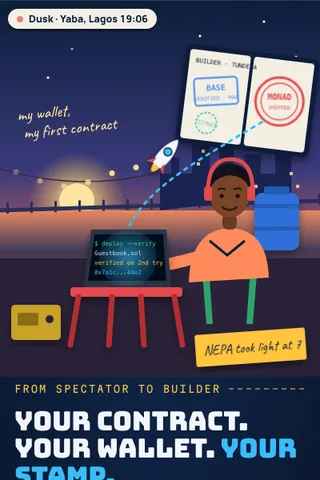
Your own verified contract live on a new chain in ten minutes, with a public builder page to prove it.
 LIVE DEMO
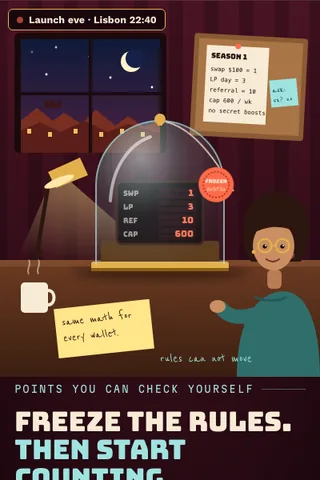
A points program where the formula, caps and conversion odds are public and frozen before day one.
 LIVE DEMO
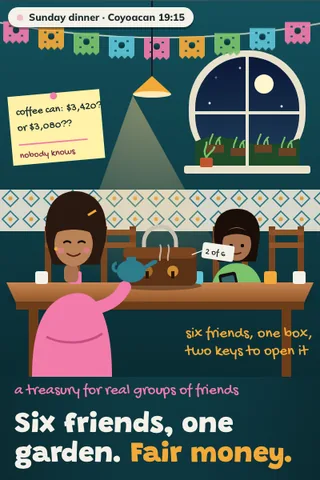
A DAO starter kit for small real groups: treasury, votes and roles in plain language.
 LIVE DEMO
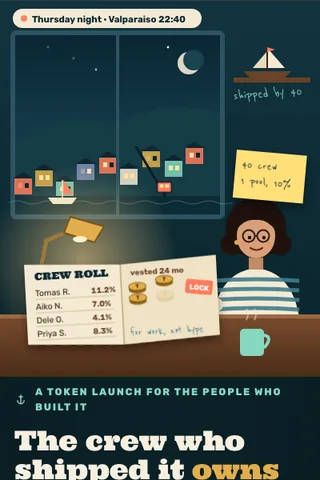
Launch a token that only your verified contributors can receive, weighted by work they actually shipped.
 LIVE DEMO
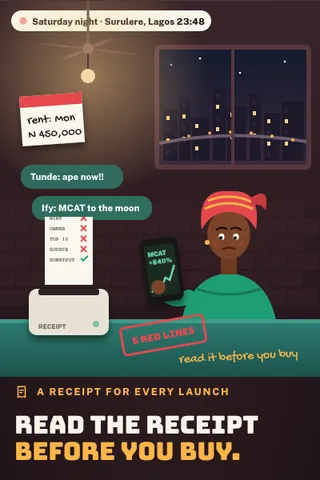
Every launch gets a printable safety receipt: locks, caps, owner keys, all checked live.