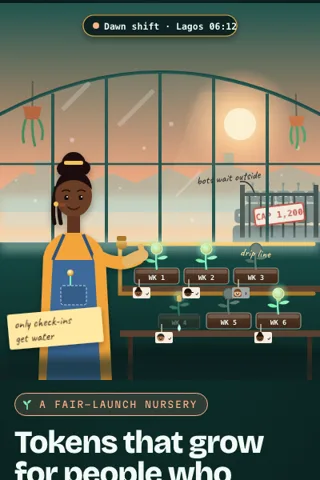
 LIVE DEMO
Slow Mint
A fair-launch token pad where supply unlocks only as real holders keep showing up, week after week.
Reserve · refundable deposit
$149Base · Solana +2
 Try it live
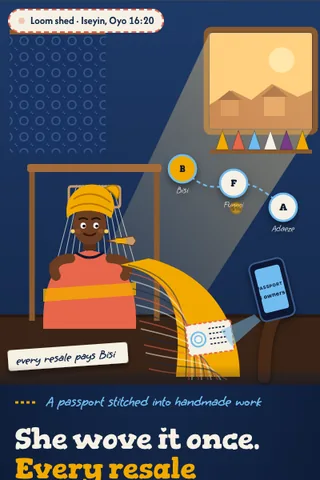
A digital passport for handmade goods that pays the maker a cut every time the item is resold.
Try it live, freeBisi weaves aso oke. Each piece ships with a passport object, and when a buyer resells it through Kiosk, five percent goes back to Bisi and the item's history grows.
Passport mint, Kiosk policy with royalty, item history page, QR tag print sheet.
Reshape it entirely: new features, your flows, your brand end to end, integrations you need. We scope it with you.
Kiosk royalties exist for digital NFTs; physical item passports with maker resale cuts were not found on Sui.
Kiosk royalty rules; Arianee and Aura for luxury passports on other chains.
Checked with web searches in October 2026. A search is not proof that nothing similar exists, and the market moves fast, so we recheck before every build.
Ecosystem program for shipped apps; check current terms.
The complete Maker Passport app: makers mint a Sui passport for each handmade piece, earn a royalty on every Kiosk resale, and buyers tap a woven tag to see who made it and catch copies.
Every buyer gets the same finished app. Basic branding and copy changes come through a quick form.
Your admin side: revenue, paywall editor, users, rules and the agent log.
Referral and growth mechanics, switched on when you are ready to grow.
Minting is free and the app takes a small fee on each Kiosk resale. Makers pay monthly for Studio tools, cooperatives pay for Guild, and NFC tags are sold at a margin.
Platform fee of 1% on Kiosk resales, adjustable 0 to 3%. NFC tags sold at $2.00 against a $1.40 cost. Mint gas of about $0.01 can be sponsored.
Prices are yours to set. Illustrative, not a promise of income.
A passport for handmade goods on Sui that pays the maker a cut every time the piece is resold.
Problem: Handmade pieces like aso oke, kente, rugs and ceramics gain value as they are resold, but the maker is paid once and disappears from the story. Second hand buyers cannot tell a genuine piece from a machine made copy.
Solution: Each piece gets a passport object on Sui tied to a woven NFC tag. Resales through a Kiosk apply the maker's royalty rule, and anyone can tap the tag to see the maker and every owner since.
Why now: Sui Kiosk transfer policies make royalties enforceable on chain, mint costs are around a cent, and woven NFC labels cost about a dollar.
Market: Independent makers and weaving cooperatives, plus the resale shops and buyers of handmade goods in Africa and the diaspora.
The ask: Pilot with one weaving cooperative in Iseyin and support from the Sui Foundation grants program.
Funding is never guaranteed. Check each program's rules.
Many hackathons require code written at the event. See the Regatta Boardfor each race's rule.
Custom work from $1,200: your own piece types and tag suppliers, a branded guild deployment, marketplace integrations, or extra languages. Scoped on a call.
Handmade goods like aso oke, kente, rugs and ceramics often gain value as they are resold, but the maker is paid once and then disappears from the story. Buyers on the second hand market also struggle to tell a genuine handmade piece from a machine made copy.
Sui's Kiosk already supports transfer policies with royalty rules, used today mostly for digital NFTs. Arianee and Aura run digital product passports for luxury brands on other chains. What we did not find is a simple passport for independent makers on Sui that ties a physical tag to a Kiosk royalty on resale. The new part is packaging, not primitives: woven tags, a maker friendly mint, and a public item history.
One passport object per piece (maker, piece type, first sale price, tag key fingerprint), Kiosk listings and sales, the royalty paid on each resale, ownership claims for off app sales, and gift transfers. Photos, buyer names and shipping details stay with the owners.
Makers should share in the second life of what they make, and every owner should know whose hands made it.
Tap to see its story Any buyer taps the tag and sees the maker, the town and every owner since.
Paid again, quietly Each Kiosk resale sends the maker a cut without them doing anything.
The Monday map A weekly map of where the maker's pieces now live, with notes from new owners.
Copies fail the tap A woven NFC tag answers a fresh challenge, so photocopied tags cannot pass.
Mint: The maker mints a passport object on Sui for each piece and pairs it with an NFC tag woven or sewn in.
Kiosk policy: The passport is placed in a Kiosk with a transfer policy that includes a royalty rule set by the maker.
Resale: Owners list in their Kiosk. Buyers tap the tag, the challenge is verified, and the sale pays the royalty to the maker.
History page: A public page shows the item's maker and owner history. Off app sales can be reclaimed with the previous owner's approval.
Passport keeper agent: Checks scans, drafts history entries, flags copies and runs the weekly map. It cannot move objects or change royalties.
Minting a passport on Sui costs around $0.01 in gas, and a Kiosk resale a similar amount. A woven NFC tag costs roughly $1 to $1.50 per piece, a printed QR tag about $0.05. Hosting the history pages is a few dollars a month. Estimates vary with network and supplier prices.
Every piece is a carrier. Each new owner taps the tag, sees the maker and can follow them, and each resale page links back to the maker's new work. Weaving towns like Iseyin have many makers who share suppliers, so a guild can adopt it together.
Off app sales: Royalties cannot be enforced on cash sales outside the Kiosk. The history shows a gap, and new owners can reclaim the passport with approval.
Fake tags: Printed QR tags can be copied, so they are view only. Only NFC tags with a challenge prove authenticity.
Royalty set too high: High cuts push owners off app. The setup shows the trade off before minting.
Gifts and inheritance: A zero price gift path avoids charging a royalty on gifts; repeated gifts to strangers are flagged.
Tag damage: If a tag is lost, the maker can attest a replacement linked to the same passport.
Costs and tools are estimates at the time of writing. General information only, not legal or financial advice.
Nine routes from one vessel. Tap a port to open its chart.
Maker Passport: A digital passport for handmade goods that pays the maker a cut every time the item is resold. Using someone else's version means their rules, their brand and their revenue. Owning Maker Passport means it is deployed under your wallet, carries your name, and every customer, partner and result builds your track record instead of theirs.
Maker Passport arrives deployed with a guide. Running it is settings and sharing links, not code. If you get stuck, we help you ship it.
Start with ten people you already know. The first move below takes under an hour and tells you fast whether people care.
Each step is sized in minutes. Most owners spend an hour a week, and the app does the repetitive part.
Nothing is guaranteed. The playbook gives you a clear path and honest numbers, and you decide how far to take it.
Charge the people who get the most value from Maker Passport: a monthly plan for groups or teams, plus setup fees for anyone who wants it done for them.
Illustrative stages, not a forecast. Results depend on you and the market; nothing here is guaranteed.
A starter chart. A fuller, app-specific playbook is being written.
LIVE DEMOA fair-launch token pad where supply unlocks only as real holders keep showing up, week after week.
 LIVE DEMO
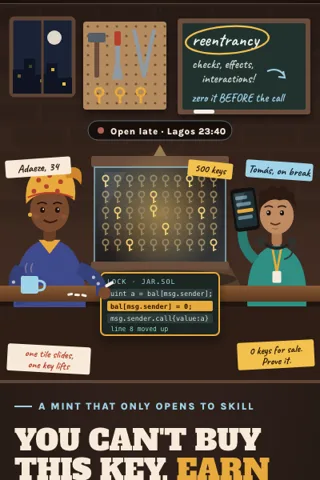
Launch an NFT collection where each piece can only be minted by proving you can do the thing.
 LIVE DEMO
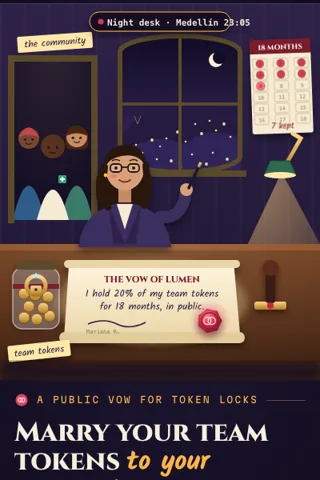
Founders publicly vow their own token lockups and get a shareable trust score that grows with time kept.
 LIVE DEMO
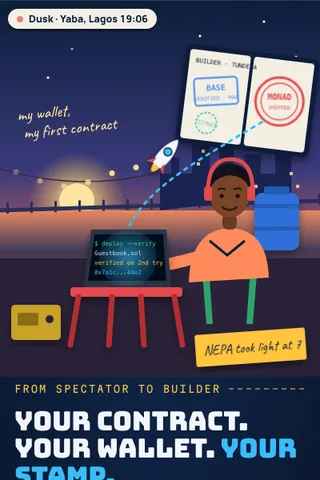
Your own verified contract live on a new chain in ten minutes, with a public builder page to prove it.
 LIVE DEMO
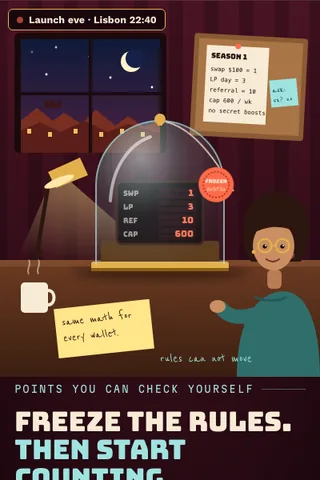
A points program where the formula, caps and conversion odds are public and frozen before day one.
 LIVE DEMO
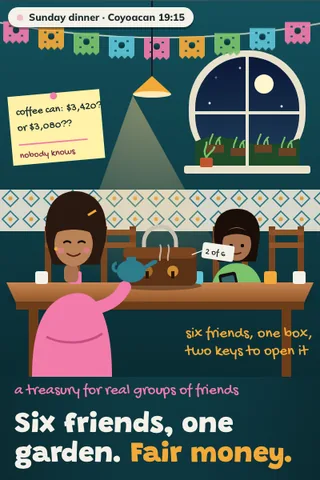
A DAO starter kit for small real groups: treasury, votes and roles in plain language.
 LIVE DEMO
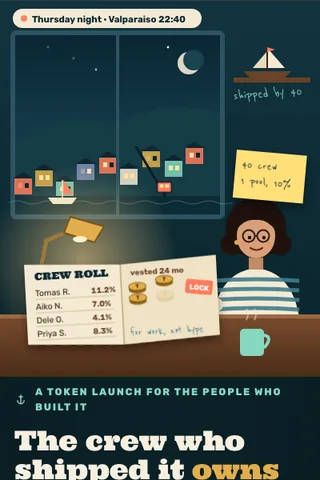
Launch a token that only your verified contributors can receive, weighted by work they actually shipped.
 LIVE DEMO
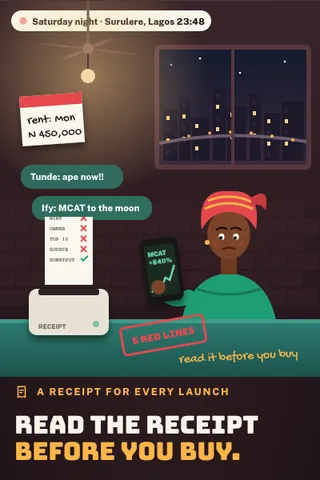
Every launch gets a printable safety receipt: locks, caps, owner keys, all checked live.