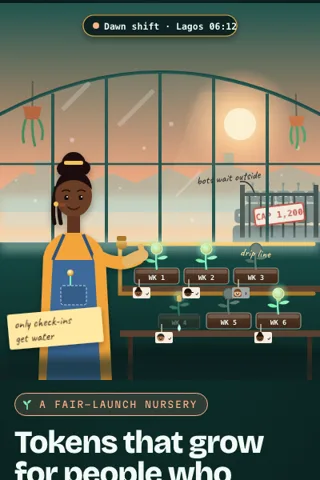
 LIVE DEMO
Slow Mint
A fair-launch token pad where supply unlocks only as real holders keep showing up, week after week.
Reserve · refundable deposit
$149Base · Solana +2
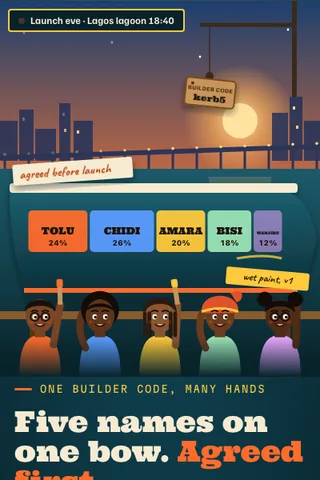 Try it live
Share one Base builder code across a team and publish who earned what share of the app's onchain credit.
Try it live, freeFive friends build a mini app together. Credit Split registers their builder code, reads the attributed activity, and shows a public split by contribution that they agreed up front, so nobody argues later about whose app it is.
Code registration guide, attribution reader, contributor split page, share card.
Reshape it entirely: new features, your flows, your brand end to end, integrations you need. We scope it with you.
Builder codes attribute to one code. A public, agreed contributor split of that attribution was not found.
base.dev builder codes dashboard; Drips and Splits for revenue sharing.
Checked with web searches in October 2026. A search is not proof that nothing similar exists, and the market moves fast, so we recheck before every build.
Ecosystem program for shipped apps; check current terms.
The complete Credit Split app: a crew shares one Base builder code through a team Safe, signs a versioned split of the credit before launch, and watches a weekly reader repaint the bow, with a paywall built in.
Every buyer gets the same finished app. Basic branding and copy changes come through a quick form.
Your admin side: revenue, paywall editor, users, rules and the agent log.
Referral and growth mechanics, switched on when you are ready to grow.
Crews agree and publish their first split for free. Teams pay a monthly Studio plan for weekly reads and change tools, and hackathon hosts pay per event, all in USDC.
Owner sponsors attestation gas, typically about one cent per version on Base.
Prices are yours to set. Illustrative, not a promise of income.
Share one Base builder code across a team and publish who earned what share of the app's onchain credit, agreed before launch.
Problem: A Base builder code attributes onchain activity to one code with one owner. Whoever registers it looks like the builder, and months later nobody remembers who agreed to what.
Solution: Credit Split puts the code in a team Safe, has every member sign a versioned split, and repaints a public bow each week from tagged transactions.
Why now: Builder codes and data suffix attribution are new on Base, and small crews are shipping mini apps faster than they can agree on credit.
Market: Small teams and hackathon crews shipping on Base, plus hosts and studios that run many teams.
The ask: Launch with two hackathon hosts and 50 crews, then apply to Base Builder Grants with the public bow board.
Funding is never guaranteed. Check each program's rules.
Many hackathons require code written at the event. See the Regatta Boardfor each race's rule.
Custom work covers your own branding, extra chains, a different split model, payout contracts or integrations with your event platform, scoped on a call from $700.
Small teams ship apps on Base together, but a Base builder code attributes onchain activity to one code with one owner. Whoever registers it looks like the builder, and months later nobody remembers who agreed to what. Friends fall out over credit far more often than over code.
The pieces exist. base.dev lets builders register a builder code and see the activity attributed to it, and revenue sharing tools like Splits and Drips already route money to many addresses by fixed percentages. Research did not find a public, signed contributor split of builder code attribution itself. What is new is narrow: a shared team owner for the code, a split everyone signs before launch, versioned changes with a signature threshold, and a weekly public read of attributed activity painted onto that split. It is a coordination layer on existing tools, not a new protocol.
Transactions on Base that carry the team's builder code in their data suffix, read from blocks and cross checked against the base.dev dashboard; the team Safe address; the split attestation and its versions; member signatures. Chats, reasons and task notes stay with the team and are never published.
Let every small crew that builds something together keep a public, agreed record of whose work it was, from the first night.
The bow Every name painted as wide as its share. It is the picture people screenshot when the app launches.
Agree once, kindly The split is signed on launch eve, while everyone is still friends, and changes need a real threshold.
Monday paint A weekly digest repaints the bow with fresh numbers and warns when new screens forget the builder code suffix.
Team owner: The builder code is registered on base.dev to a Safe owned by the team, with a threshold such as 3 of 5, so no single member can repoint it.
Split attestation: The agreed shares, cliff and change threshold are written as an EAS attestation on Base, signed by every member with EIP-712 signatures. New versions reference the previous one.
Attribution reader: An indexer reads Base blocks for transactions whose data suffix carries the team's code (ERC-8021 style), counts one per transaction hash, and reconciles weekly against the base.dev dashboard.
Optional payout split: If the team ever receives rewards or revenue at the Safe, a Splits style contract can distribute by the current version. Nothing is promised and the app works without it.
Suffix check: After each deploy, the reader samples recent transactions and alerts the team if they arrive without the builder code suffix.
Digest and share card: A weekly email or Farcaster mini app notification with the repainted bow, built by a small model such as Claude Haiku from the counts only.
Per team: one Safe deployment and one attestation per version on Base, typically well under one US cent each at recent Base gas levels (check current fees). The weekly read uses an RPC or indexer plan; at hobby scale this fits a free or roughly 50 dollar a month tier. A digest written by a small model costs a fraction of a cent per team per week. Example: 200 teams cost roughly 60 to 80 dollars a month to run.
Each launch posts a bow image with every member's name, and each member shares it. Hackathon hosts onboard dozens of teams at once, and teams that split once bring the habit to their next project.
Rewards are not guaranteed: Builder code attribution is credit, not income. Any rewards program can change or end, and the app must never imply payouts.
Bad suffix, no credit: If a screen sends transactions without the suffix, activity is lost. The reader checks after deploys, but missed weeks cannot be recovered.
Disputes about fairness: The app records agreements; it does not judge contribution. Teams can still disagree, and the threshold may block changes.
Key loss: If too many members lose keys, the Safe cannot sign. Encourage passkeys and a recovery member.
Legal meaning: A public split may look like an ownership or employment agreement in some places. Present it as a credit record and suggest local advice if money flows.
Costs and tools are estimates at the time of writing. General information only, not legal or financial advice.
Nine routes from one vessel. Tap a port to open its chart.
Credit Split: Share one Base builder code across a team and publish who earned what share of the app's onchain credit. Using someone else's version means their rules, their brand and their revenue. Owning Credit Split means it is deployed under your wallet, carries your name, and every customer, partner and result builds your track record instead of theirs.
Credit Split arrives deployed with a guide. Running it is settings and sharing links, not code. If you get stuck, we help you ship it.
Start with ten people you already know. The first move below takes under an hour and tells you fast whether people care.
Each step is sized in minutes. Most owners spend an hour a week, and the app does the repetitive part.
Nothing is guaranteed. The playbook gives you a clear path and honest numbers, and you decide how far to take it.
Charge the people who get the most value from Credit Split: a monthly plan for groups or teams, plus setup fees for anyone who wants it done for them.
Illustrative stages, not a forecast. Results depend on you and the market; nothing here is guaranteed.
A starter chart. A fuller, app-specific playbook is being written.
LIVE DEMOA fair-launch token pad where supply unlocks only as real holders keep showing up, week after week.
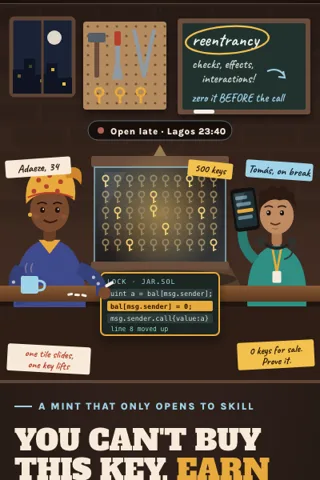 LIVE DEMO
Launch an NFT collection where each piece can only be minted by proving you can do the thing.
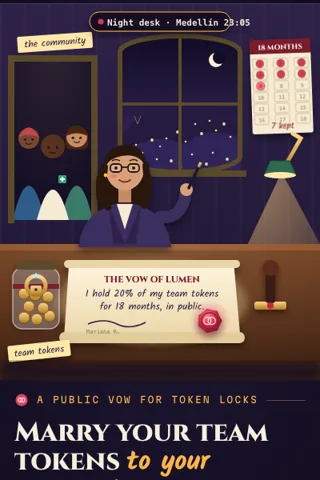 LIVE DEMO
Founders publicly vow their own token lockups and get a shareable trust score that grows with time kept.
 LIVE DEMO
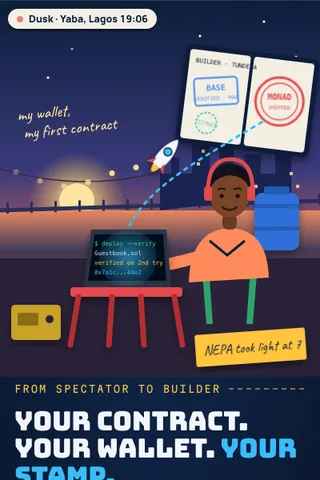
Your own verified contract live on a new chain in ten minutes, with a public builder page to prove it.
 LIVE DEMO
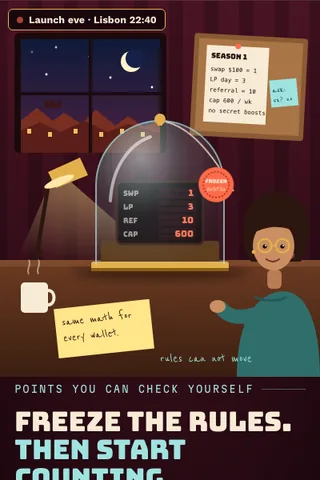
A points program where the formula, caps and conversion odds are public and frozen before day one.
 LIVE DEMO
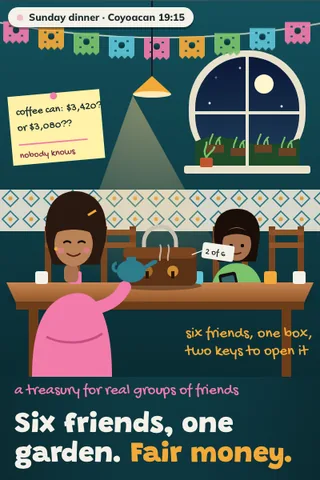
A DAO starter kit for small real groups: treasury, votes and roles in plain language.
 LIVE DEMO
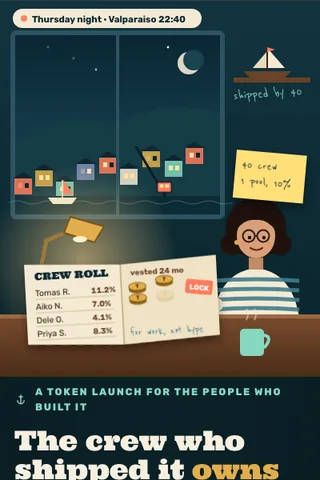
Launch a token that only your verified contributors can receive, weighted by work they actually shipped.
 LIVE DEMO
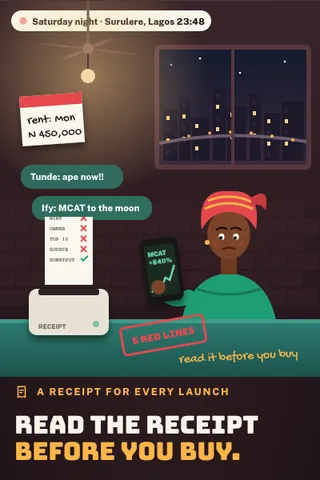
Every launch gets a printable safety receipt: locks, caps, owner keys, all checked live.