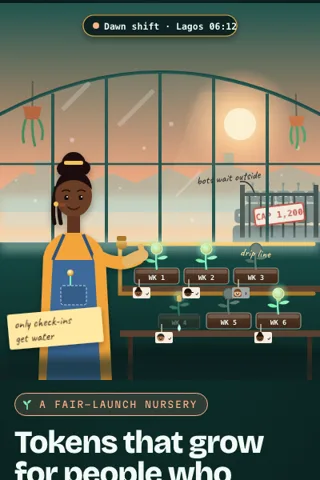
 LIVE DEMO
Slow Mint
A fair-launch token pad where supply unlocks only as real holders keep showing up, week after week.
Reserve · refundable deposit
$149Base · Solana +2
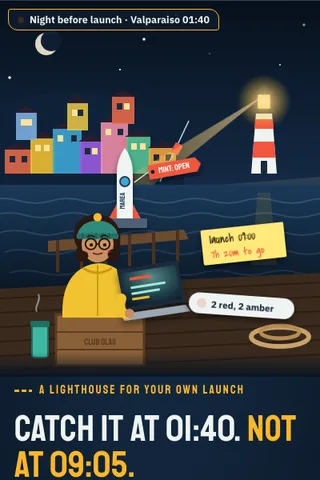 Try it live
An AI agent that watches your own launch and warns you of misconfigurations before you ship.
Try it live, freeBefore going live, a founder runs the sentinel; it flags an unlocked mint authority.
Agent checklist, report, fix tips.
Reshape it entirely: new features, your flows, your brand end to end, integrations you need. We scope it with you.
A pre-ship launch configuration agent was not found, though it extends existing scanning and AI audit tools.
Token scanners like GoPlus and Birdeye check deployed tokens and AI audit tools exist, but no founder-side agent checking launch configuration before shipping was found.
Checked with web searches in October 2026. A search is not proof that nothing similar exists, and the market moves fast, so we recheck before every build.
Varies per event.
The complete Launch Sentinel app: founders sweep a token launch on a fork before it goes live, see every red flag in plain words, and sign a one transaction fix for each, with a paywall and helper agent built in.
Every buyer gets the same finished app. Basic branding and copy changes come through a quick form.
Your admin side: revenue, paywall editor, users, rules and the agent log.
Referral and growth mechanics, switched on when you are ready to grow.
Free first sweep each month, then subscriptions for founders and studios, plus launchpad integrations at a monthly fee. All paid in USDC.
Launchpads pay $500 a month to require a sweep before listing. Single checks can be sold at $20 each.
Prices are yours to set. Illustrative, not a promise of income.
The pre-flight check small token launches never get, run on a fork hours before scanners see it.
Problem: Small founders launch with open mints, short locks and heavy team wallets by accident, and public scanners flag them red minutes after launch.
Solution: An agent that simulates the deploy on a fork, reads the real resulting state, explains each flag in plain words and builds a fix the founder signs.
Why now: Launchpads on Base, Solana and Monad ship thousands of tokens a week, and holders now check scanners before they buy.
Market: Every small token founder, studio and launchpad, from a $30 founder plan to $500 a month launchpad integrations.
The ask: Pilot with three launchpads that require a sweep before listing.
Funding is never guaranteed. Check each program's rules.
Many hackathons require code written at the event. See the Regatta Boardfor each race's rule.
Custom checks, new chains, launchpad integrations and branded reports, scoped on a call from $1,000.
Small teams launch tokens from templates late at night. The most common public red flags (a mint left open, liquidity unlocked, one wallet holding too much, an announcement linking the wrong address) are usually config mistakes, and scanners publish them within minutes of launch, before the founder can explain.
Token scanners such as GoPlus and Birdeye's security checks already flag these issues on deployed tokens, and AI smart contract audit tools exist. Research did not find a founder-side agent that checks the launch configuration before shipping, by simulating the deploy and reading the resulting state. Research verdict: rare, medium novelty; it extends existing scanning and audit tools rather than replacing them, and it is not an audit.
The founder's deploy script and launch plan, a fork simulation of the deploy, the resulting onchain state (mint authority or minter roles, liquidity lock contract and unlock time, holder distribution, metadata mutability), the draft announcement links, and the founder's chosen strictness. Reports stay private unless the founder publishes a hash.
Every small launch gets the pre-flight check that big teams pay auditors for, in plain words, before anyone else sees it.
See it first The same flags public scanners will show, seven hours early, with the one transaction that fixes each.
It never signs The sentinel proposes fixes. The founder reviews and signs every one in their own wallet.
Monday drift watch After launch, a weekly check for new admin keys, changed roles or ending locks keeps a clean-weeks streak going.
Connect the launch: Founder pastes or links the deploy script, token address on testnet, and draft announcement. Wallet login via Privy; read access only.
Fork simulation: Run the deploy on a local fork (Anvil or Foundry for Base and Monad, a local validator or simulateTransaction for Solana), then read the real resulting state instead of trusting config files.
Check library: Deterministic checks for mint authority or minter roles, liquidity lock contract and unlock time, holder concentration, metadata mutability, proxy admin and announcement address match. Results are cross-checked against what public scanners such as GoPlus report on similar tokens.
Agent explanation: A mid tier model (for example Claude Sonnet via OpenRouter) turns check results into plain explanations and proposes fix transactions; a cheaper tier (for example Claude Haiku) handles routing. The model never decides pass or fail alone; deterministic checks do.
Fix transactions: Each fix is an unsigned transaction the founder reviews and signs with their own wallet. The app holds no keys.
Optional attestation: An EAS attestation on Base with the report hash and timestamp, so holders can verify a pre-flight check ran before launch.
Drift watch: A weekly indexer job compares current roles, admins and lock dates to the launch report and sends a digest by email or Telegram.
Per sweep: fork simulation compute is a few cents; model cost for a few thousand tokens of explanation on a mid tier is roughly 2 to 5 cents; an optional EAS attestation on Base is usually well under 5 cents in gas. Weekly drift checks cost under 1 cent each. Example month with 300 sweeps and 200 tokens on drift watch: about $25 model, $15 compute, $5 gas, $40 hosting and RPC, about $85 total. Figures are estimates and vary with model prices and gas.
Founders who pass share the public pre-flight report and attestation in their launch post, which shows other founders the tool exists. Launchpads that require a sweep before listing bring repeat volume. The Monday digest keeps founders returning after launch.
Not an audit: It checks configuration, not contract logic. The app must say so on every report and never call a token safe.
False confidence: A clean report can be shown off by bad actors. Reports describe setup at a point in time, and drift watch shows changes after.
False alarms and misses: Unknown lockers or custom contracts can confuse checks. Every result names exactly what it read and how, and uncertain checks say unknown rather than pass.
Private code: Deploy scripts may contain secrets. The app strips keys, never stores private keys, and deletes uploaded scripts after the sweep unless the founder opts in.
Chain differences: Solana authorities, EVM roles and Monad specifics differ. Checks are per chain and labelled, and unsupported patterns are reported as not checked.
Costs and tools are estimates at the time of writing. General information only, not legal or financial advice.
Nine routes from one vessel. Tap a port to open its chart.
Launch Sentinel is an AI agent that checks a launch for misconfigurations, like an unlocked mint authority, before it goes live. Owning it means launchpads and founders trust your sentinel at the riskiest moment, and every clean launch report carries your name. It is a security brand you can build without pretending to be an auditor.
You don't need to. The app ships deployed to your wallet with a setup guide. Your work is running checks on real launches and explaining the flags clearly.
No. It is a preflight checklist assisted by AI and it can miss things. Say so on every report and point serious teams to a full audit.
Be clear about scope and keep a public list of what it checks. You never control a launch, the founder decides.
Yes. The contracts deploy from your wallet, and the brand, domain and customer list are yours. DEPLOYR takes no cut of what you charge after purchase.
Records live onchain on contracts deployed from your wallet, so a page outage does not erase anything. Setup issues are covered by the get-it-shipped promise.
Founders pay per check, and launchpads and studios pay monthly to run the sentinel on every launch they host. Reaching $1M a year is a target to plan toward, not a promise. Most revenue comes from launchpads, not single founders.
Illustrative stages, not a forecast. Results depend on you and the market; nothing here is guaranteed.
LIVE DEMOA fair-launch token pad where supply unlocks only as real holders keep showing up, week after week.
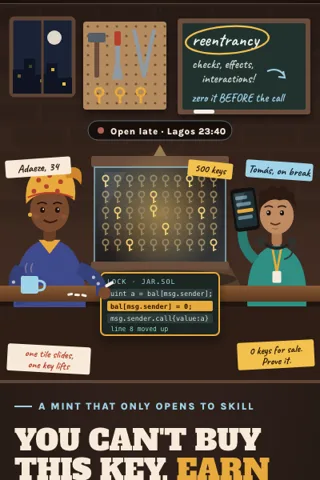 LIVE DEMO
Launch an NFT collection where each piece can only be minted by proving you can do the thing.
 LIVE DEMO
Founders publicly vow their own token lockups and get a shareable trust score that grows with time kept.
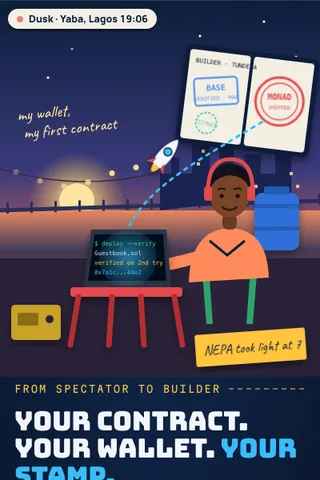 LIVE DEMO
Your own verified contract live on a new chain in ten minutes, with a public builder page to prove it.
 LIVE DEMO
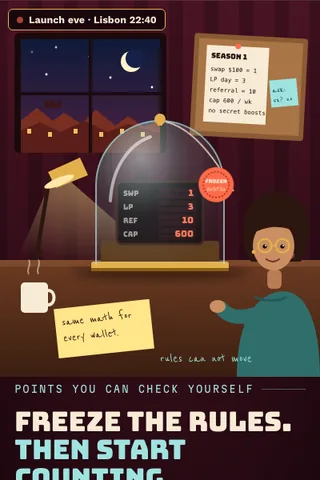
A points program where the formula, caps and conversion odds are public and frozen before day one.
 LIVE DEMO
A DAO starter kit for small real groups: treasury, votes and roles in plain language.
 LIVE DEMO
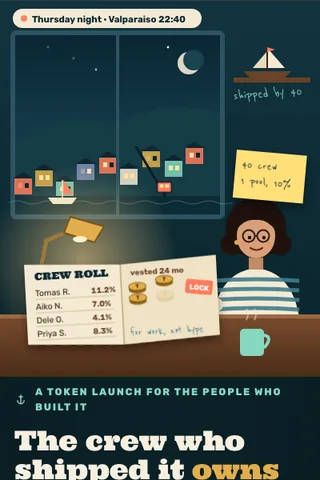
Launch a token that only your verified contributors can receive, weighted by work they actually shipped.
 LIVE DEMO
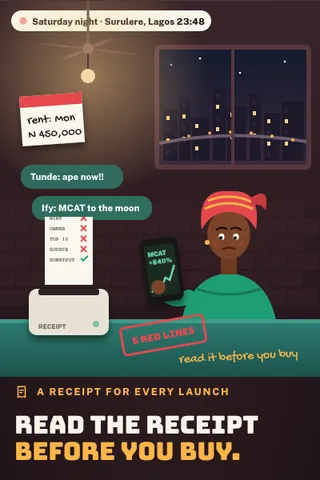
Every launch gets a printable safety receipt: locks, caps, owner keys, all checked live.