 LIVE DEMO
Sealed Take
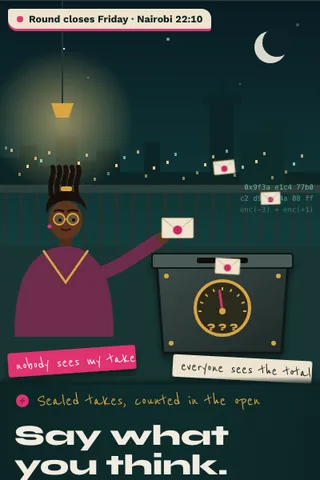
Everyone stakes a conviction, encrypted. The chain tallies it without ever seeing a single take. FHE on Base.
Ready now
$20Fhenix
 Try it live
A coordination game: commit to a group action that only happens if enough people commit too.
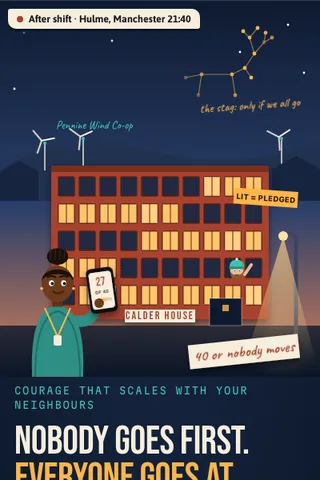
Try it live, freeFifty renters want to switch to a greener energy co-op but nobody moves first. Stag Hunt collects conditional commitments that trigger only at 40 signups, and when the threshold hits everyone is notified to act together.
Pledge page, threshold contract, optional deposit, trigger notifications, success archive.
Reshape it entirely: new features, your flows, your brand end to end, integrations you need. We scope it with you.
Threshold commitment is a known mechanism; a consumer app for non-financial group actions is rare.
Assurance contracts exist for crowdfunding (BUND on Bitcoin, BCH covenants) and the pact repo implements mutual assurance contracts, mostly as dev projects.
Checked with web searches in October 2026. A search is not proof that nothing similar exists, and the market moves fast, so we recheck before every build.
Coordination public good if open source
The complete Only If You Do app: neighbours pledge to a group action that only happens if enough of them pledge too, with a live block count, a same minute trigger, rally tools, receipts and a paywall built in.
Every buyer gets the same finished app. Basic branding and copy changes come through a quick form.
Your admin side: revenue, paywall editor, users, rules and the agent log.
Referral and growth mechanics, switched on when you are ready to grow.
Neighbours always pledge free. Organisers pay a small monthly plan for the tools that bring a block together, and unions, co-ops and councils pay for many buildings. Deposits sit in the contract and are never revenue.
No fee on pledges or deposits. Gas (well under 1 cent per pledge on Base) can be sponsored by the owner; SMS is passed through at cost.
Prices are yours to set. Illustrative, not a promise of income.
Conditional pledges for group action: commit to something that only happens if enough neighbours commit too.
Problem: Good group moves die because nobody wants to go first: switching a block to a community energy co-op, reporting damp together, joining a local scheme. Each person would act if enough others did, but there is no safe way to say so.
Solution: A pledge page per hunt backed by a small threshold contract. One pledge per household, an optional refundable deposit, and a single trigger that tells every pledger at the same minute. Names and flat numbers stay offchain.
Why now: Embedded email wallets, near free transactions on Base and small models that draft multilingual nudges make an assurance contract usable by tenants who have never touched crypto.
Market: Tenant unions, housing associations, energy co-ops, parent groups and councils who need many people to act together, starting with renters in dense housing.
The ask: Pilot partners: one tenants' union and one community energy co-op, and grant funding from public goods rounds such as Gitcoin.
Funding is never guaranteed. Check each program's rules.
Many hackathons require code written at the event. See the Regatta Boardfor each race's rule.
Custom work from $700: your own hunt types and pledge statements, integrations with a co-op or union CRM, extra languages, or a council branded deployment. Scoped on a call.
Lots of good group moves die because nobody wants to go first: switching a block to a community energy co-op, reporting damp together, joining a local scheme. Each person would act if enough others did, but there is no safe way to say so.
Threshold or assurance contracts are a known mechanism. Crowdfunding uses them, BUND on Bitcoin and BCH covenant designs implement them, and the open source mutual-assurance-contract repo shows the pattern on Ethereum, mostly as developer projects. What is less common is a plain consumer app for non-financial group actions, with one pledge per household, an optional refundable deposit and a single shared trigger moment. Research verdict: rare, medium novelty; the mechanism itself is not new.
The pledge statement, threshold and deadline; one pledge per household (checked against an organiser's list, never published); optional deposit escrow; the trigger or expiry event; per-person confirmations of acting. Names and flat numbers stay offchain with the organiser.
Make it safe to be brave together, so groups do the things every member already wants.
No risk in going first Your pledge only counts if the group shows up. If it falls short, nothing happens and any deposit comes back.
Watch the block light up Every pledge lights a window. Seeing neighbours commit is what tips the rest.
Same minute, same message When the number is hit, everyone is told at once, with the exact steps. Momentum does the rest.
Pledge page and identity: A shareable page per hunt. Privy email or phone login creates an embedded wallet on Base; no seed phrase. One pledge per household, checked against the organiser's list.
Threshold contract: A small assurance contract on Base (also deployable to Optimism or Polygon) records pledge counts, the threshold and the deadline, and emits a Triggered or Expired event.
Optional deposit: Refundable USDC deposits held by the contract: returned to all on expiry, returned to each person when they confirm they acted, kept only if they pledged, it triggered and they never acted.
Nudge agent: A cheap model tier (for example Claude Haiku or a comparable OpenRouter model) drafts reminders, translations and door notes, and spots duplicate pledges. It cannot pledge or move funds.
Notifications: On trigger, one broadcast via email, SMS (for example Twilio) and web push with the exact steps, sent at the same minute to everyone who pledged.
Success archive: Each finished hunt is saved to the block page with its outcome and receipt hashes, so new residents see what the group has done.
Per hunt of 50 households on Base: pledge and trigger transactions cost well under 1 cent each, so under $0.50 total, usually sponsored by the owner via a paymaster. Nudge drafts with a small model are a few cents. SMS is about $0.01 to $0.08 per message depending on country, so one trigger to 50 people is up to about $4. A tenants' union running 20 hunts a month would spend roughly $40 to $90.
Every successful hunt produces a share card and an archive page. Partner organisations (energy co-ops, tenant unions) bring hunts to new buildings, and each pledger sees the next hunt in their block.
Deposits and regulation: Holding money can raise consumer and payments rules. Keep deposits optional, small and refundable, and get advice before charging fees on them.
Fake or duplicate pledges: One pledge per household against an organiser list, with deduplication. A threshold reached by fakes is worse than none.
Privacy: Who lives where and who pledged stays offchain. Only counts and hashes are public.
Pressure: Social pressure can tip into coercion. No public names by default, and anyone can withdraw before the deadline.
Trigger without follow through: Reaching the number does not mean people act. Track confirmations and make the action itself as short as possible.
Costs and tools are estimates at the time of writing. General information only, not legal or financial advice.
Nine routes from one vessel. Tap a port to open its chart.
Only If You Do turns "I will if you will" into a contract: people commit to a group action that only fires when enough of them commit too. When you own it, every pledge page carries your name, the threshold contract is deployed from your wallet, and every campaign that tips over its threshold becomes part of your public onchain record. Run on someone else's tool and the communities you rally belong to their brand; run on yours and the organizers come back to you.
You do not need to. The pledge page, threshold contract, optional deposit and trigger notifications ship ready. Your job is choosing the first group action and the number that makes it real, such as 40 renters or 25 parents. If you can write a WhatsApp message, you can run a campaign.
Then nobody is exposed, which is the whole point of the mechanism. Deposits return and the archive shows an honest miss. Start with a small, winnable threshold (12 people for a shared bulk order) so your first campaign succeeds, then raise the stakes.
Yes. The contract deploys from a wallet you control, the domain and branding are yours, and the success archive lives at your address. DEPLOYR does not hold your keys or your users' deposits.
Deposits are optional, and many campaigns work with no money at all, just a signed commitment. If you do take refundable deposits for purchases or fundraising, rules differ by country, so check a local lawyer or your regulator's guidance before taking money for others. Start with no-deposit campaigns while you learn.
Some will. That is why the optional deposit exists: a small refundable stake, returned when people act, filters out casual clicks. Even without it, public commitments at a threshold move far more people than a vague group chat poll.
You earn as the coordination desk for groups that need to move together: a flat fee per hosted campaign for organizers (tenant unions, school parent groups, buying clubs, climate co-ops), a monthly plan for organizations that run campaigns all year, and an optional small percentage on successful group purchases where deposits convert into an order. Revenue comes from organizers, never from the people pledging.
Illustrative stages, not a forecast. Results depend on you and the market; nothing here is guaranteed.
LIVE DEMOEveryone stakes a conviction, encrypted. The chain tallies it without ever seeing a single take. FHE on Base.
 LIVE DEMO
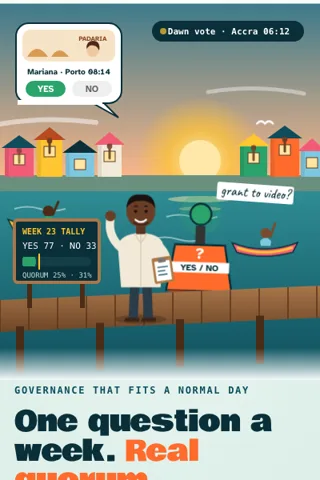
Governance by text-sized questions: one decision a week, answered in ten seconds, with real quorum.
 LIVE DEMO
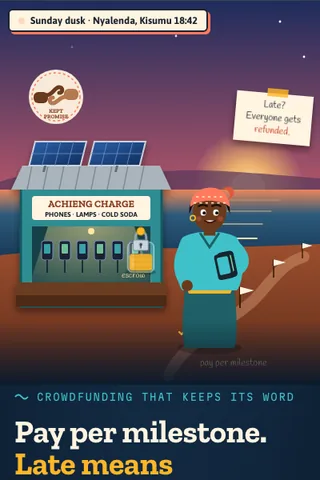
Crowdfunding where backers get refunded by contract if the goal or the milestones are missed.
 LIVE DEMO
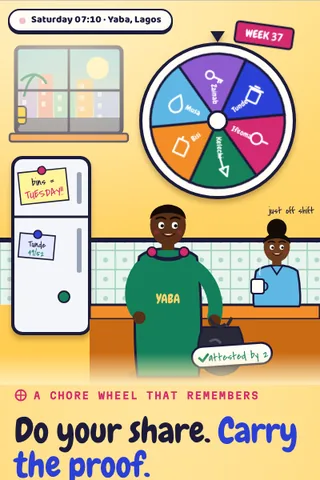
A shared house or club tracks who did the work, and the record becomes everyone's portable reliability score.
 LIVE DEMO
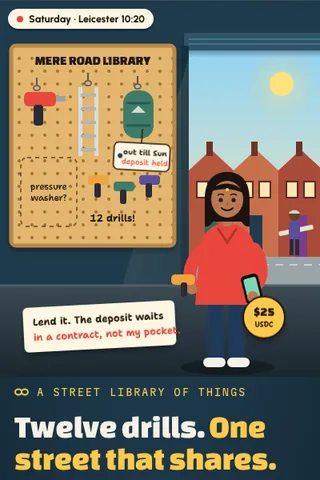
Lend the ladder, the drill, the tent: a street library of things with deposits held by contract.
 LIVE DEMO
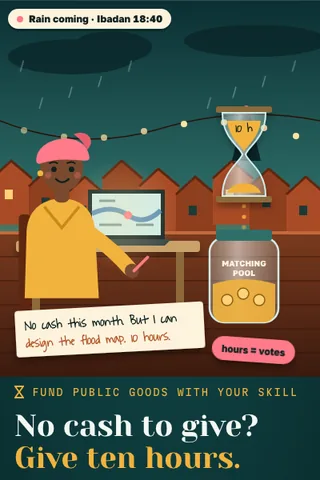
Fund a public good with hours of your skill, not just money, and get matched like a donation.
 LIVE DEMO
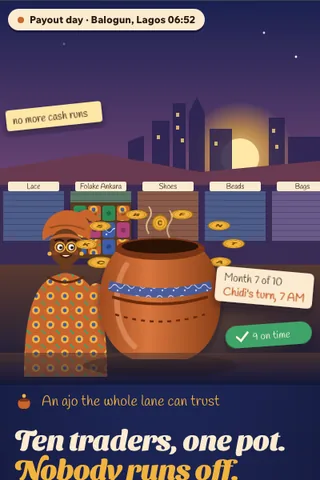
A rotating savings circle (ajo, susu, chama) with payouts enforced by contract and trust scores for members.
 LIVE DEMO
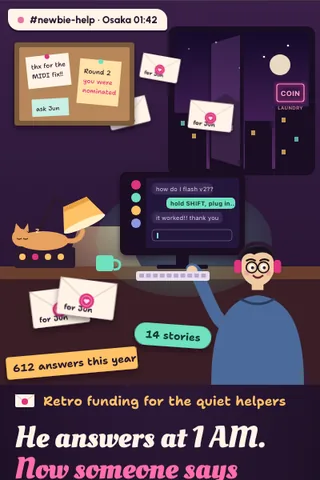
Retro funding for the quiet helpers: the community nominates who mattered, a pot pays them.