 LIVE DEMO
Sealed Take
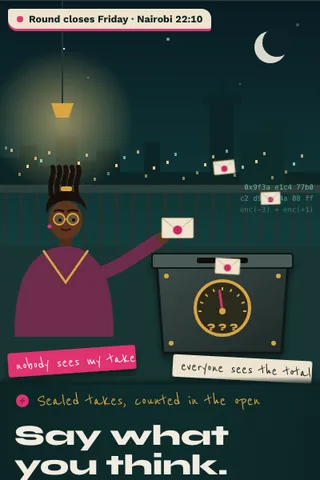
Everyone stakes a conviction, encrypted. The chain tallies it without ever seeing a single take. FHE on Base.
Ready now
$20Fhenix
 Try it live
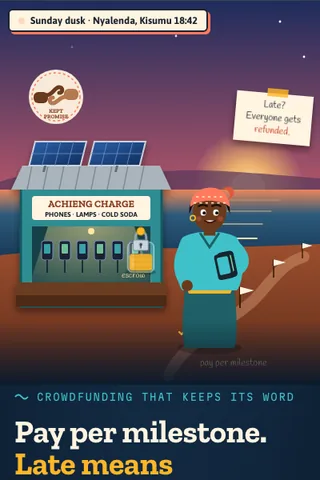
Crowdfunding where backers get refunded by contract if the goal or the milestones are missed.
Try it live, freeAma wants to raise $8k for a neighbourhood solar kiosk but her neighbours were burned by a GoFundMe last year. Kept Promise locks pledges in escrow and releases them per milestone, with proof photos and a backer vote, and any missed deadline refunds everyone automatically.
Campaign page, USDC escrow contract, up to 5 milestones, backer approval vote, automatic refund on deadline miss, creator dashboard.
Reshape it entirely: new features, your flows, your brand end to end, integrations you need. We scope it with you.
Milestone refund crowdfunding exists; this would be a cleaner EVM implementation rather than a new mechanic.
StellarFund runs milestone escrow with automatic refunds on Stellar mainnet, and Boundless, CrowdMantle and OpenPledge implement milestone-gated crowdfunding with refunds.
Checked with web searches in October 2026. A search is not proof that nothing similar exists, and the market moves fast, so we recheck before every build.
Retroactive grant for shipped apps on Base; existing projects OK
Fits public goods rounds if open-sourced; existing OSS generally required
USDC escrow use case; eligibility unknown
The complete Kept Promise app: an organiser turns a community project into a USDC escrow with milestones, neighbours vote on each proof before money moves, and a missed deadline refunds everyone by contract, with a paywall and witness agent built in.
Every buyer gets the same finished app. Basic branding and copy changes come through a quick form.
Your admin side: revenue, paywall editor, users, rules and the agent log.
Referral and growth mechanics, switched on when you are ready to grow.
Escrow is free for backers; organisers and foundations pay monthly in USDC, plus a small fee on released money only.
A 2% fee on released money, never on refunds; under $1 of gas and model cost per campaign.
Prices are yours to set. Illustrative, not a promise of income.
Turn an organiser's word into rules their community can check, one milestone at a time.
Problem: Community projects stall on trust: backers fear the money vanishes and refunds mean chasing people.
Solution: USDC escrow released per milestone after proof and a backer vote, with refunds by contract.
Why now: Stablecoins and cheap L2 transactions make small escrows practical for any street.
Market: Local organisers, community groups and the foundations that fund them.
The ask: Partner with two community foundations to run their next cohort of projects.
Funding is never guaranteed. Check each program's rules.
Many hackathons require code written at the event. See the Regatta Boardfor each race's rule.
Custom milestones, mobile money on-ramps, foundation dashboards and branded pages, scoped on a call from $1,000.
Small community projects die on trust, not on money. Neighbours who gave to a fundraiser that vanished will not give again, and the honest organiser next door pays for it. People need a way to back a local project where the money cannot leave before the work is real.
This mechanic is not new. StellarFund runs milestone escrow with automatic refunds on Stellar mainnet, and Boundless, CrowdMantle and OpenPledge implement milestone-gated crowdfunding with refunds. Research verdict: exists, low novelty. What this app adds is a cleaner EVM version on Base, Arbitrum or Polygon aimed at very small neighbourhood campaigns: code-word proof photos that survive chat apps, nearby backers as site visitors, an AI checker that advises voters but holds no key, and a grace period the organiser chooses up front.
Campaign rules (goal, funding window, milestones with deadlines and shares, vote threshold, grace days), pledges and refunds in USDC, proof fingerprints, vote tallies and release transactions. Proof photos, videos and chat stay in private storage; only their hashes go onchain.
Turn an organiser's word into rules their community can check, so trust is earned one milestone at a time and nobody has to chase a refund.
Late means refunded Backers do not need to trust the organiser or the app. If a deadline passes, the contract returns the unspent money pro rata on its own.
See it, then pay it Each release follows a fresh proof photo with a code word and a short vote. Backers watch the project move instead of hoping.
Friday photo One photo and one small vote a week keeps backers close without spamming them, and it gives the organiser a public track record.
Wallets and on-ramp: Privy embedded wallets on Base so backers sign in with a phone number or email. Card or mobile money on-ramp to USDC through a licensed provider where available; the app never holds fiat.
Escrow contract: One audited Solidity escrow per campaign (factory pattern). Rules are immutable after the first pledge: goal, funding deadline, milestones with share and deadline, vote threshold, grace days. Funds release only on a passed vote; anyone can call refund() after a missed deadline.
Votes: Backer votes weighted one wallet one vote or by pledge, set at creation. Votes are signed offchain (EIP-712) and the tally is submitted with the signatures, so voting costs backers no gas.
Proof and attestations: Organiser uploads photo or video to private storage. The app issues a one-time code word an hour before. A proof hash and the vote result are attested with EAS so the record outlives the app.
Witness checker: A small vision model (for example Gemini Flash or Claude Haiku tier via OpenRouter) checks the code word, reverse-image similarity and receipts, and writes a plain summary for voters. It has no signing key and cannot move funds.
Indexer and notifications: A lightweight indexer (Ponder or a Convex cron reading Base logs) drives the campaign page, Friday digests over WhatsApp Business or email, and deadline reminders.
Per milestone: one Base release or refund transaction, usually well under 1 cent in gas at typical Base fees, plus a vision model check of a few images at roughly 0.1 to 1 cent. Per campaign of 4 milestones and about 200 backers: under $1 in gas and model costs, plus on-ramp fees paid by backers (often 1 to 3 percent depending on provider). A month with 20 small campaigns: about $20 compute and gas, $25 hosting and indexing, $10 messaging.
Every share card says how many neighbours backed a project and that the money only moved after proof. Backers who got a clean refund or watched a project finish become the next campaign's first pledgers, and organisers point to their milestone history when they raise again.
Regulation: Crowdfunding and holding funds for others are regulated in many countries. Start with donation-style campaigns, no equity or returns, use a licensed on-ramp, and get local legal advice before handling large sums.
Fake proof: Photos can be staged. Code words, nearby backer visits and vote windows reduce this but do not remove it. The vote, not the AI, decides.
Honest delays: Ports, customs and weather cause real delays. A grace period and a delay vote help, but a strict setting can refund a project that would have finished.
Vote capture: An organiser could recruit friendly wallets. Use one wallet per verified phone number and show voter counts by distance from the project.
Contract risk: Escrow bugs lose real money. Keep the contract small, audited and immutable, with no admin key that can redirect funds.
Privacy: Proof photos may show neighbours and homes. Keep them private to backers, blur faces by default and never put media onchain.
Costs and tools are estimates at the time of writing. General information only, not legal or financial advice.
Nine routes from one vessel. Tap a port to open its chart.
People stopped giving to crowdfunding because they got burned. Own Kept Promise and you run the campaign tool where escrow, milestones and automatic refunds are enforced by contract, from your wallet and brand. The campaigns, the organizers and the trust are yours.
Often yes, especially for anything that looks like an investment. Kept Promise is for donations and community projects, not equity. Check your local rules before you take fees.
Many won't. Plan for a simple card to USDC onramp and walk the first backers through it in person.
You do not need to. Kept Promise arrives working, deployed from your own wallet with a written guide for every step. You will click, paste and fill in names. If you ever want a change you cannot make, the custom option or a freelancer can handle it, but the first launch needs no code.
Yes. The contract is deployed from your wallet on Base, the code sits in your own git repo, and the name and brand are yours. DEPLOYR does not hold your keys or take a cut of what Kept Promise earns. If you stop paying anyone tomorrow, the app keeps running on your wallet.
That is the most likely early outcome, and it is fixable. The paths below start with you as the first user, then ten real community organizers raising money for local projects you can name today. If ten people you message do not care after you have shown it to them, you have learned something useful in a week instead of a year.
A small fee on released milestones (around 3 percent), plus a setup fee for guided campaigns. This ladder is a target, not a promise.
Illustrative stages, not a forecast. Results depend on you and the market; nothing here is guaranteed.
LIVE DEMOEveryone stakes a conviction, encrypted. The chain tallies it without ever seeing a single take. FHE on Base.
 LIVE DEMO
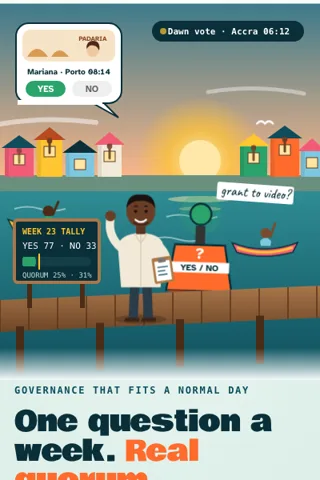
Governance by text-sized questions: one decision a week, answered in ten seconds, with real quorum.
 LIVE DEMO
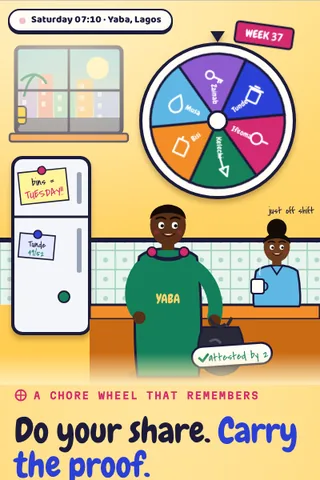
A shared house or club tracks who did the work, and the record becomes everyone's portable reliability score.
 LIVE DEMO
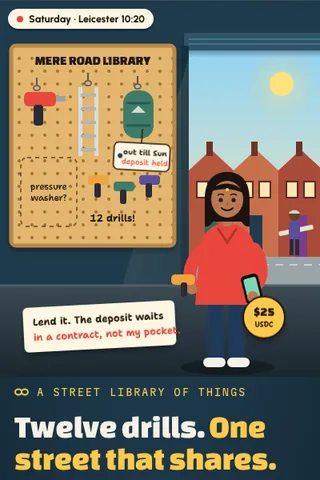
Lend the ladder, the drill, the tent: a street library of things with deposits held by contract.
 LIVE DEMO
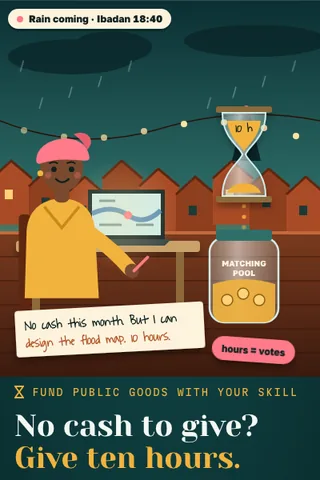
Fund a public good with hours of your skill, not just money, and get matched like a donation.
 LIVE DEMO
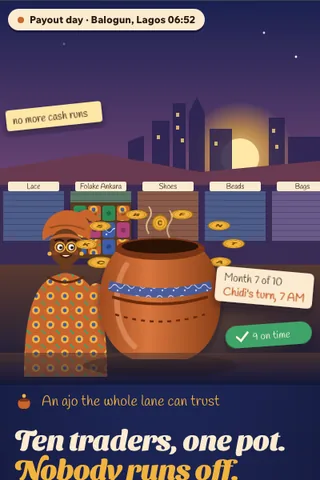
A rotating savings circle (ajo, susu, chama) with payouts enforced by contract and trust scores for members.
 LIVE DEMO
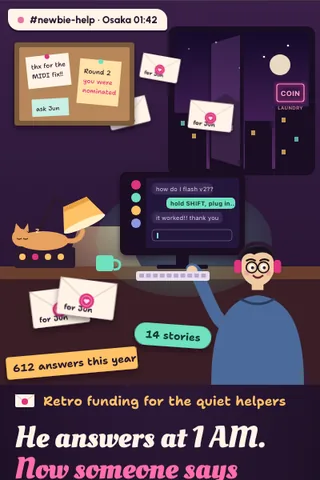
Retro funding for the quiet helpers: the community nominates who mattered, a pot pays them.
 LIVE DEMO
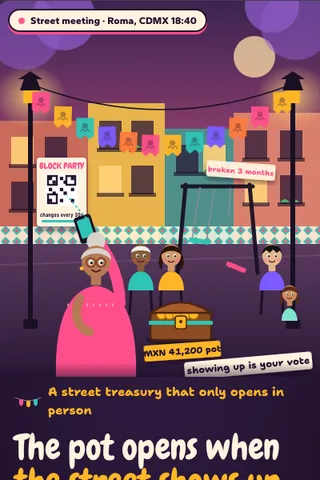
A neighbourhood treasury where proposals unlock only after enough real neighbours physically show up.