 LIVE DEMO
Called It
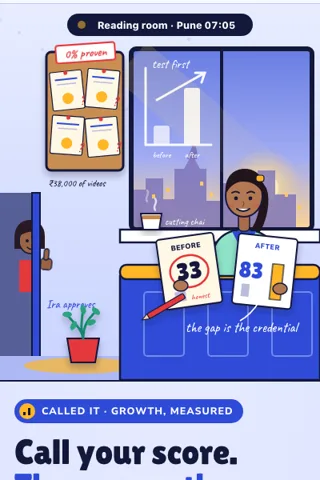
Log what you expect to learn before a course, then prove how much you actually grew.
Reserve · refundable deposit
$149Base · Optimism
 Try it live
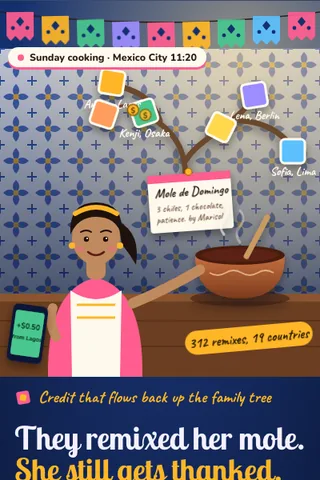
When someone remixes your work, the credit and a share of sales flow back up the family tree.
Try it live, freeA designer posts a template that gets remixed 300 times. Remix Royalty tracks each fork and splits sales automatically along the lineage.
Upload and fork flow, lineage graph, split contract, storefront
Reshape it entirely: new features, your flows, your brand end to end, integrations you need. We scope it with you.
Upstream remix royalties exist as infrastructure; a consumer remix-credit app for everyday creative work like recipes is the less common angle.
Story Protocol royalty policies route derivative revenue up the IP graph, and FaiRemix (Zora) and InvestHub IPFI register parent links for upstream royalties.
Checked with web searches in October 2026. A search is not proof that nothing similar exists, and the market moves fast, so we recheck before every build.
Eligibility unknown
The complete Remix Royalty app: creators publish recipe cards, remixes grow a visible family tree, and every paid remix sends a share back up the tree in USDC, with a paywall and a polite matching agent built in.
Every buyer gets the same finished app. Basic branding and copy changes come through a quick form.
Your admin side: revenue, paywall editor, users, rules and the agent log.
Referral and growth mechanics, switched on when you are ready to grow.
Publishing and remixing are free. The owner keeps a small fee on paid remix sales, and creators who want more tools pay a monthly plan.
Platform fee of 5% (Cook) or 2% (Pro and Studio) on paid remix sales, set by the owner. Gas on Base is well under a cent per split and can be sponsored.
Prices are yours to set. Illustrative, not a promise of income.
When someone remixes your recipe and sells it, credit and a small share flow back up the family tree.
Problem: Recipes and templates get remixed constantly. When a remix sells, the person who made the original usually gets nothing, not even a name, and remixers who want to give credit have no easy way to pay it across borders.
Solution: A consumer remix app: a fork button that records the parent, a visible family tree, a split the creator picks paid in USDC in the same transaction, and a matching agent that suggests missing parent links politely instead of issuing takedowns.
Why now: Story Protocol lineage, cheap split payments on Base, embedded email wallets and small models that compare ratios and steps make cross border credit practical for home cooks.
Market: Home cooks, food creators, template sellers, cooking schools and any niche where buying a remixable work is normal.
The ask: Pilot creators in one niche, a cooking school as the first Studio, and a place in builder programmes such as Base Batches.
Funding is never guaranteed. Check each program's rules.
Many hackathons require code written at the event. See the Regatta Boardfor each race's rule.
Custom work from $1,800: new work types and fingerprints, your own license set, integrations with a shop or school platform, extra languages, or a branded deployment. Scoped on a call.
Recipes, templates and other everyday creative work get remixed constantly, and that is good. But when a remix sells, the person who made the original usually gets nothing, not even a name. Remixers who want to give credit have no simple way to pay it forward across borders.
The infrastructure exists. Story Protocol royalty policies already route revenue from derivatives up an IP graph, and projects such as FaiRemix (on Zora) and InvestHub IPFI register parent links so upstream creators get paid. Research verdict: rare, medium novelty. What this app adds is a consumer remix app for everyday creative work like recipes: a friendly fork flow, a visible family tree, a split the creator picks, and a matching agent that suggests missing parent links politely instead of issuing takedowns. It is a product layer on known rails, not a new protocol.
Uploaded recipes or templates (text, ingredient quantities, steps, photos), fingerprints of ingredient ratios and method order, parent links declared by remixers or accepted after a match report, each creator's split settings, and sales paid in USDC. Recipe text and photos stay in the app's storage; only fingerprints, parent links and payments go on chain.
Make it normal for creativity that inspires other creativity to be credited, and when it sells, paid.
Your family tree Watching a recipe grow branches in cities you have never been to is a joy in itself, and every branch has a face.
Money from far away A small payment from Lagos or Osaka because someone loved your dish enough to build on it.
The Sunday letter A weekly letter shows new remixes and photos, with one tap to thank the cook.
Accounts: Email sign in with a Privy embedded wallet, so cooks never handle seed phrases. Payouts land in USDC on Base.
Publish and fork: A creator uploads a recipe or template and sets a split (for example 10% to the parent, halving each level up, for up to 3 levels). A remix starts from a fork button that records the parent.
Lineage: Each work is registered as an IP asset on Story with its parent links, so the tree is public and portable. A mirror on Base keeps the split addresses for payments.
Sales and splits: Card sales are paid in USDC on Base through a split contract (for example 0xSplits style) that pays each ancestor in the same transaction.
Matching agent: New listings are compared by ingredient ratios and step order, not just words. Embeddings plus a small model (Claude Haiku tier) summarise the match. Above 80% it sends a match report; below, it only suggests an optional credit tag.
Letters: A weekly email and push summary of new branches, sales and thank yous, written from the tree data.
A sale with a 3 level split on Base costs well under a cent in gas, usually sponsored. Registering a work and its parent link on Story costs a small fee per registration. Fingerprinting a new listing and a short model summary cost roughly $0.001 to $0.003. Example month with 5,000 new works and 20,000 sales: about $40 in gas and registration, $15 in model and embedding calls, $40 hosting and email, roughly $95 total, plus card payment fees for buyers paying by card.
Every remix page shows its parent and the parent's tree, so buyers discover the original and its other branches. Creators share their tree as a picture because it is beautiful, and each thank you notification brings both cooks back.
Recipes are hard to own: In many countries a list of ingredients is not protected by copyright. The app presents splits as a creator's terms and a community norm, not a legal claim, and never threatens legal action on anyone's behalf.
False matches: Similar dishes are common. The agent only reports above a high bar, a person decides, and below the bar it never accuses.
Gaming the tree: People may attach fake parents to farm splits. Parent links need the parent to exist first and are visible, and suspicious chains can be reported and reviewed.
Small amounts: Most remixes are free and most paid ones sell little. The app must say clearly that upstream income is small and not guaranteed.
Payments and tax: Cross border payouts can carry tax or reporting duties for creators. The owner should provide clear statements and check local rules.
Costs and tools are estimates at the time of writing. General information only, not legal or financial advice.
Nine routes from one vessel. Tap a port to open its chart.
When your template, recipe or design gets remixed, the credit usually vanishes after the first copy. Remix Royalty tracks every fork and splits sales automatically back up the family tree. Owning it means you run the storefront where creators keep lineage and earnings: your brand, your creator community and your platform fee on every sale.
Yes. Upload and fork flow, lineage graph, split contract and storefront are built. You choose the chain, upstream percent, name and colors, and deploy from your wallet with the guide.
The ones who remix get credit and a share from their own remixers too. Pitch it as fairness that pays both ways.
You cannot stop all copying. You make the honest path easier and better paid, and lineage visible. Be clear about that limit.
Creators keep their rights; the license they pick decides what remixers may do. Offer a few plain licenses and suggest a lawyer for commercial deals.
Start with a niche where buying templates is normal: design templates, recipes for food businesses, music loops, Notion setups.
You take a small platform fee on every sale; creators and their upstream lineage receive the rest automatically. Pro creators pay monthly for analytics and featured placement.
Illustrative stages, not a forecast. Results depend on you and the market; nothing here is guaranteed.
LIVE DEMOLog what you expect to learn before a course, then prove how much you actually grew.
 LIVE DEMO
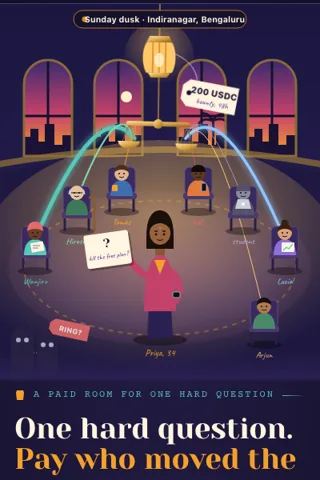
Pose a hard question, stake a bounty, and pay the crowd by how much each answer moved the final consensus.
 LIVE DEMO
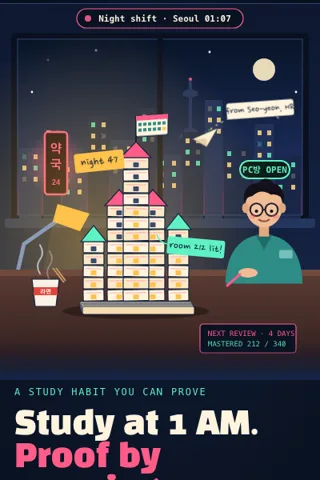
Turn what you are learning into spaced repetition decks that prove your streak and mastery onchain.
 LIVE DEMO
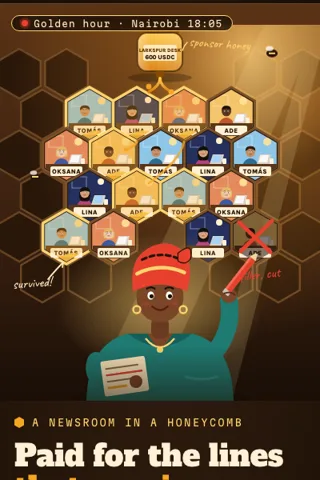
A group writes one living briefing together and everyone is paid by the lines that survive edits.
 LIVE DEMO
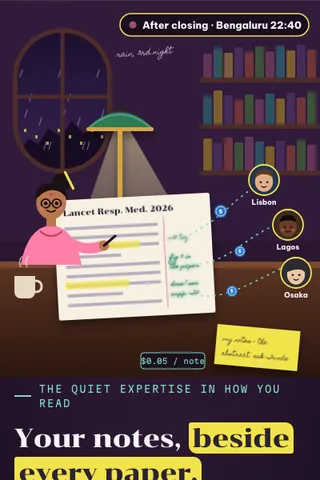
Your highlights and annotations on any article become a collectible, tippable layer others can subscribe to.
 LIVE DEMO
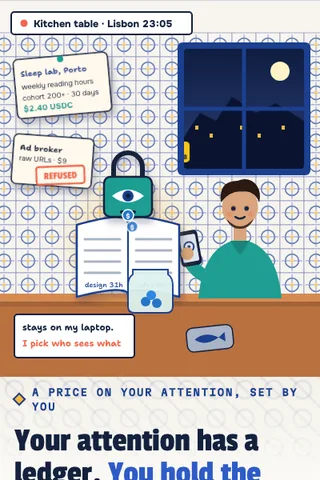
Keep a private log of what you read and watch, then sell anonymized slices only when you choose.
 LIVE DEMO
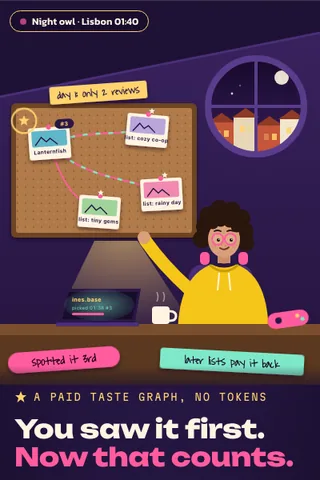
Curate a list early, and earn a share when the things you picked go on to be loved.
 LIVE DEMO
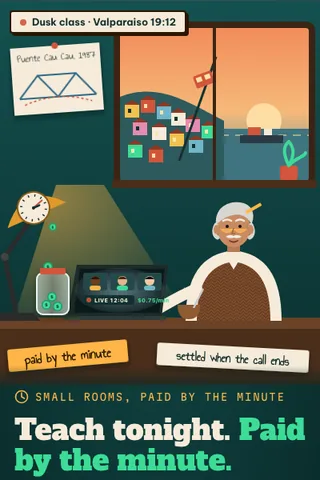
Teach live in small rooms where students pay per minute and you get paid the second the call ends.