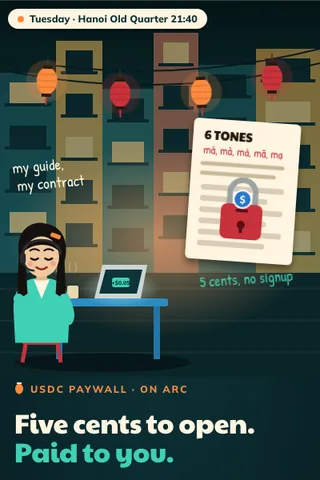
 LIVE DEMO
USDC Paywall
Lock content behind a fraction-of-a-cent USDC payment, on your own Arc contract. Deploy it, become the onchain creator.
Ready now
$20Arc
 Try it live
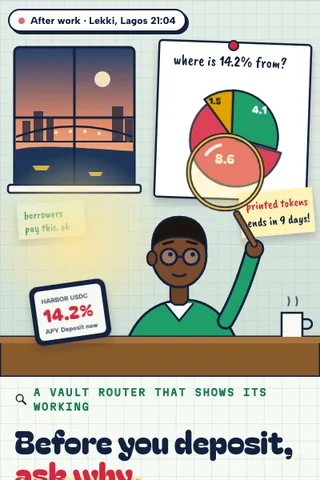
A vault router that shows where every percent of yield comes from before you deposit.
Try it live, freeFemi sees 14 percent APY and asks why. Yield Why breaks it into lending, incentives and leverage, routes his deposit only to sources he approves, and warns when emissions end.
Yield decomposition, approved source routing, emission end alerts
Reshape it entirely: new features, your flows, your brand end to end, integrations you need. We scope it with you.
Yield source breakdowns are already shown; per-source routing consent is a minor addition.
Morpho's docs and app separate native yield from reward streams, and Beefy's API breaks out vault APR, trading APR and fees; DefiLlama Yields shows base vs reward APY.
Checked with web searches in October 2026. A search is not proof that nothing similar exists, and the market moves fast, so we recheck before every build.
PoL DeFi; eligibility unknown
The complete Yield Why app: people open any vault's headline rate, see who pays each percent and when it stops, sign a yes list onchain, and route only within it, with alerts, a weekly quiz and USDC plans built in.
Every buyer gets the same finished app. Basic branding and copy changes come through a quick form.
Your admin side: revenue, paywall editor, users, rules and the agent log.
Referral and growth mechanics, switched on when you are ready to grow.
Splitting vaults, the yes list and routing within it are free. Users pay a monthly plan for automation, and community treasuries pay for Desk. The app takes no cut of deposits or yield.
No fee on deposits or yield. The owner can sponsor gas for yes list signatures, about $0.01 each.
Prices are yours to set. Illustrative, not a promise of income.
A vault router that shows who pays every percent of yield before you deposit, and only routes where you said yes.
Problem: People pick vaults by one headline APY that mixes borrower interest, trading fees, printed reward tokens and leverage. When the rewards stop, the rate falls and depositors find out late.
Solution: Yield Why splits each vault by source from its contracts, lets the user sign a yes list of sources onchain, routes only within it, and warns before known incentives end. It explains; it never predicts or promises returns.
Why now: Cheap attestations on Base, session keys on smart accounts and fast indexers make consent-bound routing practical, while incentive programs on Berachain and Base keep inflating headline rates.
Market: Everyday savers holding stablecoins, crypto-curious people in group chats, and small community treasuries and co-ops that need a written policy for where funds may go.
The ask: Pilot partners among stablecoin wallets and community treasuries, ecosystem grants such as Berachain programs, and audit support for the router contract.
Funding is never guaranteed. Check each program's rules.
Many hackathons require code written at the event. See the Regatta Boardfor each race's rule.
Custom work from $1,100: your own vault adapters and chains, a branded split widget for a wallet or exchange, treasury policy templates, or a white-label deployment. Scoped on a call.
Most people choose a vault by its headline APY. That one number usually mixes interest that borrowers pay, fees that traders pay, reward tokens printed on a timer, and leverage. When the rewards stop, the rate falls and depositors find out late.
Yield breakdowns already exist and are good: Morpho's app separates native yield from reward streams, Beefy's API breaks vault APR into parts, and DefiLlama Yields shows base versus reward APY. What this app adds is small but practical: the user approves which kinds of yield their money may earn from, the router only deposits within that consent list (recorded onchain), and it warns and moves funds before a known incentive ends. Research verdict: exists, low novelty. The value is packaging and consent, not a new primitive.
Public onchain data only for the split: vault supply and borrow rates, fee revenue, reward distributor contracts and their end times, and leverage positions on Base, Arbitrum and Berachain. Per user: their consent list, deposits and alert settings. No identity data beyond a wallet.
Nobody should deposit savings into a number they cannot explain. Every percent should come with who pays it and when it stops.
The pie you can open Any vault becomes a pie by source. People screenshot the slice that surprised them.
Your yes list Pick the kinds of yield you are comfortable with once. The router never goes outside it.
Guess the slice on Monday One vault a week, guess how much of its rate is paid by real users. A streak, and a sharper eye.
Wallet: Privy embedded wallet or any connected wallet. Smart account on Base with session keys limited to deposit, withdraw and move between vaults on the approved list.
Yield splitter: An indexer (for example Ponder or Envio) reads supply rates, fee accrual, reward distributor schedules and loop positions per vault every hour, and computes each source's share. Results are published daily so anyone can recheck.
Consent list: The user's approved sources and cap are written as an EAS attestation on Base. The router contract checks it before every deposit or move.
Router: A small ERC-4626 aware router contract per chain. Cross chain moves use a bridge aggregator only if the user enabled that chain.
Explainer agent: A small fast model (for example Claude Haiku 4.5) writes the plain language note and weekly quiz from the computed split. It never decides allocations; the rules do.
Alerts: Push and email alerts N days before a reward distributor end time, plus Telegram as an option.
Per user per month: indexing shared across users is about $0.01, explainer notes with a small model about $0.02 (roughly 20 short generations), Base gas for a consent attestation and one or two moves around $0.01 to $0.05. Example: 2,000 active users cost about $120 a month in compute and RPC, plus hosting.
Shareable pie cards of popular vaults travel in group chats when a big APY appears. Every card links back to the split, and the weekly quiz keeps people returning.
Not advice: It shows sources and follows the user's rules. It does not recommend or promise returns, and must say so clearly.
Wrong split: Contract reads can be wrong or a vault can hide rewards elsewhere. If the split does not reconcile with the displayed rate, the router refuses to act and says so.
Smart contract risk: The router and the vaults can be exploited. Keep the router minimal, audited, with caps and a pause, and list only vaults with public audits.
Regulation: Automated routing of other people's funds can be regulated in some places. Non custodial session keys and user set rules help but need legal review per market.
Bridge risk: Cross chain moves add bridge risk. Off by default.
Costs and tools are estimates at the time of writing. General information only, not legal or financial advice.
Nine routes from one vessel. Tap a port to open its chart.
Most people see a big APY number and have no idea it is 80 percent temporary emissions. Own Yield Why and you run the honest yield explainer, from your wallet and brand, for the people who want to know before they deposit. The subscribers, the routing and the trust are yours.
No. It explains where yield comes from; it does not tell anyone what to buy. Put a clear notice on every page and never rank vaults by 'best'.
Show your sources and timestamps on every breakdown, label estimates as estimates, and correct errors publicly. Users still make their own decisions.
You do not need to. Yield Why arrives working, deployed from your own wallet with a written guide for every step. You will click, paste and fill in names. If you ever want a change you cannot make, the custom option or a freelancer can handle it, but the first launch needs no code.
Yes. The contract is deployed from your wallet on Base, the code sits in your own git repo, and the name and brand are yours. DEPLOYR does not hold your keys or take a cut of what Yield Why earns. If you stop paying anyone tomorrow, the app keeps running on your wallet.
That is the most likely early outcome, and it is fixable. The paths below start with you as the first user, then ten real DeFi users who chase APY without knowing where it comes from you can name today. If ten people you message do not care after you have shown it to them, you have learned something useful in a week instead of a year.
Free decomposition for any vault, a pro plan for alerts and approved source routing, and paid listings for protocols that want their yield explained clearly. This ladder is a target, not a promise.
Illustrative stages, not a forecast. Results depend on you and the market; nothing here is guaranteed.
LIVE DEMOLock content behind a fraction-of-a-cent USDC payment, on your own Arc contract. Deploy it, become the onchain creator.
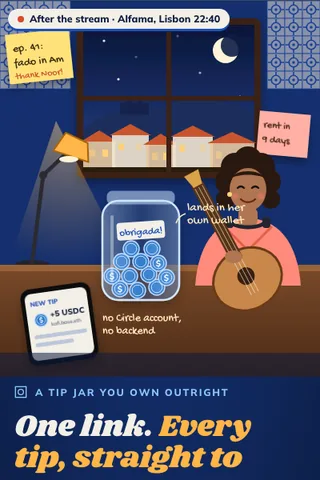 LIVE DEMO
Take pay-what-you-want USDC tips on Base, with a live supporters feed read straight from chain. No Circle account, no backend.
 LIVE DEMO
Your own swap/bridge front-end. Integrator fee optional and disclosed.
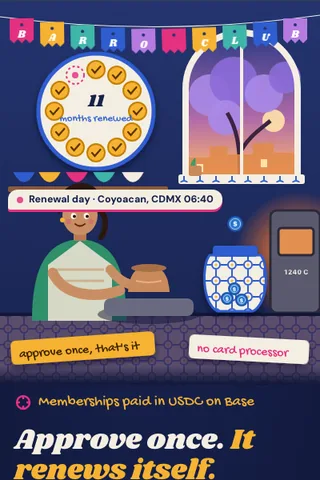 LIVE DEMO
Recurring USDC on Base. Members approve once, it renews itself. No card processor, no contract.
 LIVE DEMO
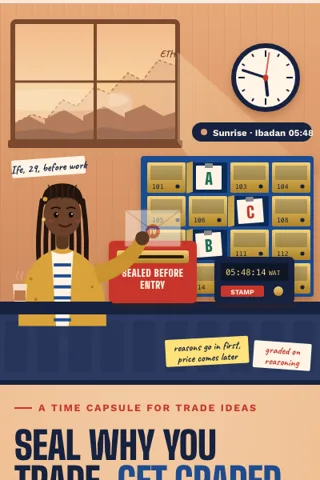
Write why you entered a trade, seal it with the timestamp, and get graded on reasoning, not luck.
 LIVE DEMO
Let a trusted mentor co sign your risky trades above a size you choose.
 LIVE DEMO
Your perp bot follows your rules, and every rule you kept becomes a public, provable track record.
 LIVE DEMO
A tilt brake that delays your trades after losses until you answer one honest question.