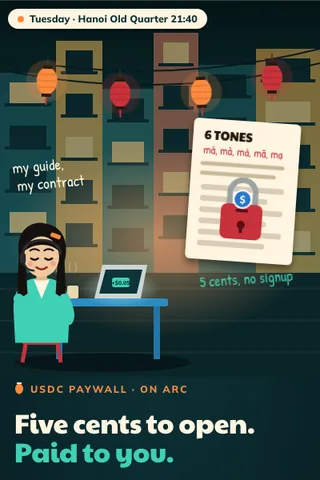
 LIVE DEMO
USDC Paywall
Lock content behind a fraction-of-a-cent USDC payment, on your own Arc contract. Deploy it, become the onchain creator.
Ready now
$20Arc
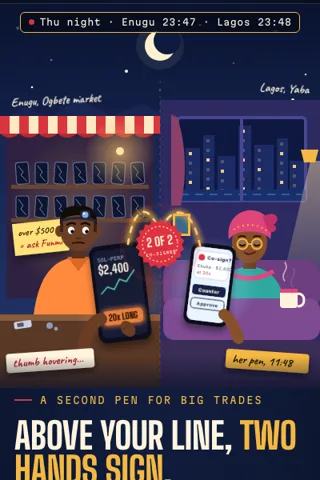 Try it live
Let a trusted mentor co sign your risky trades above a size you choose.
Try it live, freeEbuka is new to perps. Any order above 500 dollars needs his mentor's second signature, and their exchanges become a learning log both can see.
Size threshold, mentor approval flow, shared notes log
Reshape it entirely: new features, your flows, your brand end to end, integrations you need. We scope it with you.
Applies existing multisig threshold approvals to a new personal accountability use case.
Threshold co-signing is standard in Safe, Safeheron and Bitpanda custody, but only for institutions; no consumer product framed as a mentor co-signing personal trades was found.
Checked with web searches in October 2026. A search is not proof that nothing similar exists, and the market moves fast, so we recheck before every build.
Consumer onchain; eligibility unknown
The complete Mentor Mode app: traders set a size line and leverage cap while calm, and a trusted mentor co-signs, counters or declines anything past it, with a shared learning log, plans and checkout built in.
Every buyer gets the same finished app. Basic branding and copy changes come through a quick form.
Your admin side: revenue, paywall editor, users, rules and the agent log.
Referral and growth mechanics, switched on when you are ready to grow.
The second signature is free. Traders pay monthly for Plus habits, and coaches or trading communities pay per mentor seat.
No trading fees. Gas for a co-sign and attestation is a few cents, under $1 per user a month at scale.
Prices are yours to set. Illustrative, not a promise of income.
A trusted mentor co-signs your risky trades above a size you chose while calm.
Problem: New perp traders blow up on late night impulse orders. Self control apps are easy to switch off, and mentors only hear about it after the loss.
Solution: A Safe guard enforces the trader's own size line and leverage cap. Anything past it needs the mentor's second signature, and every decision becomes a shared, attested lesson.
Why now: Smart accounts with guards, passkey signers and cheap attestations on Base make a two person rule practical on retail perp venues.
Market: New perp traders, trading communities that onboard them, and coaches who mentor for a living.
The ask: Pilot with three trading communities, and ecosystem grant support for the open guard module.
Funding is never guaranteed. Check each program's rules.
Many hackathons require code written at the event. See the Regatta Boardfor each race's rule.
Custom work from $800: your venue, your community's rules, a branded coach dashboard, or Telegram and Discord integrations. Scoped on a call.
New traders lose the most money in the first months, usually on one late, oversized, high leverage order. Willpower fails at midnight. A trusted person who can say not this one, and explain why, is the protection most of them already have but cannot plug in.
Threshold co-signing is standard and mature: Safe multisigs, Safeheron trader permission policies and Bitpanda Custody threshold sending rules all require a second approver above a set amount. But those are built for institutions and treasuries. We found no consumer product framed as a mentor co-signing a person's own trades, with a shared learning log. The mechanism is not new; the personal accountability use case and the coaching loop around it are. Research verdict: rare, medium novelty.
The user's own rules (size line, leverage cap, response window, timeout behavior), each order request (asset, side, size, leverage, stop, reason note), the mentor's decision and note, and weekly review answers. Notes are encrypted between the two people; only hashes and decisions are attested.
Make the people who care about you part of your safety, so a bad night stays small and every close call becomes something you learn together.
You chose the line while calm Rules are set on a Sunday and need both signatures plus a 48 hour delay to loosen, so the midnight version of you cannot undo them.
A counter, not just a no The mentor can offer a smaller, survivable version of the same idea. People take the counter far more often than they accept a flat block.
A shared log you both keep Every request and reply becomes a lesson both can reread. The Sunday review turns it into three questions and a streak.
Wallet and vault: Privy embedded wallet for the trader. Trading funds sit in a Safe smart account on Base with a custom guard: orders above the size line or leverage cap need the mentor's signature. The mentor key can only approve, decline or counter, never withdraw.
Order routing: Approved orders are sent to the venue the owner picks (Hyperliquid via its API agent wallet, or an Arbitrum perps venue). Orders under the line pass straight through.
Coach agent: A small model (for example Claude Haiku or a similar fast tier via OpenRouter) pre-reads each order, computes distance to liquidation, decides what pings the mentor now vs the morning digest, and drafts the weekly questions. It never places trades.
Attestations: Each decision and weekly review is an EAS attestation on Base: who decided, what, when, and a hash of the encrypted note. A reputation both can show later.
Notifications: Push and Telegram or WhatsApp business messages to the mentor with one-tap approve, decline, counter. Timeout timer enforced by the guard, not the app.
Indexer: A lightweight indexer (Ponder or a hosted subgraph) builds the shared log, charts and streaks from vault events and attestations.
Per co-signed order: one Safe transaction plus one EAS attestation on Base, usually a few cents in gas combined (fees typically run 1 to 10 cents and rise during mainnet congestion). Coach model pass on a fast tier: under 1 cent per order at a few thousand tokens. Example month for 500 active traders, 60 orders each, 30% needing a co-sign: about 9,000 co-signs at roughly 3 cents is $270 gas, 30,000 coach passes at about $0.003 is $90, plus around $50 for indexing and notifications. Roughly $410 a month, under $1 per user.
Every user brings a second person by design. Mentors who enjoy it take on more mentees, trading communities adopt it as their onboarding rule, and the share card (my mentor said no, I said thank you) spreads in the group chats where new traders already hang out.
Not financial advice: Mentors are friends or coaches, not licensed advisers. The app frames notes as personal opinions; paid mentor seats may trigger advisory rules in some countries and need legal review per market.
Mentor key compromise: A stolen mentor key could approve risky orders but cannot move funds. Mentor keys are passkey based, and the user can rotate the mentor with a 48 hour delay.
Mentor abuse or coercion: A controlling mentor could block every trade. The trader can always withdraw to their own wallet after a delay; the guard only governs trading, not ownership.
Missed fast markets: Waiting for a co-sign means some trades are missed or filled worse. That is the intended trade off, stated plainly at setup.
Venue and contract risk: The guard and routing are custom code. Needs audit, small caps at launch, and a kill switch that only returns funds to the trader.
Privacy: Trade reasons are personal. Notes are end to end encrypted; only hashes are public, and the trader can keep attestations private.
Costs and tools are estimates at the time of writing. General information only, not legal or financial advice.
Nine routes from one vessel. Tap a port to open its chart.
Mentor Mode turns the trading coach relationship you already have into protection your students can feel: any order above the size they pick waits for your second signature. If you use someone else's tool, the student list, the approval history and the learning log all live on their servers. Own it and the mentors, the threshold rules and the shared notes sit under your name, on your wallet, earning for your community.
You do not need to. DEPLOYR ships it with the size threshold, the mentor approval flow and the shared notes log already wired. You pick the chain, name, logo and accent color. Custom work starts at 800 dollars if you ever want more.
Not all of them, and that is fine. It is for people who already know they size up when tilted. The threshold is theirs to set, and anything under it moves with no delay. Start with traders who asked you for accountability, not with strangers.
Then the oversized trade waits, which is the whole point. Say it plainly on your landing page, encourage two mentors per trader, and let traders pick a sensible threshold so normal trades are never blocked.
The mentor approves or declines a transaction; nobody else holds the funds, and the app does not tell anyone what to trade. Rules on coaching and paid trading communities differ by country, so read your local rules and keep your copy clear that this is accountability, not advice. If in doubt, ask a local lawyer before charging.
Yes. It deploys to your wallet, your domain and your brand. The traders, the mentor roster and the log belong to your instance, not to a platform that can change its terms on you.
Traders pay a monthly seat for mentor protection, mentors pay nothing or earn a share, and trading communities license a branded instance for their whole group. Revenue comes from seats, community licenses and a premium tier with weekly review calls built on the shared log. The ladder below is a target, not a promise.
Illustrative stages, not a forecast. Results depend on you and the market; nothing here is guaranteed.
LIVE DEMOLock content behind a fraction-of-a-cent USDC payment, on your own Arc contract. Deploy it, become the onchain creator.
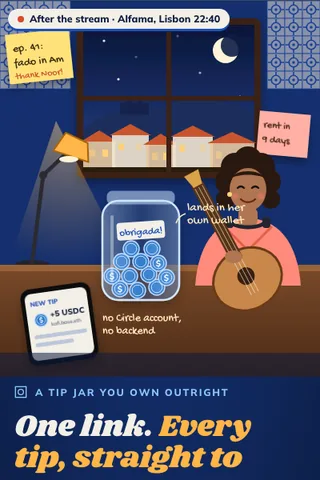 LIVE DEMO
Take pay-what-you-want USDC tips on Base, with a live supporters feed read straight from chain. No Circle account, no backend.
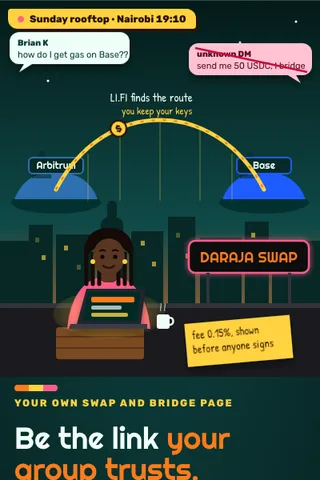 LIVE DEMO
Your own swap/bridge front-end. Integrator fee optional and disclosed.
 LIVE DEMO
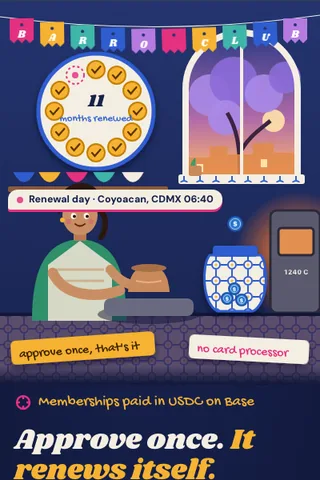
Recurring USDC on Base. Members approve once, it renews itself. No card processor, no contract.
 LIVE DEMO
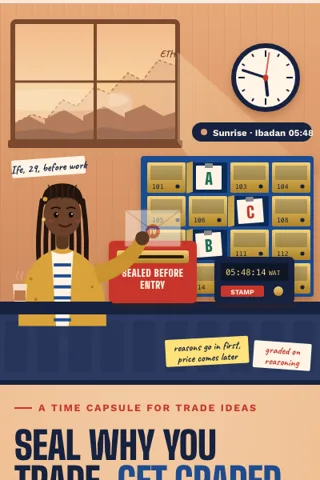
Write why you entered a trade, seal it with the timestamp, and get graded on reasoning, not luck.
 LIVE DEMO
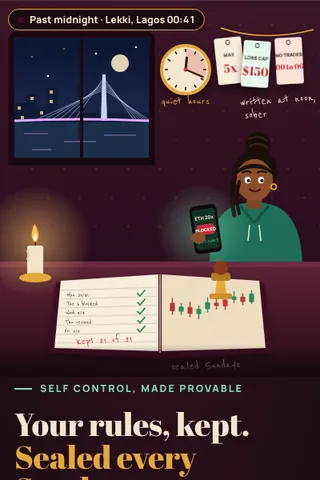
Your perp bot follows your rules, and every rule you kept becomes a public, provable track record.
 LIVE DEMO
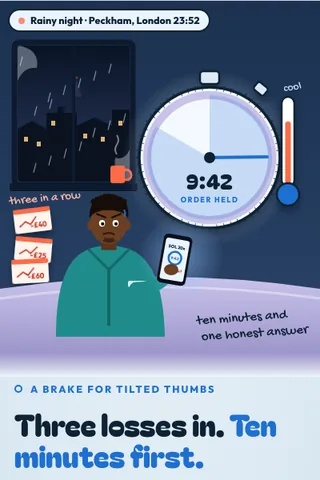
A tilt brake that delays your trades after losses until you answer one honest question.
 LIVE DEMO
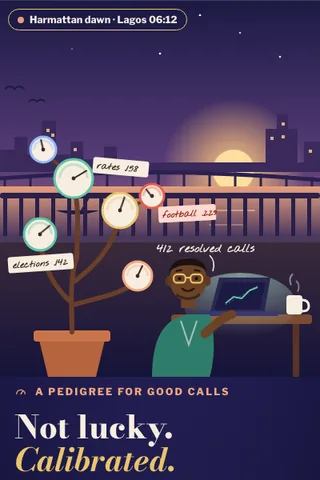
Your prediction market history, turned into a calibration score you can carry anywhere.