 LIVE DEMO
USDC Paywall
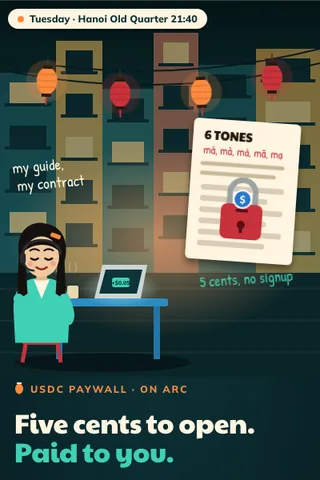
Lock content behind a fraction-of-a-cent USDC payment, on your own Arc contract. Deploy it, become the onchain creator.
Ready now
$20Arc
 Try it live
Your own swap/bridge front-end. Integrator fee optional and disclosed.
Try it live, freeThe working app on your own wallet and git, one-click deploy, and the step-by-step guide that makes you the verifiable developer.
Reshape it entirely: new features, your flows, your brand end to end, integrations you need. We scope it with you.
The complete DEX Aggregator app: a community branded swap and bridge page on LI.FI routing, with one tap presets for the group's usual moves, every fee itemised on the quote and honest re-quotes, plus a paywall, owner console and route agent built in.
Every buyer gets the same finished app. Basic branding and copy changes come through a quick form.
Your admin side: revenue, paywall editor, users, rules and the agent log.
Referral and growth mechanics, switched on when you are ready to grow.
Members swap free apart from a small page fee printed on every quote, accrued through LI.FI to the owner's integrator id. Group Plus waives the fee and adds alerts and saved routes, and other moderators pay for their own branded page.
Page fee set by the owner, for example 0.15%. LI.FI may keep a share of integrator fees, so check current partner terms.
Prices are yours to set. Illustrative, not a promise of income.
A community's own swap and bridge page, run by a moderator members already trust, with every fee on the quote.
Problem: New members ask how to get gas on a new chain every day, and scammers answer first in DMs.
Solution: A branded page on LI.FI routing with one tap presets, itemised fees and honest re-quotes, pinned in the group.
Why now: LI.FI routing and integrator fees make a branded front end a trust and distribution play, not a routing one.
Market: Telegram and Discord communities onboarding people to new chains.
The ask: Pilot partners: three community moderators with active groups.
Funding is never guaranteed. Check each program's rules.
Many hackathons require code written at the event. See the Regatta Boardfor each race's rule.
Custom work from $300: your own presets and chains, a bot, a multi group setup or integrations. Scoped on a call.
People new to a chain keep asking the same thing: how do I get my money and a little gas over there? Strangers answer in DMs and some of them steal. Communities need a trusted, plain swap and bridge page that shows every fee before anyone signs.
This is not new technology. Jumper is LI.FI's own swap and bridge app, the LI.FI widget is already embedded by many wallets and apps, and other aggregators such as Socket (Bungee), Squid and 0x offer similar routing and embeddable widgets. What is different is narrow: a community-branded front end run by someone a group already trusts, with one-tap presets for that group's common moves, and an integrator fee that is optional, small and printed on every quote. Low novelty; the value is trust and distribution, not routing.
Route quotes from the LI.FI API (bridges, DEXs, gas and fee lines), the user's own wallet signatures, the resulting source and destination transactions, the owner's integrator id and fee setting, and page settings (name, presets). No user accounts or personal data are stored.
Every community gets a safe, honest front door for moving money between chains, run by someone they already trust.
A link from someone you know People swap where they trust the link. A moderator's page beats a random search result and every DM offer.
One tap for the common move Presets like 'get gas on Base' turn the group's most asked question into a single button.
Every fee, before you sign Gas, bridge cost and the owner's fee are itemised on the quote. Expired quotes are re-shown, never silently retried.
Routing: The LI.FI widget or SDK requests quotes across bridges and DEXs and returns ranked routes with fees and time estimates.
Wallets: Users connect their own wallet through the widget's built-in connectors and sign each step. The app never holds funds or keys.
Integrator fee: An optional fee set as a decimal (for example 0.0015) under the owner's integrator id, added to the route and shown in the quote.
Fee collection: Fees accrue to the integrator id registered in the LI.FI partner portal, and the owner claims them to their wallet.
Presets and branding: A Next.js page on Vercel with the owner's name, colors and preset routes (chain and token pairs) set by environment variables.
Receipts: Each completed route links the source and destination transactions in block explorers and LI.FI's route explorer.
Per swap for the user: network gas plus bridge or DEX costs shown in the quote, for example a few cents for a USDC move from Arbitrum to Base, and a few dollars when starting from Ethereum mainnet. Plus the owner's fee if set: at 0.15% that is $0.06 on a $40 swap. For the owner: hosting on a free or hobby plan, $0; LI.FI integration is free to start, and LI.FI may keep a share of collected integrator fees, so check current partner terms. Monthly example: 340 swaps averaging $85 at 0.15% accrue about $43 before any LI.FI share.
Each solved question in the group becomes a pinned link. Members share receipts when a swap lands, other groups ask for their own page, and token projects embed it as their 'how to get in' route. Growth comes from one trusted community at a time, not from competing with large apps.
Regulation: A non custodial interface charging fees is treated differently by country and rules change. Owners charging at scale should get local legal advice and avoid markets their rules exclude.
Blame for failures: Bridges can delay or fail. The owner is the face of it, so the page links every route to its explorer and a clear support note, and never takes custody.
Bridge and contract risk: Routes rely on third party bridges and DEX contracts. They are audited but not risk free; users should start with small amounts.
Fee trust: A hidden or high fee destroys the main asset, trust. The fee is always printed on the quote and kept small.
Phishing copies: Scammers may clone the page with a different routing setup. Owners share the link only from official channels and pin it.
Quote expiry: Prices move while wallets open. The page re-quotes and asks again instead of retrying silently.
Costs and tools are estimates at the time of writing. General information only, not legal or financial advice.
Nine routes from one vessel. Tap a port to open its chart.
Every swap people make through someone else's aggregator pays that someone else. When the front end is yours, the integrator fee (optional and always disclosed) lands in your wallet, the brand on the page is yours, and every route your users take is an onchain record that you built and run a real product. You are not competing with Jumper's routing, you are using it as the engine under your own hull.
You are not running a DEX. The routing, liquidity and bridging come from LI.FI, which already powers large apps. You own the front end: the name, the colors, the fee setting and the deploy. The guide walks you through every click, and if you get stuck the support thread is there.
Most people will not, unless you give them a reason. The reason is your audience: a community, a chain niche, or a group you already talk to. People swap where they trust the link. Your job is to be that trusted link for a specific group, not for the whole internet.
Only if it is hidden. Your fee is shown on every quote before the user signs, and you can set it to zero. Many owners start at zero to earn trust, then add a small fee like 0.1 to 0.25 percent once people rely on it.
Routes execute through audited bridge and DEX contracts, not code you wrote, and users sign every transaction in their own wallet. Still, you are the face of it, so keep a clear support page, link to the route explorer for every swap, and never custody anyone's funds.
A non custodial interface is treated differently from an exchange in many places, but rules vary and change. If you plan to charge fees at scale, spend an hour with a local lawyer or a crypto legal clinic before you push volume. Do not market to regions your own rules exclude.
You earn the disclosed integrator fee on each swap or bridge routed through your front end, paid out by LI.FI to your wallet. Revenue is volume times fee rate, so growth comes from bringing a loyal group of repeat swappers, plus optional sponsored token listings or partner placements later.
Illustrative stages, not a forecast. Results depend on you and the market; nothing here is guaranteed.
LIVE DEMOLock content behind a fraction-of-a-cent USDC payment, on your own Arc contract. Deploy it, become the onchain creator.
 LIVE DEMO
Take pay-what-you-want USDC tips on Base, with a live supporters feed read straight from chain. No Circle account, no backend.
 LIVE DEMO
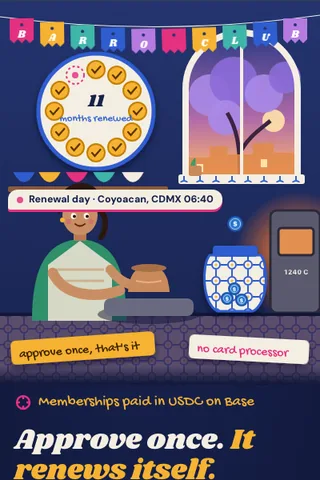
Recurring USDC on Base. Members approve once, it renews itself. No card processor, no contract.
 LIVE DEMO
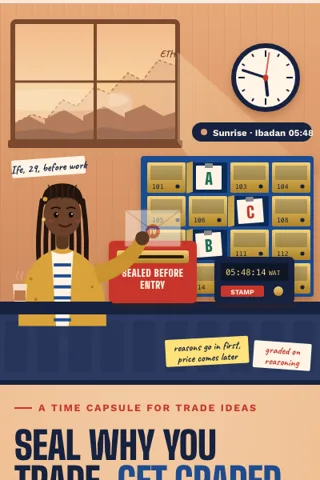
Write why you entered a trade, seal it with the timestamp, and get graded on reasoning, not luck.
 LIVE DEMO
Let a trusted mentor co sign your risky trades above a size you choose.
 LIVE DEMO
Your perp bot follows your rules, and every rule you kept becomes a public, provable track record.
 LIVE DEMO
A tilt brake that delays your trades after losses until you answer one honest question.
 LIVE DEMO
Your prediction market history, turned into a calibration score you can carry anywhere.