 LIVE DEMO
Sealed Take
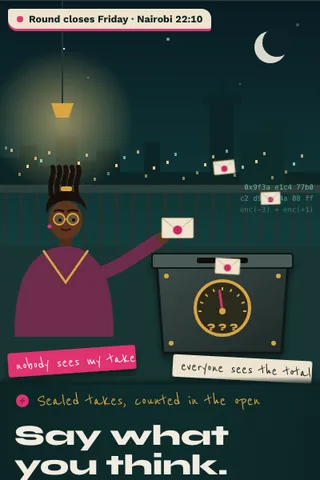
Everyone stakes a conviction, encrypted. The chain tallies it without ever seeing a single take. FHE on Base.
Ready now
$20Fhenix
 Try it live
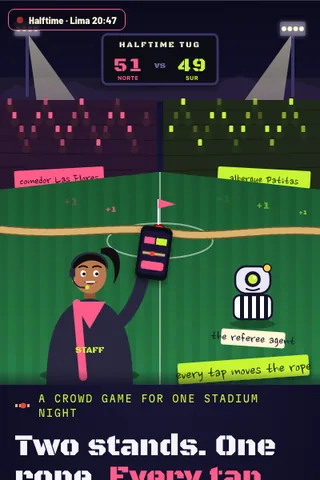
A crowd game where two sides tap and every tap moves the rope onchain.
Try it live, freeAt halftime, two stands of fans tap their phones. Each tap is a transaction, the rope moves live, and the winning side's charity gets the pot.
Game page, tap contract, live rope, winner payout.
Reshape it entirely: new features, your flows, your brand end to end, integrations you need. We scope it with you.
MegaETH tap apps are trading games (Euphoria, Hit One); a crowd tug of war was not found.
Euphoria; Dorado Games.
Checked with web searches in October 2026. A search is not proof that nothing similar exists, and the market moves fast, so we recheck before every build.
The complete Tug of Tap app: at halftime two stands tap their phones, every tap is a transaction on MegaETH, the rope moves live and the sponsor's pot goes to the winning side's charity, with a paywall, owner console and referee agent built in.
Every buyer gets the same finished app. Basic branding and copy changes come through a quick form.
Your admin side: revenue, paywall editor, users, rules and the agent log.
Referral and growth mechanics, switched on when you are ready to grow.
Fans always tap for free. Clubs pay monthly for home matches, or a sponsor covers the round and the operator takes a small cut of the pledge, never of fan money or the charity payout. Leagues pay monthly for many clubs.
A round with about 2 million taps costs a few dollars of sponsored gas on MegaETH. The pot passes straight from escrow to the charity.
Prices are yours to set. Illustrative, not a promise of income.
A crowd game where two sides tap and every tap moves the rope onchain.
Problem: Halftime at small and mid sized clubs is dead air, sponsors get a logo nobody looks at, and local charities rarely get a share of the night.
Solution: Seat passes give every fan an embedded wallet. Each tap is a transaction on MegaETH, the rope renders live, a referee agent enforces the gate without deleting taps, and the pot pays the winning charity in one transaction.
Why now: MegaETH makes millions of near instant transactions cheap enough to sponsor, and embedded wallets remove app installs.
Market: Small and mid sized football clubs, amateur leagues and their local sponsors.
The ask: A pilot with two Lima neighbourhood clubs for half a season.
Funding is never guaranteed. Check each program's rules.
Many hackathons require code written at the event. See the Regatta Boardfor each race's rule.
Custom work from $1,100: stadium screen integrations, ticketing partners, more sides or a different chain. Scoped on a call.
Halftime at small and mid sized clubs is dead air: fans scroll, sponsors get a logo nobody looks at, and local charities rarely get a share of the night. Clubs want something the whole stand does together that is fair enough that nobody argues about the result for a week.
Tap games on MegaETH already exist, but they are trading games such as Euphoria and Hit One, and Dorado Games builds onchain casual games. Stadium second screen and crowd voting apps exist offchain. What we did not find is a crowd tug of war where every tap is a public transaction, the rope position is onchain state anyone can recount, and the winning stand's charity is paid in the same system. Research verdict: high novelty for the format; the tap mechanic itself is not new.
Per tap: wallet, side, seat pass and timestamp, written as a transaction on MegaETH. The round: start and end block, running rope state, taps counted and taps held back by the referee agent, winner. The payout transaction to the charity wallet. Fan names and phone numbers are never stored; the seat to wallet link is held by the club for one match.
Give a whole stand one thing to do together at halftime, count it in the open, and let a local cause win.
You see your tap move it MegaETH's real time blocks let the knot on the big screen move while you are still tapping.
Close by design Two stands of similar size, a per wallet cap and a short round keep margins tiny, so both sides keep tapping to the whistle.
Call the rope A match day ping to call which stand holds the rope, nothing staked, and a season board both stands follow.
Seat pass: Each ticket carries a one match seat pass. Fans open a link, a Privy embedded wallet is created in seconds, and the pass is attached. No app install.
Tap contract: A minimal contract on MegaETH records each tap against a side and updates the rope. Gas is sponsored through a paymaster or paid as a tiny per tap amount that also adds to the pot.
Referee agent: Watches taps per wallet per second and wallet age, enforces the cap and seat pass rule, and can hold taps back for review. It never deletes taps and never judges by rhythm.
Live rope: A big screen page and every fan phone subscribe to rope state over a websocket from a MegaETH node, rendering the knot in real time.
Payout: At the final block the sponsor's escrowed pot, plus any fan tap amounts, is sent to the winning side's pre registered charity wallet in one transaction.
Season board: An indexer over rounds powers results, the season table, the share card and the match day ping.
MegaETH transactions cost a small fraction of a cent, so a round with about 2 million taps costs a few dollars of gas when sponsored; the season in the demo is about $41. Hosting the websocket fan out and indexer is roughly $30 to $60 a month for a club. The pot itself is the sponsor's money and passes straight to the charity.
Every round ends with a share card showing the rope, the charity and the recount link, posted by thousands of fans at once. Sponsors see engagement numbers per match and ask for more rounds; rival clubs in the same league see the halftime and ask for the same.
Bots and scripts: Open gates let scripts win. Default to seat pass only plus an 8 per second cap, and show held taps on the results card.
False bot flags: Real fans can look scripted, like drummers tapping in time. The agent holds taps for review rather than deleting them, and rhythm is never a signal.
Gambling rules: Fans never stake money on the outcome and nothing is won by fans. If fans add per tap amounts, it goes to charity and is shown before tapping. Owners should check local rules.
Stadium networks: Crowded mobile networks drop connections. Taps are batched on the phone and sent within the round window; late taps are shown as late, not counted.
Charity disputes: Both charities and their wallets are registered and verified before the season, never changed mid round.
Costs and tools are estimates at the time of writing. General information only, not legal or financial advice.
Nine routes from one vessel. Tap a port to open its chart.
Tug of Tap: A crowd game where two sides tap and every tap moves the rope onchain. Using someone else's version means their rules, their brand and their revenue. Owning Tug of Tap means it is deployed under your wallet, carries your name, and every customer, partner and result builds your track record instead of theirs.
Tug of Tap arrives deployed with a guide. Running it is settings and sharing links, not code. If you get stuck, we help you ship it.
Start with ten people you already know. The first move below takes under an hour and tells you fast whether people care.
Each step is sized in minutes. Most owners spend an hour a week, and the app does the repetitive part.
Nothing is guaranteed. The playbook gives you a clear path and honest numbers, and you decide how far to take it.
Charge the people who get the most value from Tug of Tap: a monthly plan for groups or teams, plus setup fees for anyone who wants it done for them.
Illustrative stages, not a forecast. Results depend on you and the market; nothing here is guaranteed.
A starter chart. A fuller, app-specific playbook is being written.
LIVE DEMOEveryone stakes a conviction, encrypted. The chain tallies it without ever seeing a single take. FHE on Base.
 LIVE DEMO
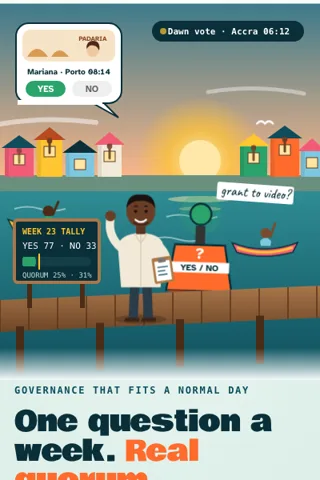
Governance by text-sized questions: one decision a week, answered in ten seconds, with real quorum.
 LIVE DEMO
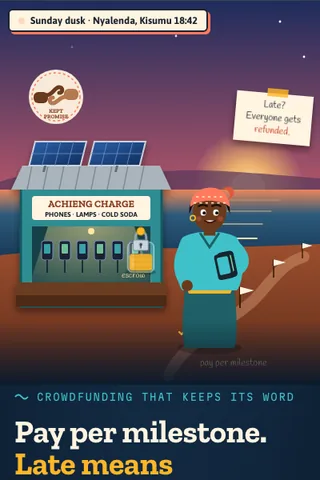
Crowdfunding where backers get refunded by contract if the goal or the milestones are missed.
 LIVE DEMO
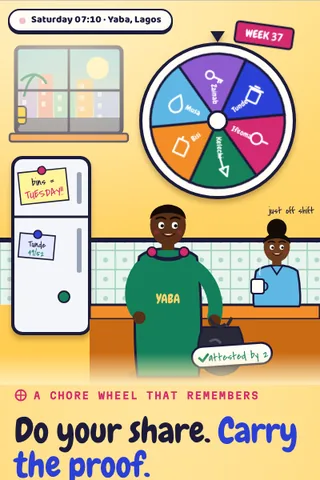
A shared house or club tracks who did the work, and the record becomes everyone's portable reliability score.
 LIVE DEMO
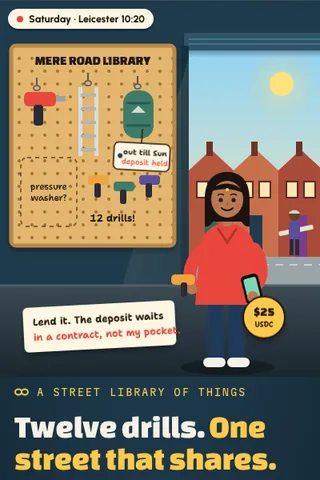
Lend the ladder, the drill, the tent: a street library of things with deposits held by contract.
 LIVE DEMO
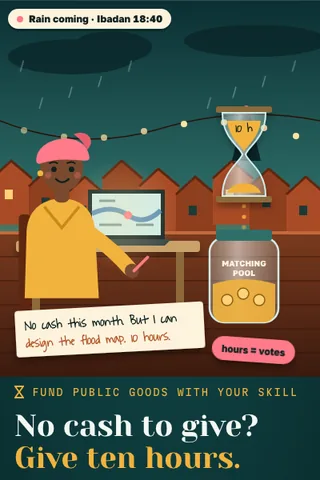
Fund a public good with hours of your skill, not just money, and get matched like a donation.
 LIVE DEMO
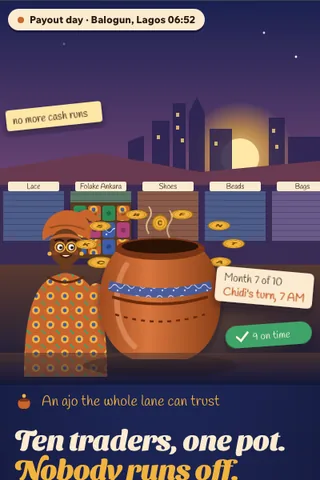
A rotating savings circle (ajo, susu, chama) with payouts enforced by contract and trust scores for members.
 LIVE DEMO
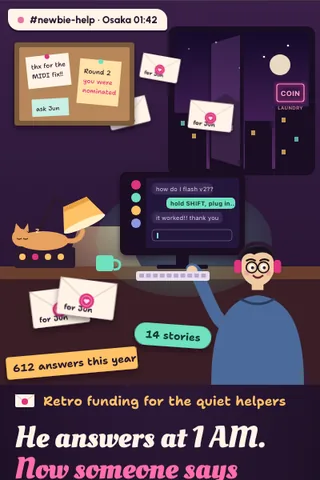
Retro funding for the quiet helpers: the community nominates who mattered, a pot pays them.