 LIVE DEMO
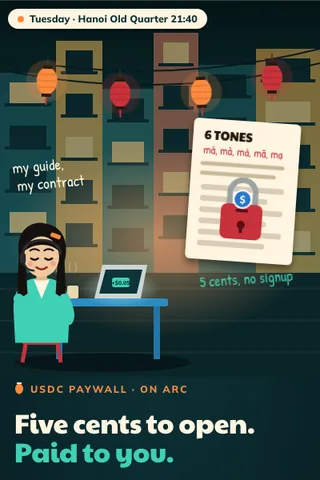
USDC Paywall
Lock content behind a fraction-of-a-cent USDC payment, on your own Arc contract. Deploy it, become the onchain creator.
Ready now
$20Arc
 Try it live
Publish your rule set as a forkable recipe, earn credit when others run it on their own capital.
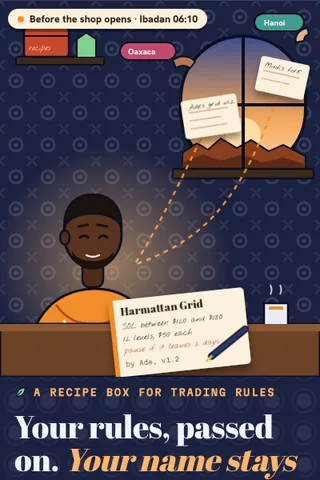
Try it live, freeAde's grid rules for SOL work for him. He publishes them as a recipe; others run it in their own wallets, and each run credits him onchain with a small fee.
Recipe format, run in own wallet, author credit and fee split
Reshape it entirely: new features, your flows, your brand end to end, integrations you need. We scope it with you.
Strategy creator fees exist; forking with attributed lineage credit is the uncommon part.
Success Trading on Arbitrum tokenizes strategies as ERC-1155 that investors run in their own accounts with onchain fee sharing, and CopyTrade.AI and GemW share profits with strategy creators, but forkable recipes with lineage credit were not found.
Checked with web searches in October 2026. A search is not proof that nothing similar exists, and the market moves fast, so we recheck before every build.
Existing projects allowed
The complete Strategy Heirloom app: traders publish their rules as forkable recipe cards, others run them in their own wallets, and every run or fork credits the author a flat fee, with a paywall and USDC checkout built in.
Every buyer gets the same finished app. Basic branding and copy changes come through a quick form.
Your admin side: revenue, paywall editor, users, rules and the agent log.
Referral and growth mechanics, switched on when you are ready to grow.
Publishing, running, forking and claiming credit are free. The owner earns a small platform fee per run week on top of each author's flat fee, plus monthly plans for authors whose recipes travel. Never a share of anyone's gains.
Platform fee of $0.05 per run week, set by the owner. Author fees (for example $0.50 a week) go straight to authors and their ancestors through the split. Paid in USDC on Base by default.
Prices are yours to set. Illustrative, not a promise of income.
Publish your trading rules as a forkable recipe; others run it in their own wallets and your name, and a flat fee, follow every fork.
Problem: Careful traders have rules that work for them and friends who ask to copy them. Today that means screenshots in a group chat, no credit when the rules spread, or handing custody to a copy trading platform.
Solution: A readable recipe card with an attested fingerprint, a non custodial runner with scoped session keys, a flat weekly fee split up the fork lineage, and rule based copy detection.
Why now: Cheap attestations on Base and Solana, session keys that can only place and cancel orders, and small models that can compare recipes and write plain language notes.
Market: Retail grid and range traders on Solana, trading clubs and educators who want credit for their rules without holding anyone's money.
The ask: Ten authors with real followings for a closed pilot, a legal review per market, and ecosystem grants such as Colosseum Eternal.
Funding is never guaranteed. Check each program's rules.
Many hackathons require code written at the event. See the Regatta Boardfor each race's rule.
Custom work from $2,500: new rule types, other markets or chains, a branded deployment for a trading club, or integrations with an existing community. Scoped on a call.
Many careful traders have rules that work for them and friends who ask to copy them. Today that means screenshots in a group chat, no credit when the rules spread, or handing over custody to a copy trading platform.
Creator fees for strategies already exist: Success Trading on Arbitrum tokenizes strategies as ERC-1155 that investors run in their own accounts with onchain fee sharing, and CopyTrade.AI and GemW share profits with strategy creators. What we did not find is the recipe framing: a readable, forkable rule card where each fork records its parent onchain and a share of every run fee flows up the lineage, plus rule based copy detection. Research verdict: rare, medium novelty. The fee mechanism itself is not new.
The recipe parameters (range, levels, sizes, stop rules), the author's fingerprint attestation, fork lineage, run start and stop events, and fee splits. Trades happen in each runner's own wallet. Runner identities are wallets only.
What a person learns about markets should travel with their name on it, and pay them a little each time someone uses it, without anyone handing over their money.
A card with your name Rules look like a recipe card anyone can read, not a black box. People share the card itself.
Forks pay their parents Improve someone's recipe and publish it. A slice of every run of your fork goes up the family line.
Sunday notes A weekly digest of what runners saw and asked. Authors come back to answer and release a new version.
Wallets: Phantom or a Privy embedded Solana wallet for runners; trades never leave their wallet. Authors can receive credits on Solana or Base in USDC.
Recipe format: A small JSON schema (market, range, levels, size, stop rules, fee, parent) rendered as a card. Its hash and author are attested with EAS on Base, or the Solana Attestation Service.
Runner: A non custodial grid executor using Jupiter limit orders or a DEX program on Solana, driven by a session key that can only place and cancel orders for that recipe within the runner's limit.
Fee and lineage split: A split program takes the flat weekly run fee in USDC and sends shares to the author and each ancestor by the percentages written at fork time.
Copy detection: A server job compares every new recipe's parameters against earlier ones and flags close matches with both timestamps. A small model (for example Claude Haiku 4.5) writes the plain language comparison.
Notes and alerts: Runner notes, stop events and the Sunday digest by push and email.
Per run week: Solana fees for a grid of 12 orders and their refills are usually well under $0.05, the fee split on Base costs around $0.01, similarity checks and notes with a small model about $0.002. Example: 1,000 active runs a week cost roughly $60 a month in fees and compute, plus hosting.
Each recipe card is shareable and shows its author and lineage. Forks bring their own runners, and their fees bring attention back up to the original author, who shares the card again.
Losses: Strategies can and do lose money. Every card shows down weeks and the share of runners with losses. No returns are promised, and fees are flat, never tied to gains.
Regulation: Selling trading strategies or signals can be regulated in some places. Non custodial execution and flat fees help but need legal review per market.
Copies outside the app: Anyone can rerun the numbers in their own bot. The app can only flag copies and show the earlier timestamp. It cannot force payment.
Session key abuse: Keys are limited to one recipe, one market, a cap and an expiry, and can be revoked at any time.
Bad recipes: A careless recipe can harm runners. Require a stop rule and a capital cap on every card, and show plain warnings.
Costs and tools are estimates at the time of writing. General information only, not legal or financial advice.
Nine routes from one vessel. Tap a port to open its chart.
Strategy Heirloom lets a trader publish a rule set as a forkable recipe that others run in their own wallets, with a small onchain credit and fee to the author on every run. On a copy trading platform, the platform holds the funds relationship, sets the fees and owns the authors. Own it, and the recipe format, the author registry and the fee split are yours, deployed from your wallet on Solana or Base.
Recipes are rule sets users choose to run on their own capital. Still, rules differ by country and copy trading can be regulated. Never promise returns, show past results with clear warnings, and check with a local adviser before charging.
Many will. Show each recipe's full history including losses, require users to set their own size limits, and make it easy to stop. Honesty here is what keeps the platform alive.
The recipe format, wallet runner and fee split come built. You publish recipes through a form. New rule types later need a developer.
They can. Your edge is the onchain credit record: authors build a public track of runs and forks on your registry, which is hard to move.
Yes. Registry and fee contracts deploy from your wallet; the platform fee goes to your address.
A platform fee on every recipe run, split with the author, plus a premium listing for authors with verified histories. This is a target, not a promise, and depends on recipes people keep running.
Illustrative stages, not a forecast. Results depend on you and the market; nothing here is guaranteed.
LIVE DEMOLock content behind a fraction-of-a-cent USDC payment, on your own Arc contract. Deploy it, become the onchain creator.
 LIVE DEMO
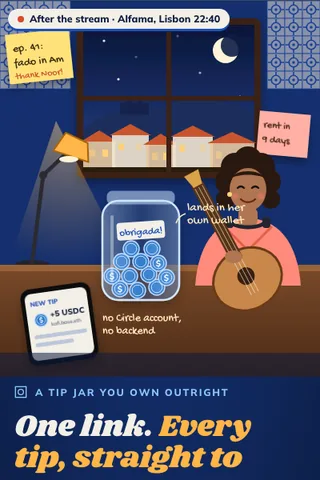
Take pay-what-you-want USDC tips on Base, with a live supporters feed read straight from chain. No Circle account, no backend.
 LIVE DEMO
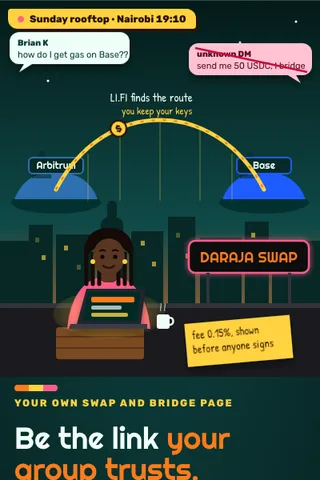
Your own swap/bridge front-end. Integrator fee optional and disclosed.
 LIVE DEMO
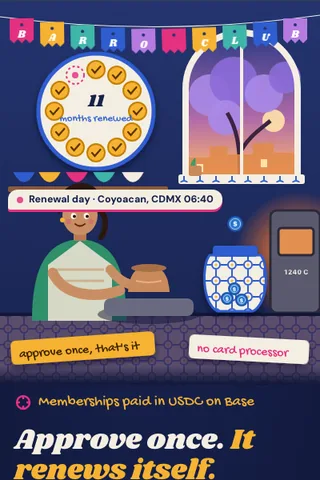
Recurring USDC on Base. Members approve once, it renews itself. No card processor, no contract.
 LIVE DEMO
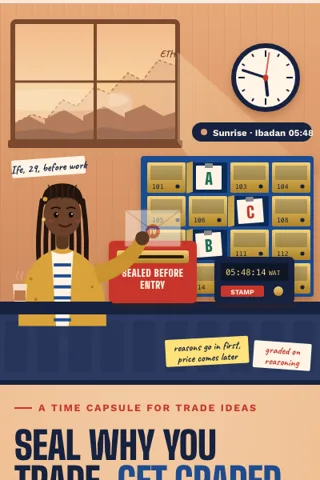
Write why you entered a trade, seal it with the timestamp, and get graded on reasoning, not luck.
 LIVE DEMO
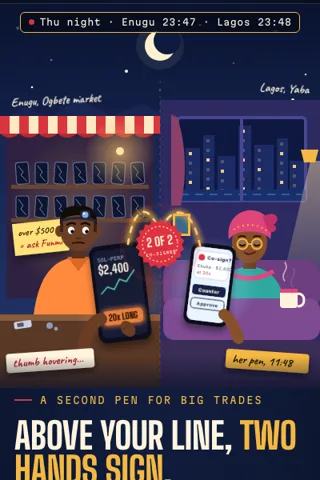
Let a trusted mentor co sign your risky trades above a size you choose.
 LIVE DEMO
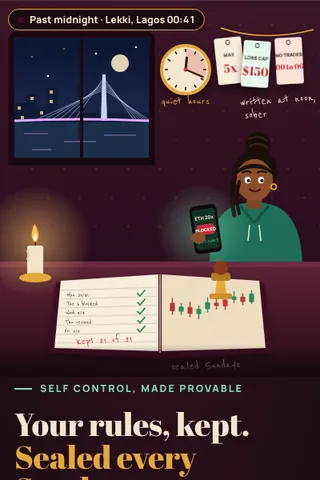
Your perp bot follows your rules, and every rule you kept becomes a public, provable track record.
 LIVE DEMO
A tilt brake that delays your trades after losses until you answer one honest question.