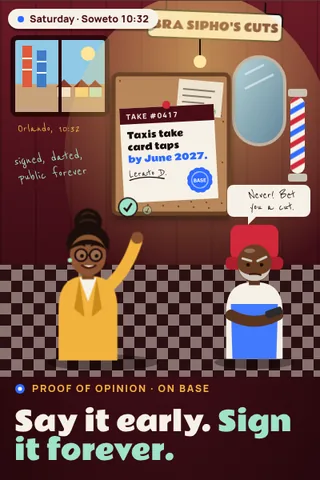
 LIVE DEMO
Proof of Opinion
Put your name on a take onchain, mint a shareable badge, others co-sign.
Ready now
$20Base
 Try it live
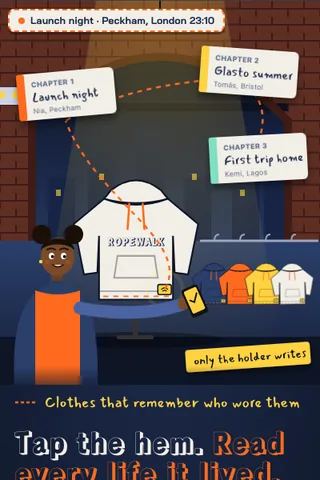
Tap a jacket and read every life it has lived, written by each person who owned it.
Try it live, freeNia runs a small streetwear label. Each piece ships with an NFC tag tied to an onchain record. Every owner can add a photo and a short story when it changes hands, so a resold hoodie arrives with three chapters: the launch night, a festival summer, a trip to Lagos. Provenance becomes the reason to buy secondhand.
Item registry contract, NFC tap page, holder-only chapter posting, transfer handoff flow, brand admin for tagging items.
Reshape it entirely: new features, your flows, your brand end to end, integrations you need. We scope it with you.
Moves provenance from brand-authored ownership logs to an owner-written memory chain, where each holder adds a chapter only while they hold the item.
MarketMaker (Intertrust), SmartLinks and Coachtopia NFC passports track authenticity, ownership and lifecycle events, but those records come from the brand. I found none that let each owner add their own story.
Checked with web searches in October 2026. A search is not proof that nothing similar exists, and the market moves fast, so we recheck before every build.
Real-world commerce onchain on Base.
Physical goods provenance fits Polygon's commerce focus.
The complete Stitch Story app: labels tag every piece with an NFC chip, each owner writes one chapter while they hold it, and resold pieces arrive with their past lives attached, with a paywall, owner console and helper agent built in.
Every buyer gets the same finished app. Basic branding and copy changes come through a quick form.
Your admin side: revenue, paywall editor, users, rules and the agent log.
Referral and growth mechanics, switched on when you are ready to grow.
Owners read and write chapters for free. Labels pay per tagged item for a first drop or monthly for unlimited items, featured chapters, the Friday digest and moderation, and larger brands pay for resale partner scans and authentication exports.
Chapter gas on Base is about a cent and can be sponsored by the label. Signed chips cost about $1 each.
Prices are yours to set. Illustrative, not a promise of income.
Every piece carries the story of every life it lived, written by whoever wore it.
Problem: The moment a garment sells, its story is lost, and secondhand buyers cannot tell where a piece has been or whether it is real.
Solution: Signed NFC chips link each piece to a tap page. Only the current holder can write one chapter, sealed on Base when it changes hands, and copied tags show as not verified.
Why now: Resale is a mainstream channel, signed NFC chips cost about a dollar, and L2 gas makes a chapter cost about a cent.
Market: Independent streetwear labels, vintage and resale shops, and brands running circular programmes.
The ask: A pilot with three independent labels and two vintage shops.
Funding is never guaranteed. Check each program's rules.
Many hackathons require code written at the event. See the Regatta Boardfor each race's rule.
Custom work from $1,200: brand portals, authentication partner integrations, other chip vendors or a different chain. Scoped on a call.
Small labels and vintage sellers lose touch with every piece the moment it sells, and secondhand buyers cannot tell where a piece has been or whether it is real. The memories people attach to clothes vanish at each resale.
Brand provenance passports already exist: MarketMaker (Intertrust), SmartLinks and Coachtopia NFC passports track authenticity, ownership and lifecycle events. In those, the record is written by the brand. What is new here is narrower: each owner writes their own chapter, and only while they hold the item, so the history is a chain of owner-written memories rather than a brand log. Research did not find an existing product doing that; the NFC and onchain registry parts are not new.
Per item: a registry entry (item id, brand, chip public key), the current holder, handoff signatures, and per chapter a text hash, author address and timestamp. Chapter text and photos are stored on IPFS and linked. No buyer names, addresses or prices are recorded.
Let the things we wear carry the stories of the people who wore them, written by those people.
Tap the hem Any phone can read a piece's past lives in a second, no app or wallet needed to read.
Your chapter stays Sell it on and what you wrote travels with it, signed by you, forever readable by the next owner.
Friday chapters The label gets a weekly digest of new chapters on its pieces around the world, and can ask owners to feature the best ones.
Signed NFC chips: Chips such as NTAG 424 DNA produce a fresh signed counter on every tap (SUN messages), so a copied link or screenshot cannot pass as the real piece. Plain stickers are cheaper but cannot prove authenticity.
Item registry: A registry contract on Base (or Polygon or Solana) records each item, its chip key and its current holder. The brand admin tags items in bulk.
Handoff: The current holder releases the item to the next owner's address, or the claim opens after 7 days with no reply. Embedded wallets (Privy) mean owners need no crypto knowledge.
Chapters: Only the current holder can post one chapter per holding period: text up to the brand's limit plus one photo on IPFS. The chain stores the hash, the author and the time.
Tap page: A server checks the chip signature, then renders the chapters. Reading is public and needs no wallet.
Helper agent: Drafts chapter 1 for the brand to approve, flags spam and listings that reuse old tap counters, and writes the Friday digest. It never contacts owners or sellers without the brand's approval.
Signed chips cost roughly $0.80 to $1.50 each in small runs; plain stickers about $0.10 to $0.20. Registering an item on Base is a fraction of a cent to a few cents in gas, and a chapter is about a cent, often sponsored by the brand through a paymaster. IPFS pinning for a photo is well under a cent a month. Hosting and the tap page run about $20 to $40 a month for a small label. A 60 piece drop: about $72 in chips, under $5 in gas.
Every resale puts a tap page in front of a new owner who sees the label's name and earlier chapters. Resale shops that scan tags at intake become a channel, and the best chapters featured on the label's site pull buyers toward pieces with a past.
Tags and washing: Many sewn or woven tags survive washing, but test the exact tag through several washes before a full run.
Clones: Plain stickers can be copied. Use signed chips for anything where authenticity matters, and say clearly what plain tags cannot prove.
Spam and abuse: An open pen invites spam. Default to holder-only writing, add a report button and let the brand hide chapters without deleting the onchain hash.
Privacy: Owners may write things they later regret. Text lives off chain so it can be hidden from the tap page; only a hash stays. Never record buyer names, addresses or prices.
Resale value: Stories may help some pieces sell. The app must never promise higher resale prices.
Costs and tools are estimates at the time of writing. General information only, not legal or financial advice.
Nine routes from one vessel. Tap a port to open its chart.
Stitch Story ties each garment to an NFC tag and an onchain record, so every owner can add a photo and a short chapter when it changes hands. If a brand uses a third party provenance platform, that platform owns the item registry and the resale story. Own it, and the registry, the tap pages and the growing archive of stories behind every piece belong to your label, deployed from your wallet.
Many sewn in or woven tags are designed to, but test the exact tag you buy through several washes before a full run.
Some will, especially for limited drops and vintage resale. It is a reason to keep pieces, not a guarantee of resale value.
Registry, tap page, chapter posting, handoff and brand admin come built. You tag items and write the first chapter.
Plan for many who do not. Keep posting simple and help first owners at your launch.
Yes. Deployed from your wallet on Base, Polygon or Solana.
Brands pay per tagged item plus a monthly plan; you can also earn a small fee on resale handoffs. This is a target, not a promise.
Illustrative stages, not a forecast. Results depend on you and the market; nothing here is guaranteed.
LIVE DEMOPut your name on a take onchain, mint a shareable badge, others co-sign.
 LIVE DEMO
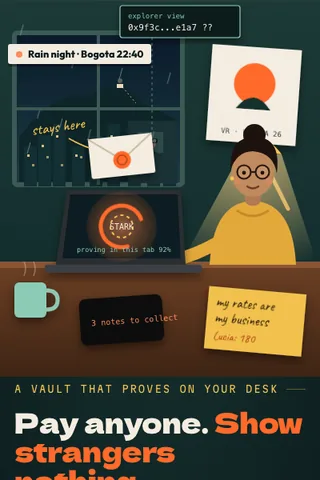
Create an account and prove your transactions in your own browser. Client-side proving on Miden, nothing leaks.
 LIVE DEMO
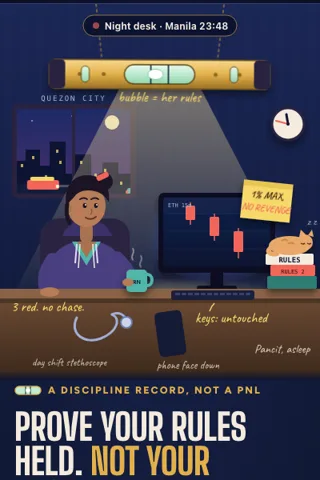
Prove your trading discipline, not your profits: stops honored, sizing kept, tilt avoided.
 LIVE DEMO
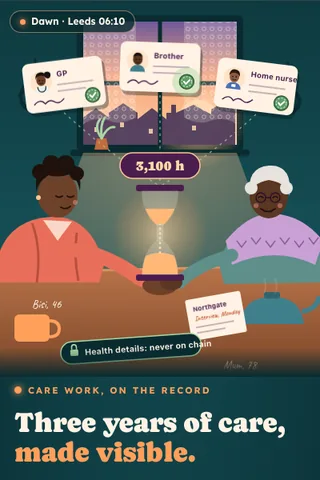
Caregivers and parents prove unpaid care work, privately, for loans and jobs.
 LIVE DEMO
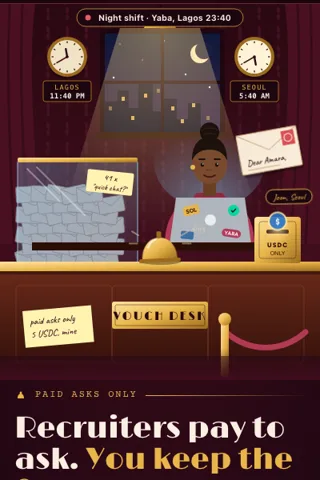
Recruiters pay a small USDC fee to request verified proofs from candidates, who get paid.
 LIVE DEMO
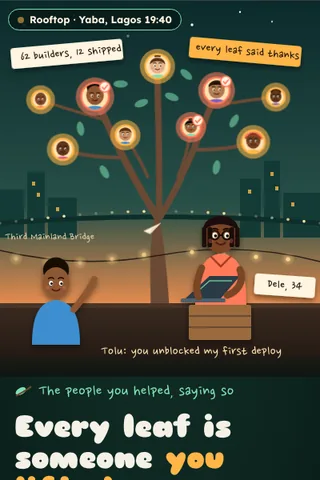
Mentees attest that you changed their path, building a lineage tree of who you lifted up.
 LIVE DEMO
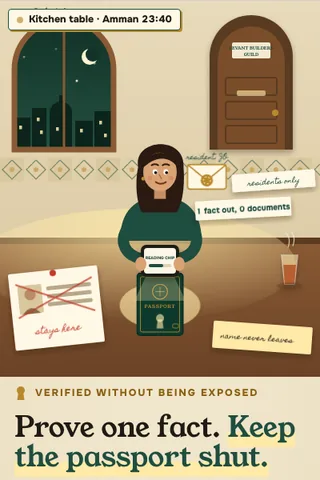
Prove you are over 18, a resident, or a degree holder without showing a single document.
 LIVE DEMO
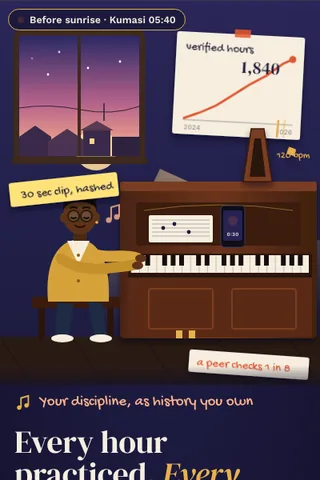
Timestamp every hour of deliberate practice and own the 10,000 hour proof.