 LIVE DEMO
Sealed Take
Everyone stakes a conviction, encrypted. The chain tallies it without ever seeing a single take. FHE on Base.
Ready now
$20Fhenix
 Try it live
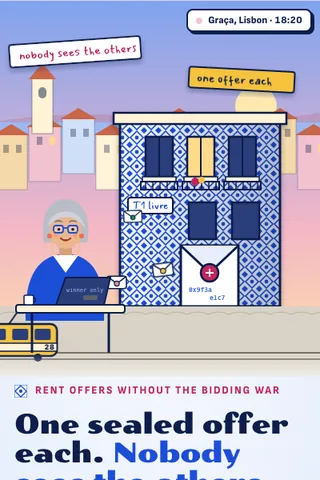
Landlords take sealed encrypted rent offers, and nobody sees the others.
Try it live, freeA housing coop in Lisbon takes encrypted offers for a flat; the winning offer is revealed only to the coop.
Listing, encrypted offers, reveal to owner.
Reshape it entirely: new features, your flows, your brand end to end, integrations you need. We scope it with you.
Sealed bid demos exist on FHE chains; a rent offer product was not found.
Generic sealed bid auctions.
Checked with web searches in October 2026. A search is not proof that nothing similar exists, and the market moves fast, so we recheck before every build.
Ecosystem program for shipped apps; check current terms.
The complete Sealed Rent app: landlords and housing coops take sealed, encrypted rent offers on Fhenix, compare them without decrypting, and reveal only the winner to the coop, with a paywall, owner console and intake agent built in.
Every buyer gets the same finished app. Basic branding and copy changes come through a quick form.
Your admin side: revenue, paywall editor, users, rules and the agent log.
Referral and growth mechanics, switched on when you are ready to grow.
Applicants never pay. Landlords pay a fee per listing, and coops pay monthly for unlimited listings, the lottery rule, member votes and the intake agent.
Rent never passes through the app. FHE gas for offers is typically cents and can be sponsored by the landlord.
Prices are yours to set. Illustrative, not a promise of income.
Sealed rent offers: nobody sees anyone else's number, and only the winner is revealed to the landlord.
Problem: Good flats get flooded with offers in public chats. Applicants bid each other up, people who cannot keep raising drop out, and everyone's offer stays visible forever.
Solution: A listing contract on Fhenix takes one encrypted offer per applicant, keeps an encrypted maximum or count, and at close grants the landlord permission to decrypt only the winner. Losing offers are never decrypted.
Why now: Fully homomorphic encryption on Fhenix makes encrypted comparisons practical, and rental markets in cities like Lisbon are under intense pressure.
Market: Housing coops, small landlords and later city affordable housing programmes.
The ask: Pilot with three Lisbon housing coops and a municipal housing partner.
Funding is never guaranteed. Check each program's rules.
Many hackathons require code written at the event. See the Regatta Boardfor each race's rule.
Custom work from $1,300: coop branding, a municipal lottery setup, lease integrations or extra languages. Scoped on a call.
When a good flat comes up, landlords and housing coops get flooded with offers in public chats and portals. Applicants see each other's numbers and bid each other up, people who cannot keep raising drop out, and everyone's offer stays visible forever. Small landlords and coops want fair offers without running an auction in the open.
Sealed bid auctions are a known pattern, and sealed bid demos already exist on FHE chains, including Fhenix examples. Our search did not find a product built for rent offers. What is new is the rental product around the mechanic: a floor rent, a choice between highest offer and a lottery at the floor, an optional encrypted count of offers above the floor, and a reveal of only the winner, only to the landlord. The cryptography is not new; the use and the fairness options are.
A listing contract with its fixed rules (floor, rule, window), one encrypted offer per applicant stored as FHE ciphertext handles, an encrypted comparison result, and a winner reveal sealed to the landlord's key. Applicant names, references and the lease stay with the landlord, off chain.
Let people offer what they can honestly pay for a home, without being pushed into a bidding war or exposing their number to anyone.
No public war Applicants offer once and walk away. No refreshing a group chat to see if someone outbid them.
A fair rule Coops can choose a lottery at the floor rent, so the person with the most money does not always win.
Thursday flats A weekly digest of new coop and small landlord listings, each one offer away.
Listing: The landlord creates a listing contract on a Fhenix supported chain with the floor rent, selection rule, offer window and what extra info they may learn.
Encrypt on device: The applicant's offer is encrypted in the browser with Fhenix's cofhejs client and submitted as an encrypted integer. One offer per verified applicant.
Compare encrypted: The contract keeps a running encrypted maximum, or an encrypted count of offers at or above the floor, using FHE comparisons. Nothing is decrypted during the window.
Close and reveal: At close, the contract grants the landlord permission to decrypt only the winning offer and winner identity. With the lottery rule, a random pick among eligible offers is made.
Notify: Applicants are told selected or not selected. Losing offers are never decrypted.
Intake agent: An assistant drafts listings, answers questions and sends reminders before close. It has no decrypt permission.
Each encrypted offer and comparison costs FHE gas, which is higher than a normal transaction but typically cents on current Fhenix testnets and early mainnets; real costs depend on the chain at launch. Gas can be sponsored by the landlord. Example: 20 listings a month with 15 offers each, roughly 300 encrypted submissions plus comparisons, is likely tens of dollars in gas, plus a small server for the agent. Treat these as estimates.
Every listing link is shared in neighbourhood groups and housing forums. Applicants who lose still keep the digest and come back on Thursdays. Coops talk to other coops, and a fair rule is a story people repeat.
Still an auction: Highest sealed offer can still push rent up. Make the lottery rule easy to pick and show its effect.
Sybil offers: One person could submit many offers. Require a light identity check per applicant, kept by the landlord.
Housing law: Some cities limit rent increases or require certain processes. Landlords must check local rules; the app does not give legal advice.
Discrimination: The landlord still chooses who to rent to after the reveal. Keep a record of the rule and the result for fairness.
FHE maturity: Fhenix tooling is young. Keep contracts small, audited, and avoid storing anything that does not need to be onchain.
Costs and tools are estimates at the time of writing. General information only, not legal or financial advice.
Nine routes from one vessel. Tap a port to open its chart.
Sealed Rent: Landlords take sealed encrypted rent offers, and nobody sees the others. Using someone else's version means their rules, their brand and their revenue. Owning Sealed Rent means it is deployed under your wallet, carries your name, and every customer, partner and result builds your track record instead of theirs.
Sealed Rent arrives deployed with a guide. Running it is settings and sharing links, not code. If you get stuck, we help you ship it.
Start with ten people you already know. The first move below takes under an hour and tells you fast whether people care.
Each step is sized in minutes. Most owners spend an hour a week, and the app does the repetitive part.
Nothing is guaranteed. The playbook gives you a clear path and honest numbers, and you decide how far to take it.
Charge the people who get the most value from Sealed Rent: a monthly plan for groups or teams, plus setup fees for anyone who wants it done for them.
Illustrative stages, not a forecast. Results depend on you and the market; nothing here is guaranteed.
A starter chart. A fuller, app-specific playbook is being written.
LIVE DEMOEveryone stakes a conviction, encrypted. The chain tallies it without ever seeing a single take. FHE on Base.
 LIVE DEMO
Governance by text-sized questions: one decision a week, answered in ten seconds, with real quorum.
 LIVE DEMO
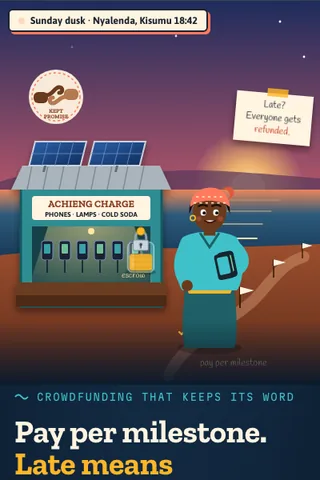
Crowdfunding where backers get refunded by contract if the goal or the milestones are missed.
 LIVE DEMO
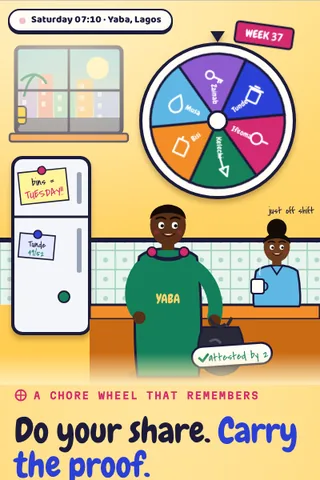
A shared house or club tracks who did the work, and the record becomes everyone's portable reliability score.
 LIVE DEMO
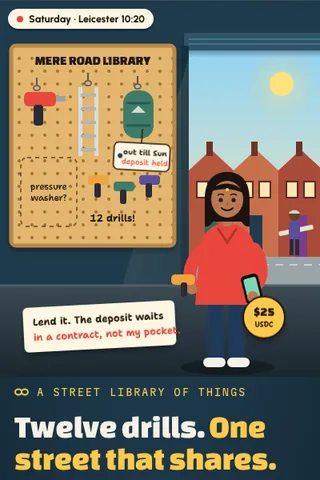
Lend the ladder, the drill, the tent: a street library of things with deposits held by contract.
 LIVE DEMO
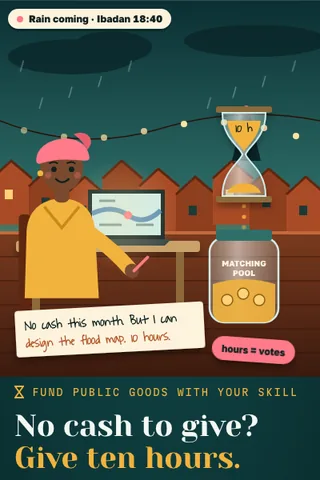
Fund a public good with hours of your skill, not just money, and get matched like a donation.
 LIVE DEMO
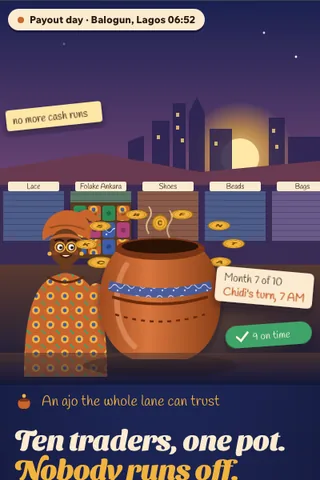
A rotating savings circle (ajo, susu, chama) with payouts enforced by contract and trust scores for members.
 LIVE DEMO
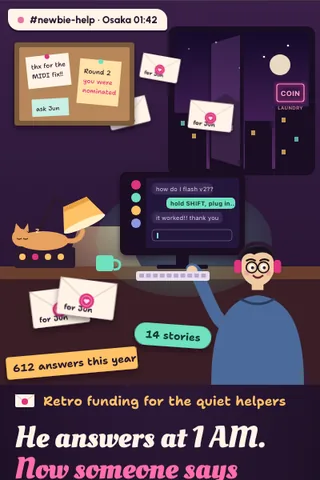
Retro funding for the quiet helpers: the community nominates who mattered, a pot pays them.