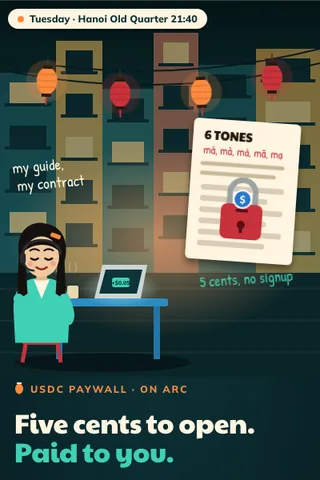
 LIVE DEMO
USDC Paywall
Lock content behind a fraction-of-a-cent USDC payment, on your own Arc contract. Deploy it, become the onchain creator.
Ready now
$20Arc
 Try it live
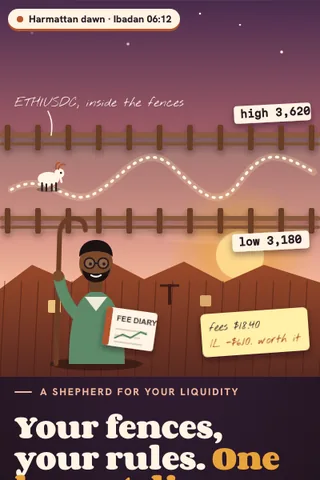
Keeps your concentrated LP in range with your own recentering rules and a fee diary.
Try it live, freeBayo provides ETH USDC on Uniswap v4. Range Tender recenters only when his rules allow and keeps a diary of fees versus impermanent loss so he knows if it is worth it.
Position monitor, rule based recentering, fee and IL diary
Reshape it entirely: new features, your flows, your brand end to end, integrations you need. We scope it with you.
Automated LP recentering is live; the fee diary is a reporting addition.
Revert Finance offers an Auto-Range rebalancer for Uniswap v3 positions, and Gelato and WaaP publish rebalancer recipes for custom triggers.
Checked with web searches in October 2026. A search is not proof that nothing similar exists, and the market moves fast, so we recheck before every build.
High performance EVM DeFi; eligibility unknown
The complete Range Tender app: liquidity providers set fences and patience rules for a Uniswap v4 position on Base, sign every move, and read one honest page a week on fees versus losses versus costs, with plans and USDC checkout built in.
Every buyer gets the same finished app. Basic branding and copy changes come through a quick form.
Your admin side: revenue, paywall editor, users, rules and the agent log.
Referral and growth mechanics, switched on when you are ready to grow.
The diary for one position is free. LPs pay monthly in USDC for auto mode, what-if replays, more positions and Telegram prompts; clubs and small funds pay for the Desk plan.
No custody and no cut of pool fees. Each LP pays their own gas on moves (a few cents on Base).
Prices are yours to set. Illustrative, not a promise of income.
A patient shepherd for concentrated liquidity: moves only when your rules say so, and one honest page a week on whether it was worth it.
Problem: Rebalancing bots move LP ranges too often and lock in losses, and almost nobody can say plainly whether fees beat impermanent loss and costs.
Solution: Owner written patience rules (wait, weekly cap, fee gate, ask first) fingerprinted onchain, one bundled recenter the LP signs, and a weekly diary of fees versus losses versus costs against simply holding.
Why now: Uniswap v4 on Base makes recenters cost cents, embedded wallets and scoped session keys make ask first and capped auto mode safe, and small models can write the weekly summary for a fraction of a cent.
Market: Retail and small club liquidity providers on Uniswap style pools, starting with ETH/USDC on Base, then Arbitrum and Monad.
The ask: Pilot LP clubs and communities, a security review of the session key module, and ecosystem grants for an open LP diary standard.
Funding is never guaranteed. Check each program's rules.
Many hackathons require code written at the event. See the Regatta Boardfor each race's rule.
Custom work from $1,000: other DEXs or chains, your own rule types, club co-signing, white label branding for an LP community, or exports for a specific accountant. Scoped on a call.
People who provide concentrated liquidity on Uniswap style pools face two quiet problems: rebalancing bots move their range too often and lock in losses, and almost nobody can say plainly whether fees actually beat impermanent loss and costs.
Automated range rebalancing already exists: Revert Finance offers Auto-Range for Uniswap v3 positions, and Gelato and WaaP publish rebalancer recipes with custom triggers. Range Tender is not new on that front. What it adds is modest: owner-written patience rules (wait time, weekly cap, a fees-must-cover-cost gate, ask-first mode) and a plain weekly fee diary of fees versus impermanent loss versus move costs, compared with simply holding. Research verdict: exists, low novelty.
The position id and its fences, pool prices and fee growth read from the pool, the owner's rule card (fingerprinted onchain), every close, swap and mint transaction, and the diary entries with the reason for each move or hold. No custody of funds; diary notes stay offchain.
Every liquidity provider should know, in one honest page a week, whether their position is earning or just busy.
Patient by default Most out of range wanders come home. Your wait rule and weekly cap stop the bot from locking in losses on noise.
The Sunday page One page a week: fees, impermanent loss, move costs, days in range, and the same numbers if you had just held.
What if replays Each week asks one question, like would a wider range have done better, and replays your actual weeks to answer it.
Pools and chains: Uniswap v4 positions on Base first, then Arbitrum and Monad. Positions stay in the owner's wallet as the usual position NFT.
Wallet and keys: Privy embedded or external wallet. In auto mode a Safe module or scoped session key may only call close, swap and mint for one named position, with a slippage cap and weekly move cap enforced onchain.
Watcher: A small worker reads pool price and fee growth every block window through an RPC provider and a Ponder or similar indexer, and checks the rule card.
Rule card: Fence width, wait hours, weekly cap, fee gate and mode are hashed and attested with EAS on Base, so the rules the tender followed can be checked later.
Execution: Recenter is one bundled transaction: decrease liquidity, collect, swap to the new ratio with a slippage limit, mint the new range. Failed swaps retry split and later, never with a looser limit than the owner set.
Diary and AI: The diary math is plain code. A small model (for example Claude Haiku class) writes the two sentence weekly summary from the numbers; it never decides moves.
Notifications: Ask-first prompts and the Sunday page go out by Telegram, email or web push.
Per recenter on Base: gas is usually a few cents (about $0.02 to $0.10 per bundled transaction at normal activity) plus the pool swap fee and slippage on the rebalanced amount. Watching costs roughly RPC and indexer usage, a few dollars a month for hundreds of positions. The weekly AI summary is a fraction of a cent per user. Example month for 300 users: about $40 infra, $5 model, gas paid by each user on their own moves.
The share card (moved 3 times, not 14) travels in LP group chats. A free diary for any existing position, no migration needed, is the front door; the what-if replays give people a reason to come back weekly.
Market risk: Concentrated liquidity can lose money versus holding, and rules cannot prevent that. The app must say so plainly and never promise returns.
Key scope: A badly scoped session key could drain a position. Scope it to one position and the three calls, with onchain caps, and audit the module.
Execution failure: Thin liquidity, MEV and reverts can cost gas or give bad fills. Use private relays where available and slippage caps the owner set.
Accuracy: Impermanent loss and fee numbers depend on correct price and fee growth reads. Show the method and let users check against the pool.
Regulation: Automated management of other people's positions may count as a regulated activity in some places. Keep it self-directed software with user-set rules and no pooled funds.
Costs and tools are estimates at the time of writing. General information only, not legal or financial advice.
Nine routes from one vessel. Tap a port to open its chart.
Hosted rebalancers decide when your liquidity moves and keep the history of whether it was worth it on their dashboard. When you own Range Tender, the recentering rules, the position monitor and the fee versus impermanent loss diary run under your wallet and your name, so you can tend your own pools and offer the same honesty to other liquidity providers as your product. The diary is the part nobody else gives you plainly: did this position actually earn.
You choose a pool, set a width and write recentering rules in a form, such as recenter only if out of range for 2 hours and gas is under a limit. The build arrives deployed. You will need to understand concentrated liquidity basics, and the diary teaches you fast.
No. Concentrated liquidity can lose to simply holding, especially in trending markets. Range Tender keeps you in range by your rules and shows the truth in the diary. Sometimes the truth is that a pool is not worth it, and that is useful too.
They do, and the honest answer is the core mechanic exists. Owning yours means your own rules, your own brand for a community of LPs, no third party fee on your positions, and a diary you can publish. If you just want a rebalancer for one position, a hosted tool may be enough.
It only acts inside your rules, and you can add guards: max recenters per day, minimum fees earned before moving, gas ceiling. Start with one small position for two weeks and read every diary entry.
Running it on your own positions is just using software. If you manage other people's funds, that can count as investment management in many places. Offer it as software each user runs on their own wallet, never pool customer funds, and check local rules before charging.
Liquidity providers pay a monthly subscription per tended position, and DAOs or treasuries pay a premium plan for multi-position diaries and reports. This is a target, not a promise.
Illustrative stages, not a forecast. Results depend on you and the market; nothing here is guaranteed.
LIVE DEMOLock content behind a fraction-of-a-cent USDC payment, on your own Arc contract. Deploy it, become the onchain creator.
 LIVE DEMO
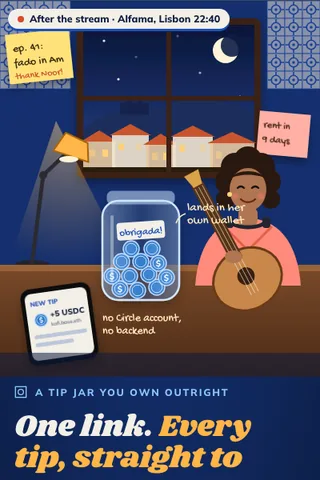
Take pay-what-you-want USDC tips on Base, with a live supporters feed read straight from chain. No Circle account, no backend.
 LIVE DEMO
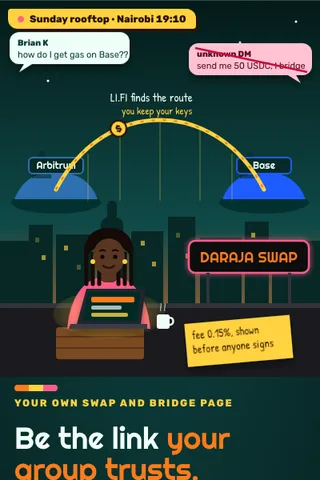
Your own swap/bridge front-end. Integrator fee optional and disclosed.
 LIVE DEMO
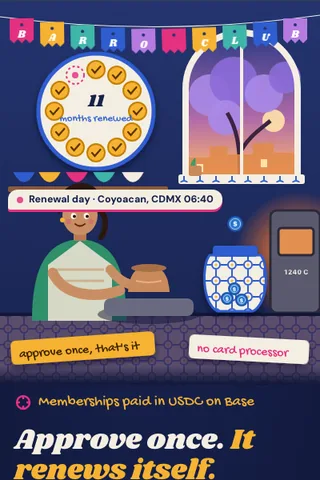
Recurring USDC on Base. Members approve once, it renews itself. No card processor, no contract.
 LIVE DEMO
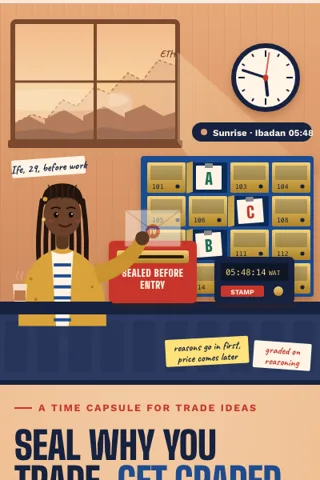
Write why you entered a trade, seal it with the timestamp, and get graded on reasoning, not luck.
 LIVE DEMO
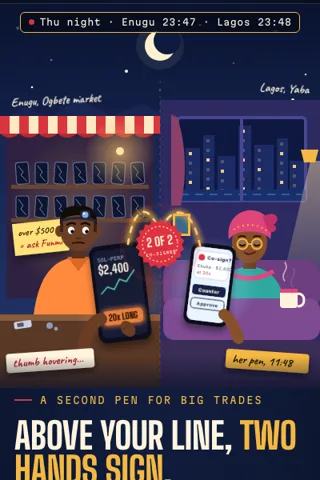
Let a trusted mentor co sign your risky trades above a size you choose.
 LIVE DEMO
Your perp bot follows your rules, and every rule you kept becomes a public, provable track record.
 LIVE DEMO
A tilt brake that delays your trades after losses until you answer one honest question.