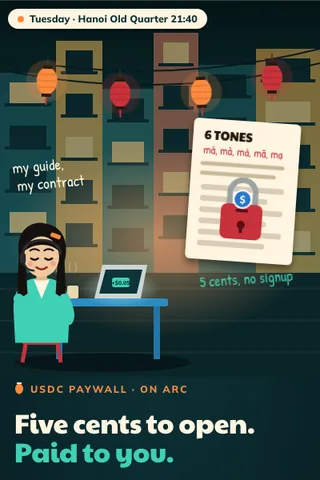
 LIVE DEMO
USDC Paywall
Lock content behind a fraction-of-a-cent USDC payment, on your own Arc contract. Deploy it, become the onchain creator.
Ready now
$20Arc
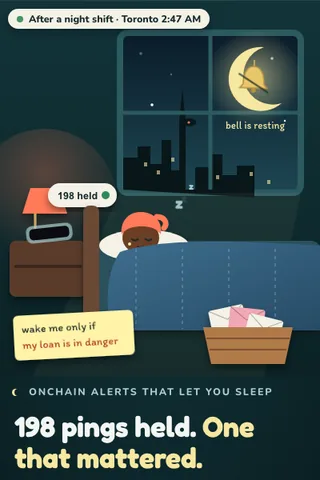 Try it live
Onchain alerts that respect your sleep, batching what can wait and waking you for what cannot.
Try it live, freeNgozi was getting 200 wallet pings a day. Quiet Hours triages by her own rules, wakes her only for liquidation risk, and delivers a morning digest for the rest.
Wallet watch, severity rules, Telegram and email delivery, daily digest
Reshape it entirely: new features, your flows, your brand end to end, integrations you need. We scope it with you.
Sleep-aware onchain alert triage already exists in Ava; batching and budgeting refinements are incremental.
Ava Protocol already offers per-wallet alerts with a quiet window that only lets critical alerts through, plus snooze controls, and Bitkey separates critical security alerts from general notifications.
Checked with web searches in October 2026. A search is not proof that nothing similar exists, and the market moves fast, so we recheck before every build.
Consumer app; eligibility unknown
The complete Quiet Hours app: onchain alerts triaged by the user's own rules, waking them only for what cannot wait, like liquidation risk, and folding everything else into a morning digest, with plans and checkout built in.
Every buyer gets the same finished app. Basic branding and copy changes come through a quick form.
Your admin side: revenue, paywall editor, users, rules and the agent log.
Referral and growth mechanics, switched on when you are ready to grow.
Night is free forever with liquidation wake ups always on. Users pay monthly for Deep sleep, and small teams pay for Desk.
No transaction fees. Watching costs a few cents per wallet a month; voice wake calls about 1 to 2 cents each.
Prices are yours to set. Illustrative, not a promise of income.
Onchain alerts that respect your sleep: batch what can wait, wake you for what cannot.
Problem: Active wallet users get hundreds of pings a day, mostly junk, so they mute everything and miss the one alert that could save a loan.
Solution: A watcher decodes every event, triages it by the user's rules, wakes them only for liquidation risk and what they choose, and sends one morning digest with safe action links.
Why now: More people hold onchain loans and approvals, webhooks and RPC are cheap, and small models write good digests for fractions of a cent.
Market: DeFi borrowers, active wallet users, and small treasury teams.
The ask: Pilot with two lending communities and 500 users, plus ecosystem grant support.
Funding is never guaranteed. Check each program's rules.
Many hackathons require code written at the event. See the Regatta Boardfor each race's rule.
Custom work from $500: protocol specific readers, a community branded setup link, or alert routing into your own tools. Scoped on a call.
People with active wallets get hundreds of notifications a day, mostly junk tokens, offers and dust. They mute everything, and then miss the rare alert that matters, like a loan nearing liquidation or a risky approval.
This largely exists. Ava Protocol already offers per-wallet alerts with a quiet window that only lets critical alerts through, plus snooze controls, and Bitkey separates critical security alerts from general notifications. Quiet Hours is an incremental take: owner-written wake rules per alert type, a loan health line, a grouped morning digest that folds junk, and a weekly tune-up that suggests rule changes. Research verdict: exists, low novelty.
Watched wallet addresses, the user's rule card (quiet window, wake types, loan health line, channels), decoded wallet events and lending positions, and delivery logs. Only transactions the user signs, plus a fingerprint of the rule card, are onchain.
Your wallet should guard your sleep: wake you for real danger and let everything else wait for morning.
The 7 AM envelope One digest grouped by wallet, with the risky item pinned on top and junk folded into a single line.
Sleep report Every Sunday: alerts held, folded and the ones that woke you, with a moon for each quiet night.
Tune of the week One suggested rule from your own patterns, like blocking a spammy contract. Nothing changes until you approve.
Chains: Base and Ethereum through RPC and webhook providers such as Alchemy Notify; Solana through Helius webhooks.
Decoder: Events are decoded and classed: liquidation risk (read from the lending pool's own oracle and health factor), approvals, large transfers, claims and votes, small transfers and junk.
Rules engine: Plain code applies the quiet window and wake list. Liquidation risk below the user's line always wakes. Stale price data counts as a reason to wake, not to wait.
Delivery: Critical alerts by Telegram, push with critical alert permission, or a voice call through a service like Twilio. Digests by email, Telegram or in-app.
Digest writer: A small model (for example Claude Haiku class) writes the one line summaries and groups junk. It never decides what wakes the user.
Action links: Repay and revoke buttons open a prepared transaction in the user's own wallet (Privy embedded or external). The app never holds keys.
Rule card: A hash of the rules is attested with EAS on Base so users and support can see which rules were in force.
Webhooks and RPC for watching: roughly $0.02 to $0.10 per wallet per month at typical volumes. Digest writing with a small model: well under $0.01 per user per day. Voice wake calls: about $0.01 to $0.02 each. Example month for 1,000 users with 3 wallets: about $150 infra, $60 model, $20 calls.
The sleep report share card is the hook: people post how many alerts waited for their coffee. Wallet and lending communities can embed a one link setup.
Missed alert: A stale feed or provider outage could hide real danger. Use two data sources, treat staleness as an alarm and show status openly.
False comfort: Users may treat alerts as protection. Say plainly that it only notifies, and cannot stop a liquidation by itself.
Privacy: Watched addresses link a person to wallets. Store minimal data, never sell it, allow full deletion.
Phishing look-alikes: Scammers copy alert messages. Action links must open only in the app or the user's wallet, never a link in a message.
Alert fatigue returns: Too many wake types defeat the point. The weekly tune-up should suggest fewer, not more.
Costs and tools are estimates at the time of writing. General information only, not legal or financial advice.
Nine routes from one vessel. Tap a port to open its chart.
Everyone with a wallet gets too many pings, and the tool that decides what is allowed to wake them earns a rare kind of trust. If you own Quiet Hours, the rules, the digest and the subscriber list are yours, so every night of good sleep is credited to your brand rather than to an alert company. You also own the relationship with every DAO, fund and community that needs calm, reliable alerts for its members.
Wallet watching, severity rules, Telegram and email delivery and the daily digest ship ready. You set default rules, invite people and answer questions. Custom channels like Discord or SMS are paid options, not homework.
That is true, and you should say so if asked. Your edge is focus: a branded service for one community, with rules tuned for their positions and a human (you) who answers when something feels wrong. Generic tools rarely do that.
That is the real risk. Keep liquidation and approval alerts always loud by default, show a delivery log, and be clear in your terms that alerts are best effort and never a replacement for the user's own risk limits.
The deployment, the brand, the subscriber list and the payout wallet are yours. If you stop using DEPLOYR, your users and data stay with you.
Not for fewer notifications. They pay for sleeping without fear. Sell the morning digest and the one alert that matters, and start with active DeFi users who already feel the pain.
Individuals pay a monthly subscription per watched wallet bundle. DAOs, funds and communities pay team plans for shared watch lists and on call rotations. The ladder below is a target, not a promise.
Illustrative stages, not a forecast. Results depend on you and the market; nothing here is guaranteed.
LIVE DEMOLock content behind a fraction-of-a-cent USDC payment, on your own Arc contract. Deploy it, become the onchain creator.
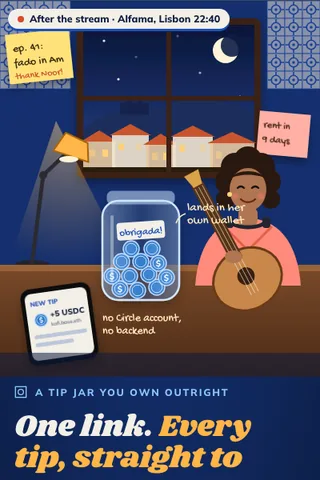 LIVE DEMO
Take pay-what-you-want USDC tips on Base, with a live supporters feed read straight from chain. No Circle account, no backend.
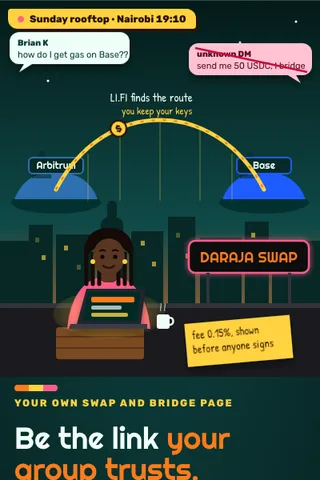 LIVE DEMO
Your own swap/bridge front-end. Integrator fee optional and disclosed.
 LIVE DEMO
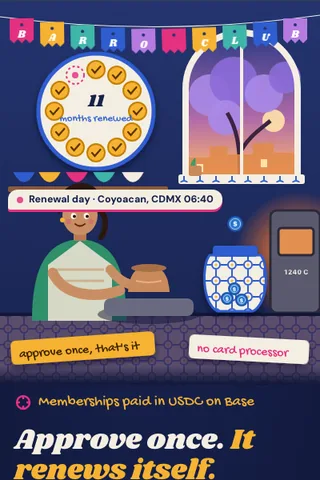
Recurring USDC on Base. Members approve once, it renews itself. No card processor, no contract.
 LIVE DEMO
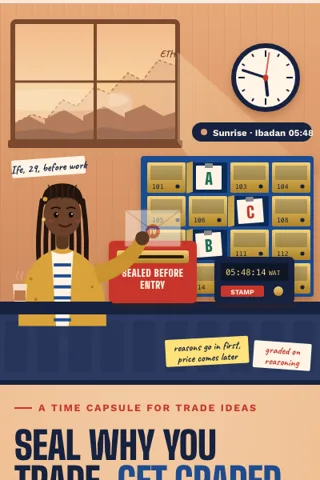
Write why you entered a trade, seal it with the timestamp, and get graded on reasoning, not luck.
 LIVE DEMO
Let a trusted mentor co sign your risky trades above a size you choose.
 LIVE DEMO
Your perp bot follows your rules, and every rule you kept becomes a public, provable track record.
 LIVE DEMO
A tilt brake that delays your trades after losses until you answer one honest question.