 LIVE DEMO
Fix Proof
Tradespeople log each repair with photos and a customer signature, sealed onchain as a warranty.
Reserve · refundable deposit
$159Base · Polygon +1
 Try it live
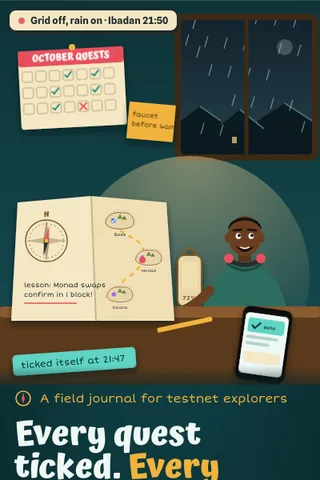
Track every testnet task you do by hand, with deadlines, notes, and what you actually learned.
Try it live, freeAde tries five testnets a month and loses track of which tasks he finished. Quest Journal keeps a calendar of tasks, reads his one wallet's activity to auto-tick them, and saves a short lesson for each protocol he used.
Task calendar, single-wallet auto-check, lesson notes, export to guide draft.
Reshape it entirely: new features, your flows, your brand end to end, integrations you need. We scope it with you.
Tracking exists in templates; a dedicated journal app with learnings is a modest step beyond.
Airdrop trackers exist mostly as Notion and spreadsheet templates (DropTime, paid Getly tracker) plus Layer3 quests.
Checked with web searches in October 2026. A search is not proof that nothing similar exists, and the market moves fast, so we recheck before every build.
The complete Quest Journal app: explorers keep a calendar of testnet tasks, one read only wallet ticks them automatically, and each protocol leaves a short lesson that can become a shareable guide, with a paywall, owner console and watcher built in.
Every buyer gets the same finished app. Basic branding and copy changes come through a quick form.
Your admin side: revenue, paywall editor, users, rules and the agent log.
Referral and growth mechanics, switched on when you are ready to grow.
Writing lessons is free. Explorers who want auto ticks, more testnets, nudges and guide export pay for Journal, and study groups pay for a shared Crew map.
No fees on activity. Optional EAS timestamps on Base cost about $0.01.
Prices are yours to set. Illustrative, not a promise of income.
A journal for onchain exploring that ticks tasks from one wallet and keeps what you learned.
Problem: People who explore testnets lose track of which tasks they finished and forget what each protocol taught them. Hours of exploring leave nothing behind.
Solution: A task calendar reads one public wallet to tick tasks, asks one question per protocol, and turns lessons into a guide draft that can be timestamped and shared.
Why now: New testnets launch every month, and small models make tidying notes into guides nearly free.
Market: Developers, students and study groups exploring new networks, and the educators who teach them.
The ask: Pilot with three developer study groups and ecosystem education grants.
Funding is never guaranteed. Check each program's rules.
Many hackathons require code written at the event. See the Regatta Boardfor each race's rule.
Custom work from $500: more networks, school branding, course content or a Telegram first version. Scoped on a call.
People who explore testnets lose track of which tasks they finished, from which wallet, before which deadline, and forget what they learned from each protocol. Hours of exploring leave nothing behind.
Airdrop and testnet trackers already exist, mostly as Notion and spreadsheet templates (DropTime, a paid Getly tracker) and quest platforms like Layer3 that track their own quests. What is a modest step beyond: a dedicated journal that reads one wallet's public activity to auto tick tasks across chains, keeps manual and verified ticks visibly different, and asks one short lesson per protocol that becomes an exportable guide draft. Research verdict: rare, medium novelty.
Tasks the user adds (title, network, deadline), public transactions of one read only wallet on the chosen testnets, the user's own lesson notes, and reminder settings. No keys, no signing, no other wallets.
Turn hours of onchain exploring into knowledge people keep, and can share or teach.
It ticks itself Do the task, and the journal sees the transaction and checks the box. No copy pasting hashes.
One question, 15 seconds What surprised you? A month of answers becomes a guide draft in your own words.
A map of your month Each testnet is an island on your page; the route grows as you go.
Sign in and one wallet: Privy email or wallet sign in. The user adds one address to read; nothing is signed and no keys are held.
Task calendar: Tasks with network, deadline and a match rule (contract, method, or protocol router). Templates for common testnet tasks.
Watcher: Small per wallet polls every 20 minutes via public RPCs and explorers for Base Sepolia, Arbitrum Sepolia, Solana devnet and Monad testnet; aggregator routers are mapped to end protocols. Failed reads show as checking, never as not done.
Lesson prompt: After a matched task, one question. Optional tidy up and guide draft by a small model tier such as Claude Haiku or a similar low cost model via OpenRouter.
Reminders: Telegram bot or email, either nightly or 24 hours before a deadline.
Export: Markdown guide draft and CSV of tasks. Optional: the author can attest a published guide's hash on Base with EAS to timestamp it.
Reading testnets through public RPCs is free to low cost; a paid RPC plan for reliability runs about $0 to $50 a month at small scale. A lesson tidy up with a small model is a fraction of a cent per lesson; a full guide draft roughly 1 to 3 cents. Optional EAS timestamp on Base is usually around $0.01 or less. Example month with 2,000 users: about $30 to $80 in RPC and model costs plus about $20 hosting.
Guide drafts and share cards carry the journal's name back into hunter and study groups; a friend who reads a good guide starts their own journal for next month.
False ticks: Routers and proxies can confuse matching. Verified and hand ticks look different, and unclear reads say checking.
Reward expectations: Testnet tasks are practice. The app never says tasks lead to an airdrop or payment.
Privacy: A wallet address links activity. Keep it private by default, read only one wallet, never link others.
RPC reliability: Public endpoints rate limit. Poll lightly, back off, and fall back to a second provider.
Copied lessons: Exported guides are the user's own words; the app drafts from their notes only, not from other users.
Costs and tools are estimates at the time of writing. General information only, not legal or financial advice.
Nine routes from one vessel. Tap a port to open its chart.
Quest Journal keeps a calendar of every testnet task someone does by hand, reads their one wallet to tick tasks off automatically, and saves a short lesson for each protocol they used. On a points tracking site, the site owns the user's task history and can push them toward whatever it is paid to promote. Own it, and your users' journals, the lessons they write and the guide drafts they export are under your brand, with nobody else deciding what they see.
No. Airdrops are never guaranteed. Quest Journal helps you stay organised and actually learn from what you try. That learning is the reliable part.
No. It is built for one wallet on purpose. It reads that wallet's public activity to tick tasks, nothing more.
Task calendar, wallet auto check, lesson notes and export come built.
Some will, mostly those who try many protocols and write about them. Communities and content creators are the stronger buyers.
Yes. Your domain, your git, your users.
Monthly subscriptions from active testers and writers, plus community plans for groups that share task lists and guides. This is a target, not a promise.
Illustrative stages, not a forecast. Results depend on you and the market; nothing here is guaranteed.
LIVE DEMOTradespeople log each repair with photos and a customer signature, sealed onchain as a warranty.
 LIVE DEMO
Leave clear onchain instructions so the people you trust can reach your crypto if you cannot.
 LIVE DEMO
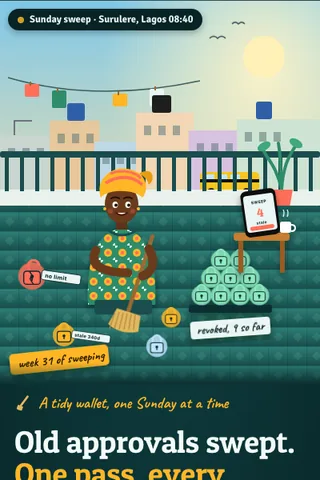
A weekly ritual that finds risky token approvals and lets you revoke them in one tidy pass.
 LIVE DEMO
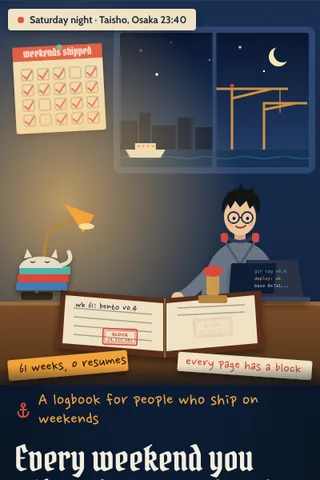
Every commit, deploy, and demo you ship becomes a signed, timestamped builder diary.
 LIVE DEMO
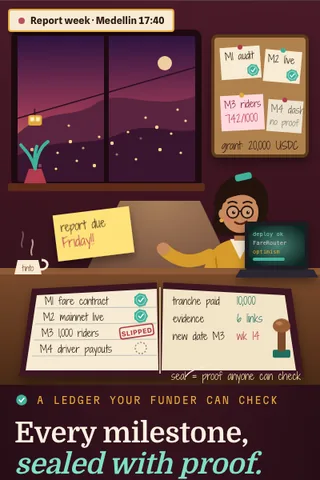
Show funders exactly what their grant built, milestone by milestone, with proof attached.
 LIVE DEMO
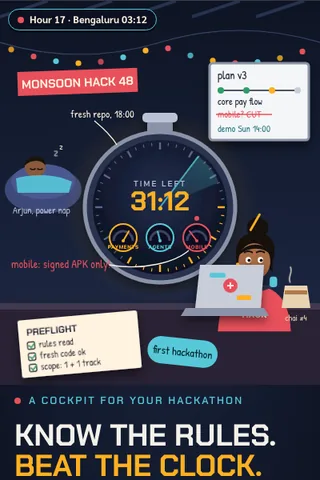
A hackathon cockpit that plans your scope, tracks bounties, and drafts a judge-ready submission.
 LIVE DEMO
Your DePIN devices report uptime and earnings in one honest dashboard with tax-ready exports.
 LIVE DEMO
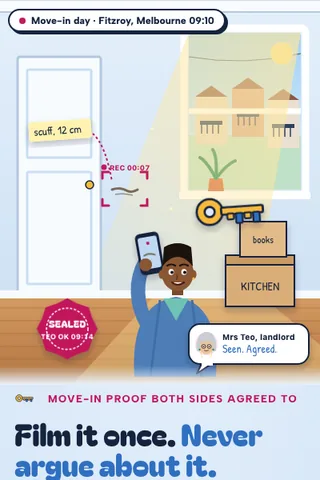
Tenants and landlords seal move-in photos and rent receipts so deposit disputes end fast.