 LIVE DEMO
Handoff Vault
Leave clear onchain instructions so the people you trust can reach your crypto if you cannot.
Reserve · refundable deposit
$179Base · Arbitrum +1
 Try it live
Tradespeople log each repair with photos and a customer signature, sealed onchain as a warranty.
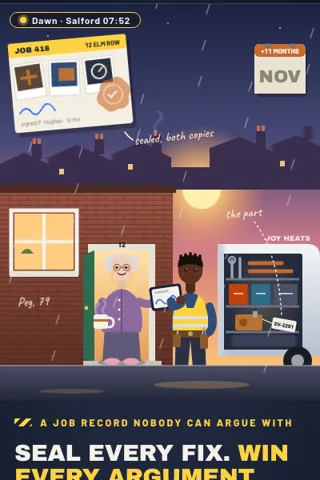
Try it live, freeJoy fixes a boiler and her customer taps to sign on her phone. A year later when the part fails, both of them can pull up the sealed job record without arguing about dates.
Job log with photo hashes, customer signature via email or wallet, warranty page, worker profile.
Reshape it entirely: new features, your flows, your brand end to end, integrations you need. We scope it with you.
Blockchain-anchored job photos exist; a tradesperson repair warranty flow is less common.
Kura and Record360 anchor inspection photos to blockchains, and WarrentChain stores warranties onchain, but none combine repair logs with customer signatures for tradespeople.
Checked with web searches in October 2026. A search is not proof that nothing similar exists, and the market moves fast, so we recheck before every build.
Real-world payments and apps; existing projects OK.
Existing shipped projects OK.
The complete Fix Proof app: tradespeople photograph each repair, get the customer's signature on any phone and seal the job with its warranty, so a year later it is a fact both sides can check.
Every buyer gets the same finished app. Basic branding and copy changes come through a quick form.
Your admin side: revenue, paywall editor, users, rules and the agent log.
Referral and growth mechanics, switched on when you are ready to grow.
Traders start free and upgrade per month in USDC. Firms pay for Crew, and trade associations pay for a branded edition for their members. Customers never pay to see their own job.
Association editions from $250 a month. Gas (under 1 cent per seal) and SMS (a few pence per job) can be sponsored by the owner.
Prices are yours to set. Illustrative, not a promise of income.
Every repair sealed with photos, the customer's signature and the warranty, so disputes end in minutes.
Problem: Small tradespeople lose time and money when customers dispute what was done and when. Paper job sheets get lost, and platform reviews belong to the platform, not the worker.
Solution: Photos are fingerprinted on the phone, the customer signs on any phone with a texted code, and the job is sealed onchain with its warranty terms. Only hashes go onchain.
Why now: Sponsored gas on Base, embedded email wallets and cheap small models make a tamper proof job record practical for people who never touch crypto.
Market: Solo tradespeople and small trades firms, plus the suppliers, associations, insurers and landlords who need trustworthy job evidence.
The ask: Pilot partners: one trade association and one merchant chain, and grant funding from Base Builder Grants and Polygon Community Grants.
Funding is never guaranteed. Check each program's rules.
Many hackathons require code written at the event. See the Regatta Boardfor each race's rule.
Custom work from $1,100: your own trades and job templates, integrations with job management or accounting tools, extra languages, or an association branded deployment. Scoped on a call.
Small tradespeople lose time and money when customers dispute what was done and when. Paper job sheets get lost, and platform reviews belong to the platform, not the worker.
Close neighbours exist: Kura and Record360 anchor inspection photos to blockchains, and WarrentChain stores warranties onchain. What is less common is one simple flow built for a solo tradesperson: photos, a customer signature that works on any phone, warranty terms, and a public work history the worker owns. The pieces are not new, the combination for this user is.
Per job: photo fingerprints (hashes), customer signature fingerprint plus a texted code, warranty terms, the time, and the worker's public trade name. Photos and customer details stay on the worker's device and encrypted backup.
Every honest repair becomes a fact both people can check, and every tradesperson owns the proof of their craft.
The argument that never happens When a part fails, both sides open the same sealed record. Dates and terms stop being a matter of memory.
A profile that is yours Hundreds of signed jobs form a work history no lead site can delist or charge to show.
Friday record A weekly summary of jobs sealed, a streak, and warranties ending soon, which doubles as a list of people to call for a service.
Phone first app: A web app the worker adds to their home screen. Photos are hashed with SHA-256 on device; images go to an encrypted backup the worker controls.
Accounts: Privy email or phone login creates an embedded wallet on Base for the worker. Customers never need a wallet; they sign on the worker's screen with a code texted to their own number, or by link.
Attestations: Each job is an EAS attestation on Base with a fixed schema: photo hashes, signature hash, terms hash, timestamp. Polygon or Celo can be chosen at setup.
Gas sponsorship: A paymaster on Base covers attestation gas so neither worker nor customer touches crypto.
Warranty page and checker: A public page per job and per worker reads attestations through an indexer such as the EAS GraphQL API. Anyone can drop in a photo to check it matches its fingerprint.
Assistant: A small model tier (for example a Claude Haiku class model via an API) drafts the job summary from voice notes and flags missing photos. A larger model is only used for dispute summaries.
Notifications: SMS via a messaging provider for signature codes, the customer copy, and annual service reminders.
Per job, roughly: attestation gas on Base usually well under 1 US cent (check live gas), 2 SMS messages at about 4 to 8 cents total in the UK, and a short small model call under 1 cent. Call it under 10 cents a job. Example month: a worker doing 80 jobs costs about 8 dollars, plus storage of a few gigabytes of photos at well under 1 dollar.
Every sealed job sends the customer a copy with the worker's name and a link. Customers forward it to neighbours and family, profile links get shared in local groups, and service reminders bring the same customer back each year.
Not a legal guarantee: A sealed record proves what was agreed and when. It does not replace consumer law, insurance or trade body rules. The app should say so plainly.
Privacy: Never put names, addresses or photos onchain. Only hashes. Customers can ask for the offchain copy to be deleted; the hash alone reveals nothing.
Fake jobs: A worker could seal jobs with a friend as the customer. The texted code to a real number, plus rate limits and patterns, reduces this but cannot remove it.
Lost phone: Photos must be backed up, or the hashes cannot be matched later. Backup is on by default.
SMS failure: Codes can be delayed or blocked. A fallback lets the customer sign later by link, with the job marked pending until they do.
Costs and tools are estimates at the time of writing. General information only, not legal or financial advice.
Nine routes from one vessel. Tap a port to open its chart.
Fix Proof lets a tradesperson seal each repair with photos and a customer signature, so a warranty claim a year later is a lookup, not an argument. Owning it means the trades firms that rely on it pay you, and every sealed job carries your brand into homes in your area. It is a quiet, trusted record nobody can edit, and you are the one who runs it.
You don't need to. The app ships deployed to your wallet with a setup guide. Your work is standing next to one tradesperson for a morning and helping their first customers sign.
Many do. Keep it to one tap after the job, and pitch it as fewer warranty arguments, not as crypto. Some will never switch, so start with the ones who already photograph their work.
It is evidence of what was done and when, not a legal contract by itself. Firms should keep their normal written terms and use Fix Proof as the proof behind them.
Yes. The contracts deploy from your wallet, and the brand, domain and customer list are yours. DEPLOYR takes no cut of what you charge after purchase.
Records live onchain on contracts deployed from your wallet, so a page outage does not erase anything. Setup issues are covered by the get-it-shipped promise.
Trades firms pay a monthly plan per van or technician, and trade associations pay for a branded version for members. Reaching $1M a year is a target to plan toward, not a promise. Most growth comes from associations and suppliers, not single traders.
Illustrative stages, not a forecast. Results depend on you and the market; nothing here is guaranteed.
LIVE DEMOLeave clear onchain instructions so the people you trust can reach your crypto if you cannot.
 LIVE DEMO
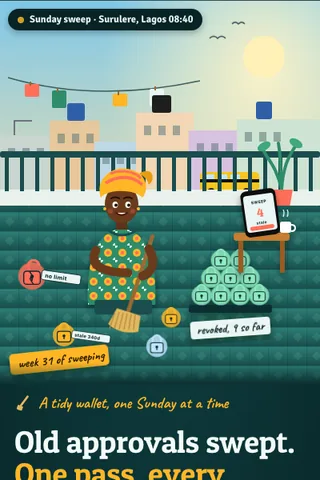
A weekly ritual that finds risky token approvals and lets you revoke them in one tidy pass.
 LIVE DEMO
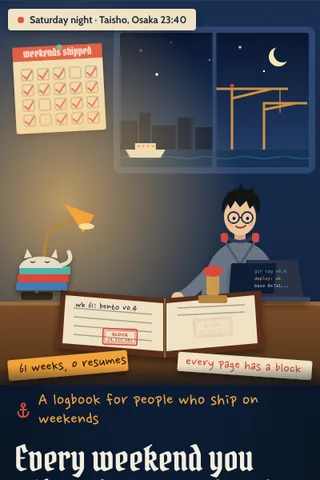
Every commit, deploy, and demo you ship becomes a signed, timestamped builder diary.
 LIVE DEMO
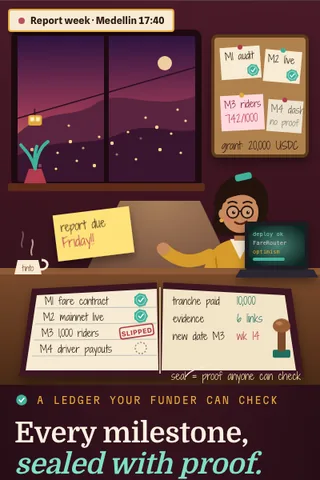
Show funders exactly what their grant built, milestone by milestone, with proof attached.
 LIVE DEMO
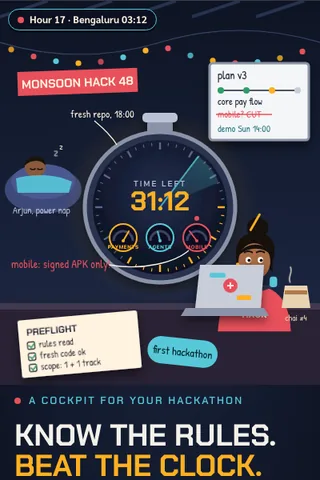
A hackathon cockpit that plans your scope, tracks bounties, and drafts a judge-ready submission.
 LIVE DEMO
Your DePIN devices report uptime and earnings in one honest dashboard with tax-ready exports.
 LIVE DEMO
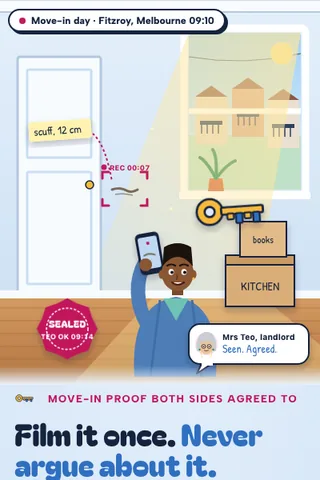
Tenants and landlords seal move-in photos and rent receipts so deposit disputes end fast.
 LIVE DEMO
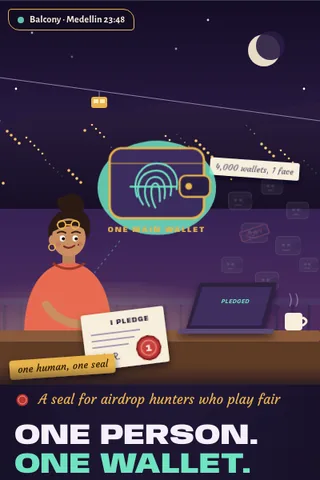
Airdrop hunters prove they are one real person with one main wallet and get ranked fairly.