 LIVE DEMO
Fix Proof
Tradespeople log each repair with photos and a customer signature, sealed onchain as a warranty.
Reserve · refundable deposit
$159Base · Polygon +1
 Try it live
Your DePIN devices report uptime and earnings in one honest dashboard with tax-ready exports.
Try it live, freeMarco runs a Helium hotspot, a weather station, and a bandwidth node. Node Diary pulls uptime, rewards and costs into one view, alerts him when a device drops, and exports a clean yearly summary.
Three DePIN network connectors, uptime alerts, net earnings with power cost, CSV export.
Reshape it entirely: new features, your flows, your brand end to end, integrations you need. We scope it with you.
The pieces exist separately; a unified DePIN operator ledger is the gap.
DePINscan shows per-network reward stats and Koinly/CoinTracking handle tax, but no tool found unifying device uptime and earnings with tax export.
Checked with web searches in October 2026. A search is not proof that nothing similar exists, and the market moves fast, so we recheck before every build.
Tooling for Solana DePIN; existing projects OK.
Existing projects allowed.
The complete Node Diary app: home operators see every DePIN device's uptime, rewards and electricity cost in one honest daily page, get fast outage alerts and a tax ready export, with a paywall, owner console and diary assistant built in.
Every buyer gets the same finished app. Basic branding and copy changes come through a quick form.
Your admin side: revenue, paywall editor, users, rules and the agent log.
Referral and growth mechanics, switched on when you are ready to grow.
Two devices and daily pages are free. Operators who run a whole roof pay monthly for fast alerts, plug restarts and the seal, and anyone can buy a yearly tax pack for their accountant.
No fees on rewards: the app is read only and never touches funds.
Prices are yours to set. Illustrative, not a promise of income.
One honest page a day showing whether your DePIN hardware is really paying you back.
Problem: Home operators juggle one app per network. None knows the electricity price, outages are noticed hours late, and at tax time there is no clean list of what was received, when, and what it was worth.
Solution: Read only connectors index rewards with the price at the minute they landed, device heartbeats drive alerts, power cost is subtracted, and pages are sealed monthly on Base so an export can be checked as unedited.
Why now: Millions of small earning devices now sit in homes, and tax authorities increasingly expect token income to be reported.
Market: Home DePIN operators, the hardware resellers that sell to them and the accountants who file for them.
The ask: Two hardware reseller partners and grant support from DePIN network foundations.
Funding is never guaranteed. Check each program's rules.
Many hackathons require code written at the event. See the Regatta Boardfor each race's rule.
Custom work from $1,400: extra network connectors, a reseller branded build, local tax templates or smart plug brands. Scoped on a call.
People who run small earning devices at home (radio hotspots, weather stations, bandwidth nodes) juggle one app per network. None of them knows the electricity price, outages are often noticed hours late, and at tax time there is no clean list of what was received, when, and what it was worth.
The pieces exist separately. DePINscan shows per-network reward stats and Koinly or CoinTracking handle crypto tax reports, but research found no tool that unifies device uptime, earnings net of power cost, and a tax-ready export for the operator. Research verdict: rare, medium novelty. What is new here is the operator ledger: one daily page across networks, alerts from a device heartbeat, and net after electricity. It is an integration and honesty layer, not a new network.
Public reward wallet addresses per device on Solana, Polygon and Base; a small heartbeat ping from each device or its local gateway; the owner's electricity price and device wattage; token prices at the time each reward lands; optional smart plug state. Power bills and home location stay private to the owner.
Show every home operator, in one honest number, whether their hardware is really paying them back.
The red line A device that costs more in power than it earns shows up in red, week after week. One look tells you what to unplug.
Silent nights No news is good news: the app only pings you when a heartbeat goes missing, with a one-tap restart when a smart plug is connected.
Sunday page Five lines each Sunday: uptime, landed, power, net, and one thing to check. A streak for weeks with everything up.
Wallets and devices: The owner adds public reward addresses and device IDs. Read only: no keys, no signing, no claims. Sign in with Privy email or passkey.
Reward indexer: A Helius webhook for Solana and an Alchemy or Goldsky stream for Polygon and Base record every incoming reward transfer with its timestamp.
Heartbeat: A tiny script on the device or router posts a signed ping every 5 minutes to a Convex endpoint. Missing pings trigger alerts; explorer data is only a cross check.
Pricing: Each reward line stores the token price at the minute it landed from a price API (for example CoinGecko), with the source printed on the export.
Net and alerts: Power cost is computed from wattage and the owner's kWh price. Alerts go out by Telegram bot, email or web push. Optional smart plug restart through the plug's local API.
Monthly seal: Daily pages are hashed into a Merkle root and attested once a month with EAS on Base, so an exported diary can be checked as unedited.
Assistant: A small model (for example Claude Haiku tier) writes the Sunday summary and the one thing to check, from the numbers only.
Per user per month: indexing and webhooks under $0.10 at hobby volume, heartbeat storage and functions about $0.05, one EAS attestation on Base usually well under $0.05, weekly summary with a small model about $0.01. Example: 1,000 operators cost roughly $150 to $250 a month including hosting and price API.
Every exported file and Sunday share card carries the app name. Operators share red-line screenshots in network communities; hardware resellers can bundle the app as a setup check.
Tax rules: Valuation rules differ by country. The app prints its method and sources and never claims to be tax advice; the accountant chooses.
Reward volatility: Network reward rules and token prices change. Charts show history only and never forecast earnings.
Privacy: Device locations can reveal a home. Locations and bills stay offchain and private; only an anonymous root is sealed.
Heartbeat spoofing: A fake heartbeat could hide an outage. Pings are signed per device and cross checked against network data daily.
Smart plug control: Remote power cycling is opt in, limited to one action per alert, and logged.
Costs and tools are estimates at the time of writing. General information only, not legal or financial advice.
Nine routes from one vessel. Tap a port to open its chart.
Node Diary pulls your DePIN devices' uptime, rewards and power costs into one honest dashboard with tax-ready exports. Owning it means the operators who rely on it rely on your brand, your connectors and your wallet, not a dashboard that can change pricing or disappear. Every operator you help see whether their hardware pays back becomes a customer you can serve for years.
You do not need to. Three network connectors, uptime alerts, net earnings with power cost and CSV export come ready. You pick the networks and add your devices.
It can happen, and honest dashboards say so. Show a clear "data delayed" note when a source fails, and ask DEPLOYR for a connector fix under your build. Starting with three networks keeps this manageable.
No. It is a clean record of rewards and costs that an accountant or a tax tool can use. Say that plainly on your page and never promise a tax outcome.
Free dashboards exist per network. Your value is the unified view with power costs and alerts. Start with operators running two or more networks, since they feel the pain most.
Yes. Your domain, your branding, your wallet. Operators connect their own device addresses read only; you never hold their rewards.
You earn subscriptions from DePIN operators: a low monthly fee for hobbyists with a few devices, a higher tier for fleet operators with dozens or hundreds, and a yearly export pack around tax season. Fleet tiers and installer partnerships carry most of the revenue.
Illustrative stages, not a forecast. Results depend on you and the market; nothing here is guaranteed.
LIVE DEMOTradespeople log each repair with photos and a customer signature, sealed onchain as a warranty.
 LIVE DEMO
Leave clear onchain instructions so the people you trust can reach your crypto if you cannot.
 LIVE DEMO
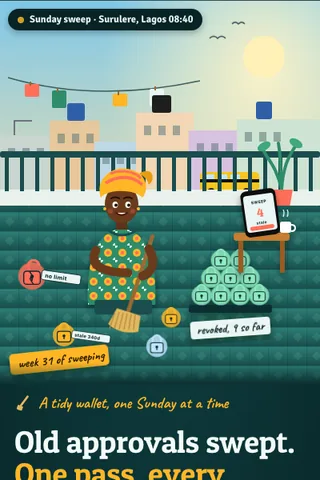
A weekly ritual that finds risky token approvals and lets you revoke them in one tidy pass.
 LIVE DEMO
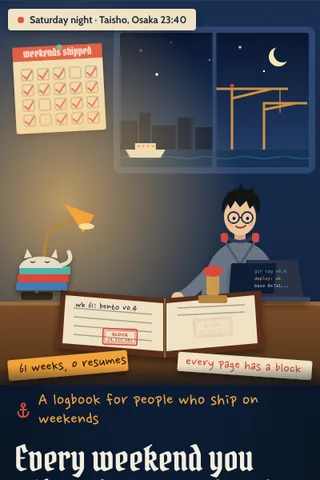
Every commit, deploy, and demo you ship becomes a signed, timestamped builder diary.
 LIVE DEMO
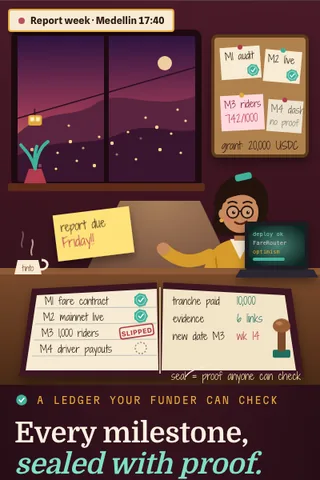
Show funders exactly what their grant built, milestone by milestone, with proof attached.
 LIVE DEMO
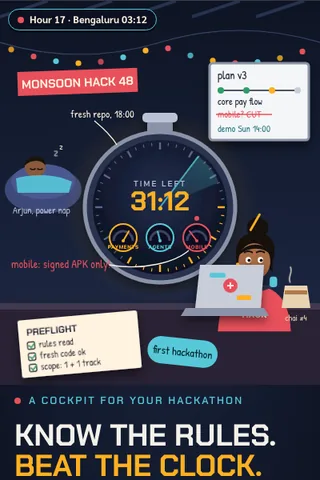
A hackathon cockpit that plans your scope, tracks bounties, and drafts a judge-ready submission.
 LIVE DEMO
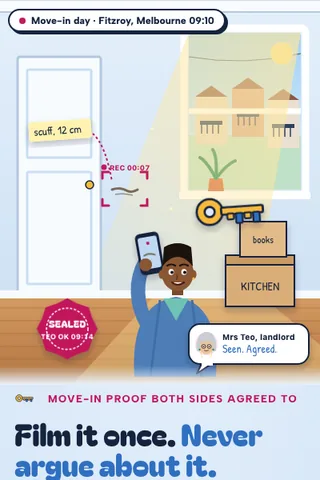
Tenants and landlords seal move-in photos and rent receipts so deposit disputes end fast.
 LIVE DEMO
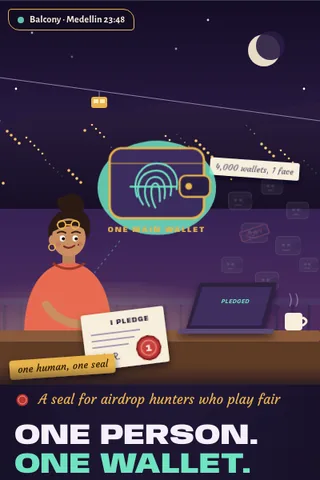
Airdrop hunters prove they are one real person with one main wallet and get ranked fairly.