 LIVE DEMO
Fix Proof
Tradespeople log each repair with photos and a customer signature, sealed onchain as a warranty.
Reserve · refundable deposit
$159Base · Polygon +1
 Try it live
Tenants and landlords seal move-in photos and rent receipts so deposit disputes end fast.
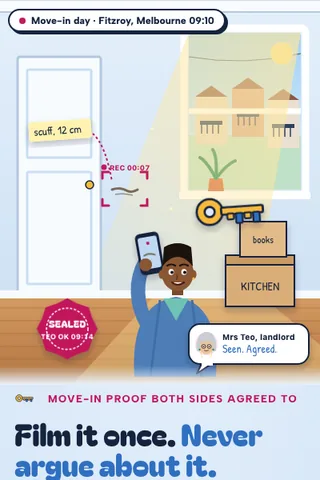
Try it live, freeOn move-in day, Sam walks the flat filming each room; the hashes are sealed with his landlord's acknowledgment. At move-out there is no he-said-she-said, and his 24 months of on-time rent become a portable renter record.
Room-by-room capture, hash sealing, two-party acknowledgment, rent receipt log, renter profile.
Reshape it entirely: new features, your flows, your brand end to end, integrations you need. We scope it with you.
Blockchain move-in evidence is already sold; rent receipts are the main addition.
Kura sells blockchain-timestamped move-in inspections to landlords, and Move-In Proof (Monad hackathon) records deposit terms and photos onchain.
Checked with web searches in October 2026. A search is not proof that nothing similar exists, and the market moves fast, so we recheck before every build.
Real-world apps; existing projects OK.
The complete Lease Trail app: renters film and seal their move-in with the landlord's acknowledgment, stack rent receipts on the same record and carry a renter record they share by link, with a paywall and helper agent built in.
Every buyer gets the same finished app. Basic branding and copy changes come through a quick form.
Your admin side: revenue, paywall editor, users, rules and the agent log.
Referral and growth mechanics, switched on when you are ready to grow.
Renters never pay to seal their own move-in. Renters pay a small monthly fee for the parts that follow them to the next flat, and agencies pay per property a year.
Gas (under $1 per tenancy for a seal and 24 receipts) can be sponsored by the owner. SMS links about $0.05 each.
Prices are yours to set. Illustrative, not a promise of income.
Move-in proof both sides agreed to, and a rent record the tenant carries.
Problem: Bond disputes are one word against another. Tenants take undated photos that get lost, landlords remember things differently two years later, and years of paying on time cannot be carried to the next application.
Solution: Tenants film each room, the phone fingerprints every clip, and both sides sign one seal. Rent receipts stack on the same record. At move-out it is two pictures side by side, and the renter shares their record by expiring link.
Why now: Cheap attestations on Base and Polygon, embedded email wallets and SMS signing make a two-party record practical for landlords who will never install a crypto app.
Market: Renters in high churn cities, the agencies that manage their tenancies, and the applications that need a fair way to read rental history.
The ask: Pilot partners: one letting agency and one tenant union, plus grant funding such as Polygon Community Grants.
Funding is never guaranteed. Check each program's rules.
Many hackathons require code written at the event. See the Regatta Boardfor each race's rule.
Custom work from $1,200: your own room templates and inspection checklists, integrations with an agency CRM or bond authority, other regions' bank feeds, extra languages, or an agency branded deployment. Scoped on a call.
Bond and deposit disputes are often one word against another. Tenants take undated photos that get lost, landlords remember things differently two years later, and a renter's long record of paying on time is not something they can carry to the next application.
Blockchain move-in evidence already exists. Kura sells blockchain timestamped move-in inspections to landlords, and Move-In Proof (a Monad hackathon project) records deposit terms and photos onchain. Research verdict: exists, low novelty. The main addition here is tenant-first: two-party acknowledgment of the walkthrough, rent receipts matched from bank transfers on the same record, and a renter profile the tenant owns and shares by link. It is a modest extension of a known idea, not a new mechanic.
Video and photo clips captured in app, fingerprinted on the device; room notes; signatures of tenant and landlord or agent; rent transfer matches from an open banking feed or manual upload; quarterly landlord confirmations. Media, names and the address stay offchain and encrypted.
Make move-in condition and rent history something both sides agreed to and the tenant can carry.
Two pictures At move-out, the same room and angle from two dates side by side. Most arguments end there.
Receipts stack Each month a receipt lands on the record, with a quiet streak counter for on-time months.
Share for 30 days One link for a new application, revocable, showing on-time months and sealed move-ins without amounts unless chosen.
Capture: A mobile web or native app records clips per room and computes SHA-256 fingerprints on the device before any upload or compression.
Two-party sign: Tenant and landlord sign in with Privy (email, SMS or passkey, embedded wallet). The landlord gets an SMS link and acknowledges in two taps, adding notes if needed.
Seal: Fingerprints form a Merkle root, attested with EAS on Base (or Polygon) with both signers. Only hashes and signer addresses go onchain.
Storage: Originals stay on the tenant's device with an encrypted backup (for example S3 with client side encryption); sharing uses expiring links.
Rent receipts: An open banking connector (for example Basiq in Australia) or a bank statement upload matches transfers by reference; a monthly receipt attestation is added.
Compare pack: At move-out, the app pulls matching move-in clips per room and builds a PDF pack with fingerprints that anyone can verify.
Assistant: A small vision model (for example Claude Haiku tier) suggests which move-in frame matches a move-out photo; people decide.
Per tenancy: a move-in seal and 24 monthly receipt attestations on Base typically cost well under $1 in gas in total; encrypted storage for about 2 GB of video about $0.05 a month; SMS links about $0.05 each; frame matching about $0.02 per room. Example: 500 active tenancies cost roughly $80 to $150 a month to run.
Every acknowledgment link brings a landlord or agent into the app; every shared renter record shows a new agency what a sealed move-in looks like.
Legal weight: A sealed record proves when files existed and who agreed, not who caused damage. Tribunals decide; the app is not legal advice.
Privacy: Videos show a home and belongings. Media stays encrypted offchain, sharing is explicit and expiring, nothing personal is onchain.
One-sided records: If the landlord never acknowledges, the record is weaker. The app says so plainly and keeps reminding before the window closes.
Tampering: Edited clips will not match their fingerprints. Hashing happens on capture, before any upload.
Rent data: Bank feeds are read only and amounts are hidden from shared records by default.
Costs and tools are estimates at the time of writing. General information only, not legal or financial advice.
Nine routes from one vessel. Tap a port to open its chart.
Deposit disputes are fought with blurry photos and memory, and whoever runs the evidence tool quietly becomes the trusted middle of every tenancy. Owning Lease Trail puts that position in your hands: your brand on every move-in report, your wallet earning from every sealed inspection, and a growing onchain record that you helped hundreds of renters get their money back fairly.
A hash proves the photo existed unchanged at a given time, and the landlord's acknowledgment shows both sides saw it. That is strong supporting evidence, but rules differ by country and no tool guarantees a ruling. Present it as better evidence, not a legal verdict, and suggest users keep the original files too.
Many will, at first. The acknowledgment works with a simple email link, no wallet needed, and a tenant can still seal photos alone with a timestamp. Lead with letting agents who want fewer disputes, not reluctant individual landlords.
Only hashes go onchain. Store originals with the user or in encrypted storage they control, publish a short privacy page, and never put addresses or faces onchain. If you are unsure about data rules where you live, ask a local adviser before taking business customers.
You do not need to be. Start with renters you know: students, friends moving flat, your own next move. Ten sealed move-ins and one avoided dispute is a story agents will listen to.
Yes. The sealing contract deploys from your wallet, payouts land in your wallet, and the domain and brand are yours. DEPLOYR builds it and hands it over.
Renters pay a small fee per sealed move-in or move-out report, and letting agents and small landlords pay a monthly seat for unlimited inspections with their branding. The renter profile (24 months of on-time rent) can later become a premium export for rental applications. This is a target, not a promise.
Illustrative stages, not a forecast. Results depend on you and the market; nothing here is guaranteed.
LIVE DEMOTradespeople log each repair with photos and a customer signature, sealed onchain as a warranty.
 LIVE DEMO
Leave clear onchain instructions so the people you trust can reach your crypto if you cannot.
 LIVE DEMO
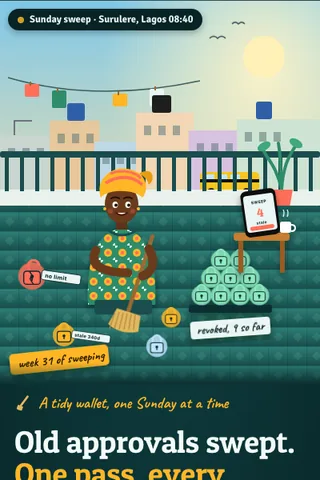
A weekly ritual that finds risky token approvals and lets you revoke them in one tidy pass.
 LIVE DEMO
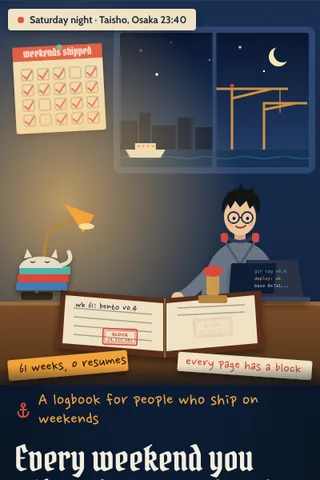
Every commit, deploy, and demo you ship becomes a signed, timestamped builder diary.
 LIVE DEMO
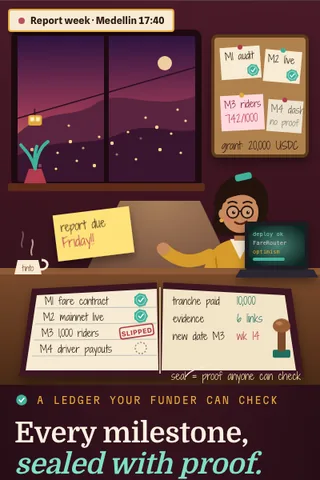
Show funders exactly what their grant built, milestone by milestone, with proof attached.
 LIVE DEMO
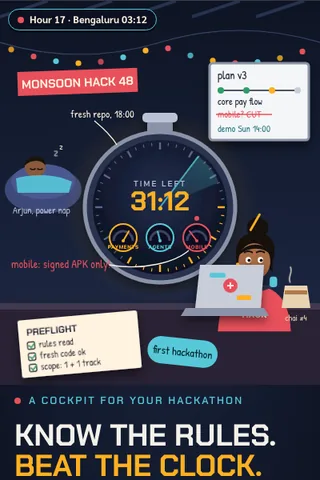
A hackathon cockpit that plans your scope, tracks bounties, and drafts a judge-ready submission.
 LIVE DEMO
Your DePIN devices report uptime and earnings in one honest dashboard with tax-ready exports.
 LIVE DEMO
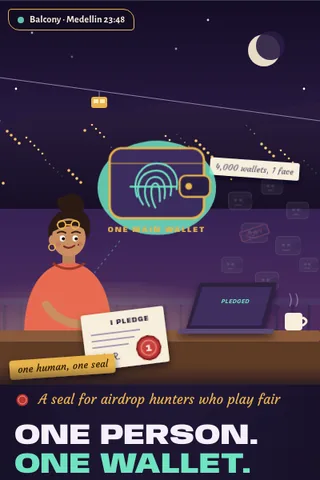
Airdrop hunters prove they are one real person with one main wallet and get ranked fairly.