 LIVE DEMO
Sealed Take
Everyone stakes a conviction, encrypted. The chain tallies it without ever seeing a single take. FHE on Base.
Ready now
$20Fhenix
 Try it live
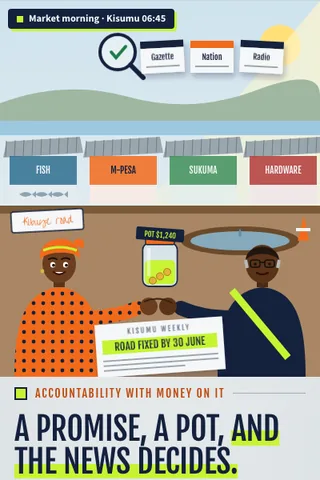
Stake on a public promise and let GenLayer read the sources to decide if it was kept.
Try it live, freeA councillor promises to fix the market road by June. Residents fund a pot; Promise Keeper reads the agreed news and government pages and releases the pot to the road fund or back to residents.
Promise page, pot contract, source list, verdict record.
Reshape it entirely: new features, your flows, your brand end to end, integrations you need. We scope it with you.
Off chain promise trackers exist (Code for Africa); a GenLayer staked promise was not found.
Code for Africa PromiseTracker; Agora on GenLayer.
Checked with web searches in October 2026. A search is not proof that nothing similar exists, and the market moves fast, so we recheck before every build.
Ecosystem program for shipped apps; check current terms.
The complete Promise Keeper app: residents write down a public promise, lock the sources that will judge it, fund a pot, and let validators read those sources after the deadline to pay the project fund, split, or refund.
Every buyer gets the same finished app. Basic branding and copy changes come through a quick form.
Your admin side: revenue, paywall editor, users, rules and the agent log.
Referral and growth mechanics, switched on when you are ready to grow.
One promise per ward is free with refunds always. Organizers and newsrooms pay monthly, and the owner may take a small fee on pots that are kept.
Optional fee on kept pots set by the owner (default 0). Verdict transactions and batched payouts cost a few dollars a month.
Prices are yours to set. Illustrative, not a promise of income.
Put money on a public promise and let validators read agreed sources to decide if it was kept.
Problem: Local promises are easy to make and hard to follow up; residents have no leverage and no shared record.
Solution: A promise page with locked criteria and sources, an anonymous pot, and a GenLayer verdict that reads those sources after the deadline and pays the project fund, splits, or refunds.
Why now: Intelligent contracts can read web pages with validator consensus, and stablecoin pots make small community contributions cheap.
Market: Residents' associations, market traders, local newsrooms and civic groups.
The ask: Pilot in three Kisumu wards with one radio station and one local paper.
Funding is never guaranteed. Check each program's rules.
Many hackathons require code written at the event. See the Regatta Boardfor each race's rule.
Custom work from $1,400: local payment rails, a newsroom branded tracker, extra languages, or civic data integrations. Scoped on a call.
Public promises about roads, boreholes and clinics are easy to make and hard to follow up. Residents have no shared, neutral way to say in advance what counts as kept, and no consequence beyond the next election.
Promise tracking exists offchain: Code for Africa's PromiseTracker lets communities track government promises. GenLayer itself has examples of AI-judged contracts such as Agora. What is new here is a resident-funded pot tied to one public promise, with sources agreed before the deadline and GenLayer validators reading them to release the pot to the project or back to contributors. A staked promise of this kind on GenLayer was not found; this is high novelty but unproven.
The promise text, deadline, agreed source URLs with fallback links, the pot contract balance and contributions, the validators' verdict with hashes of the page text they read, and the payout split. Contributor identities and amounts are kept by the app and not published.
Put residents' money behind public promises and let agreed evidence, not the person who promised, decide what happens to it.
Rules before results Everyone agrees on the sources before anyone knows the outcome, so the verdict is hard to argue with.
Money goes somewhere good either way Kept, it maintains the project. Broken, it comes back to the people who chipped in.
Monday digest A short weekly list of promises due in your ward, with one tap to follow or chip in.
Promise page: An organizer writes the promise, deadline and what counts as kept, and lists the sources with fallback links.
Pot contract: An intelligent contract on GenLayer holds contributions. No one can withdraw early.
Source rules: At least two independent sources must agree. The promiser's own pages can be read but never count toward kept.
Verdict: At the deadline, GenLayer validators each fetch the pages, run their own model and must reach consensus on kept, partly kept, broken or undetermined.
Payout: The pot goes to a named project fund, splits by measured progress if chosen, or refunds contributors. Undetermined holds the pot for a resident vote.
A verdict needs one GenLayer transaction with web reads by several validators; fees depend on the network and are expected to be small per promise. Hosting the promise pages and digest runs about $20 a month. Stablecoin payouts to many contributors are batched to keep per person cost low.
Each verdict produces a shareable result card that residents post in their groups. Local newsrooms and radio stations become sources and then hosts. Every new promise brings its own contributors into the app.
Bad sources: If sources are biased or go offline, verdicts suffer. Two independent sources, fallback links and an undetermined outcome are the guardrails.
Model mistakes: Validators can misread a page. Consensus among several validators and an appeal window reduce this.
Politics: Pots can be used to campaign. Promise pages should describe outcomes, not parties, and the app takes no side.
Rules on collecting money: Collecting money from the public may be regulated where you live. Check local rules before launching.
Costs and tools are estimates at the time of writing. General information only, not legal or financial advice.
Nine routes from one vessel. Tap a port to open its chart.
Promise Keeper: Stake on a public promise and let GenLayer read the sources to decide if it was kept. Using someone else's version means their rules, their brand and their revenue. Owning Promise Keeper means it is deployed under your wallet, carries your name, and every customer, partner and result builds your track record instead of theirs.
Promise Keeper arrives deployed with a guide. Running it is settings and sharing links, not code. If you get stuck, we help you ship it.
Start with ten people you already know. The first move below takes under an hour and tells you fast whether people care.
Each step is sized in minutes. Most owners spend an hour a week, and the app does the repetitive part.
Nothing is guaranteed. The playbook gives you a clear path and honest numbers, and you decide how far to take it.
Charge the people who get the most value from Promise Keeper: a monthly plan for groups or teams, plus setup fees for anyone who wants it done for them.
Illustrative stages, not a forecast. Results depend on you and the market; nothing here is guaranteed.
A starter chart. A fuller, app-specific playbook is being written.
LIVE DEMOEveryone stakes a conviction, encrypted. The chain tallies it without ever seeing a single take. FHE on Base.
 LIVE DEMO
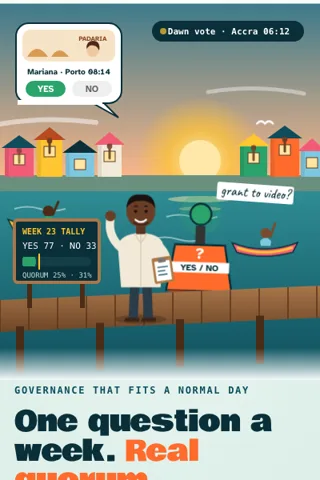
Governance by text-sized questions: one decision a week, answered in ten seconds, with real quorum.
 LIVE DEMO
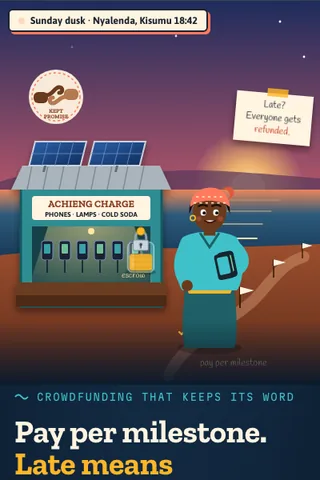
Crowdfunding where backers get refunded by contract if the goal or the milestones are missed.
 LIVE DEMO
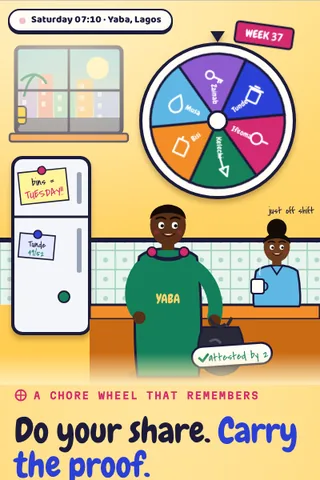
A shared house or club tracks who did the work, and the record becomes everyone's portable reliability score.
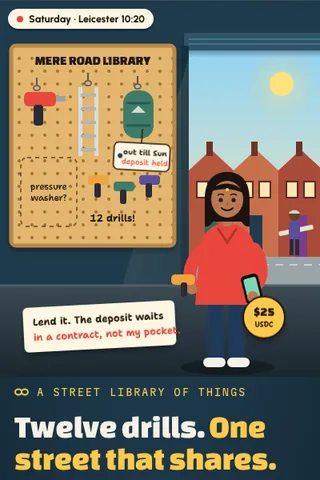 LIVE DEMO
Lend the ladder, the drill, the tent: a street library of things with deposits held by contract.
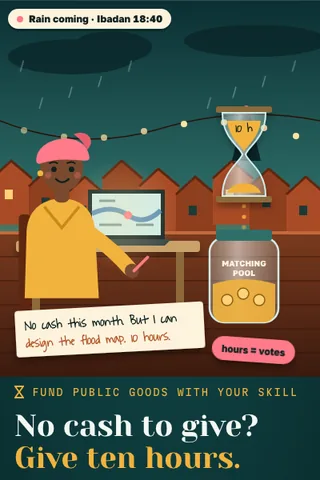 LIVE DEMO
Fund a public good with hours of your skill, not just money, and get matched like a donation.
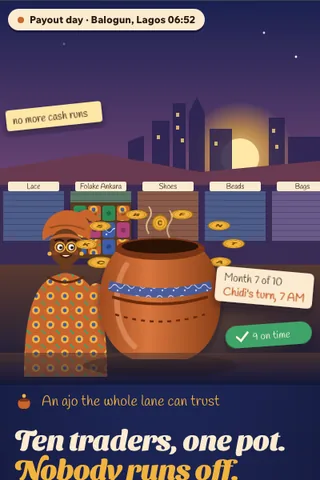 LIVE DEMO
A rotating savings circle (ajo, susu, chama) with payouts enforced by contract and trust scores for members.
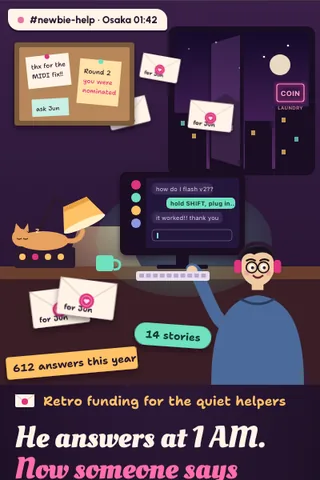 LIVE DEMO
Retro funding for the quiet helpers: the community nominates who mattered, a pot pays them.