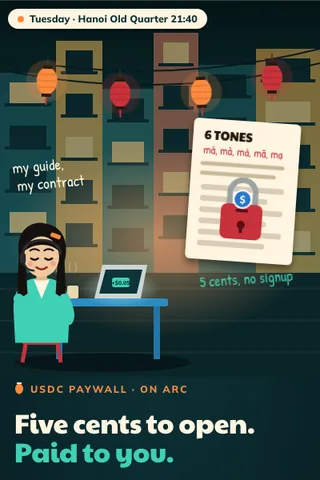
 LIVE DEMO
USDC Paywall
Lock content behind a fraction-of-a-cent USDC payment, on your own Arc contract. Deploy it, become the onchain creator.
Ready now
$20Arc
 Try it live
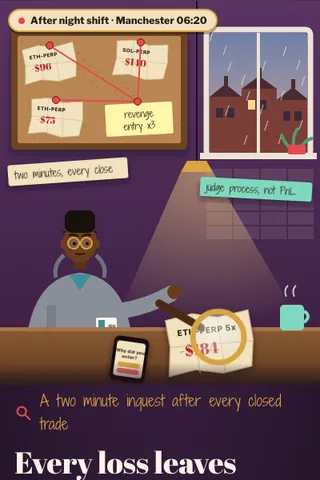
After every closed trade, a two minute review that compounds into your personal trading playbook.
Try it live, freeSeyi closes a loss. Post Mortem asks three questions, tags the mistake, and after a month shows him his top three repeat errors with onchain proof of improvement.
Fill import, review prompts, mistake tagging, monthly improvement report
Reshape it entirely: new features, your flows, your brand end to end, integrations you need. We scope it with you.
Onchain-anchored post-trade reviews were not found as a product, though adjacent tools exist.
Offchain journals like Edgewonk and Tradervue do reviews, and BausBank vtr-core anchors decisions, but none found tying reviews to onchain fills with improvement attestations.
Checked with web searches in October 2026. A search is not proof that nothing similar exists, and the market moves fast, so we recheck before every build.
Eligibility unknown
The complete Post Mortem app: traders review every closed trade in two minutes, tags judge process not profit, and a private journal turns repeat mistakes into a playbook, with a paywall and USDC checkout built in.
Every buyer gets the same finished app. Basic branding and copy changes come through a quick form.
Your admin side: revenue, paywall editor, users, rules and the agent log.
Referral and growth mechanics, switched on when you are ready to grow.
Reviewing your own trades is free. Traders pay monthly for the habit tools and the proof, and coaches pay for groups who want members reviewing.
Paid in USDC on Base by default, other chains or card on-ramp optional. Attestation gas (under 1 cent) can be sponsored by the owner.
Prices are yours to set. Illustrative, not a promise of income.
A two minute review after every closed trade that compounds into a personal playbook, with improvement provable onchain and the journal kept private.
Problem: Most traders repeat the same few mistakes, revenge entries, moved stops, oversizing, but never review consistently. Journals feel like homework, and judging trades by profit teaches the wrong lessons.
Solution: Read only fill import, three tap questions on close, process tags decided by the fills, an encrypted journal, a weekly rule, and a monthly score attested on Base without trades, notes or PnL.
Why now: Perps volume moved onchain to venues like Hyperliquid with public fills, attestations on Base cost under a cent, and small models can compare answers with fills for a fraction of a cent.
Market: Active onchain perps traders, plus the coaches, trading communities and prop programmes who want members to review their decisions.
The ask: Ten coach groups for a pilot, and builder support from the Hyperliquid ecosystem.
Funding is never guaranteed. Check each program's rules.
Many hackathons require code written at the event. See the Regatta Boardfor each race's rule.
Custom work from $600: extra venues, your own review questions and tags, a branded coach programme, or integrations with a community Discord. Scoped on a call.
Most traders repeat the same few mistakes, revenge entries, moved stops, oversizing, but never review trades consistently. Journals feel like homework, and judging trades by profit teaches the wrong lessons.
Offchain trading journals like Edgewonk and Tradervue already do post-trade reviews, and BausBank vtr-core anchors decisions onchain. Research did not find a product tying short reviews to onchain fills with improvement attestations. Research verdict: rare, medium novelty. The review method itself is standard; what is new is fill-linked process tagging and a private journal with a public, attested improvement score.
Closed fills read from public Hyperliquid, Solana and Base activity for the user's wallet, the user's answers and notes (encrypted on device), process tags, and monthly scores.
Turn every closed trade into a lesson, and let people prove they are getting better without exposing their journal.
Two minutes, every close Three tap questions while the trade is fresh, one for tiny scalps.
A green trade can be a mistake It tags process against your plan, so luck does not hide bad habits.
Sunday rule Each week your top repeat mistake becomes one rule in your playbook, checked against your fills.
Read-only wallet link: The user connects a wallet or pastes an address; no signing permissions. Fills come from the Hyperliquid info API and public Solana and Base indexers.
Trade builder: Groups fills into trades with entry, exit, size, stop moves and timing relative to previous stops.
Review prompts: Push notification on close with three questions; a small model (for example Claude Haiku tier) compares answers with the fills and proposes a process tag.
Private journal: Answers and notes are encrypted on device and synced as ciphertext. Only the user can read them.
Monthly attestation: An EAS attestation on Base records the month's repeat error rate, review count and a hash of the reviews. No trades, notes or PnL are published unless the user chooses.
Digest: Sunday digest with top repeat errors and a suggested rule, verified against next week's fills.
Per review: a small model call of about 1,000 tokens costs a fraction of a cent. A Base EAS attestation is typically under 1 cent in gas. Example month for 1,000 active users doing 40 reviews each: about $40 to $80 in model calls, about $10 in attestation gas, plus indexer and hosting of roughly $50 to $100.
Attested improvement cards are shareable without exposing PnL, which suits trading groups and mentors. Coaches invite students. The weekly rule loop keeps users coming back on Sundays.
Not financial advice: The app measures process, not outcomes, and must never suggest trades or imply better reviews mean profits.
Privacy: Wallet addresses link to public trades. Notes stay encrypted and attestations hold only scores and hashes, never journal text.
Gaming the score: Users could answer dishonestly. The fills decide the tag, and disagreements are logged.
Wrong tags: The model can mislabel a trade. Users can dispute a tag; disputed tags are excluded from the score.
Encouraging trading: Streaks must reward reviewing, not trading more. Rest weeks never break a streak.
Costs and tools are estimates at the time of writing. General information only, not legal or financial advice.
Nine routes from one vessel. Tap a port to open its chart.
Post Mortem asks a trader three quick questions after every closed trade, tags the mistake, and builds a monthly report of their top repeat errors with onchain proof of improvement. On a big journaling app, the platform owns the trader's history, data and subscription. Own it, and your brand sits on every review, the subscriptions are yours, and trading communities run their members' journals through you.
Many skip them. That is why it is two minutes and three questions, triggered right after a fill. Keep it short, show progress monthly, and accept that maybe a third of users stick. Those are your customers.
No. It asks the trader about their own trades and shows patterns. It never suggests trades. Keep the copy clear about that.
Fill import from Hyperliquid, Solana and Base, review prompts and reports come built. You edit questions and branding. New exchanges later need a developer.
Fills are public chain data, but notes are personal. Keep notes private by default and only publish what users choose to attest.
Yes. Your domain, your git, your subscribers, and the attestation contract deploys from your wallet.
Monthly subscriptions from traders, plus group plans for coaches and trading communities who want members reviewing their trades. This is a target, not a promise.
Illustrative stages, not a forecast. Results depend on you and the market; nothing here is guaranteed.
LIVE DEMOLock content behind a fraction-of-a-cent USDC payment, on your own Arc contract. Deploy it, become the onchain creator.
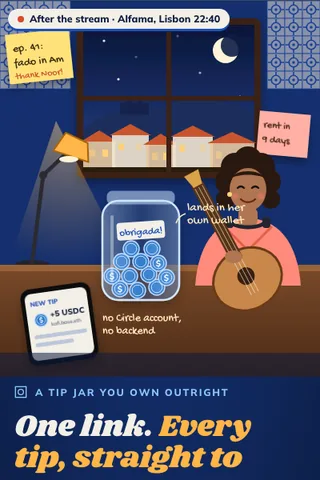 LIVE DEMO
Take pay-what-you-want USDC tips on Base, with a live supporters feed read straight from chain. No Circle account, no backend.
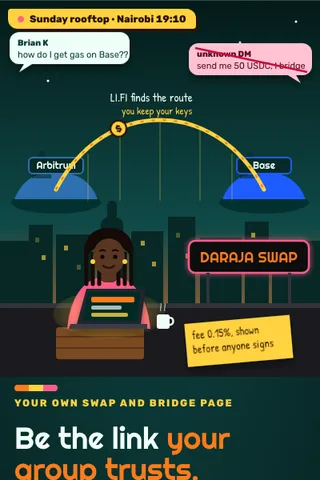 LIVE DEMO
Your own swap/bridge front-end. Integrator fee optional and disclosed.
 LIVE DEMO
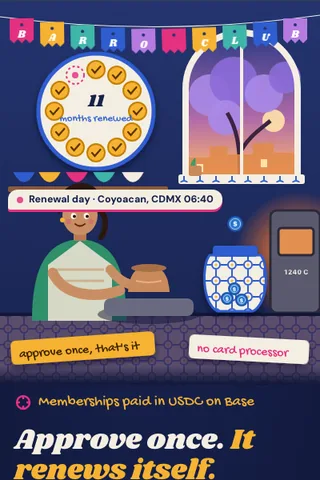
Recurring USDC on Base. Members approve once, it renews itself. No card processor, no contract.
 LIVE DEMO
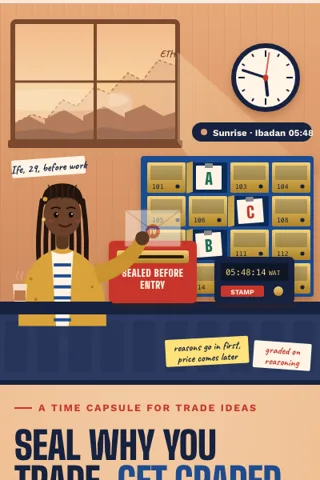
Write why you entered a trade, seal it with the timestamp, and get graded on reasoning, not luck.
 LIVE DEMO
Let a trusted mentor co sign your risky trades above a size you choose.
 LIVE DEMO
Your perp bot follows your rules, and every rule you kept becomes a public, provable track record.
 LIVE DEMO
A tilt brake that delays your trades after losses until you answer one honest question.