 LIVE DEMO
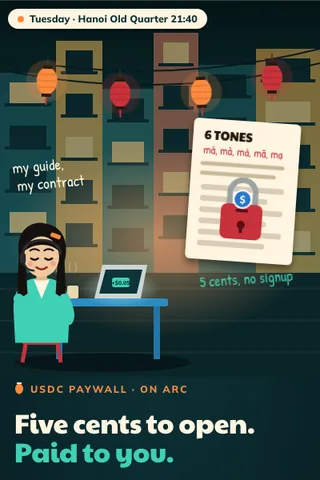
USDC Paywall
Lock content behind a fraction-of-a-cent USDC payment, on your own Arc contract. Deploy it, become the onchain creator.
Ready now
$20Arc
 Try it live
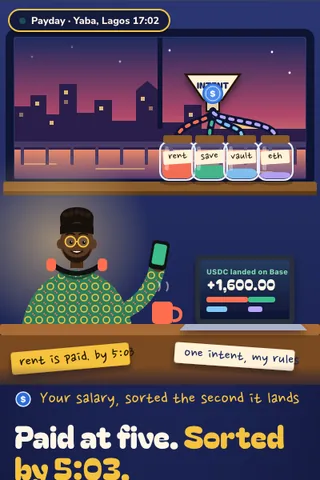
When your salary lands onchain, it auto routes into your own buckets in one intent.
Try it live, freeChidi gets paid in USDC on Base. The moment it arrives, an intent solver sends rent to savings, a slice to a yield vault he picked, and a slice to ETH, all by rules he set.
Deposit trigger, bucket rules, intent execution, monthly summary
Reshape it entirely: new features, your flows, your brand end to end, integrations you need. We scope it with you.
Paycheck splitting into crypto exists; a fully onchain intent-based version is mostly at prototype stage.
Remote with Coinbase, OnJuno and Bitwage split paychecks into crypto, and Splits.org plus hackathon projects like PayFlow and Seflow route income onchain.
Checked with web searches in October 2026. A search is not proof that nothing similar exists, and the market moves fast, so we recheck before every build.
USDC payments app; eligibility unknown
Arc testnet fit; eligibility unknown
The complete Payday Splitter app: when salary lands onchain it is routed into the worker's own jars in one batched intent, by rules they set, with receipts, plans and checkout built in.
Every buyer gets the same finished app. Basic branding and copy changes come through a quick form.
Your admin side: revenue, paywall editor, users, rules and the agent log.
Referral and growth mechanics, switched on when you are ready to grow.
Three jars are free. Users pay a small monthly Plus plan, employers pay per worker to offer it as a benefit, and the owner can take a small fee on ETH swaps.
Optional swap fee on the ETH slice set by the owner (default 10 bps). One batched transaction per payday costs a few cents on Base.
Prices are yours to set. Illustrative, not a promise of income.
When your salary lands onchain, it routes itself into your own jars in one intent.
Problem: Remote workers paid in stablecoins spend every payday moving money by hand, and rent or savings slip when they forget.
Solution: A smart wallet watches for the payroll transfer and runs one batched intent that pays rent first, then savings, a vault and an ETH slice with a price cap, only to addresses the user added.
Why now: More companies pay contractors in USDC, Base fees are cents, and intent solvers make multi step routing a single transaction.
Market: Remote workers and freelancers paid in stablecoins, and the employers who pay them.
The ask: Pilot with three remote first employers paying in USDC and 200 workers.
Funding is never guaranteed. Check each program's rules.
Many hackathons require code written at the event. See the Regatta Boardfor each race's rule.
Custom work from $900: payroll provider integrations, an employer branded deployment, extra chains, or local off-ramps. Scoped on a call.
People paid in stablecoins spend time every payday moving money by hand: rent, savings, a vault, a slice of ETH. It is slow, easy to get wrong (an old address, a forgotten rent) and it happens every month.
Paycheck splitting into crypto already exists: Remote with Coinbase, OnJuno and Bitwage let workers send part of a salary to crypto, and Splits.org plus hackathon projects such as PayFlow and Seflow route income onchain. Research verdict: exists, low novelty. What this build adds is a user-owned version: the rules live in the worker's own smart wallet, payday is detected from the payroll sender, one intent fills every jar, and there is a hard price cap and a priority order for short months. It is a well-made take on a known idea, not a new category.
The payroll sender address, the user's jar rules (fixed amounts, percentages, order, price cap), incoming USDC transfers, intent fills and a monthly summary. Labels and notes stay on the user's device.
Make payday the moment your money sorts itself, by your rules, in your own wallet.
Sorted in a minute Salary lands and rent, savings and the rest are set aside before you open the app.
Rent first, always A clear priority order means a short month still covers rent before anything optional.
Sunday look A short weekly digest with one suggested tweak and an on-time rent streak.
Wallet: Privy embedded wallet or a Coinbase Smart Wallet on Base, with sub accounts or labelled vault positions acting as jars.
Rules and permission: Jar rules are stored as a policy; a scoped session key or spend permission lets the app move only the incoming salary, only to the user's own jars, within caps.
Payday trigger: An indexer (for example an Alchemy or QuickNode webhook) watches for USDC from the payroll address above a minimum share of usual pay.
Intent execution: One batched transaction (ERC-4337 user operation) does the transfers; the ETH slice uses a swap aggregator quote with a hard slippage cap and retries for a set window.
Optional vault: Deposits into an ERC-4626 USDC vault the user picks from a short vetted list. No yield is promised.
Notifications and summary: Push or Telegram message per payday, plus a monthly summary generated by a small low cost model (a Haiku or Flash tier) from the receipts.
Other chains: Same rules can run on Arc or Polygon where USDC payroll lands.
Per payday: one batched transaction on Base, usually a few cents or less at normal gas levels, plus swap fees on the ETH slice (aggregator and pool fees, often around 0.05% to 0.3%). A digest from a small model is a fraction of a cent. Example: 1,000 users paid monthly costs roughly $20 to $60 in gas and a few dollars in model calls, plus hosting and indexer fees.
Each payday creates a small shareable moment (rent paid, streak kept). Employers that pay in stablecoins can invite their whole team, and freelancers share templates like 50/30/20 jars.
Wrong trigger: A refund or gift could be treated as salary. Guard: payroll sender match and a minimum amount; anything else lands in Spending.
Price moves: Swaps can fill badly on volatile evenings. Guard: hard slippage cap and retry window; waiting is the default.
Vault risk: Vaults can lose money or be exploited. Guard: opt in only, short vetted list, clear warnings, no yield promises.
Key and permission security: A leaked session key could move funds. Guard: scoped permissions to the user's own addresses only, low caps, easy revoke.
Regulation and tax: Swaps may be taxable and rules differ by country. The app shows records but gives no tax or investment advice.
Costs and tools are estimates at the time of writing. General information only, not legal or financial advice.
Nine routes from one vessel. Tap a port to open its chart.
Payday Splitter turns the hour you spend shuffling USDC every payday into a rule you set once. When you own it, the brand, the user list, and every routing fee belong to you, and your onchain history proves you built and run a real money tool. Using someone else's splitter means they own the relationship with every worker you bring in.
You do not need to. Payday Splitter ships ready to deploy, and every path here is written for non coders. When you want to change something deeper, you can hire help or ask DEPLOYR support.
Yes. It is deployed from your wallet, the contract address is public, and the brand, users, and revenue are yours. DEPLOYR does not hold your keys or take a cut of your app's revenue.
Rules run exactly as written, so test with small amounts first and keep a pause switch. Start every new user on a test payday before their real salary flows through.
Splitting a user's own funds into their own wallets is a tool, not custody. If you ever hold other people's money or offer yield as an investment, get local legal advice first. Never promise returns from the vault slice.
Start with people you already know who get paid in crypto. Ten real users who rely on it every payday is a better start than a launch post.
You earn a small monthly subscription per user, or a tiny routing fee per payday, for keeping their buckets running. $1M a year is a target to aim at, not a promise, and most owners start far smaller.
Illustrative stages, not a forecast. Results depend on you and the market; nothing here is guaranteed.
LIVE DEMOLock content behind a fraction-of-a-cent USDC payment, on your own Arc contract. Deploy it, become the onchain creator.
 LIVE DEMO
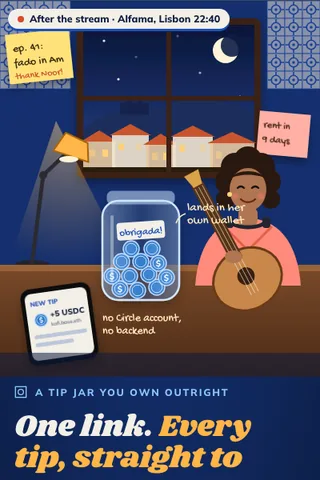
Take pay-what-you-want USDC tips on Base, with a live supporters feed read straight from chain. No Circle account, no backend.
 LIVE DEMO
Your own swap/bridge front-end. Integrator fee optional and disclosed.
 LIVE DEMO
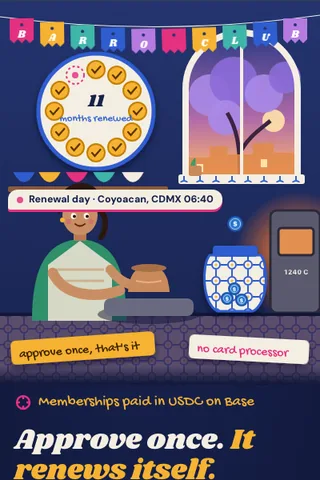
Recurring USDC on Base. Members approve once, it renews itself. No card processor, no contract.
 LIVE DEMO
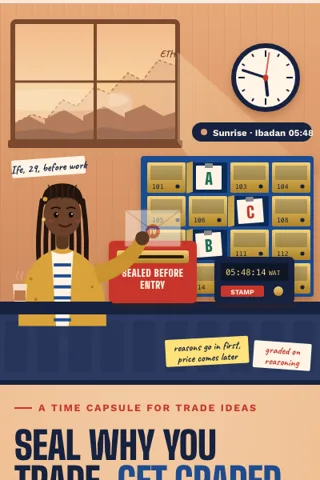
Write why you entered a trade, seal it with the timestamp, and get graded on reasoning, not luck.
 LIVE DEMO
Let a trusted mentor co sign your risky trades above a size you choose.
 LIVE DEMO
Your perp bot follows your rules, and every rule you kept becomes a public, provable track record.
 LIVE DEMO
A tilt brake that delays your trades after losses until you answer one honest question.