 LIVE DEMO
Sealed Take
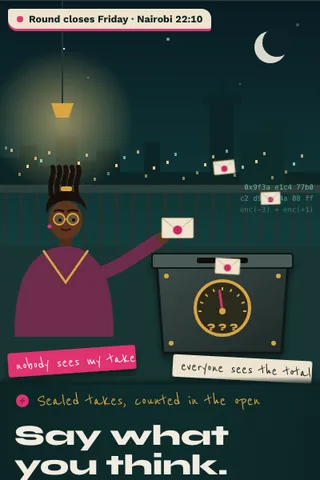
Everyone stakes a conviction, encrypted. The chain tallies it without ever seeing a single take. FHE on Base.
Ready now
$20Fhenix
 Try it live
A time bank: give an hour, earn an hour credit, spend it on anyone's help in your community.
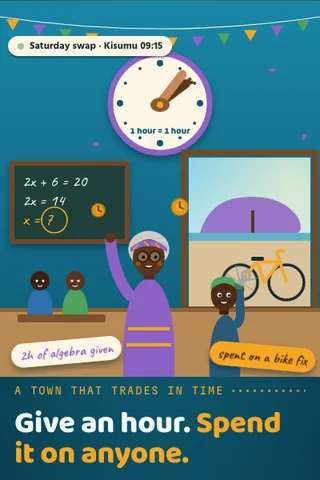
Try it live, freeGrace tutors maths for two hours and spends the credits on Ben fixing her bike. Open Hours records each exchange with both sides confirming, so the town's time economy is visible and nobody can mint free hours.
Member directory, offer and request board, two-sided confirmation, soulbound hour credits, community stats.
Reshape it entirely: new features, your flows, your brand end to end, integrations you need. We scope it with you.
Onchain time banking has been piloted but no widely used consumer app was found.
Blockchain time banks exist mainly as research pilots (IEEE Ethereum prototype, MultiChain elder-care study, ixo Hong Kong vouchers); TimeBanks USA and Ying run offchain.
Checked with web searches in October 2026. A search is not proof that nothing similar exists, and the market moves fast, so we recheck before every build.
Local public goods; open source required
The complete Open Hours app: a community time bank where every hour given earns an hour credit to spend on anyone's help, minted only when both sides confirm, with a paywall, owner console and matchmaker built in.
Every buyer gets the same finished app. Basic branding and copy changes come through a quick form.
Your admin side: revenue, paywall editor, users, rules and the agent log.
Referral and growth mechanics, switched on when you are ready to grow.
Members never pay and hours are never money. Halls pay a small monthly fee when they outgrow the free plan, and councils or funders pay for multi hall networks and reports.
No fees on swaps. Gas on Celo is a fraction of a cent and sponsored by the owner.
Prices are yours to set. Illustrative, not a promise of income.
A time bank where every hour counts the same and nobody can mint hours alone.
Problem: Communities are full of skill and short on cash. A retired teacher can tutor and a young mechanic can fix bikes, but neither can easily pay the other. Paper time banks work but are hard to run and easy to fake.
Solution: Members post what they can give and need. An hour is minted as a soulbound credit only when giver and receiver both sign, with caps and stewards for big swaps. A town board shows the time economy without names.
Why now: Phone number wallets on Celo make onchain records free and invisible to members, and SMS reaches people without smartphones.
Market: Community halls, churches, schools and councils, starting with East African towns and expanding through templates.
The ask: Pilot with three Kisumu halls and grant support from community and public goods funds.
Funding is never guaranteed. Check each program's rules.
Many hackathons require code written at the event. See the Regatta Boardfor each race's rule.
Custom work from $1,000: local languages, a council branded deployment, WhatsApp or USSD flows, or partner integrations. Scoped on a call.
Communities are full of skill and short on cash. A retired teacher can tutor, a young mechanic can fix bikes, but neither can easily pay the other. Paper time banks work but are hard to run and easy to fake.
Time banking is old and proven offline: TimeBanks USA and Ying run offchain time banks. Onchain versions exist mainly as research pilots, such as the IEEE Ethereum time banking prototype, a MultiChain elder care study and ixo community vouchers in Hong Kong. What is new here is a simple consumer app where every hour needs both sides to confirm, credits are soulbound so they cannot be traded, and a community sets its own join and cap rules. Research verdict: rare, medium novelty.
Member profiles and skills (offchain, in the app), offers and requests, two-sided swap confirmations, soulbound hour credit balances and a public town total. Phone numbers, names and what exactly was done stay offchain.
Make everyone's time count the same, so a town can trade help even when it is short of money.
Your hour is worth an hour Algebra, bike repair and a ride to the clinic are equal. People who are rarely paid well feel seen.
Two yeses, every time Hours only exist when giver and receiver both confirm, so the book is trusted.
Saturday board A weekly moment: post one thing you can give and one thing you need.
Login and wallet: Phone number login with Privy, creating an embedded wallet. Celo first for low fees and mobile reach, Base or Polygon as options.
Hour credits: A soulbound, non-transferable credit contract. A swap is minted only with signatures from both giver and receiver; above a cap, a steward co-signs.
Membership gate: Optional vouching: two existing members sign for a newcomer. Stored as attestations (for example EAS) so the rule is checkable.
Matchmaker: A small model tier (for example Claude Haiku or a comparable OpenRouter model) suggests matches from past confirmed swaps and asks one clarifying question. It cannot confirm or mint.
Notifications: SMS or WhatsApp style messages for confirmations and the Saturday board, with web push for smartphone users.
Town board: A public page with totals by category and week, read from contract events by a simple indexer.
Per swap on Celo: two signatures and one mint cost a small fraction of a cent, sponsored by the owner. A match suggestion with a small model costs well under 1 cent. SMS is about $0.01 to $0.08 per message by country. A hall with 50 active members and 200 swaps a month would cost roughly $5 to $25 a month to run.
Each swap creates two happy people and a share card. Churches, halls and schools start their own banks from a template, and members invite people they want to swap with.
Fake hours: Two-sided confirmation, new member caps and steward co-signing above the cap. Unconfirmed claims never show on the board.
Turning hours into money: Credits are soulbound and the charter forbids selling them, so it stays a time bank and not a currency.
Safety: Meeting strangers carries risk. Vouching, public venues for first swaps and a report button to stewards.
Tax and benefits: Some countries treat time bank hours differently. The owner should check local rules and share guidance.
Privacy: Names, numbers and what was done stay offchain. Only hashed swaps and totals are public.
Costs and tools are estimates at the time of writing. General information only, not legal or financial advice.
Nine routes from one vessel. Tap a port to open its chart.
Open Hours is a time bank for your community: give an hour of help, earn an hour credit, spend it on anyone else's help. Running it on someone else's platform puts your neighbours' records in their hands; owning it means your town, your rules, your membership gate and an hour ledger nobody can fake because both sides confirm every exchange. It makes a local time economy visible.
Not if you open with a blank board. Start with 10 people you know, each posting one offer and one request, and broker the first five exchanges by hand. Time banks grow from a small trusted core outward.
They do not need to think about it. Members sign in, post offers and confirm hours. Credits are soulbound, so there is nothing to buy, sell or lose value. Keep the language about hours, not tokens.
Both sides confirm each exchange, so a disputed hour is not credited. Members can see each other's history. Add a simple community agreement and a membership gate if trust is a concern.
Yes. The contract and member records are deployed from your wallet. The community keeps its history even if you hand over running it.
In many places traditional time banks are treated as non-taxable because an hour equals an hour and credits cannot be cashed out. Rules differ by country, so check how local time banks are treated before you launch.
Open Hours itself is not a money machine for members, and it should not be. You earn by hosting time banks for councils, housing associations, schools and NGOs, charging a monthly fee to run their instance, plus setup and training. This is a target to aim at, not a promise.
Illustrative stages, not a forecast. Results depend on you and the market; nothing here is guaranteed.
LIVE DEMOEveryone stakes a conviction, encrypted. The chain tallies it without ever seeing a single take. FHE on Base.
 LIVE DEMO
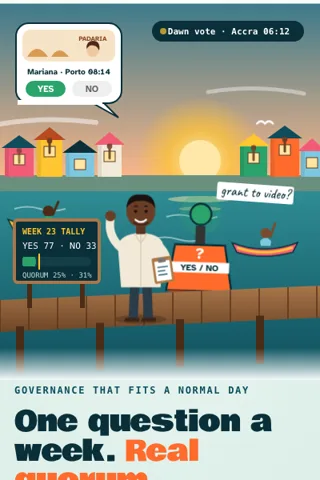
Governance by text-sized questions: one decision a week, answered in ten seconds, with real quorum.
 LIVE DEMO
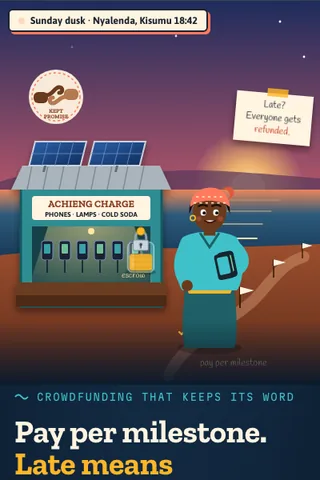
Crowdfunding where backers get refunded by contract if the goal or the milestones are missed.
 LIVE DEMO
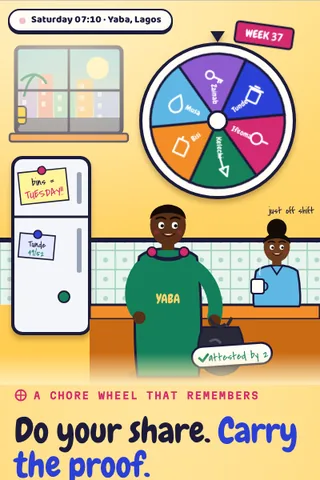
A shared house or club tracks who did the work, and the record becomes everyone's portable reliability score.
 LIVE DEMO
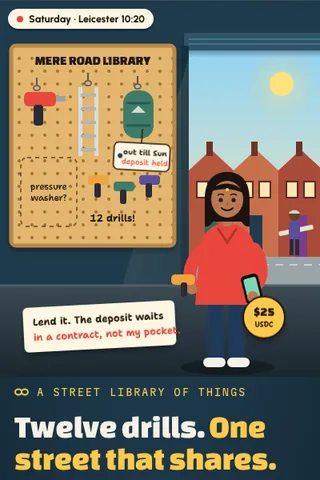
Lend the ladder, the drill, the tent: a street library of things with deposits held by contract.
 LIVE DEMO
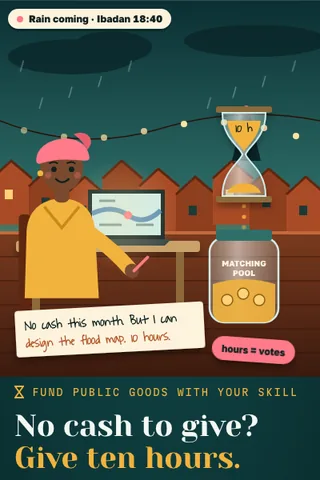
Fund a public good with hours of your skill, not just money, and get matched like a donation.
 LIVE DEMO
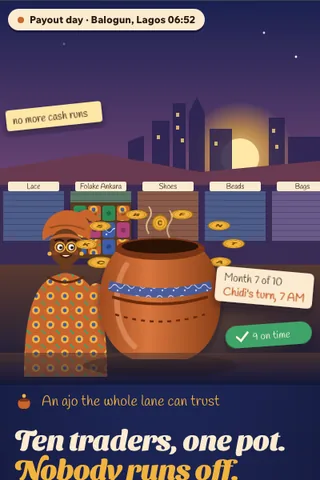
A rotating savings circle (ajo, susu, chama) with payouts enforced by contract and trust scores for members.
 LIVE DEMO
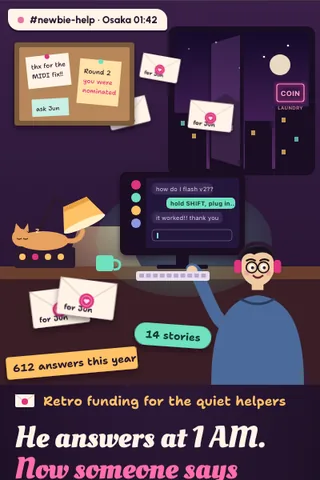
Retro funding for the quiet helpers: the community nominates who mattered, a pot pays them.