 LIVE DEMO
Sealed Take
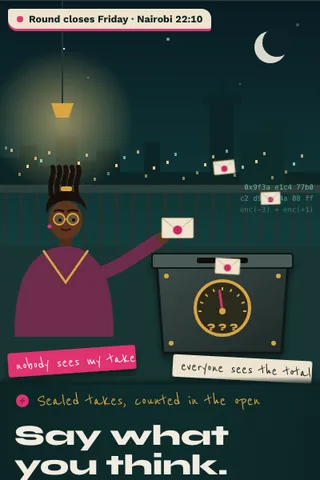
Everyone stakes a conviction, encrypted. The chain tallies it without ever seeing a single take. FHE on Base.
Ready now
$20Fhenix
 Try it live
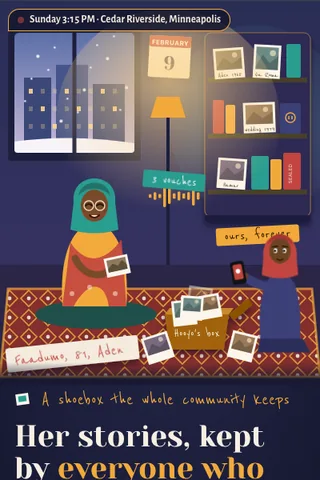
A community archive where members contribute stories and photos, curated and preserved by the group.
Try it live, freeA diaspora association wants to save elders' stories. Members upload recordings, others vouch for accuracy, and the archive lives on permanent storage owned by the community with contributors credited forever.
Upload flow, permanent storage pinning, vouching, curator roles, contributor credits, public archive.
Reshape it entirely: new features, your flows, your brand end to end, integrations you need. We scope it with you.
Permanent archives exist; group-curated community memory onchain is less common.
Arweave-based permanent archives and offchain oral history sites exist; not separately verified for group curation.
Checked with web searches in October 2026. A search is not proof that nothing similar exists, and the market moves fast, so we recheck before every build.
Cultural public goods; OSS required
Existing projects OK
The complete Memory Commons app: a community records its elders, members vouch for what is true, and the archive lives on permanent storage the community owns, with teller and recorder credited forever.
Every buyer gets the same finished app. Basic branding and copy changes come through a quick form.
Your admin side: revenue, paywall editor, users, rules and the agent log.
Referral and growth mechanics, switched on when you are ready to grow.
Keeping a story and sealing a hard one is always free. Associations pay monthly for the tools that bring the whole community in, heritage partners pay for several communities, and storage is passed through at cost.
Permanent storage is passed through at cost (roughly $10 per GB once on Arweave). The owner can cap monthly storage spend per association.
Prices are yours to set. Illustrative, not a promise of income.
A shoebox the whole community keeps: elders recorded, members vouch, the archive is owned by the community forever.
Problem: Diaspora and minority communities lose their elders' stories every year. Recordings sit on one phone, photos in a shoebox nobody can label, and paid websites vanish when the subscription lapses.
Solution: Members record elders, vouch for what they know, and keep both versions when they disagree. Media goes to permanent storage; vouches, credits and seal dates are attestations on Base, and hard stories are sealed for family.
Why now: Permanent storage costs a few dollars per GB, speech models draft transcripts for cents a story, and phone login with embedded wallets lets elders' grandchildren join without crypto knowledge.
Market: Diaspora associations, mosques, churches and cultural centres, plus the libraries, museums and universities that want consented community archives.
The ask: Pilot partners: two diaspora associations and one public library, plus public goods and heritage grant funding.
Funding is never guaranteed. Check each program's rules.
Many hackathons require code written at the event. See the Regatta Boardfor each race's rule.
Custom work from $1,000: your own languages and transcriber routes, integrations with a library catalogue or museum system, branded deployments for a federation of associations, or extra consent workflows. Scoped on a call.
Diaspora and minority communities are losing their elders' stories every year. Recordings sit on one person's phone, photos in a shoebox nobody can label, and paid websites disappear when the subscription lapses. Nobody has the authority, or the tools, to decide together what is true and who gets credit.
Permanent archives on Arweave and similar networks already exist, as do many offchain oral history projects run by libraries and universities. We did not separately verify an existing product for group-curated community memory, so we make a modest claim: what is less common is the combination of member vouching before a memory goes public, elected curators who annotate rather than delete, permanent credit to teller and recorder, and family-sealed encrypted memories, all owned by the community itself. Research verdict: rare, medium novelty.
Audio, video and photos contributed by members, draft transcripts and translations, vouch attestations from members, curator annotations, consent and seal settings, and teller and recorder credits. Media lives on permanent storage; sealed items are encrypted on the device before upload. Onchain: fingerprints, vouches, credits and seal dates.
Let any community keep its own memory: recorded while the elders are here, checked by the people who were there, and owned by the community forever.
Your name on it, forever Every memory credits the teller and the recorder by name, and every vouch is visible. Grandchildren can see who kept the story alive.
Truth by people who were there Members vouch for what they know. When people disagree, both versions are kept and credited instead of one being overwritten.
One question every Sunday A weekly prompt brings elders and young people together to record one more story, with a streak the whole circle shares.
Membership and wallets: Privy login with phone or email and an embedded wallet for each member. The association is a Safe multisig on Base that owns the archive contract and pays storage.
Recording and upload: The phone records audio or video, strips location metadata, and for sealed items encrypts locally (for example with Lit Protocol access conditions tied to family wallets) before upload.
Permanent storage: Public media goes to Arweave via a bundler such as Irys or ArDrive Turbo, paid once; or Filecoin with yearly renewal. The archive keeps the transaction ids.
Vouches and credits: EAS attestations on Base record each vouch, the teller and recorder credit, curator annotations and seal dates. A memory goes public when it reaches the vouch threshold.
The archivist agent: Speech to text drafts with a Whisper class model, translation and summaries with a mid tier model such as Claude Sonnet or Gemini Flash. It detects dialect and routes languages it handles poorly, such as Maay Maay, to paid human transcribers. It never names faces on its own.
Public archive: A Next.js site reads an indexer (Ponder) of attestations and storage ids, with search by teller, place and year, and a share card per memory.
Storage: Arweave pricing moves with the token; at the time of writing it is roughly a few dollars to about $10 per GB stored permanently, so a 50 MB voice memory with photos costs well under $1 once. Transcription with a Whisper class API is about $0.006 per minute, so a 15 minute story is about $0.10; translation and summary about $0.02. Base gas for a few attestations is typically under $0.01 each. Example month with 40 memories: about $15 storage, $6 transcription and translation, $1 gas, $25 hosting, under $50 total, plus any human transcriber hours.
Each preserved memory is shared to family in other countries, who then add their own photos and vouches. The Sunday circle turns a one-time project into a weekly ritual, and other associations ask to start their own shelf.
Permanence and consent: Anything public on permanent storage cannot be truly deleted. Hard stories default to sealed and encrypted, consent is recorded before upload, and the public site can unlist an item even though the stored copy remains.
Privacy of the living: Stories mention people who never agreed to be named. Curators can redact names before publishing, and families can request unlisting.
Disputes and harm: Memories can be contested or used to settle scores. Versions are kept side by side, defamatory or hateful content can be unlisted by curators, and disputes go to the association, not the agent.
AI errors: Transcripts and translations can be wrong, especially for less resourced languages. Drafts stay marked draft until a fluent member approves, and faces are never auto named.
Key loss: Sealed memories can be lost if family keys are lost. Use several key holders and a recovery option held by the association multisig with family approval.
Storage cost swings: Token priced storage can change cost. The app shows the price at upload and the association treasury can cap monthly spend.
Costs and tools are estimates at the time of writing. General information only, not legal or financial advice.
Nine routes from one vessel. Tap a port to open its chart.
Community memories usually end up on a cloud drive one person pays for, or a Facebook group that can vanish. Memory Commons lets members upload stories, recordings and photos, others vouch for accuracy, and the archive lives on permanent storage owned by the community, with contributors credited forever. Owning it means you are the keeper of the archive tool: your brand, your relationships with associations and your fee for setting up and caring for each archive.
Yes. Upload flow, permanent storage pinning, vouching, curator roles, contributor credits and the public archive are built. You set curator rules and branding and deploy from your wallet with the guide.
Each upload has a storage cost, usually small. Communities can pay per archive or fund a storage pool. Budget it upfront and tell contributors.
Not everything belongs on permanent public storage. Let contributors choose public or community only, get consent from anyone recorded, and never upload something you cannot later remove unless the person agreed.
Usually a younger relative uploads for them. Run recording days where volunteers help.
The contracts deploy from your wallet or the community's, storage is permanent, and credits are onchain. You can hand over ownership to the association.
Associations, diaspora groups, schools and towns pay a setup fee plus a monthly care plan for their archive, with storage costs passed through transparently.
Illustrative stages, not a forecast. Results depend on you and the market; nothing here is guaranteed.
LIVE DEMOEveryone stakes a conviction, encrypted. The chain tallies it without ever seeing a single take. FHE on Base.
 LIVE DEMO
Governance by text-sized questions: one decision a week, answered in ten seconds, with real quorum.
 LIVE DEMO
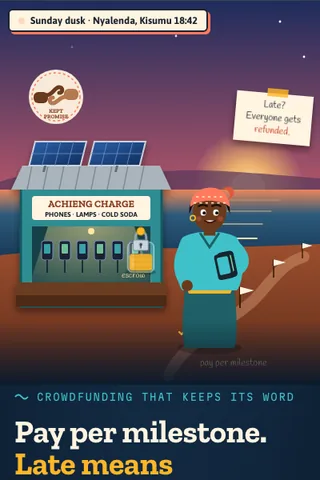
Crowdfunding where backers get refunded by contract if the goal or the milestones are missed.
 LIVE DEMO
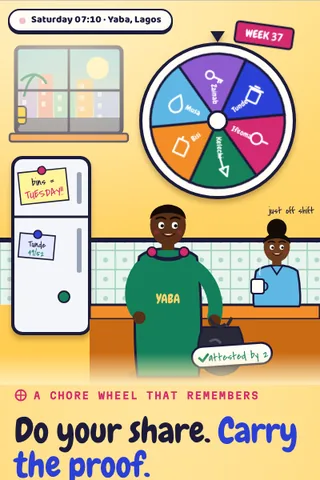
A shared house or club tracks who did the work, and the record becomes everyone's portable reliability score.
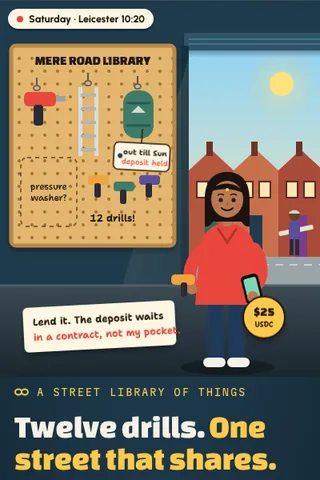 LIVE DEMO
Lend the ladder, the drill, the tent: a street library of things with deposits held by contract.
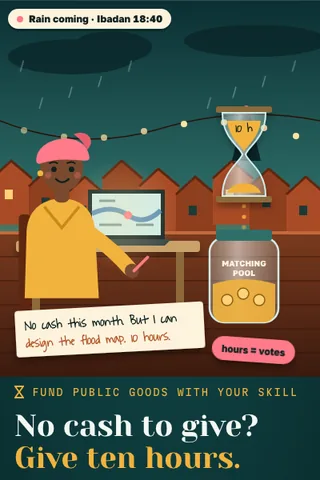 LIVE DEMO
Fund a public good with hours of your skill, not just money, and get matched like a donation.
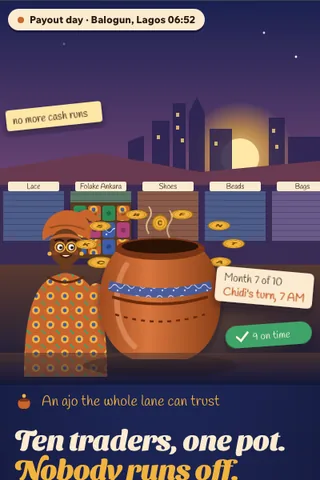 LIVE DEMO
A rotating savings circle (ajo, susu, chama) with payouts enforced by contract and trust scores for members.
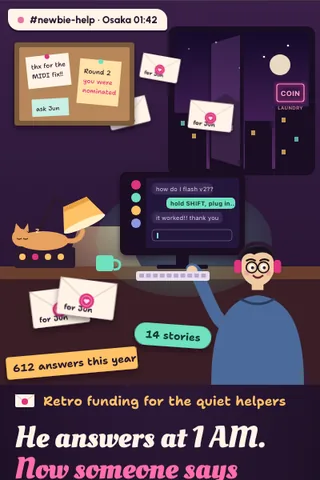 LIVE DEMO
Retro funding for the quiet helpers: the community nominates who mattered, a pot pays them.