 LIVE DEMO
Sealed Take
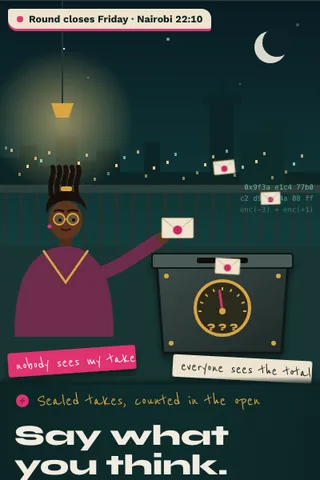
Everyone stakes a conviction, encrypted. The chain tallies it without ever seeing a single take. FHE on Base.
Ready now
$20Fhenix
 Try it live
A school meal token that only spends at approved canteens, enforced by a Token-2022 transfer hook.
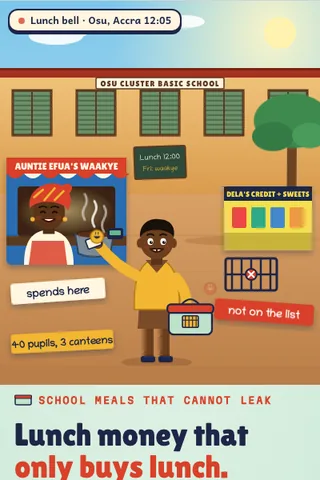
Try it live, freeA parent group in Accra funds lunches for forty pupils. Lunch Money issues a token each child can spend only at the three approved canteens. Donors see every meal bought and nothing leaks to other shops.
Token-2022 mint with hook, merchant allowlist admin, donor dashboard, canteen scan page.
Reshape it entirely: new features, your flows, your brand end to end, integrations you need. We scope it with you.
Transfer hook docs show allowlists in general; no school meal or merchant restricted aid token was found live.
Solana transfer hook examples (KYC allowlists); off chain meal cards.
Checked with web searches in October 2026. A search is not proof that nothing similar exists, and the market moves fast, so we recheck before every build.
Ecosystem program for shipped apps; check current terms.
The complete Lunch Money app: a parent group funds a meal token that pupils can spend only at approved canteens, with pupil cards, canteen scanning, donor notes, plans and checkout built in.
Every buyer gets the same finished app. Basic branding and copy changes come through a quick form.
Your admin side: revenue, paywall editor, users, rules and the agent log.
Referral and growth mechanics, switched on when you are ready to grow.
One class runs free. Schools pay a small monthly plan for more pupils, more canteens and committee signing; charity networks pay for many schools. An optional small fee on canteen redemptions.
Optional redemption fee the owner sets (0 to 3 percent) on weekly canteen payouts. Solana fees are a few dollars a month.
Prices are yours to set. Illustrative, not a promise of income.
A school meal token that only spends at approved canteens, so help arrives as meals, not leakage.
Problem: Parent groups and donors fund school lunches, but cash and transfers leak to airtime, sweets and other shops, and donors cannot see what their money bought.
Solution: A Token-2022 meal token with a transfer hook that only allows approved canteen accounts and per pupil daily limits. Pupils tap a card, canteens scan, donors get a Friday note.
Why now: Token-2022 transfer hooks make spending rules enforceable at the transfer itself, and Solana fees make a meal sized payment practical.
Market: Parent groups, school feeding charities, churches and NGOs funding meals in West Africa and beyond.
The ask: Pilot with three schools in Accra and one feeding charity, plus ecosystem grant support.
Funding is never guaranteed. Check each program's rules.
Many hackathons require code written at the event. See the Regatta Boardfor each race's rule.
Custom work from $1,400: your own spending rules, a charity branded deployment, integration with a mobile money provider or school system, extra languages. Scoped on a call.
Parent groups, churches and small charities fund school lunches with cash or mobile money, and a share of it ends up on airtime, sweets or someone else's errand. Donors cannot see how many meals their money bought, so giving slows down.
The mechanism exists: Solana's Token-2022 transfer hook extension and its published examples show allowlist checks on every transfer, and off chain meal cards and school canteen top up systems exist. What is new here is the packaging: a meal token for a named group of pupils that can only move to approved canteen accounts, multi signature changes to the canteen list, and a donor view of meals bought. Research found no live school meal or merchant restricted aid token of this kind, but the building blocks are standard, so the novelty is in the use, not the technology.
The canteen list (canteen account addresses), weekly mint and cap settings, transfer signatures and slots, and refusal counts. Pupil names, class lists, card mappings and donor identities stay in the school's own records, never onchain.
Every coin given for a child's lunch arrives as a lunch, and the people who gave can see it did.
The Friday note Each Friday donors get one line: how many meals their money bought, the top dish, and that nothing was spent outside the list.
Proof without exposure Every meal is a public transfer to a canteen, but no child's name is ever onchain. Donors trust it without anyone being watched.
Canteens want in Approved sellers get steady weekly sales and a cedi payout, so new sellers ask to join, which is a reason for the group to keep the list alive.
Meal token: A Token-2022 mint on Solana with the transfer hook extension. One token equals one meal at the group's set price. The group's treasury multisig is mint authority.
Transfer hook: A small Anchor program called on every transfer. It reads an allowlist account of approved canteen addresses and per pupil daily and weekly counters, and fails the transfer if the destination is not on the list or a limit is hit.
Pupil cards: Each pupil gets a custodial wallet behind a printed QR card. The canteen app scans the card and requests the transfer; the school's signer co-signs. Children never handle keys or phones.
Canteen accounts and payouts: Each canteen has one registered account. At week end the group redeems tokens from canteens for cedis through a mobile money or bank payout run by the treasurer, recorded as a burn.
List changes: Adding or removing a canteen needs 2 of 3 committee signatures through a Squads style multisig, so no single person can add a friend's shop.
Helper agent: A small model (for example a low cost tier such as Claude Haiku via an API) reads refusals and top ups, drafts the Friday note and proposes rule changes for the treasurer to approve. It cannot mint, move tokens or edit the list.
Donor dashboard: A public page built from an indexer (for example Helius webhooks) showing meals per canteen and refusals per week, with no pupil data.
Solana base fees are 5,000 lamports per signature, a fraction of a US cent per meal even with the extra compute of a transfer hook and an optional priority fee. 40 pupils at 5 meals a week is about 200 transfers, so under about 1 US dollar a week in network fees. Token account rent for 40 pupils and a few canteens is a one time cost of a few US dollars. The helper agent drafting one note and a few summaries a week costs cents on a small model tier. Monthly example for one school: well under 10 US dollars all in, before mobile money payout fees, which vary by provider.
Every Friday note is shareable and ends with how many meals a donor's money bought, which brings the next donor. Canteens that join tell other schools in their area, and each new school adds a parent group that already raises money.
Child privacy: Pupil identities never go onchain. Cards map to random addresses inside school records only. Delete mappings at the end of each school year.
Canteen collusion: A canteen could hand out cash instead of food. Committee spot checks, per pupil daily limits and a clear removal process reduce it; no technology fully prevents it.
Payout and legal: Converting tokens to cedis touches mobile money and payments rules. Start with the treasurer paying canteens directly and take local advice before scaling.
Lost or shared cards: A lost card can be frozen and reissued by the school signer. The daily limit caps any loss at one meal.
Program bugs: A hook bug could block all lunches. Keep a tested fallback: the multisig can pause the hook and the group pays canteens by cash for that day.
Costs and tools are estimates at the time of writing. General information only, not legal or financial advice.
Nine routes from one vessel. Tap a port to open its chart.
Lunch Money: A school meal token that only spends at approved canteens, enforced by a Token-2022 transfer hook. Using someone else's version means their rules, their brand and their revenue. Owning Lunch Money means it is deployed under your wallet, carries your name, and every customer, partner and result builds your track record instead of theirs.
Lunch Money arrives deployed with a guide. Running it is settings and sharing links, not code. If you get stuck, we help you ship it.
Start with ten people you already know. The first move below takes under an hour and tells you fast whether people care.
Each step is sized in minutes. Most owners spend an hour a week, and the app does the repetitive part.
Nothing is guaranteed. The playbook gives you a clear path and honest numbers, and you decide how far to take it.
Charge the people who get the most value from Lunch Money: a monthly plan for groups or teams, plus setup fees for anyone who wants it done for them.
Illustrative stages, not a forecast. Results depend on you and the market; nothing here is guaranteed.
A starter chart. A fuller, app-specific playbook is being written.
LIVE DEMOEveryone stakes a conviction, encrypted. The chain tallies it without ever seeing a single take. FHE on Base.
 LIVE DEMO
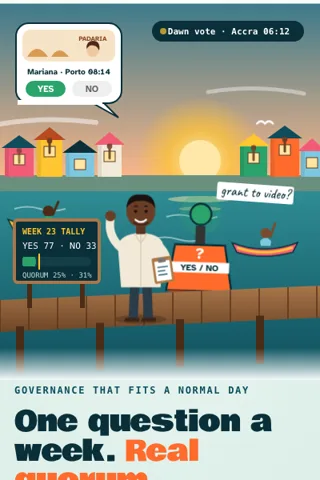
Governance by text-sized questions: one decision a week, answered in ten seconds, with real quorum.
 LIVE DEMO
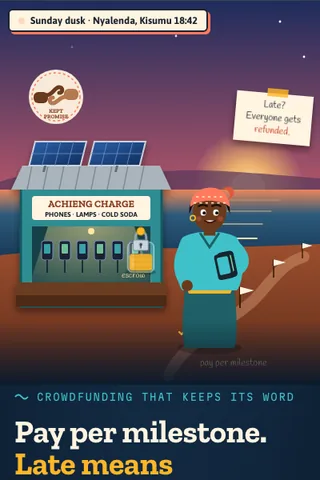
Crowdfunding where backers get refunded by contract if the goal or the milestones are missed.
 LIVE DEMO
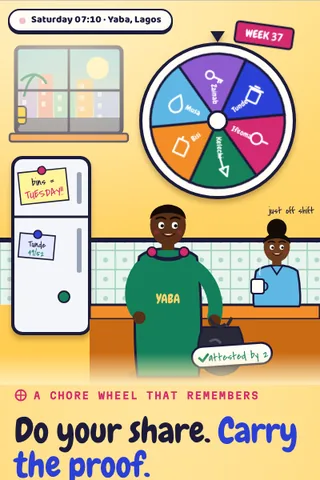
A shared house or club tracks who did the work, and the record becomes everyone's portable reliability score.
 LIVE DEMO
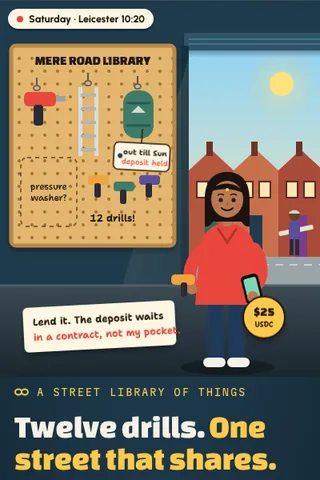
Lend the ladder, the drill, the tent: a street library of things with deposits held by contract.
 LIVE DEMO
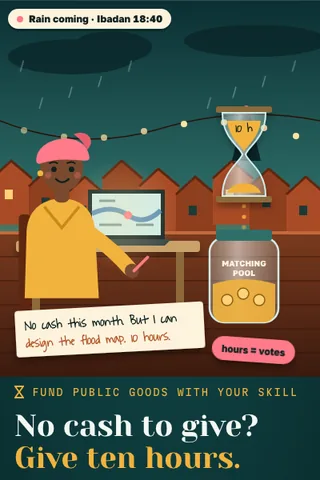
Fund a public good with hours of your skill, not just money, and get matched like a donation.
 LIVE DEMO
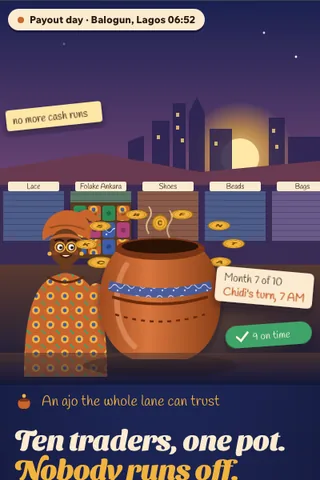
A rotating savings circle (ajo, susu, chama) with payouts enforced by contract and trust scores for members.
 LIVE DEMO
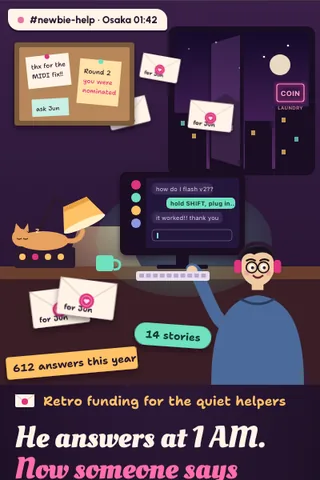
Retro funding for the quiet helpers: the community nominates who mattered, a pot pays them.