 LIVE DEMO
Sealed Take
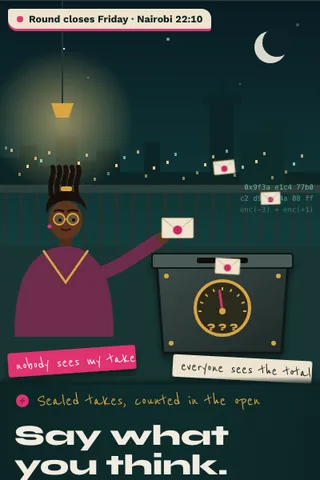
Everyone stakes a conviction, encrypted. The chain tallies it without ever seeing a single take. FHE on Base.
Ready now
$20Fhenix
 Try it live
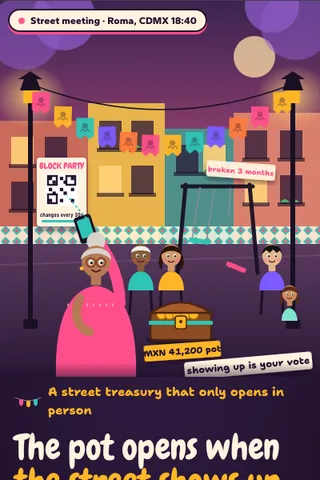
A neighbourhood treasury where proposals unlock only after enough real neighbours physically show up.
Try it live, freeA street wants to fix the playground. Block Party collects a small monthly pot, and spending proposals need sign-off from neighbours who checked in at the spot with a rotating QR code, so decisions come from people who actually live there.
Multisig-backed treasury, monthly contributions, rotating QR presence check-ins, presence-weighted proposals, spending log.
Reshape it entirely: new features, your flows, your brand end to end, integrations you need. We scope it with you.
No product found unlocking a local treasury only after verified in-person presence.
POAP check-ins and CityDAO exist, but no treasury found that gates proposals on physical neighbour attendance.
Checked with web searches in October 2026. A search is not proof that nothing similar exists, and the market moves fast, so we recheck before every build.
Consumer onchain app; eligibility unknown
The complete Block Party app: a street treasury where ideas unlock only when enough real neighbours show up at the lamppost, with a paywall, owner console and street agent built in.
Every buyer gets the same finished app. Basic branding and copy changes come through a quick form.
Your admin side: revenue, paywall editor, users, rules and the agent log.
Referral and growth mechanics, switched on when you are ready to grow.
Neighbours never pay to take part. Street organizers pay a small monthly plan and housing associations pay to run many streets. Street pots always belong to the street.
No fee on pot money. Gas for shares and payments on Base is a few cents a street per month and can be sponsored.
Prices are yours to set. Illustrative, not a promise of income.
A neighbourhood treasury where proposals unlock only after enough real neighbours physically show up.
Problem: Street funds stall because online votes are easy to fake and nobody trusts who spent what, so small fixes like a broken swing wait for years.
Solution: Homes pay a small monthly share into a street multisig. Ideas pass only when enough households scan a rotating QR at the lamppost in person, and every payment is published with its turnout and invoice.
Why now: Cheap transactions on Base, Celo and Polygon and phones with location make in person presence a practical, low cost vote.
Market: Residents' streets and buildings, housing associations, and councils that want to match community funds.
The ask: Pilot partners: two housing associations and one council grant programme, plus public goods funding rounds.
Funding is never guaranteed. Check each program's rules.
Many hackathons require code written at the event. See the Regatta Boardfor each race's rule.
Custom work from $1,500: your own quorum and presence rules, multisig setup with your signers, WhatsApp reminders or an association branded deployment. Scoped on a call.
Street and building groups collect money in chats and then argue about who decides. Online polls get gamed by people who never live there, and the same three people end up holding the cash with no receipts.
Presence proofs exist: POAP issues attendance badges from QR and event codes, and CityDAO experimented with land-based community governance. Multisig treasuries like Safe are standard. Our research found no product that gates a local treasury's spending proposals on neighbours physically checking in at the spot. Research verdict: fresh, high novelty, though each building block is well known.
Member list (private), monthly contributions, rotating QR codes and short-lived check-in tokens, phone location within a radius at check-in, neighbour vouches, proposals with quotes and invoice photos, signer approvals and releases.
Let the people who actually live somewhere decide together, in person, how their shared money gets spent.
Your showing up is your vote No proxies and no strangers. Being at the lamppost on Saturday is what gives you a say.
Receipts on the lamppost Every release links the passed proposal, the presence count and the invoice photo. Anyone on the street can check.
A reason to meet Meetings decide real things, so people come. One lantern lights up for every meeting you attend.
Wallets: Privy embedded wallets for each household on Base (or Celo for low-fee mobile use). No seed phrases; sign in with phone or email.
Street treasury: A Safe multisig (for example 3 of 5 elected signers) holds USDC. A guard module only allows transfers that match a passed proposal ID and amount.
Contributions: Monthly pulls via a fiat on-ramp or a manual USDC deposit; each household's paid months are tracked offchain and summarised onchain as a running total.
Presence check-in: A screen or e-ink display on the spot shows a QR that rotates every 10 to 120 seconds. Scanning signs a short-lived token plus a coarse location check. Optional vouch: two present members confirm one more, capped per meeting.
Proposals and quorum: A small contract records each proposal, the Merkle root of present households and the quorum result. Names and locations never go onchain.
Helper agent: A cheap model tier (for example a small Claude Haiku class model via OpenRouter) drafts proposal summaries in plain language and flags suspicious check-in patterns. It cannot sign or move money.
Notifications: WhatsApp or SMS reminders for meetings, results and releases, plus a printable receipt for the noticeboard.
Per meeting: Base gas for a proposal, a presence root and a release is typically a few cents in total. The helper model costs well under one cent per proposal summary. Example month for a 40-home street: about $1 in gas, under $1 in model calls, $5 to $10 in SMS, $10 in hosting. Roughly $20 a month, small next to a pot of MXN 3,800 (about $220).
Every fixed swing comes with a printed receipt and a QR on the lamppost. Passers-by from the next street see it, and the share card goes into other building chats. Associations onboard streets one at a time.
Exclusion: Elderly, disabled or shift-working neighbours may not be able to attend. Offer vouches, a second meeting slot and a delegated presence rule decided by the street.
Location spoofing: GPS can be faked. Rotating codes, short windows and vouch caps raise the cost, but it is not perfect; large sums should need higher quorum.
Signer collusion: Signers could refuse to release or try to misuse funds. The guard module limits transfers to passed proposals, and signers can be replaced by a quorum vote.
Legal status: Collective funds may need a registered association or local tax treatment. The owner should check local rules before collecting money.
Privacy: Presence data reveals who is home when. Only a root goes onchain; raw check-ins are deleted after the meeting.
Costs and tools are estimates at the time of writing. General information only, not legal or financial advice.
Nine routes from one vessel. Tap a port to open its chart.
Shared money in a neighbourhood usually lives in one person's bank account and a lot of trust. Own Block Party and you run the treasury where decisions come from neighbours who actually showed up, from your wallet and brand. The neighbourhoods, the spending log and the trust are yours.
Most won't at first. Use a simple wallet, help the first five set up in person, and keep the contribution small.
Talk to your group about who signs, and check local rules for community funds. The multisig makes spending visible, not legally simple.
You do not need to. Block Party arrives working, deployed from your own wallet with a written guide for every step. You will click, paste and fill in names. If you ever want a change you cannot make, the custom option or a freelancer can handle it, but the first launch needs no code.
Yes. The contract is deployed from your wallet on Base, the code sits in your own git repo, and the name and brand are yours. DEPLOYR does not hold your keys or take a cut of what Block Party earns. If you stop paying anyone tomorrow, the app keeps running on your wallet.
That is the most likely early outcome, and it is fixable. The paths below start with you as the first user, then ten real neighbourhoods, tenant groups and street committees you can name today. If ten people you message do not care after you have shown it to them, you have learned something useful in a week instead of a year.
A monthly plan per neighbourhood treasury, plus a setup fee for housing associations and councils. This ladder is a target, not a promise.
Illustrative stages, not a forecast. Results depend on you and the market; nothing here is guaranteed.
LIVE DEMOEveryone stakes a conviction, encrypted. The chain tallies it without ever seeing a single take. FHE on Base.
 LIVE DEMO
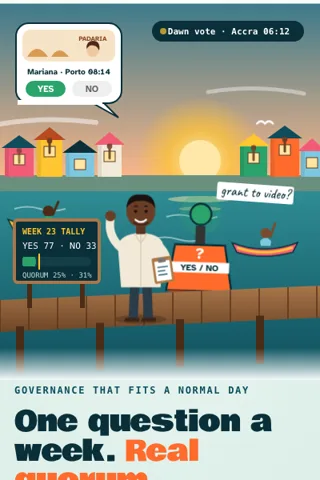
Governance by text-sized questions: one decision a week, answered in ten seconds, with real quorum.
 LIVE DEMO
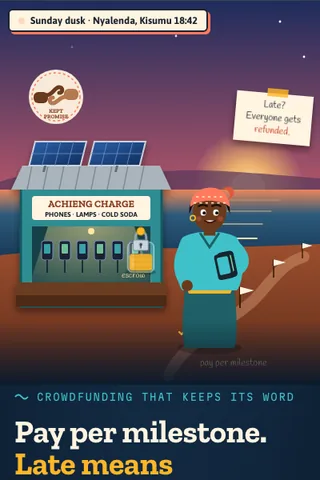
Crowdfunding where backers get refunded by contract if the goal or the milestones are missed.
 LIVE DEMO
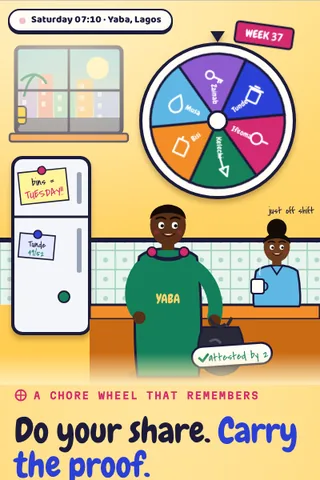
A shared house or club tracks who did the work, and the record becomes everyone's portable reliability score.
 LIVE DEMO
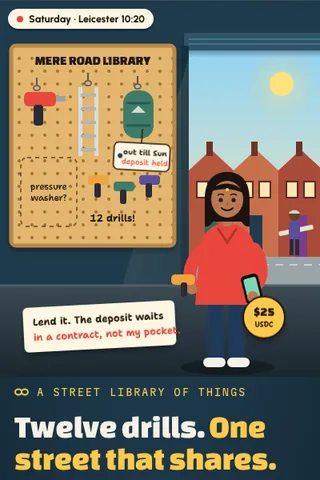
Lend the ladder, the drill, the tent: a street library of things with deposits held by contract.
 LIVE DEMO
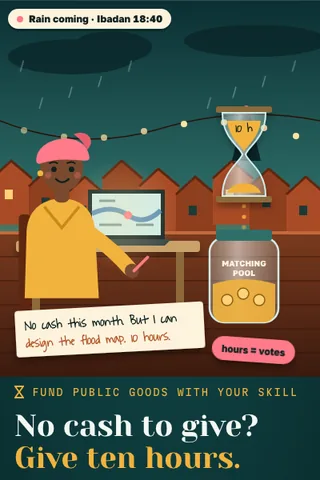
Fund a public good with hours of your skill, not just money, and get matched like a donation.
 LIVE DEMO
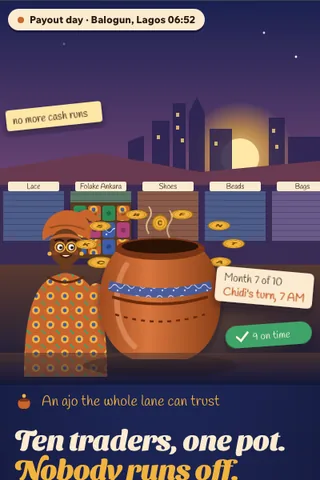
A rotating savings circle (ajo, susu, chama) with payouts enforced by contract and trust scores for members.
 LIVE DEMO
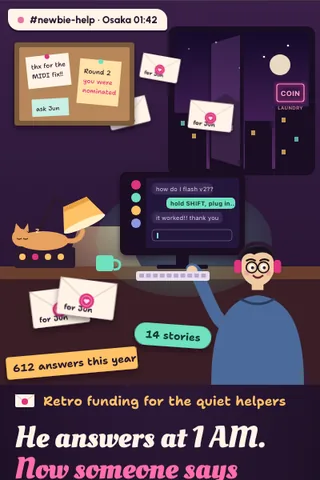
Retro funding for the quiet helpers: the community nominates who mattered, a pot pays them.