 LIVE DEMO
The Verdict
Put a claim to an impartial AI judge that reads the world and rules, on-chain.
Ready now
$20GenLayer
 Try it live
Run AI jobs with a verifiable receipt that this exact model gave this exact answer.
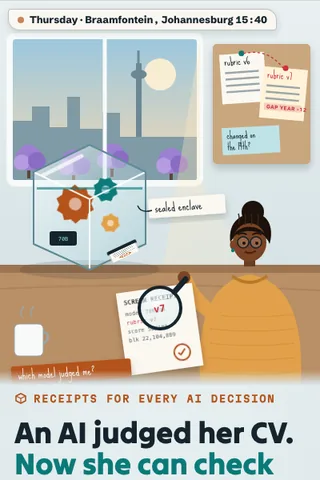
Try it live, freeA hiring firm screens CVs with AI. Glass Box gives each candidate a TEE-signed receipt of the model and prompt, so the process can be audited.
TEE inference integration, receipt contract, audit viewer, API
Reshape it entirely: new features, your flows, your brand end to end, integrations you need. We scope it with you.
Infra and standards exist; a consumer-facing receipt app is still uncommon.
OpenGradient offers a TEE attestation checker, Meru (hackathon) issues per-inference receipts, and an IETF draft defines Attested Inference Receipts; no shipping consumer receipt app found.
Checked with web searches in October 2026. A search is not proof that nothing similar exists, and the market moves fast, so we recheck before every build.
Onchain AI; eligibility unknown
The complete Glass Box app: a firm runs AI screening in a sealed enclave, every decision prints a signed receipt the person can check, appeals re-run with proof and a Monday audit catches swapped models, with a paywall and receipt agent built in.
Every buyer gets the same finished app. Basic branding and copy changes come through a quick form.
Your admin side: revenue, paywall editor, users, rules and the agent log.
Referral and growth mechanics, switched on when you are ready to grow.
Candidates check receipts free; firms pay monthly in USDC for volume, audits and compliance.
About $0.001 to $0.009 of inference and $0.0004 of Base gas per screen.
Prices are yours to set. Illustrative, not a promise of income.
Make every AI decision about a person come with a receipt that person can check.
Problem: People rejected by AI cannot see which model or rubric judged them, and firms cannot prove fairness.
Solution: AI jobs run in a sealed enclave and sign the model, rubric and answer onchain, with appeals and audits.
Why now: Firms screen with AI at scale while audit duties for automated decisions are arriving.
Market: Hiring, lending and insurance teams with audit needs, from free to $200 a month.
The ask: Ten hiring teams and one applicant tracking partner this quarter.
Funding is never guaranteed. Check each program's rules.
Many hackathons require code written at the event. See the Regatta Boardfor each race's rule.
Custom rubrics, new enclave hosts, regulator portals and branded viewers, scoped on a call from $1,000.
Firms already use AI to screen CVs, loan applications and claims, and the people affected get a one line rejection with no way to know which model or which rules judged them. Even a well meaning firm cannot prove afterwards that the model it described is the one that actually ran.
The building blocks exist. OpenGradient offers a TEE attestation checker for inference, Meru (a hackathon project) issues per-inference receipts, and an IETF draft defines Attested Inference Receipts. Research verdict: rare, medium novelty. No shipping consumer-facing receipt app was found. What this app adds is the person-facing layer: a readable receipt for the candidate, the rubric version on every decision, a one tap appeal with proof, and audit tooling for the firm. It packages existing attestation infrastructure; it does not invent it.
Per decision: a fingerprint of the model weights, a fingerprint of the rubric or prompt, a fingerprint of the input (the CV), the output score, and the enclave's attestation quote. Fingerprints and attestation references go onchain; the CV text and the full output stay encrypted with the firm for a retention window the firm sets.
Make every AI decision about a person come with a receipt that person can check.
Which model judged me? A candidate opens the receipt and sees the model, the rubric version and the score per criterion, in plain words.
Appeal with proof When a rule looks wrong, the appeal carries the receipt. The firm can re-run on another rubric and issue a new receipt.
Monday audit Hiring leads spot check ten receipts a week and keep a clean audit streak they can show regulators and clients.
Enclave inference: The firm's screening model runs inside a TEE (for example an Intel TDX or NVIDIA confidential computing GPU host, or Ritual's TEE execution). The enclave produces an attestation quote binding model, prompt, input and output hashes.
Models: Open weight models with published hashes: a large tier (around 70B parameters) for nuanced screens and a small tier (around 8B) for high volume, chosen by the firm and pinned per rubric.
Receipt contract: A small contract on Base stores receipt records: attestation reference, model hash, rubric hash, input hash, score, block time. Optionally mirrored on Ritual for native onchain AI verification.
Attestations: Rubric versions are published as EAS attestations by the firm, so a rubric change is visible and dated.
Verifier and viewer: A web viewer checks the enclave quote against the vendor's root certificates and the onchain record, then renders a plain language page for the candidate.
Indexer and alerts: An indexer watches receipts for model fingerprint drift or rubric changes and alerts the firm, which is how a silent model swap gets caught.
API: A REST API for the firm's applicant tracking system: submit a job, get a receipt id, link it in the rejection email.
Per screen, roughly: model inference about $0.001 (8B) to $0.009 (70B) for a 3,000 token CV and rubric at open model hosting rates, a confidential computing premium on top, and about $0.0004 of Base gas per receipt record. Example: a firm screening 2,000 CVs a month on the large tier pays about $20 to $40 in compute and under $1 in gas. Prices are estimates and change often.
Every rejection email carries a receipt link, so each candidate sees the brand. Candidates who were treated fairly share that they could check; firms list 'receipted AI screening' on job posts to attract applicants, which pulls in other firms.
Proof is not fairness: A receipt proves what ran, not that the rubric is fair. The app shows the rubric version and encourages human review; it does not certify fairness.
Privacy: CVs are personal data. Only hashes go onchain; text is encrypted, retained for a set window, and deleted on schedule. Data protection laws such as POPIA and GDPR apply.
Enclave trust: TEEs depend on hardware vendors and have had vulnerabilities. Receipts name the attestation type so verifiers can weigh it.
Gaming: Candidates could probe rubrics to game them. Firms can choose fingerprint only mode, with rubric text released during appeals.
Legal exposure: Receipts may be used in disputes. Firms need legal review before switching it on, and the app is not legal advice.
Costs and tools are estimates at the time of writing. General information only, not legal or financial advice.
Nine routes from one vessel. Tap a port to open its chart.
Glass Box gives every AI answer a signed receipt so the people affected can check what model and prompt was used. Owning it means the clients who need audit trails pay you, and your onchain record shows you build trust infrastructure. On someone else's tool, your clients' audit history lives on their servers.
You do not need to. Glass Box ships ready to deploy, and every path here is written for non coders. When you want to change something deeper, you can hire help or ask DEPLOYR support.
Yes. It is deployed from your wallet, the contract address is public, and the brand, users, and revenue are yours. DEPLOYR does not hold your keys or take a cut of your app's revenue.
No. It proves what ran, not that it was right. Say this plainly to clients. It makes the process auditable, which is a step towards fairness.
Store hashes and receipts onchain, never raw CVs or personal data. Check data protection rules where your clients operate.
Receipts already issued stay valid. Keep your provider options documented so you can switch if needed.
You charge teams a monthly fee for receipts on their AI jobs, with higher tiers for volume and audit exports. $1M a year is a target, not a promise.
Illustrative stages, not a forecast. Results depend on you and the market; nothing here is guaranteed.
LIVE DEMOPut a claim to an impartial AI judge that reads the world and rules, on-chain.
 LIVE DEMO
Invite-gated: Ritual's testnet faucet needs a Discord invite. Get the invite, then contact us and we set you up. Not sold in the normal flow yet.
 LIVE DEMO
Teach an AI agent your craft, and every time it earns, you earn as the teacher of record.
 LIVE DEMO
An AI that guards your inbox and DMs and charges strangers a fee you keep to reach you.
 LIVE DEMO
Give your AI agent a wallet with house rules it literally cannot break.
 LIVE DEMO
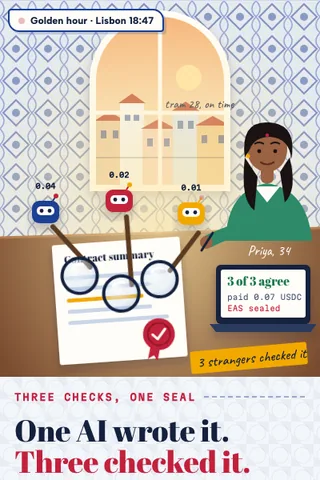
Pay three independent AIs a few cents to check one answer, and get a signed receipt of agreement.
 LIVE DEMO
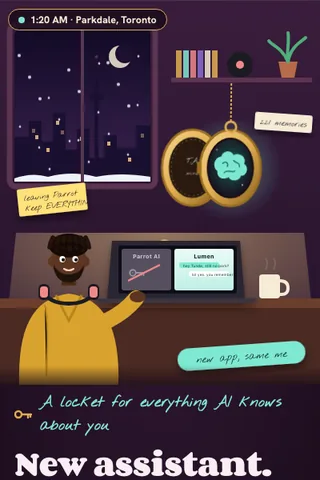
Your personal AI memory, owned by you, rentable to any assistant you choose.
 LIVE DEMO
AI labs pay you to rank their outputs, and your taste builds an onchain reputation.