 LIVE DEMO
The Verdict
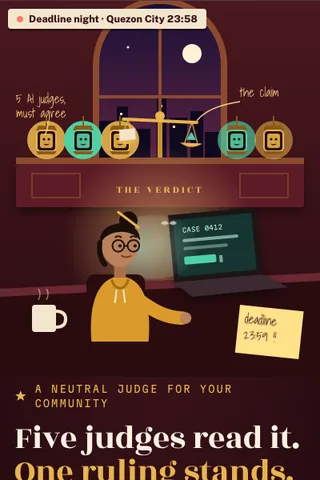
Put a claim to an impartial AI judge that reads the world and rules, on-chain.
Ready now
$20GenLayer
 Try it live
Your personal AI memory, owned by you, rentable to any assistant you choose.
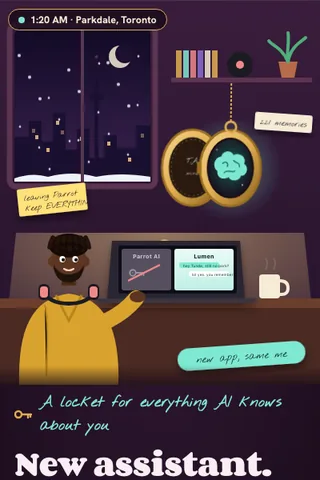
Try it live, freeTunde moves from one AI assistant to another and loses nothing: his preferences and notes sit in an encrypted vault he controls, and he grants each app a revocable key.
Encrypted vault, grant and revoke registry, MCP connector, access log
Reshape it entirely: new features, your flows, your brand end to end, integrations you need. We scope it with you.
User-owned AI memory with revocable onchain grants has live and hackathon implementations.
SealedMind claims a live 0G mainnet memory vault with onchain revocable grants, alongside Mnemo, EchoVault and OpenGradient's user-owned memory vision.
Checked with web searches in October 2026. A search is not proof that nothing similar exists, and the market moves fast, so we recheck before every build.
User-owned AI theme; eligibility unknown
Public goods angle; existing projects OK
The complete Keepsake Mind app: people keep what AI assistants learn about them in an encrypted vault they own and lend each app a scoped, revocable key, with a paywall, owner console, MCP connector and importer built in.
Every buyer gets the same finished app. Basic branding and copy changes come through a quick form.
Your admin side: revenue, paywall editor, users, rules and the agent log.
Referral and growth mechanics, switched on when you are ready to grow.
Owning your memory is free. People who want more keys, per read approvals and full imports pay for Plus, and assistant builders pay per active user to offer instant personalisation through the connector.
Base gas for a grant or revoke is usually under one cent; the owner can sponsor it.
Prices are yours to set. Illustrative, not a promise of income.
Your AI memory in a vault you own, lent to any assistant with a key you can take back.
Problem: People spend years teaching AI assistants how they write, what they eat and who their clients are. That memory lives inside each app, so switching means starting from zero and the app decides what happens to it.
Solution: Memories are encrypted on device into shelves. A small registry on Base records which app holds a key to which shelves until when; an MCP connector lets any assistant read granted shelves and only propose new memories. Every read is logged.
Why now: MCP gives assistants a common way to call tools, passkeys remove seed phrases, and people are switching assistants more often than ever.
Market: Heavy AI assistant users, and the assistant builders who want day one personalisation without hoarding data.
The ask: Two assistant builders as launch partners and grant support from Base and NEAR ecosystem funds.
Funding is never guaranteed. Check each program's rules.
Many hackathons require code written at the event. See the Regatta Boardfor each race's rule.
Custom work from $2,000: your own assistant integration, enterprise policies, a different chain or key service, or a branded deployment. Scoped on a call.
People now spend years teaching AI assistants how they write, what they eat, who their clients are. That memory lives inside each app, so switching means starting from zero, and the app, not the person, decides what happens to it.
This already exists in several forms. SealedMind claims a live memory vault on 0G mainnet with onchain revocable grants, and Mnemo, EchoVault and OpenGradient's user-owned memory work explore the same idea. Research verdict: exists, low novelty. What this build adds is a packaged, owner-ready version: shelf-level keys (so a family fact cannot leak into work), timed grants, an access log a person can read, a distilling importer, and a weekly tidy habit, on Base with an MCP connector any assistant can use.
Memories are short facts, each with a source chat, date and shelf, encrypted on the user's device before upload. Onchain: the vault root hash, and per grant the app, shelves, expiry and revocation. Read events are logged offchain and signed, with a daily hash anchored onchain.
What an AI learns about you belongs to you, and goes where you go.
Day one, it knows you A new assistant reads your vault on first launch, so switching costs nothing.
Keys you can take back Every app holds a scoped, timed key. Revoke in one tap and its next read fails.
Sunday tidy Ten minutes a week to keep or forget the new memories apps wrote. A streak keeps it light.
Wallet and identity: Privy embedded wallet on Base. Passkey login, no seed phrase; the wallet signs grants and revokes.
Encrypted vault: Memories encrypted client side with per-shelf keys (for example Lit Protocol access conditions or a simple envelope scheme), stored on IPFS or a private bucket. Only ciphertext leaves the device.
Grant registry: A small contract on Base maps app address to shelves and expiry. Apps prove a valid grant to the key service to get a shelf key; revoke flips the entry.
MCP connector: An MCP server any assistant can call: read memories for granted shelves, propose new memories (which land as pending for the owner to keep or forget).
Distilling importer: Imports exported chats and keeps only stable facts using a cheap model tier (for example Claude Haiku or a comparable small model via OpenRouter), with a mid tier for ambiguous ones.
Access log: Every read is logged with app, shelf and time, signed by the key service, with a daily Merkle root written to Base.
Import: about 2,000 chats at a few hundred tokens each through a small model tier is roughly $0.50 to $2 one time. Reads: no model cost, only key service and storage, well under $0.001 each. Base gas for a grant or revoke is usually under one cent. Example month for 1,000 users: storage and key service about $40, daily log anchoring about $3, imports for new users about $100, hosting $30, so about $175.
Every app that adds the connector advertises import from your vault, which pulls users in from rival assistants. Users share the switched assistants and it still knew me card. Builders adopt it because it cuts cold start.
Copies already made: Revoking stops future reads, not copies an app already kept. Say so plainly, prefer apps that sign a no-retention pledge, and show it in the grant screen.
Sensitive data: Family, health and money facts are high risk. Default those shelves to ask every read, keep them out of import unless starred, and follow GDPR, PIPEDA and NDPR style rights to delete.
Key service as a weak point: If the key service is breached, shelf keys could leak. Use threshold or hardware-backed key management and rotate keys on revoke.
Bad memories: Distilling can save wrong facts. Every memory shows its source chat and can be edited or forgotten; apps can only propose, not write.
Existing competition: Several projects do similar things. Compete on usability, the connector and the weekly habit, not on novelty claims.
Costs and tools are estimates at the time of writing. General information only, not legal or financial advice.
Nine routes from one vessel. Tap a port to open its chart.
Every AI assistant you use is quietly building a memory of you that it keeps when you leave. When you own Keepsake Mind, your preferences, notes and history sit in an encrypted vault under your wallet, and each assistant gets a key you can revoke. Run it under your brand for a community and you become the trusted place people keep their AI memory, not another platform harvesting it.
Yes. The vault, the grant and revoke registry and the MCP connector arrive deployed. You add notes, connect an assistant that supports MCP, and grant or revoke from a screen.
Memory is encrypted before it is stored and only keys you grant can read it. Onchain you store grants and the access log, not your notes. No system is perfect, so do not store passwords or seed phrases, ever.
Honestly, user owned memory has live projects. Owning yours means your brand, your chain, and your community's trust, and you are not dependent on one vendor staying alive. If you just want a personal vault, a hosted one may do.
Many assistants now do, and the list grows. For ones that do not, you can export a context pack and paste it. Be honest with users about which assistants connect natively.
If you host others, you are handling personal data, and laws like GDPR may apply. Keep data encrypted, let users delete it, write a plain privacy page, and get local advice before charging at scale.
Individuals pay a monthly plan for vault storage, connectors and access logs; teams and communities pay for shared vaults where members keep private memory and grant a shared assistant limited access. This is a target, not a promise.
Illustrative stages, not a forecast. Results depend on you and the market; nothing here is guaranteed.
LIVE DEMOPut a claim to an impartial AI judge that reads the world and rules, on-chain.
 LIVE DEMO
Invite-gated: Ritual's testnet faucet needs a Discord invite. Get the invite, then contact us and we set you up. Not sold in the normal flow yet.
 LIVE DEMO
Teach an AI agent your craft, and every time it earns, you earn as the teacher of record.
 LIVE DEMO
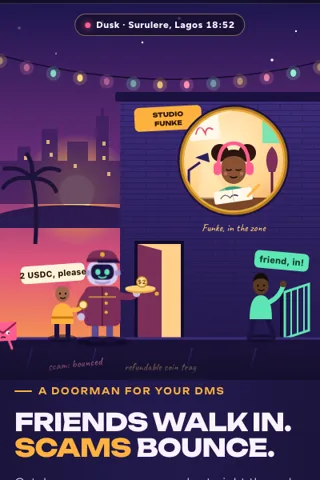
An AI that guards your inbox and DMs and charges strangers a fee you keep to reach you.
 LIVE DEMO
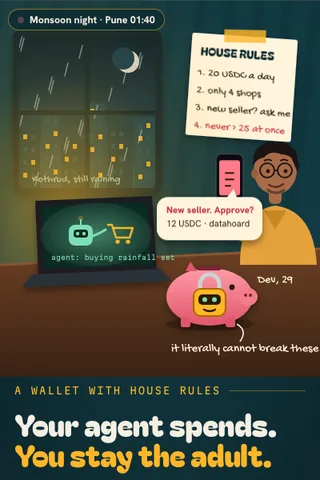
Give your AI agent a wallet with house rules it literally cannot break.
 LIVE DEMO
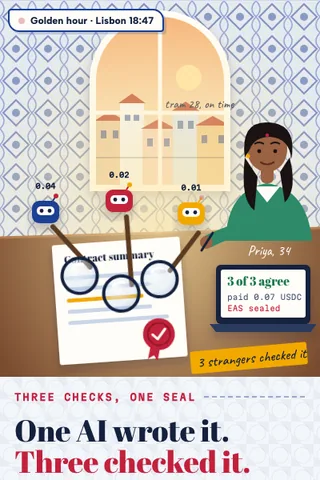
Pay three independent AIs a few cents to check one answer, and get a signed receipt of agreement.
 LIVE DEMO
AI labs pay you to rank their outputs, and your taste builds an onchain reputation.
 LIVE DEMO
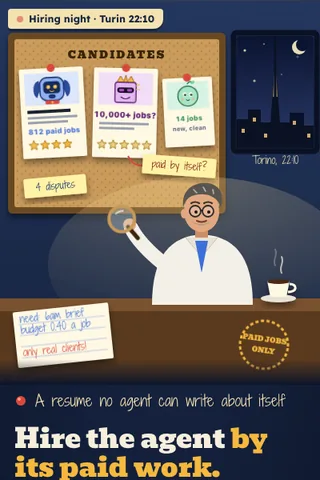
A public, verifiable work history for any AI agent, built from the jobs it actually finished.