 LIVE DEMO
Fix Proof
Tradespeople log each repair with photos and a customer signature, sealed onchain as a warranty.
Reserve · refundable deposit
$159Base · Polygon +1
 Try it live
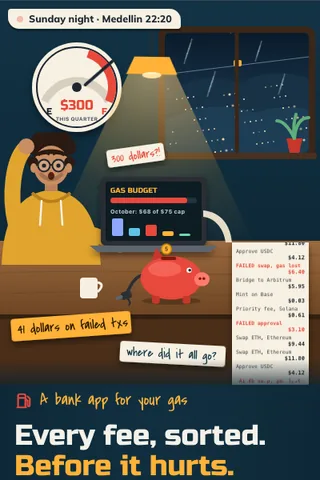
Set a monthly onchain spending budget and see where every fee went, like a bank app for gas.
Try it live, freeRafa has no idea he spent 300 dollars on fees last quarter. Gas Budget categorizes every fee by app and chain, warns him before he blows his monthly cap, and suggests cheaper routes.
Fee categorization, monthly cap, alerts, cheaper route tips.
Reshape it entirely: new features, your flows, your brand end to end, integrations you need. We scope it with you.
Fee data is available; budgeting and alerts around it is the uncommon angle.
Etherscan has a TxnFees analytics tab and Zerion/DeBank show history, but no budget-focused fee app was found.
Checked with web searches in October 2026. A search is not proof that nothing similar exists, and the market moves fast, so we recheck before every build.
The complete Gas Budget app: people who use crypto every week see every fee sorted by app and chain, keep a monthly gas cap, get warned before they sign and get a cheaper route when one is real, with a paywall built in.
Every buyer gets the same finished app. Basic branding and copy changes come through a quick form.
Your admin side: revenue, paywall editor, users, rules and the agent log.
Referral and growth mechanics, switched on when you are ready to grow.
Freemium subscriptions: seeing fees is free, Budget adds warnings, tips and every chain, Team adds a shared cap for studios and DAOs. Paid in USDC.
Owner sets tier prices, free limits and whether cap pledge gas is sponsored.
Prices are yours to set. Illustrative, not a promise of income.
A bank budget for your gas: every fee sorted, a monthly cap, and a warning before you sign.
Problem: Weekly crypto users pay fees on several chains and never add them up. Busy hour swaps, repeat approvals, bridges and failed transactions quietly eat small incomes.
Solution: Read only indexing sorts every fee by app, chain and kind, a monthly cap warns before a fee crosses the line, and a live second quote shows a cheaper route only when it is real.
Why now: Activity is spread across many chains and L2s, so fees are fragmented and invisible, while cheap routes now exist for most everyday actions.
Market: Millions of monthly active wallets that transact weekly, plus studios, DAOs and trading desks that need a shared fee budget.
The ask: Pilot with freelancer communities paid in stablecoins, then a browser extension to move the warning to the moment of signing.
Funding is never guaranteed. Check each program's rules.
Many hackathons require code written at the event. See the Regatta Boardfor each race's rule.
Custom work covers your own chains and indexers, branding, extra categories, partner route integrations and anything beyond the roadmap, scoped on a call.
People who use crypto every week pay fees on several chains and almost never add them up. Swaps on busy hours, repeated approvals, bridges and failed transactions quietly eat a real share of small incomes.
Fee history already exists: Etherscan has a transaction fee analytics view, and portfolio apps like Zerion and DeBank show past transactions with gas. Research found no app built around a monthly gas budget with alerts before signing and cheaper route tips. That budgeting angle is what is new here; the underlying fee data is not. Research verdict: rare, medium novelty.
Public transaction history for the wallets the user adds, on Ethereum, Base, Arbitrum, Polygon and Solana; a public list of known contract roles (DEX routers, bridges, mint contracts); live fee quotes; the user's cap, categories and notes, stored privately in the app.
Make the cost of living onchain as visible and manageable as a grocery bill.
The first number Connecting a wallet shows last quarter's total and the share lost on failed transactions. Most people screenshot it.
A nudge before you sign One short warning, with a cheaper route when one is really cheaper, and silence the rest of the time.
The Sunday slip A weekly statement with one goal to pick and a streak for weeks under cap.
Read-only wallets: Users paste addresses or sign in with Privy to prove ownership. No signing rights, no custody.
Indexer: Transactions and receipts pulled from RPC and indexer providers (for example Alchemy or Helius for Solana), normalised to fee in USD at the block's price.
Categoriser: Rules first: known contract role, then method signature. A small model (a cheap tier on OpenRouter such as Gemini Flash class) only labels unknown contracts and asks the user once.
Pre-sign check: A browser extension or deep link quotes the fee, simulates the transaction (Tenderly or eth_call) to catch likely failures, and compares a second route.
Alerts: Push and email when a planned fee crosses the user's alert line, plus the Sunday statement.
Optional pledge: Users can record a monthly cap as an EAS attestation on Base, for streaks they want public. Nothing else is written onchain.
Per active user per month: indexing about 0.02 to 0.10 dollars depending on chain activity, simulations about 0.01 dollars each at typical provider plan rates, model labelling under 0.01 dollars. An optional EAS attestation on Base costs a fraction of a cent in gas. Example: 2,000 active users cost roughly 150 to 300 dollars a month in infrastructure. Check current provider prices before launch.
The quarterly total is a natural share: 'I spent X on gas and did not know'. Each share card links to a free check of any address. Teams invite members to shared envelopes.
Not financial advice: Route tips compare fees only. The app never recommends what to buy or sell, and says so.
Wrong labels: Contracts can be mislabelled. Unknown contracts go to 'Other' and the user can correct them.
Bad tips: Fees move fast. Tips use live quotes, stay silent under a 30 percent saving, and never promise a number.
Privacy: Linking wallets reveals holdings to the operator. Store addresses encrypted, no selling of data, delete on request.
Phishing look-alikes: The app never asks for keys or signatures. Say this on every screen where a wallet appears.
Costs and tools are estimates at the time of writing. General information only, not legal or financial advice.
Nine routes from one vessel. Tap a port to open its chart.
People track every dollar in their bank app and nothing onchain. Own Gas Budget and you run the bank app for gas, from your wallet and brand, that shows people where their fees went. The users, the alerts and the data are yours.
No. It shows what you spent and where; it does not tell you what to buy. Say that on the site.
Most will use it free. Pros pay for alerts, many wallets and exports. That is fine; the free card is your marketing.
You do not need to. Gas Budget arrives working, deployed from your own wallet with a written guide for every step. You will click, paste and fill in names. If you ever want a change you cannot make, the custom option or a freelancer can handle it, but the first launch needs no code.
Yes. The contract is deployed from your wallet on Base, the code sits in your own git repo, and the name and brand are yours. DEPLOYR does not hold your keys or take a cut of what Gas Budget earns. If you stop paying anyone tomorrow, the app keeps running on your wallet.
That is the most likely early outcome, and it is fixable. The paths below start with you as the first user, then ten real active onchain users who have no idea what they spend on fees you can name today. If ten people you message do not care after you have shown it to them, you have learned something useful in a week instead of a year.
Free monthly report, a pro plan for alerts and multiple wallets, and team plans for funds and farms tracking costs. This ladder is a target, not a promise.
Illustrative stages, not a forecast. Results depend on you and the market; nothing here is guaranteed.
LIVE DEMOTradespeople log each repair with photos and a customer signature, sealed onchain as a warranty.
 LIVE DEMO
Leave clear onchain instructions so the people you trust can reach your crypto if you cannot.
 LIVE DEMO
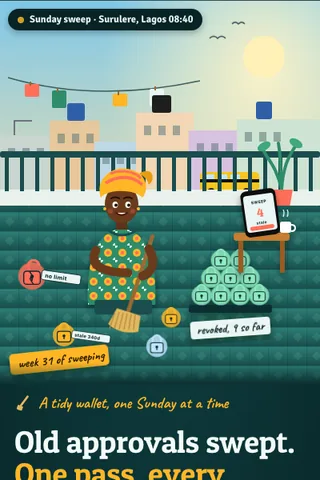
A weekly ritual that finds risky token approvals and lets you revoke them in one tidy pass.
 LIVE DEMO
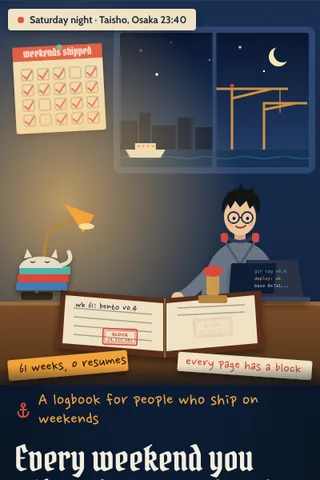
Every commit, deploy, and demo you ship becomes a signed, timestamped builder diary.
 LIVE DEMO
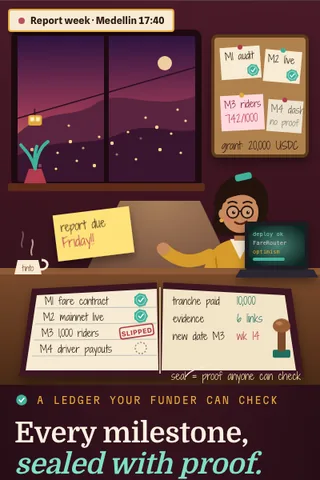
Show funders exactly what their grant built, milestone by milestone, with proof attached.
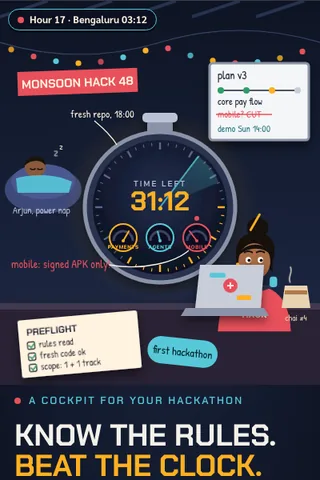 LIVE DEMO
A hackathon cockpit that plans your scope, tracks bounties, and drafts a judge-ready submission.
 LIVE DEMO
Your DePIN devices report uptime and earnings in one honest dashboard with tax-ready exports.
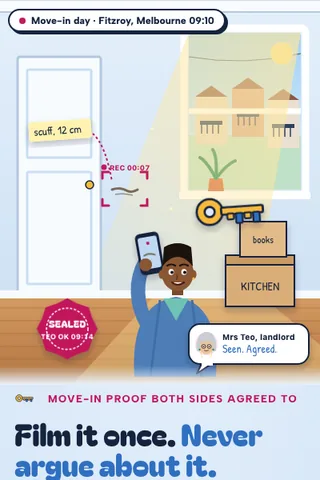 LIVE DEMO
Tenants and landlords seal move-in photos and rent receipts so deposit disputes end fast.