 LIVE DEMO
Sealed Take
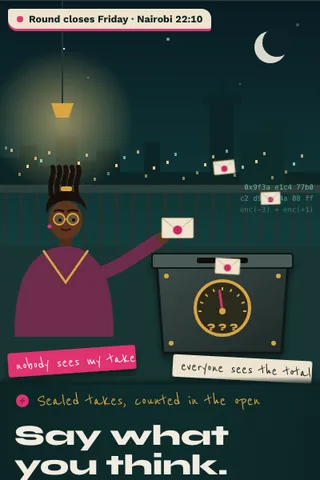
Everyone stakes a conviction, encrypted. The chain tallies it without ever seeing a single take. FHE on Base.
Ready now
$20Fhenix
 Try it live
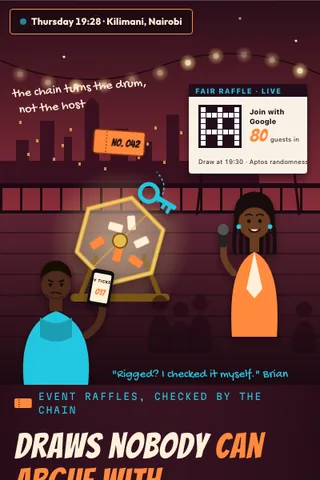
Event raffles where guests join with Google and the draw uses Aptos onchain randomness.
Try it live, freeAt a fintech meetup in Nairobi, eighty guests scan a code and join with Google. The winner is drawn by the chain, and anyone can check it.
Join page with Keyless, draw contract, proof page.
Reshape it entirely: new features, your flows, your brand end to end, integrations you need. We scope it with you.
A tutorial pairs Keyless with randomness, but no live event raffle product was found.
Aptos randomness tutorials; off chain raffle apps.
Checked with web searches in October 2026. A search is not proof that nothing similar exists, and the market moves fast, so we recheck before every build.
Ecosystem program for shipped apps; check current terms.
The complete Fair Raffle app: hosts run free entry draws where guests join with Google, the list is frozen on chain, Aptos randomness picks once and anyone can check the proof, with a paywall built in and an owner console available as an add-on.
Every buyer gets the same finished app. Basic branding and copy changes come through a quick form.
Your admin side: revenue, paywall editor, users, rules and the agent log.
Referral and growth mechanics, switched on when you are ready to grow.
Guests never pay to enter and the draw is never gated. Hosts pay a monthly plan for bigger rooms and door tools, and larger organisers pay for multi draw events.
No entry fees: paid entry raffles are regulated in many countries, so the app does not sell tickets. Gas (well under $1 per raffle) can be sponsored by the owner.
Prices are yours to set. Illustrative, not a promise of income.
Event raffles where guests join with Google and the draw uses Aptos onchain randomness that anyone can check.
Problem: Meetups, clubs and fundraisers draw names from a hat or a spreadsheet. When a friend of the host is picked, people assume it was rigged and the host has nothing to show. Guests will not install a wallet just to enter.
Solution: Guests join with Google through Aptos Keyless. Rules are published first, the entry list is frozen and hashed on chain, and a single call to Aptos randomness picks the names. A public proof page lets anyone check every step.
Why now: Aptos ships onchain randomness and Keyless sign in, sponsored gas makes entry free, and small models can flag duplicate accounts for a host to review.
Market: Monthly meetups, campus clubs, church and school fundraisers, conferences and community groups that run draws, and later any fair choice by lot.
The ask: Pilot communities in Nairobi and Lagos, and grant support from ecosystem programs such as Aptos Foundation Grants.
Funding is never guaranteed. Check each program's rules.
Many hackathons require code written at the event. See the Regatta Boardfor each race's rule.
Custom work from $700: your own draw rules and allocation types, integrations with ticketing or a community CRM, extra languages, or a branded deployment for a venue or network. Scoped on a call.
Meetups, community events and school fundraisers run raffles from a hat or a spreadsheet. When the winner is a friend of the host, people assume the draw was rigged, and there is nothing the host can show to prove otherwise. Guests also do not want to install a wallet just to enter.
The pieces exist. Aptos ships onchain randomness through its randomness API, with official tutorials that pair it with Keyless sign in, and many off chain raffle apps and random name pickers are in daily use. Our research did not find a live event raffle product that combines Google sign in, a door check in, an entry list frozen and hashed before the draw, a single allowed draw call and a public proof page for guests. The novelty is in packaging a known primitive for a real room of people, not in the randomness itself.
Per raffle: the rules (prize count, who can enter, code rotation), each entry as a Keyless account address with a display name of first name and initial, the door check in status, the frozen entry list hash, the draw transaction and its winners, and any removals with a written reason. Emails and Google profile data are never published.
Give every community a draw that the most skeptical person in the room can check from their own phone.
Check it yourself The proof page lets any guest confirm their entry was in the list and the draw was called once. Skeptics become the loudest fans.
Ten second join Google sign in through Keyless means no seed phrase and no app install, so almost everyone in the room enters.
The live moment The drum spinning on the projector and the winner appearing on every phone at once is the best five minutes of the night.
Join with Google: The projector QR opens a web page. Guests sign in with Google through Aptos Keyless, which derives an Aptos account from the login without a seed phrase. Gas is sponsored by the host through a fee payer account.
Door check in: A rotating code (default every 90 seconds, last two valid) proves the guest is in the room. Optional desk check in by the host for prizes of higher value.
Raffle module in Move: A Move module stores rules and entries, freezes the list with a hash at the set time, and exposes a single draw entry function marked #[randomness] that calls aptos_framework::randomness to pick winners. A second draw call aborts.
Proof page: A public page reads the module's events through the Aptos indexer and shows the list hash, the draw transaction, winners and any removals with reasons, with links to an explorer.
Door helper agent: A small model such as Claude Haiku or GPT-4o mini reads anonymised check in events to flag many accounts on one device or accounts made the same week. It suggests; the host decides in public.
Notifications: Winners get an in page alert and an email from the host's own sender. Prize handover happens in person; the app never holds money or prizes.
Per raffle with about 80 guests: around 80 entry transactions plus one freeze and one draw on Aptos, typically a small fraction of a US cent each at current gas prices, so well under $1 in total sponsored by the host. The door helper uses a few thousand model tokens, under $0.05. Hosting is about $10 to $20 a month. A meetup running one raffle a month spends roughly $12 to $25 a month all in. Gas and model prices change; check current rates.
Every guest at every draw sees the product working and gets a proof link that they share in group chats. Other organisers in the room ask how to run their own. The share card from a skeptic who checked the draw is the strongest ad it has.
Gambling law: Paid entry raffles are regulated in many countries, including Kenya. The default is free entry with donated prizes; owners must check local rules before charging for tickets.
Sybil entries: One person with many Google accounts. Door codes, device flags and optional desk check in reduce it; the host removes entries in public with a reason.
Privacy: Only account addresses and first name plus initial are shown. Emails and profile data stay private and are never written onchain.
Host abuse: A host could freeze the list early or remove rivals. Every freeze and removal is a public event with a timestamp, so guests can see it.
Randomness misuse: Randomness must be used only in a private entry function so it cannot be tested and aborted; the module follows the Aptos guidance for this.
Venue connectivity: Rooftops have weak signal. Join works on slow connections and the list freeze waits for the host's go.
Costs and tools are estimates at the time of writing. General information only, not legal or financial advice.
Nine routes from one vessel. Tap a port to open its chart.
Fair Raffle: Event raffles where guests join with Google and the draw uses Aptos onchain randomness. Using someone else's version means their rules, their brand and their revenue. Owning Fair Raffle means it is deployed under your wallet, carries your name, and every customer, partner and result builds your track record instead of theirs.
Fair Raffle arrives deployed with a guide. Running it is settings and sharing links, not code. If you get stuck, we help you ship it.
Start with ten people you already know. The first move below takes under an hour and tells you fast whether people care.
Each step is sized in minutes. Most owners spend an hour a week, and the app does the repetitive part.
Nothing is guaranteed. The playbook gives you a clear path and honest numbers, and you decide how far to take it.
Charge the people who get the most value from Fair Raffle: a monthly plan for groups or teams, plus setup fees for anyone who wants it done for them.
Illustrative stages, not a forecast. Results depend on you and the market; nothing here is guaranteed.
A starter chart. A fuller, app-specific playbook is being written.
LIVE DEMOEveryone stakes a conviction, encrypted. The chain tallies it without ever seeing a single take. FHE on Base.
 LIVE DEMO
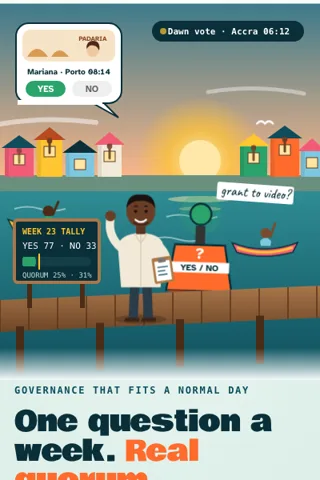
Governance by text-sized questions: one decision a week, answered in ten seconds, with real quorum.
 LIVE DEMO
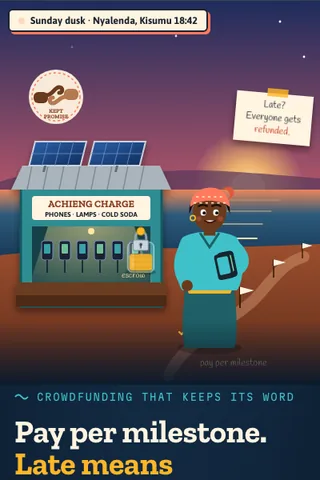
Crowdfunding where backers get refunded by contract if the goal or the milestones are missed.
 LIVE DEMO
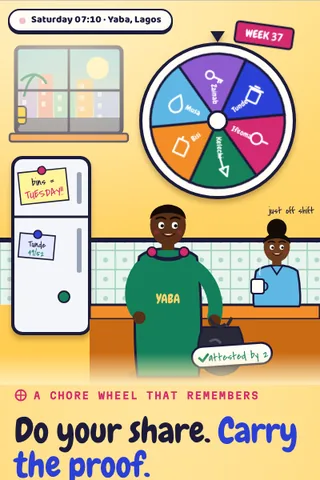
A shared house or club tracks who did the work, and the record becomes everyone's portable reliability score.
 LIVE DEMO
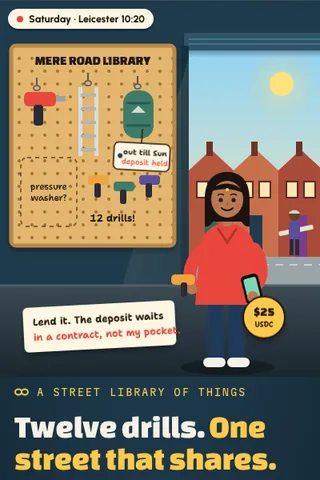
Lend the ladder, the drill, the tent: a street library of things with deposits held by contract.
 LIVE DEMO
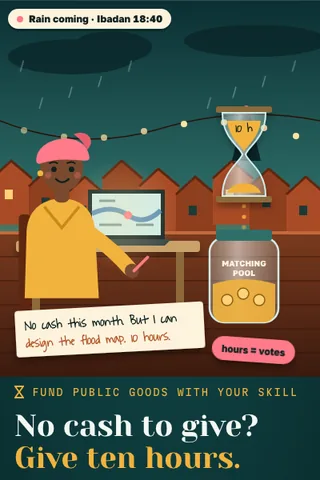
Fund a public good with hours of your skill, not just money, and get matched like a donation.
 LIVE DEMO
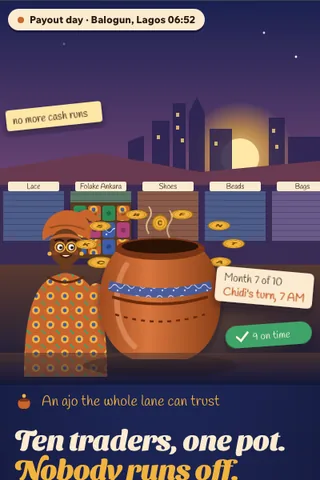
A rotating savings circle (ajo, susu, chama) with payouts enforced by contract and trust scores for members.
 LIVE DEMO
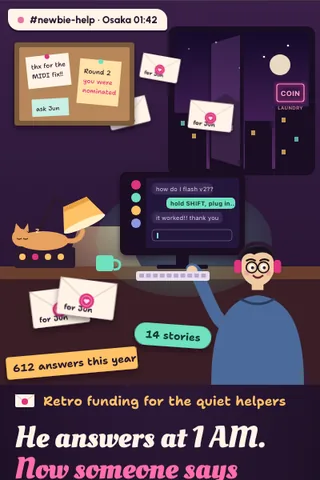
Retro funding for the quiet helpers: the community nominates who mattered, a pot pays them.