 LIVE DEMO
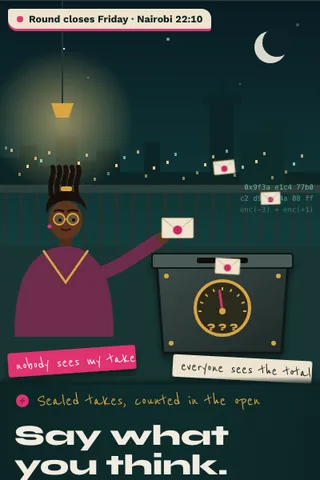
Sealed Take
Everyone stakes a conviction, encrypted. The chain tallies it without ever seeing a single take. FHE on Base.
Ready now
$20Fhenix
 Try it live
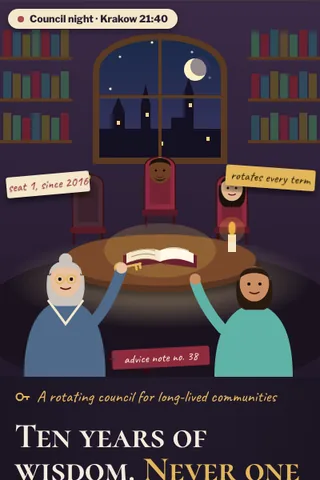
Turn your community's longest-serving members into a rotating, accountable advisory council.
Try it live, freeA ten-year-old open source project has founders burning out. Elder Council selects advisors by verified tenure and contribution history, rotates seats every term, and records every advice note so knowledge outlives any single person.
Tenure scoring from GitHub or attestations, seat rotation, advice notes archive, council page.
Reshape it entirely: new features, your flows, your brand end to end, integrations you need. We scope it with you.
Rotating accountable councils exist per-DAO; a packaged tool for small communities was not found.
Gitcoin Steward Council uses term limits, Olympus proposed confidence votes for its council, and Orca documents recall votes, all as bespoke governance not off-the-shelf tools.
Checked with web searches in October 2026. A search is not proof that nothing similar exists, and the market moves fast, so we recheck before every build.
Existing open-source repos allowed; judged on work added during event
The complete Elder Council app: a community seats a rotating council by verified tenure, asks it questions, and keeps every signed answer and dissent in a searchable book, with a paywall built in.
Every buyer gets the same finished app. Basic branding and copy changes come through a quick form.
Your admin side: revenue, paywall editor, users, rules and the agent log.
Referral and growth mechanics, switched on when you are ready to grow.
Advisors and contributors never pay and money never buys a seat. Communities pay monthly for bigger councils and the tools around the book.
Attestations cost under $0.01 on Optimism and can be sponsored by the owner. Clerk model cost is roughly $3 to $15 a term.
Prices are yours to set. Illustrative, not a promise of income.
A rotating council of a community's longest-serving members, picked from verifiable history, with every piece of advice kept.
Problem: Long-lived open source projects and communities rely on a few founders who carry ten years of context. They burn out, and when they leave the reasons behind past decisions leave too.
Solution: Score tenure from public reviews and mentoring, seat a council that rotates each term, and keep every signed note and dissent in a searchable book with hashes attested onchain.
Why now: Cheap attestations on Optimism, Arbitrum and Base, email wallets, and mid-tier models that can draft agendas without editing what people sign.
Market: Open source projects, small DAOs, co-ops and clubs that have outgrown one founder, plus the foundations and grant programs that fund them.
The ask: Pilot partners: three long-lived open source projects and one co-op, plus public goods funding such as Gitcoin or Optimism RetroPGF.
Funding is never guaranteed. Check each program's rules.
Many hackathons require code written at the event. See the Regatta Boardfor each race's rule.
Custom work from $1,000: your own tenure sources, a branded council page, integrations with GitLab, Discourse or a co-op membership system, extra languages. Scoped on a call.
Long-lived open source projects and communities rely on a few founders who carry ten years of context. They burn out, and when they leave, the reasons behind past decisions leave with them.
Rotating, accountable councils exist as bespoke governance: Gitcoin's Steward Council uses term limits, Olympus proposed confidence votes for its council, and Orca documents council recall votes. These are custom setups inside large DAOs. A packaged, off-the-shelf tool for small communities that scores tenure from verifiable history, rotates seats and archives advice was not found in research. Verdict: rare, medium novelty.
Git and code review history (GitHub or GitLab APIs), mentoring signals such as answered issues, optional attestations of offline service, the charter, seat rosters, attendance, and signed advice notes with dissent.
Turn a community's longest-serving members into a rotating, accountable council, so wisdom is shared and outlives any one person.
A seat you earned Seats come from years of reviews and mentoring, visible to all, not from popularity or money.
Rest is built in Rotation means founders step back on schedule, without guilt, and newer elders step up.
The book Every piece of advice is kept with its dissent, so newcomers read the why before they ask.
Identity: Contributors sign in with GitHub via OAuth and link a wallet through Privy; the link is attested with EAS on Optimism, Arbitrum or Base.
Tenure scoring: An indexer pulls commits, reviews and issue replies, caps commits per week, weighs reviews and mentoring, and publishes each score with its inputs for open review.
Charter contract: A small contract stores seats, term length, minimum tenure, rest rule and recall threshold, and records each roster as an attestation.
Clerk agent: A mid-tier model (Claude Sonnet or GPT-4o class) drafts agendas and summaries; the signed note itself cannot be edited by the agent, and dissent is a separate field.
Advice archive: Notes are signed by advisors, stored on IPFS, and their hash attested onchain, with a searchable site for the community.
Notifications: Email and chat digests (Discord or Matrix bots) for sessions, recall votes and the monthly page from the book.
Per term for a 40-contributor project: indexing via GitHub API is free within rate limits; scoring and summaries are about 1M tokens a term on a mid-tier model, roughly $3 to $15. Attestations and roster updates on an L2 are cents. Hosting about $10 a month. Example year: under $100.
Advice notes are cited in pull requests and shared publicly; other maintainers see the council page and badge, and adopt it for their own projects.
Gaming tenure: Commit farming is capped, reviews weigh more, and minimum years apply. Scores are public for challenge.
Exclusion: Tenure favours early members; charters can reserve a seat for newer contributors and count mentoring.
Authority creep: Advice is advice: maintainers still decide. The charter states this and notes are labelled.
Privacy: Only public contribution data is scored; private discussions are never published.
Agent errors: Summaries once dropped a dissent; now dissent is stored separately and signed notes are immutable.
Costs and tools are estimates at the time of writing. General information only, not legal or financial advice.
Nine routes from one vessel. Tap a port to open its chart.
Elder Council turns a community's longest serving members into a rotating, accountable advisory council, chosen by verified tenure and contribution, with every advice note archived. If you use a generic governance tool, the knowledge and the council record live on someone else's platform. Own it, and the tenure scoring, the seat rotation and the archive that outlives any one founder belong to your community and your wallet.
It can. Weight contribution, not just time, and keep a seat for a newer voice. Publish the scoring so anyone can check it.
Only if notes are short and requested on a schedule. Ask one question per month per seat.
Tenure scoring from GitHub or attestations, rotation, notes and the council page come built.
No. It is advisory. Your existing decision process stays.
Yes. Deployed from your wallet on Optimism, Arbitrum or Base.
Open source projects, DAOs and foundations pay a monthly fee for a managed council with archive, plus setup fees. This is a target, not a promise.
Illustrative stages, not a forecast. Results depend on you and the market; nothing here is guaranteed.
LIVE DEMOEveryone stakes a conviction, encrypted. The chain tallies it without ever seeing a single take. FHE on Base.
 LIVE DEMO
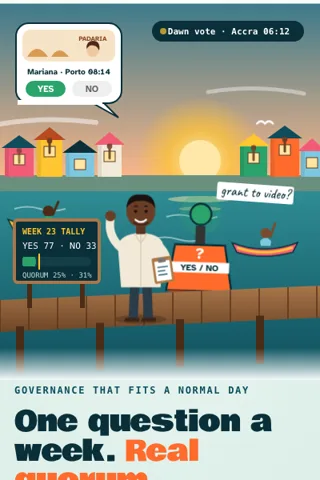
Governance by text-sized questions: one decision a week, answered in ten seconds, with real quorum.
 LIVE DEMO
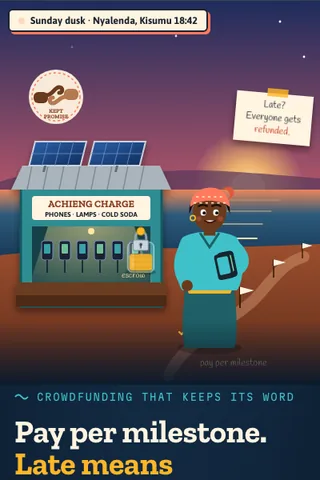
Crowdfunding where backers get refunded by contract if the goal or the milestones are missed.
 LIVE DEMO
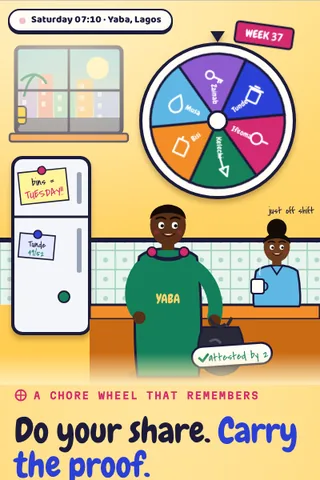
A shared house or club tracks who did the work, and the record becomes everyone's portable reliability score.
 LIVE DEMO
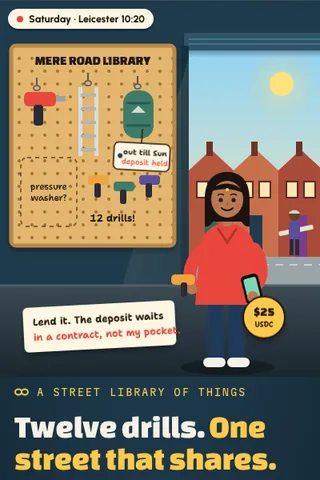
Lend the ladder, the drill, the tent: a street library of things with deposits held by contract.
 LIVE DEMO
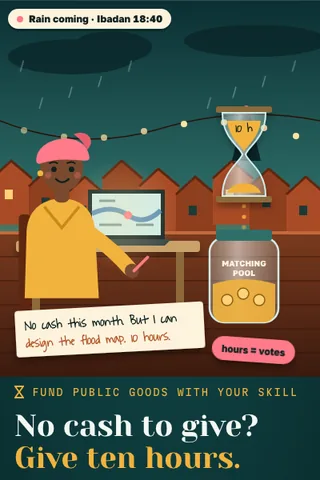
Fund a public good with hours of your skill, not just money, and get matched like a donation.
 LIVE DEMO
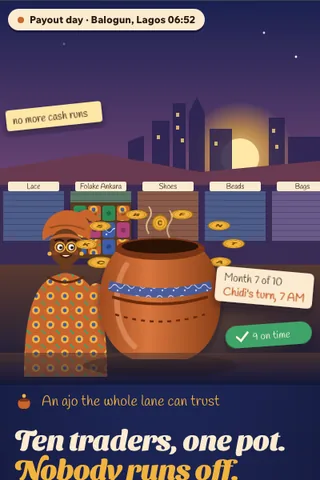
A rotating savings circle (ajo, susu, chama) with payouts enforced by contract and trust scores for members.
 LIVE DEMO
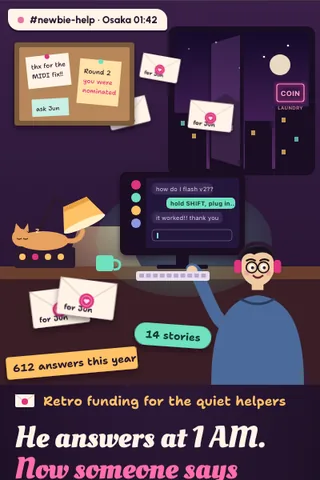
Retro funding for the quiet helpers: the community nominates who mattered, a pot pays them.