 LIVE DEMO
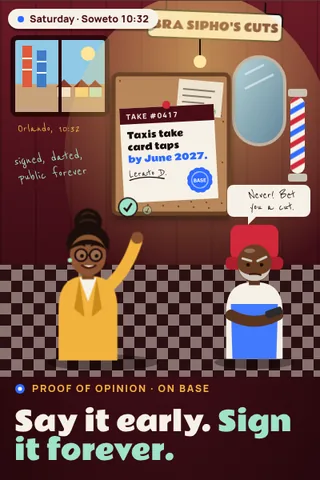
Proof of Opinion
Put your name on a take onchain, mint a shareable badge, others co-sign.
Ready now
$20Base
 Try it live
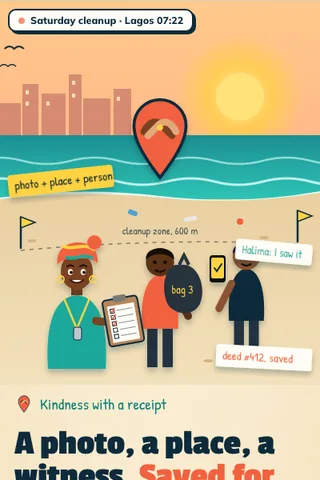
Real world good deeds, verified by a photo, a place, and a witness, saved forever.
Try it live, freeNgozi organizes a Saturday beach cleanup in Lagos. Volunteers check in with geotagged photos and a co-volunteer witnesses each one, and the city NGO later uses the record to give the top helpers internship priority.
Event setup, geo plus photo check in, witness cosign, deed credential, organizer dashboard.
Reshape it entirely: new features, your flows, your brand end to end, integrations you need. We scope it with you.
Each piece exists; a single organizer app combining photo, place and human witness is a modest combination.
ImpactX (Celo) mints AI-verified Proof-of-Impact NFTs from photos of good deeds, and ImpactChain (ETHGlobal) uses DAO witness signatures; TruthCam anchors photo GPS hashes.
Checked with web searches in October 2026. A search is not proof that nothing similar exists, and the market moves fast, so we recheck before every build.
Public goods fit; open-source required generally.
Existing projects OK.
The complete Deed Witness app: volunteers check in with a fresh photo, a place and a co-volunteer witness, and every good deed becomes a private, signed record they can share with NGOs, with a USDC paywall built in.
Every buyer gets the same finished app. Basic branding and copy changes come through a quick form.
Your admin side: revenue, paywall editor, users, rules and the agent log.
Referral and growth mechanics, switched on when you are ready to grow.
Checking in and witnessing are free forever. Volunteers pay a small monthly fee for exports and insights, organiser groups pay monthly to cover every member, and NGOs pay per season export.
Season export to an NGO, $15 each. Gas is under one cent per deed and the owner chooses whether to sponsor it.
Prices are yours to set. Illustrative, not a promise of income.
Kindness with a receipt: every good deed is checked in with a photo, a place and a witness, and saved as a record that outlives the group chat.
Problem: Volunteer groups and the NGOs that rely on them cannot tell who really shows up. Sign up sheets and group chat photos are easy to pad, and the people who come every week get no lasting credit.
Solution: An organiser-first app where a deed only counts with a fresh in-app photo, a GPS fix inside the event zone and a nearby co-volunteer's signature, with duplicate and ring checks and private storage for photos.
Why now: Attestations cost under a cent on Celo, Base and Polygon, embedded wallets hide seed phrases, and NGOs increasingly need verified volunteer data for internships and grants.
Market: Millions of volunteer groups, school clubs and community cleanups, plus the NGOs, scholarship boards and employers who ask for proof of service.
The ask: Pilot partners: two NGOs and ten organiser groups for one season, and a small grant to sponsor gas for the first 10,000 deeds.
Funding is never guaranteed. Check each program's rules.
Many hackathons require code written at the event. See the Regatta Boardfor each race's rule.
Custom work covers your own deed types and branding, other chains or attestation schemas, NGO and council integrations, guardian consent flows and anything beyond the roadmap, scoped on a call from $1,000.
Volunteer groups and the NGOs that rely on them have no trustworthy record of who actually showed up. Sign up sheets and group chat photos are easy to pad, and the volunteers who come every week get no lasting credit for it when an internship, reference or scholarship asks for proof.
Each piece exists. ImpactX on Celo mints AI-verified Proof-of-Impact NFTs from photos of good deeds, ImpactChain (an ETHGlobal project) uses DAO witness signatures, and TruthCam anchors photo GPS hashes. Research verdict: rare, medium novelty. What this app adds is one organiser-first flow that needs all three at once, a fresh in-app photo, a place inside the event zone, and a nearby human witness, plus ring and duplicate detection. It is a modest combination, not a new mechanic.
Per check in: a perceptual hash of an in-app photo, a coarse location cell and event zone id, the witness's signature, the deed type and time. The photo and exact GPS are stored privately for the organiser and deleted after the season. Only hashes, cells and signatures go onchain.
Give every real world act of kindness a lasting record, so the people who keep showing up are finally seen.
Seen by a friend A deed only counts when someone who was there says so. Volunteers like being the witness as much as being witnessed.
The season calendar Witnessed Saturdays fill in like a tide chart. Missing one feels like breaking a streak with friends.
A record that travels Volunteers can share a deed history with an NGO, school or employer, and it outlives any group chat.
Wallets: Privy embedded wallets with phone or email sign in. Volunteers never see a seed phrase; gas is sponsored by the organiser's paymaster on Celo, Base or Polygon.
Event setup: The organiser draws a zone, picks deed types, witness radius and count. The event is a small onchain record with the zone id and rules hash.
Check in: The volunteer takes the photo inside the app. The phone computes a perceptual hash and checks the GPS fix against the zone, then requests a witness.
Witness: A different checked in volunteer within the radius gets a prompt and signs a confirmation. If GPS drifts, the witness can vouch for the spot and the organiser sees a flag.
Attestation: The deed is saved as an EAS attestation (or a similar schema on Celo) holding the photo hash, location cell, witness signature and deed type.
Fraud checks: A server compares photo hashes to past deeds to catch reposts, and a simple graph check flags pairs who only ever witness each other. Nothing is auto-punished; the organiser decides.
Summaries: A small model such as Gemini Flash or Claude Haiku via OpenRouter drafts the organiser's weekly recap from structured data. It never edits records.
An attestation on Celo, Base or Polygon is usually well under one cent in gas. Perceptual hashing runs on the phone. Private photo storage is about $0.02 per GB per month. Example month for an organiser with 4 events and 200 check ins: about $1 to $3 sponsored gas, $1 storage, $2 model, plus around $20 shared hosting.
Every check in needs a second person, so each volunteer pulls in a friend. Organisers share season recaps in their communities, and NGOs that rely on the records ask their other partner groups to use it.
Privacy and minors: Photos can show faces, including children. Other faces are blurred by default, photos stay private, and events with minors need guardian consent.
Collusion: Friends can witness each other at a fake event. Zone checks, ring detection and organiser review make it harder, not impossible.
GPS limits: Cheap phones drift. A witness can vouch for the spot, and the organiser can resolve flags, so honest people are not shut out.
Misuse of the record: A deed count is not a measure of a person. NGOs should use it as one input, and the app should never rank people publicly by default.
Safety: Location data can expose where people gather. Only coarse cells go onchain, and exact GPS is deleted after the season.
Costs and tools are estimates at the time of writing. General information only, not legal or financial advice.
Nine routes from one vessel. Tap a port to open its chart.
Volunteer hours usually live in a spreadsheet that disappears when the organizer moves on. Deed Witness records each good deed with a geotagged photo and a co volunteer's signature, then issues a credential the volunteer keeps forever. Owning it makes you the organizer whose records count: NGOs, schools and sponsors can trust your events, and the platform fees and partnerships are yours.
Yes. Event setup, geo plus photo check in, witness cosign, deed credentials and the organizer dashboard are built. You set the chain, name, colors and deed types, then deploy from your wallet with the guide.
Many will not want to at first. Use the simplest login the app supports and explain that the credential is theirs to keep. Run check in at the event with a helper so nobody gets stuck.
A single photo can be faked. That is why each deed needs place, time and a second volunteer's cosign. It is much harder to fake, not impossible, so describe it honestly.
Store only what is needed, let volunteers choose what is public, and avoid exact home locations. For minors, get guardian consent and keep profiles private.
NGOs, schools and companies running volunteer days. They need trustworthy impact records for reports and funders.
NGOs, schools and companies pay per event or per month for verified volunteer records and impact reports. Sponsors pay to reward top helpers.
Illustrative stages, not a forecast. Results depend on you and the market; nothing here is guaranteed.
LIVE DEMOPut your name on a take onchain, mint a shareable badge, others co-sign.
 LIVE DEMO
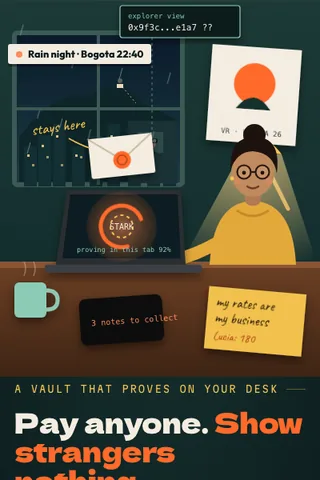
Create an account and prove your transactions in your own browser. Client-side proving on Miden, nothing leaks.
 LIVE DEMO
Prove your trading discipline, not your profits: stops honored, sizing kept, tilt avoided.
 LIVE DEMO
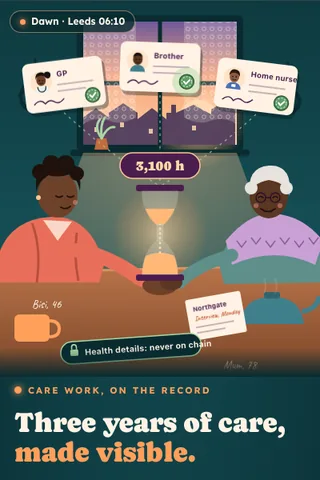
Caregivers and parents prove unpaid care work, privately, for loans and jobs.
 LIVE DEMO
Recruiters pay a small USDC fee to request verified proofs from candidates, who get paid.
 LIVE DEMO
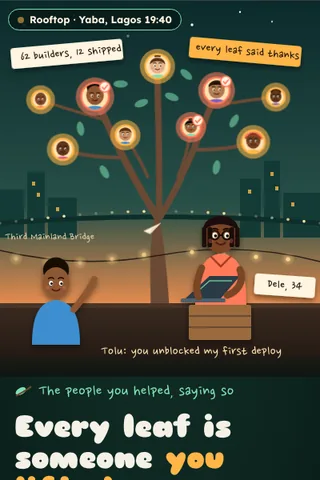
Mentees attest that you changed their path, building a lineage tree of who you lifted up.
 LIVE DEMO
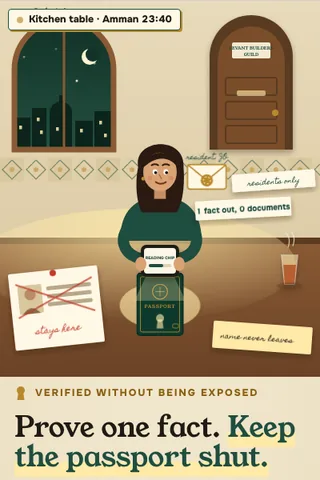
Prove you are over 18, a resident, or a degree holder without showing a single document.
 LIVE DEMO
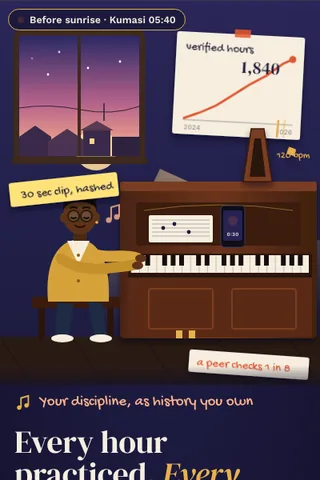
Timestamp every hour of deliberate practice and own the 10,000 hour proof.