 LIVE DEMO
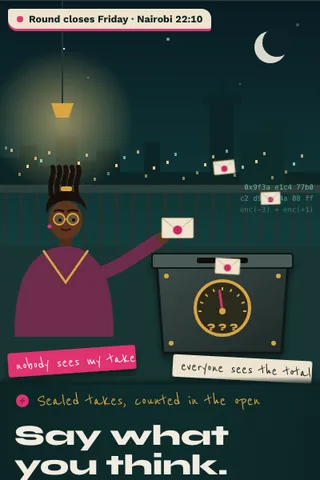
Sealed Take
Everyone stakes a conviction, encrypted. The chain tallies it without ever seeing a single take. FHE on Base.
Ready now
$20Fhenix
 Try it live
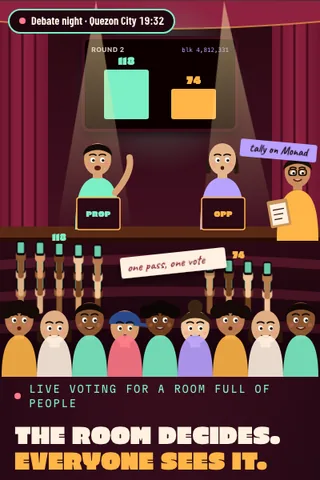
Live onchain audience voting for streams, matches and talks, one vote per person per round, results every block.
Try it live, freeAt a campus debate, two hundred students vote on who won each round from their phones. Crowd Tally shows the bar move every block and keeps the record for anyone to check.
Host console, voter page, live bar chart, round history.
Reshape it entirely: new features, your flows, your brand end to end, integrations you need. We scope it with you.
Onchain polls exist (Snapshot is offchain signatures). Real time per block audience voting was not found on Monad.
Snapshot; Farcaster polls.
Checked with web searches in October 2026. A search is not proof that nothing similar exists, and the market moves fast, so we recheck before every build.
Ecosystem program for shipped apps; check current terms.
The complete Crowd Tally app: hosts run live audience votes with one door pass per person, hand bars that move every block on Monad, and a public record anyone can check, with plans and checkout built in.
Every buyer gets the same finished app. Basic branding and copy changes come through a quick form.
Your admin side: revenue, paywall editor, users, rules and the agent log.
Referral and growth mechanics, switched on when you are ready to grow.
Voting is always free for the room. Hosts pay monthly for bigger nights and fair count tools, or book a single big event.
Gas on Monad is well under $1 a night and can be sponsored by the owner. Payments settle in USDC.
Prices are yours to set. Illustrative, not a promise of income.
Live audience voting where the room decides, one vote per person, counted every block on Monad.
Problem: Debate nights, talks and open mics vote all the time. Hands get miscounted, online polls get flooded by one person with many accounts, and the losing side always says the count was wrong.
Solution: A volunteer checks ID once and issues a pass. Each pass gets one vote per round inside a fixed block window, the bars move live, and every round lands on a public record including rejected votes.
Why now: Sub second blocks on Monad, embedded wallets and sponsored gas make per block audience voting cheap and invisible to voters.
Market: Student debate societies, talk series, open mics, community streams and local competitions, plus the federations and circuits that connect them.
The ask: Pilot circuits in Metro Manila and support from Monad builder programs to reach more clubs.
Funding is never guaranteed. Check each program's rules.
Many hackathons require code written at the event. See the Regatta Boardfor each race's rule.
Custom work from $700: your own branding and screen themes, new vote types, integrations with ticketing or a club CRM, or a federation deployment. Scoped on a call.
Live audiences vote all the time: debate nights, talks, open mics, community streams, local matches. Hands are miscounted, online polls are flooded by one person with many accounts, and the losing side always says the count was wrong. Hosts need a count the room can watch and anyone can check later.
Voting tools exist. Snapshot runs widely used community votes with offchain signatures, and Farcaster and other social apps offer quick polls. Research did not find real time, per block audience voting on Monad. What is new here is narrow: a vote window that opens and closes on fixed blocks, one vote per door pass rather than per wallet, a live bar that updates as blocks land, an optional hidden mode against bandwagons, and a public record of every round including rejected votes. It is a live event tool, not a governance platform.
Round definitions and windows set by the host, signed passes issued at the door, votes signed by pass holders, rejected votes with reasons, and the adjudicator tie break if the host publishes it. Student or attendee IDs are checked once in person and never stored.
Let any room decide something together in public, and let nobody have to trust the person counting.
The bar moves A giant screen of raised hands that grows every block is the most watched thing in the hall.
Find your own vote Every pass holder can look up their vote on the record after the night. Recount arguments end fast.
The season pass Attendance streaks and how often you agreed with the judges bring people back every week.
Host console: A web app where the host sets rounds, window length in blocks, pass rule, live or hidden bars, and the tie break rule. Settings are written to a round contract on Monad before doors open.
Door passes: A volunteer checks ID in person and issues a signed, non transferable pass to a fresh embedded wallet (for example Privy) on the attendee's phone. Only the pass, not the ID, is recorded.
Voting contract: A small Solidity contract on Monad accepts one vote per pass per round inside the block window, keeps only the last vote if changes are allowed, and rejects others with a reason code.
Gas sponsorship: The host sponsors gas through a paymaster or relayer so attendees never need tokens. Votes carry the block number seen at signing so short Wi-Fi drops do not lose them.
Live screen: A projector page subscribes to new blocks over WebSocket RPC and redraws the hand bars each block, or shows a question mark until close in hidden mode.
Record page: A public page per round lists totals, window blocks, and every vote by pass number, with links to the transactions.
Each vote is a small contract call on Monad; at recent fee levels a night of a few hundred votes typically costs well under one US dollar in gas for the host to sponsor (check current fees). RPC with WebSocket subscriptions fits a free or low tier for a few events a week. No AI model is required. Example: a society running 4 nights a month with 200 voters and 3 rounds pays a few dollars a month in gas plus hosting.
Every attendee leaves with a pass and a link to the record, and the live screen is filmed and shared. Debate societies, talk series and community streams pass the tool to other clubs on the same circuit.
Not a secret ballot: Votes are public by pass number. Passes are pseudonymous, but in a small room people may be identifiable. Do not use it for sensitive or binding votes.
Sybil pressure: Any wallet mode can be flooded. Door passes depend on volunteers checking IDs honestly.
Bandwagon effects: Live bars can sway late voters. Hidden mode reduces this but cannot remove it.
Connectivity: Hall Wi-Fi fails. Votes signed inside the window are accepted late, but phones that never connect cannot vote.
Chain or RPC outage: If blocks stall or the RPC drops, the screen freezes. The host needs a declared fallback, such as the adjudicator ballot.
Costs and tools are estimates at the time of writing. General information only, not legal or financial advice.
Nine routes from one vessel. Tap a port to open its chart.
Crowd Tally: Live onchain audience voting for streams, matches and talks, one vote per person per round, results every block. Using someone else's version means their rules, their brand and their revenue. Owning Crowd Tally means it is deployed under your wallet, carries your name, and every customer, partner and result builds your track record instead of theirs.
Crowd Tally arrives deployed with a guide. Running it is settings and sharing links, not code. If you get stuck, we help you ship it.
Start with ten people you already know. The first move below takes under an hour and tells you fast whether people care.
Each step is sized in minutes. Most owners spend an hour a week, and the app does the repetitive part.
Nothing is guaranteed. The playbook gives you a clear path and honest numbers, and you decide how far to take it.
Charge the people who get the most value from Crowd Tally: a monthly plan for groups or teams, plus setup fees for anyone who wants it done for them.
Illustrative stages, not a forecast. Results depend on you and the market; nothing here is guaranteed.
A starter chart. A fuller, app-specific playbook is being written.
LIVE DEMOEveryone stakes a conviction, encrypted. The chain tallies it without ever seeing a single take. FHE on Base.
 LIVE DEMO
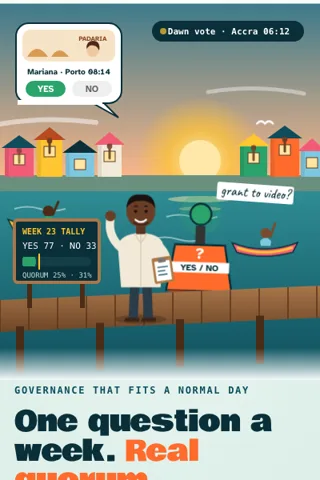
Governance by text-sized questions: one decision a week, answered in ten seconds, with real quorum.
 LIVE DEMO
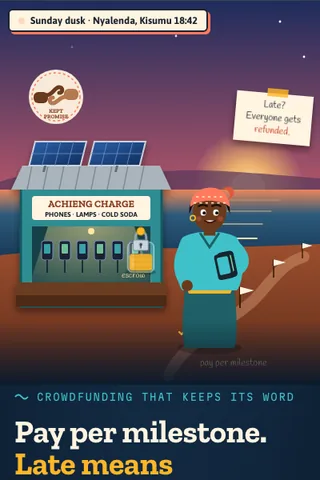
Crowdfunding where backers get refunded by contract if the goal or the milestones are missed.
 LIVE DEMO
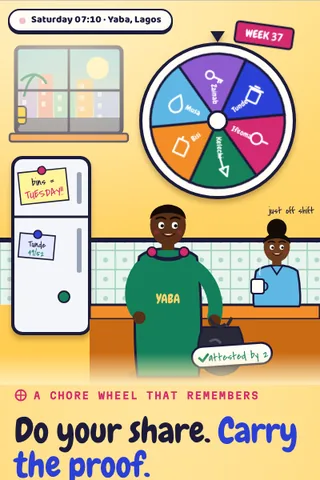
A shared house or club tracks who did the work, and the record becomes everyone's portable reliability score.
 LIVE DEMO
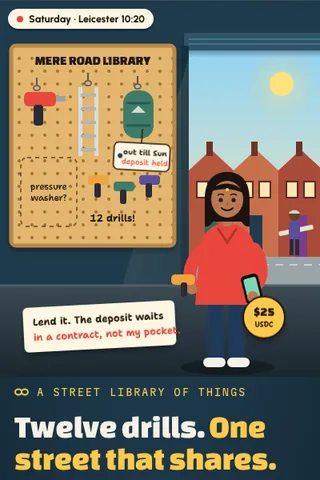
Lend the ladder, the drill, the tent: a street library of things with deposits held by contract.
 LIVE DEMO
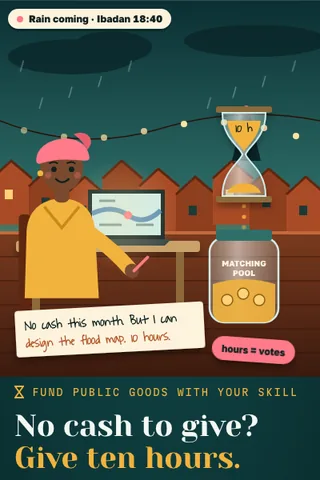
Fund a public good with hours of your skill, not just money, and get matched like a donation.
 LIVE DEMO
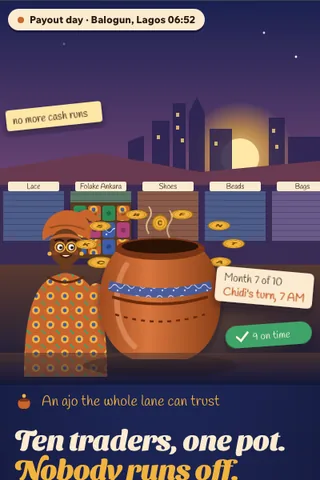
A rotating savings circle (ajo, susu, chama) with payouts enforced by contract and trust scores for members.
 LIVE DEMO
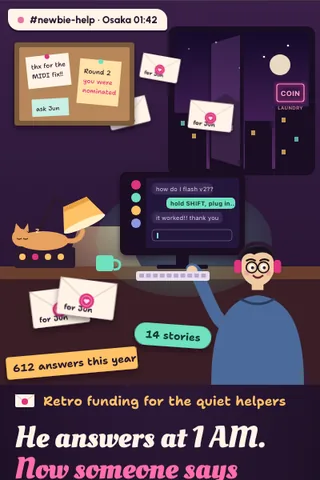
Retro funding for the quiet helpers: the community nominates who mattered, a pot pays them.