 LIVE DEMO
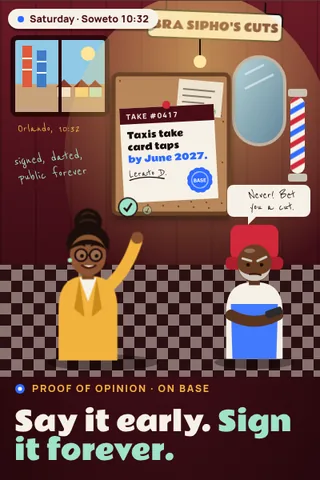
Proof of Opinion
Put your name on a take onchain, mint a shareable badge, others co-sign.
Ready now
$20Base
 Try it live
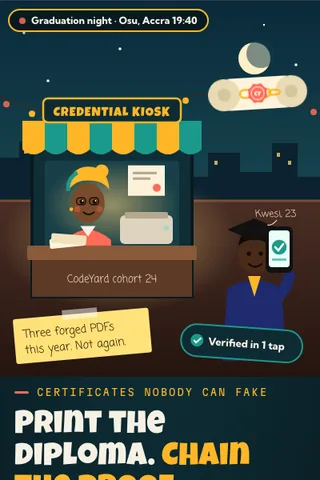
Any school, bootcamp, or guild issues verifiable certificates in an afternoon.
Try it live, freeA coding bootcamp in Accra has graduates whose PDFs get forged. With Credential Kiosk they issue onchain certificates employers verify in one click.
Issuer dashboard, CSV bulk issue, recipient claim, public verifier.
Reshape it entirely: new features, your flows, your brand end to end, integrations you need. We scope it with you.
A cheaper owned deploy of a well-served category, differentiated on price and branding only.
Accredible, Blockcerts, Disco and CertifyMe already let schools and bootcamps issue verifiable certificates with verifier pages.
Checked with web searches in October 2026. A search is not proof that nothing similar exists, and the market moves fast, so we recheck before every build.
Existing projects OK.
Existing projects OK.
The complete Credential Kiosk app: a school designs a certificate, issues a whole cohort onchain with one or two signers, graduates claim it, and employers verify it in one tap, with a paywall and kiosk agent built in.
Every buyer gets the same finished app. Basic branding and copy changes come through a quick form.
Your admin side: revenue, paywall editor, users, rules and the agent log.
Referral and growth mechanics, switched on when you are ready to grow.
Schools issue and verify free on Starter. Busy schools pay monthly for Kiosk Pro, guilds pay for a shared verifier, and recruiters pay per bulk verify check.
Recruiters pay $0.50 per paid verify check (owner sets it). Gas is cents per cohort and can be sponsored by the owner.
Prices are yours to set. Illustrative, not a promise of income.
Any school, bootcamp or guild issues verifiable certificates in an afternoon, and employers check them in one tap.
Problem: Small schools hand out PDF certificates anyone can edit in a minute. Employers either trust a file they should not or phone the school, and honest graduates' real grades look exactly like fakes.
Solution: A branded kiosk the school owns: CSV bulk issue signed by one or two keys, only hashes and a status bit onchain, claim links by email or WhatsApp, and a public verifier that shows the true record when a file was edited.
Why now: Attestations on Base, Polygon and Solana cost fractions of a cent, email wallets remove setup, and small models can clean messy cohort files and draft claim messages.
Market: Bootcamps, trade guilds, training centres and community schools, especially in regions where per certificate SaaS pricing is out of reach. The category exists; this competes on price, ownership and local fit.
The ask: Pilot issuers: three bootcamps or guilds in one city, and grant support from Polygon Community Grants or Solana Foundation Grants.
Funding is never guaranteed. Check each program's rules.
Many hackathons require code written at the event. See the Regatta Boardfor each race's rule.
Custom work from $1,500: your own certificate schema or accreditation fields, integrations with a school LMS or student records system, extra languages, or a white label guild deployment. Scoped on a call.
Small schools, bootcamps and trade guilds hand out PDF certificates that anyone can edit in a minute. Employers either trust a file they should not, or phone the school, and honest graduates' real grades look exactly like fakes.
This is a well served category. Accredible, Blockcerts, Disco and CertifyMe already let schools and bootcamps issue verifiable certificates with verifier pages. Research verdict: exists, low novelty. What this app offers is a cheaper owned deploy: the school runs its own branded kiosk on its own chain choice, with CSV bulk issue, two signer issuing, revocation with a reason, and claim links over WhatsApp as well as email. It competes on price, ownership and fit for small issuers, not on a new mechanic.
The school's cohort CSV (student ID, name, track, grade, phone or email), the issuer's signing keys, a certificate template, and a status bit per certificate. Names, grades and PDFs stay in the school's own storage; only hashes, issuer keys and status live onchain.
Let any place that teaches give its learners proof of what they earned, which anyone can check in one tap.
Issue night A whole cohort claims together on graduation night and posts the ticket. The school's brand travels with every share.
The real grade shows An edited PDF does not just fail: the verifier shows the true record, so employers learn what the graduate actually earned.
Monthly checks note The issuer sees who verified, from where and how often, which doubles as proof that employers value the certificate.
Issuer keys: The school signs in with Privy and holds one or two signing keys in a Safe on Base or Polygon, or a multisig on Solana. Two signers can be required for every batch.
Bulk issue: A CSV is matched to student records by ID plus phone, then each certificate is written as an EAS attestation on Base or Polygon, or a compressed record on Solana, in one batched transaction.
Claim: Graduates get a claim link by email or WhatsApp. They can claim to their own wallet or keep it under a free email login and move it later.
Verifier: A public page reads the attestation by QR or ID, hashes the uploaded file, and shows match, edited (with the real record) or revoked (with the reason).
Revocation: The issuer flips a status bit with a written reason. The graduate is notified first.
Kiosk agent: A small model (for example a Claude Haiku class model) cleans the CSV, flags duplicates and drafts claim messages. It never signs; humans sign every batch.
Onchain fees are small: an attestation on Base or Polygon is usually well under one US cent, so a 42 person cohort costs cents in gas, estimated and variable. Messaging and hosting dominate: WhatsApp business messages cost a few US cents each depending on country. CSV cleaning with a small model is under one cent per cohort. Example month for a bootcamp issuing 160 certificates a year: about $1 in gas, $5 in messages, $20 hosting.
Every verification is a branded page seen by an employer, often another company that trains people. Graduates share their claimed certificate on LinkedIn, and each share links to the school's kiosk. Issuers invite partner schools into a shared guild verifier.
Key loss or theft: One stolen key could issue fakes. Two signer mode, revocation by batch and a short issuing window reduce this.
Privacy: Grades and names must not be onchain. Only hashes are written; the school can delete off chain records on request, which leaves an unreadable hash.
Wrong issue: Certificates issued in error must be revocable with a reason, and the graduate told first.
Legal standing: A verifiable certificate is not an accreditation. The school's own legal status does not change, and the page says so.
Lookalike issuers: A fake school could copy a name. Issuer pages show verified domain and a contact, and the verifier warns on new issuers.
Costs and tools are estimates at the time of writing. General information only, not legal or financial advice.
Nine routes from one vessel. Tap a port to open its chart.
Certificate platforms charge per learner and put their brand on your graduates' proof. When you own Credential Kiosk, every certificate is issued from your wallet under your school's or guild's name, and the verifier page employers click lives on your domain. You keep the issuing record, the learner list and the revenue if you issue for others.
Honestly, this category is well served, so your edge is price, branding and being local. A bootcamp in your city that cannot justify a per-certificate SaaS bill, or wants its own domain, is your customer. Do not try to beat the big players on features; beat them on being the person who answers the phone.
You do not need to. Issuing is a CSV upload in the dashboard, the template is set at purchase, and recipients claim with an email or wallet. Your work is getting schools to try it and helping their admin upload the first batch.
Most employers do not care about the chain; they care that one click shows the certificate is real and who issued it. The public verifier page does that. Teach issuers to put the verify link on every certificate and CV.
The issuer is responsible for what they issue, and your terms should say so. Revocation lets an issuer withdraw a certificate, and the verifier page shows it was revoked. Only onboard issuers you can identify, and list the issuer's name clearly on every certificate.
Issuing a record of completion is generally fine, but calling something an accredited degree or license is regulated in most countries. Keep wording to 'certificate of completion' unless the issuer holds the accreditation. If unsure, ask a local education lawyer before onboarding a formal institution.
Sell issuer plans to schools, bootcamps, guilds and event organizers: a monthly fee by issuing volume, plus setup fees for branded templates. Learners always verify free.
Illustrative stages, not a forecast. Results depend on you and the market; nothing here is guaranteed.
LIVE DEMOPut your name on a take onchain, mint a shareable badge, others co-sign.
 LIVE DEMO
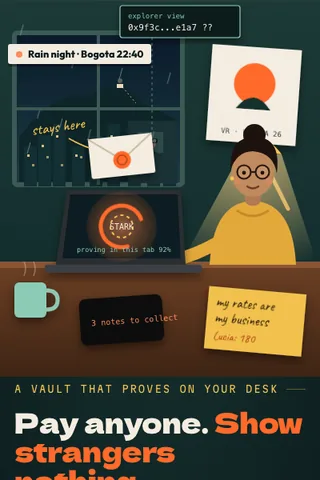
Create an account and prove your transactions in your own browser. Client-side proving on Miden, nothing leaks.
 LIVE DEMO
Prove your trading discipline, not your profits: stops honored, sizing kept, tilt avoided.
 LIVE DEMO
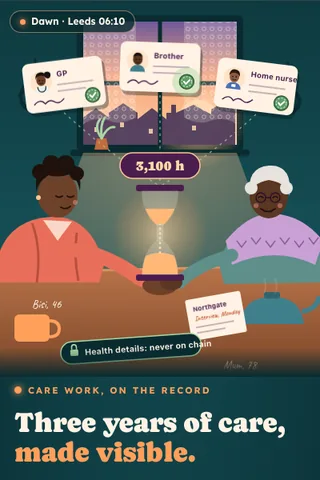
Caregivers and parents prove unpaid care work, privately, for loans and jobs.
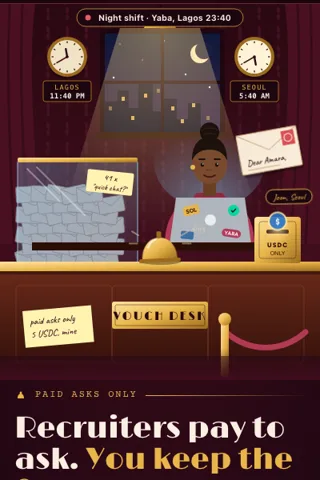 LIVE DEMO
Recruiters pay a small USDC fee to request verified proofs from candidates, who get paid.
 LIVE DEMO
Mentees attest that you changed their path, building a lineage tree of who you lifted up.
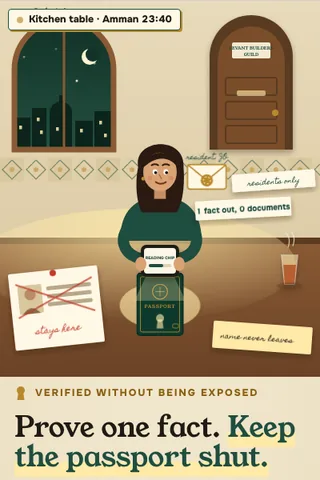 LIVE DEMO
Prove you are over 18, a resident, or a degree holder without showing a single document.
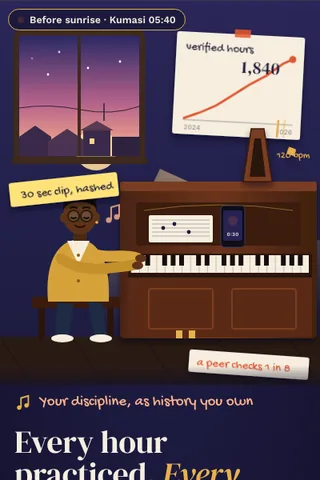 LIVE DEMO
Timestamp every hour of deliberate practice and own the 10,000 hour proof.