 LIVE DEMO
Sealed Take
Everyone stakes a conviction, encrypted. The chain tallies it without ever seeing a single take. FHE on Base.
Ready now
$20Fhenix
 Try it live
Post a small local job with USDC held in escrow, released when the neighbourhood confirms it is done.
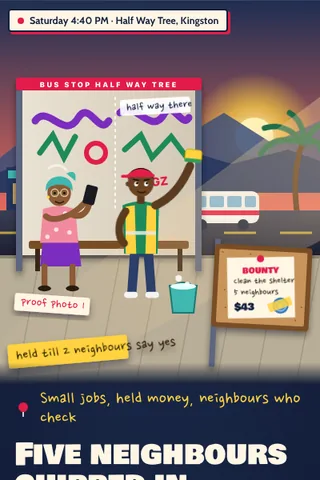
Try it live, freeThe bus shelter graffiti has sat for months. Residents chip $40 into a Neighbour Bounty, a teenager cleans it, two residents confirm with photos, and he gets paid plus a public civic-work badge.
Bounty posting, multi-funder escrow, photo proof, two-confirmer release, civic badges.
Reshape it entirely: new features, your flows, your brand end to end, integrations you need. We scope it with you.
Escrowed bounties are common; local physical jobs confirmed by neighbours is the rarer twist.
USDC escrow bounties exist for digital and agent work (Gibwork, StandardBounties, Trustless Work); no neighbourhood-confirmed local version was found.
Checked with web searches in October 2026. A search is not proof that nothing similar exists, and the market moves fast, so we recheck before every build.
Shipped Base apps; retroactive
The complete Neighbour Bounty app: neighbours pin small local jobs, chip USDC into one escrow, and release it only when neighbours at different addresses confirm with dated photos, with a paywall and crypto checkout built in.
Every buyer gets the same finished app. Basic branding and copy changes come through a quick form.
Your admin side: revenue, paywall editor, users, rules and the agent log.
Referral and growth mechanics, switched on when you are ready to grow.
Neighbours fund, claim and confirm for free. Street organisers pay monthly for the tools that run a street, churches and councils sponsor whole areas, and a small escrow fee rides on top of released bounties.
Owner set escrow fee on release (default 3%, paid by funders on top; workers get the full bounty, refunds carry no fee). Gas under $0.05 per bounty can be sponsored.
Prices are yours to set. Illustrative, not a promise of income.
Neighbours pool USDC for small local fixes and release it only when neighbours confirm the work.
Problem: Every street has small jobs nobody owns. People will chip in, but pooled cash goes missing and there is no fair way to check the work before paying.
Solution: A multi funder escrow with no admin withdraw, dated code card photos checked by an agent, and release only after neighbours at different addresses confirm in person. Workers earn a civic work badge.
Why now: Cheap stablecoin transfers on Base and Celo, phone number wallets and card on-ramps, and low cost vision models make neighbour escrow practical for people who never touch crypto.
Market: Residents associations, churches, youth clubs and councils in dense neighbourhoods, starting with Caribbean and African cities where small cash pools are already common.
The ask: Pilot partners: one parish and one youth programme in Kingston, plus civic and public goods grants.
Funding is never guaranteed. Check each program's rules.
Many hackathons require code written at the event. See the Regatta Boardfor each race's rule.
Custom work from $1,000: your own job categories and safety rules, a council or church branded deployment, WhatsApp integration, extra languages or a different chain. Scoped on a call.
Every street has small jobs everyone wants done and nobody owns: a tagged bus shelter, a blocked gully, shopping for an elderly neighbour. People will chip in, but pooled cash goes missing, and there is no fair way to check the work before paying.
USDC escrow bounties already exist for digital and agent work, for example Gibwork, StandardBounties and Trustless Work. What we did not find is a neighbourhood version for physical local jobs, funded by several neighbours at once and released only when neighbours at different addresses confirm with dated photos. The escrow mechanism is not new; the local, neighbour-confirmed use is the rarer twist. Research verdict: rare, medium novelty.
The bounty terms (amount, deadline, confirmers needed), funder contributions, the claim, before and after photos with the day's code card, confirmer signatures and a civic work attestation. Photos and the street list stay offchain; only hashes, amounts and signatures go onchain.
Let any street fund and finish the small fixes nobody owns, and give the young people who do them a visible record of civic work.
Money nobody can walk off with Contributions sit in an escrow contract. Not even the organiser can spend them. They release to the worker or go back to funders.
Your neighbours are the judges Release needs two or three people at different addresses to look in person and sign. The agent only checks photos and reminds.
A badge that means something Every finished job adds a civic work attestation to the worker's wallet, confirmed by real neighbours, useful for a first job or a scholarship form.
Sign in and wallets: Privy email or phone login with an embedded wallet, so Miss Pearl never sees a seed phrase. Card or Apple Pay contributions are converted to USDC through an onramp provider.
Escrow contract: A small audited-pattern escrow on Base (or Celo or Polygon): multiple funders deposit USDC, one claimer is assigned, release requires N of M confirmer signatures, and a deadline enables pro-rata refunds. No admin withdraw function.
Proof and the board keeper: Claimers upload before and after photos showing a 4 letter code issued at claim time. A low cost vision model (for example a Gemini Flash or Claude Haiku tier via OpenRouter) checks location, the code and visible change, then pings confirmers. It cannot release funds.
Confirmers: The organiser keeps an offchain street list. Confirmers must be at different addresses from the claimer and each other; each signs a typed message that the contract verifies.
Civic badges: On release, an EAS attestation records the job, the amount band and the confirmer count against the worker's wallet. Under 18s claim with a guardian co-signer.
Indexer and notifications: A light indexer (Ponder or a hosted subgraph) powers the board and map. WhatsApp or SMS style notifications via a messaging API, one reminder per confirmer, then the next neighbour.
Per bounty: Base gas for create, a few deposits, release and an attestation is typically well under $0.05 in total at current fees. Photo checks with a small vision model are roughly $0.001 to $0.01 per image. Messaging is about $0.005 to $0.05 per message depending on channel and country. Example month for one neighbourhood with 30 bounties: about $1.50 gas, $1 model, $6 messaging, $20 hosting and indexing, under $30 total.
Every finished bounty leaves a share card and a visibly clean place. Workers bring their friends to claim the next one, and confirmers become funders. The Saturday board turns one fix into a weekly habit for the street.
Safety and minors: Some jobs are not safe for teenagers. Jobs carry categories with age limits, under 18s need a guardian co-signer, and dangerous work (roads, heights, electrics) is blocked.
Collusion: Friends can confirm fake work. Different-address rules, dated code cards, the option of three confirmers and public photos reduce it but do not remove it.
Legal and permission: Cleaning or painting public property may need council permission. The posting flow asks who owns the place and keeps a note of permission.
Payments and tax: Workers receive USDC; cashing out depends on local onramps and offramps, and income may be taxable. The app explains this plainly and does not give tax advice.
Privacy: Photos can show faces and homes. Faces are blurred by default and photos are shared only with confirmers unless the worker opts in.
Contract risk: A bug in escrow could lock funds. Use a reviewed, minimal contract with refunds always possible after the deadline.
Costs and tools are estimates at the time of writing. General information only, not legal or financial advice.
Nine routes from one vessel. Tap a port to open its chart.
Neighbour Bounty lets your street pool small amounts of USDC into escrow for a real job and release it only when neighbours confirm the work with photos. If you run it on your own wallet, the escrow contract, the civic-work badges and the community that trusts it all carry your name, not a platform's. Every completed job is a public onchain record that your neighbourhood gets things done, and that you were the one who made it possible.
You don't need to. The app ships deployed to your wallet with a setup guide. Your work is posting the first bounty and talking to neighbours, which no code can do for you anyway.
Start with a job you would happily fund alone, like $20 for clearing the alley. A funded bounty with your name on it is the best invitation for others to add to the next one. Some streets will stay small, and that is fine.
Funds sit in a contract deployed from your wallet with release rules you can read. Nobody, including DEPLOYR, can move them outside those rules. Still, start with small amounts until you have watched a few releases work.
Small one-off jobs are normal in most places, but local rules on minors, permits and public property differ. Get permission from the council or property owner for anything on public land, and keep jobs safe and age appropriate.
The contract is simple and verified. If the web page has a problem, funds stay in escrow and can still be released by the confirmed rules. Your DEPLOYR purchase includes the get-it-shipped promise for setup issues.
You earn a small coordination fee on each funded bounty (for example 5 percent, shown clearly), plus a monthly plan for residents associations, schools and councils that want their own branded board with reporting. Reaching $1M a year is a target to plan toward, not a promise, and most boards will stay community sized.
Illustrative stages, not a forecast. Results depend on you and the market; nothing here is guaranteed.
LIVE DEMOEveryone stakes a conviction, encrypted. The chain tallies it without ever seeing a single take. FHE on Base.
 LIVE DEMO
Governance by text-sized questions: one decision a week, answered in ten seconds, with real quorum.
 LIVE DEMO
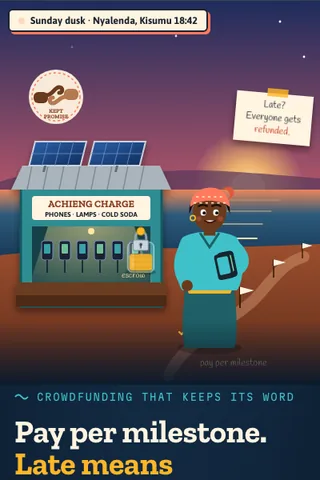
Crowdfunding where backers get refunded by contract if the goal or the milestones are missed.
 LIVE DEMO
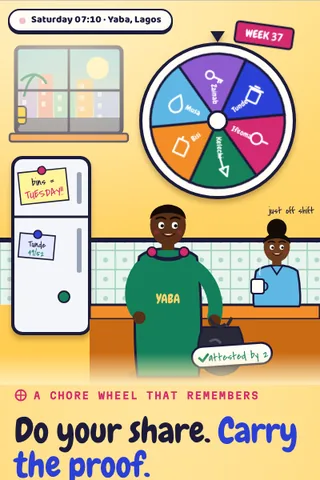
A shared house or club tracks who did the work, and the record becomes everyone's portable reliability score.
 LIVE DEMO
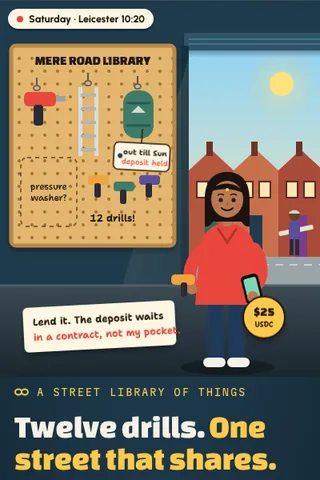
Lend the ladder, the drill, the tent: a street library of things with deposits held by contract.
 LIVE DEMO
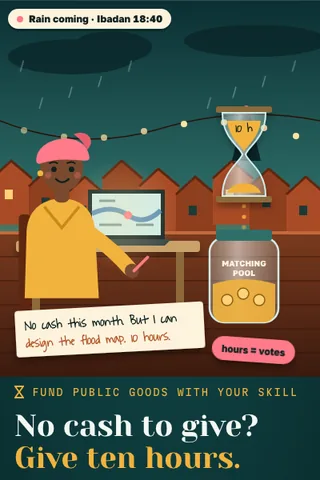
Fund a public good with hours of your skill, not just money, and get matched like a donation.
 LIVE DEMO
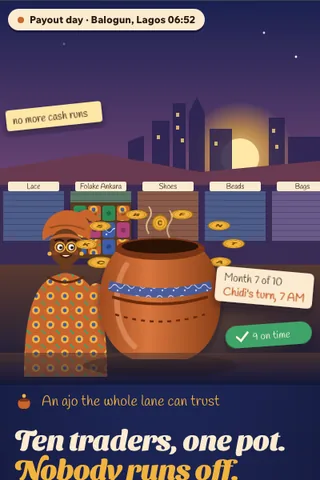
A rotating savings circle (ajo, susu, chama) with payouts enforced by contract and trust scores for members.
 LIVE DEMO
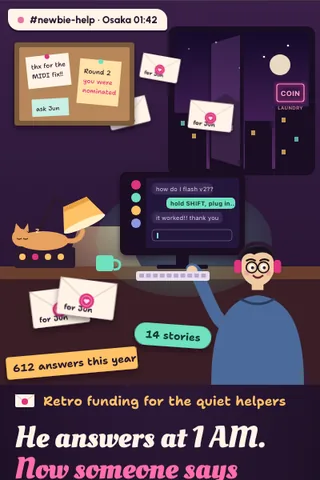
Retro funding for the quiet helpers: the community nominates who mattered, a pot pays them.