 LIVE DEMO
Fix Proof
Tradespeople log each repair with photos and a customer signature, sealed onchain as a warranty.
Reserve · refundable deposit
$159Base · Polygon +1
 Try it live
Capped, scheduled payments set on your own Starknet account, no custodian.
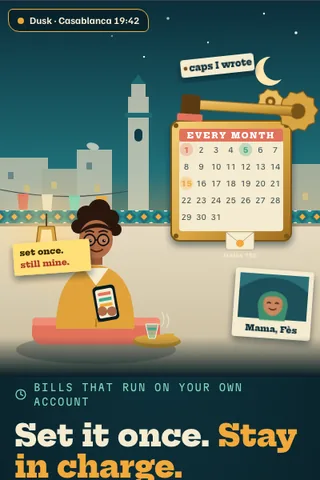
Try it live, freeAisha sets rent, internet and her mother's allowance once. Bill Autopilot pays them monthly within the caps she wrote.
Policy editor, schedule, payee list, history.
Reshape it entirely: new features, your flows, your brand end to end, integrations you need. We scope it with you.
Subscriptions exist; account native scheduled bills were not found as a product.
Session key demos; off chain bill pay.
Checked with web searches in October 2026. A search is not proof that nothing similar exists, and the market moves fast, so we recheck before every build.
Ecosystem program for shipped apps; check current terms.
The complete Bill Autopilot app: rent, internet and family money paid on schedule from the user's own Starknet account, inside caps they wrote, with plans and checkout built in. Owner console and growth tools are available as add-ons.
Every buyer gets the same finished app. Basic branding and copy changes come through a quick form.
Your admin side: revenue, paywall editor, users, rules and the agent log.
Referral and growth mechanics, switched on when you are ready to grow.
Running your own bills is free. Households pay for more payees and tight month tools, small businesses pay for supplier runs. The owner never holds user funds.
Starknet fees are well under a cent per payment and can be sponsored by the owner through a paymaster.
Prices are yours to set. Illustrative, not a promise of income.
Capped, scheduled payments from your own Starknet account, no custodian.
Problem: People with rent, internet and money for family pay by hand every month and sometimes late. Onchain, the choice is a custodian holding your funds or signing every payment yourself.
Solution: One passkey signature issues a session key that can only pay listed payees, only up to written caps, only until it expires. A keeper submits payments on schedule; anything outside the policy becomes a question.
Why now: Native account abstraction on Starknet, cheap fees, paymasters and passkeys make self custodial automation usable by people who never think about wallets.
Market: Stablecoin earners paying recurring bills, families sending money home, and small businesses paying suppliers and contractors.
The ask: Starknet Seed Grants, plus pilot partners: one internet co-op and one landlord group willing to list a pay link.
Funding is never guaranteed. Check each program's rules.
Many hackathons require code written at the event. See the Regatta Boardfor each race's rule.
Custom work from $1,100: other chains or account types, your own payee categories, local currency display, a Telegram or WhatsApp channel, or a branded deployment for a co-op or landlord group. Scoped on a call.
People with recurring obligations (rent, internet, money for family) pay them by hand every month and sometimes late. Onchain, the options are either a custodial service holding your funds or remembering to sign every payment yourself.
What exists: session key demos and policy tooling on Starknet accounts, and many off chain bill pay and subscription services. Research did not find a product that runs scheduled bills from the user's own account with per payee caps enforced by the account itself. Verdict: medium novelty. The building blocks (account abstraction, session keys, keepers) are known; the new part is packaging them as a calm bill pay app for ordinary people.
The user's payee list, caps, schedule and grace rules (policy hashes onchain, human labels encrypted on the device), session key metadata, payment transactions and a weekly digest built from the user's own history.
Let anyone automate the money they owe every month without giving anyone else control of that money.
Caps you wrote Every payee has a ceiling enforced by your account. The app can propose a payment, but only your rules can approve it.
It asks, it never surprises A rent increase or a strange payee becomes a question on your phone, not a debit.
A one minute Sunday One weekly note: what is next, what changed, which key to renew. Then nothing needs you.
Account: A Starknet smart account (for example Argent or Braavos style) controlled by the user's passkey or wallet. Starknet has native account abstraction, so custom validation is first class.
Session key with policy: The user signs once to issue a session key limited to an allowlist of payee addresses, a USDC transfer selector, per payee caps, a monthly ceiling and an expiry. The account rejects anything outside it.
Keeper: A small scheduler service (Starknet has no native cron) submits the due payment on the right day using the session key. If it fails or is wrong, the account refuses and funds stay put.
Paymaster: Fees are sponsored through a paymaster so the user only holds USDC. Starknet fees are typically a fraction of a cent per transfer, so a year of bills costs well under a dollar.
Indexer and digest: An indexer (for example Apibara or a hosted RPC with events) reads the account's transfers and builds the weekly note and late payment stats.
Notifications: Push or Telegram messages for cap breaches, key expiry warnings 5 days ahead, and confirmations to payees who opt in.
Per payment: one USDC transfer on Starknet, usually well under $0.01 in fees, sponsored by the operator. Keeper and indexer hosting: about $20 to $40 a month for the first few thousand users. Example: 1,000 users with 3 bills each is 3,000 payments a month, roughly $10 to $30 in fees plus hosting.
Every payee who receives a confirmation sees how it was paid and can set up their own. Families sending money home share it with siblings. Landlords and co-ops can list a pay with Bill Autopilot link.
Keeper downtime: If the scheduler is down, payments are late, not wrong. Mitigation: multiple keepers, user alerts, grace days.
Key compromise: A stolen session key can only pay the allowlisted payees within caps until expiry. Short expiries and passkey renewal limit damage.
Wrong payee address: If a landlord changes address, the old one keeps being paid. Mitigation: address changes require the user's main signature and a cooling period.
Insufficient balance: A transfer can fail or starve a later bill. Mitigation: priority order and grace rules the user chooses.
Regulatory: Non custodial scheduling avoids holding funds, but recurring payments to family abroad may touch remittance rules in some countries. Get local advice before marketing cross border use.
Costs and tools are estimates at the time of writing. General information only, not legal or financial advice.
Nine routes from one vessel. Tap a port to open its chart.
Bill Autopilot: Capped, scheduled payments set on your own Starknet account, no custodian. Using someone else's version means their rules, their brand and their revenue. Owning Bill Autopilot means it is deployed under your wallet, carries your name, and every customer, partner and result builds your track record instead of theirs.
Bill Autopilot arrives deployed with a guide. Running it is settings and sharing links, not code. If you get stuck, we help you ship it.
Start with ten people you already know. The first move below takes under an hour and tells you fast whether people care.
Each step is sized in minutes. Most owners spend an hour a week, and the app does the repetitive part.
Nothing is guaranteed. The playbook gives you a clear path and honest numbers, and you decide how far to take it.
Charge the people who get the most value from Bill Autopilot: a monthly plan for groups or teams, plus setup fees for anyone who wants it done for them.
Illustrative stages, not a forecast. Results depend on you and the market; nothing here is guaranteed.
A starter chart. A fuller, app-specific playbook is being written.
LIVE DEMOTradespeople log each repair with photos and a customer signature, sealed onchain as a warranty.
 LIVE DEMO
Leave clear onchain instructions so the people you trust can reach your crypto if you cannot.
 LIVE DEMO
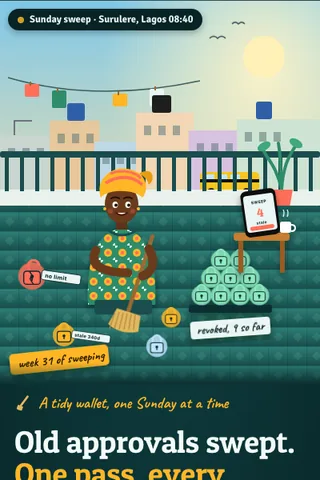
A weekly ritual that finds risky token approvals and lets you revoke them in one tidy pass.
 LIVE DEMO
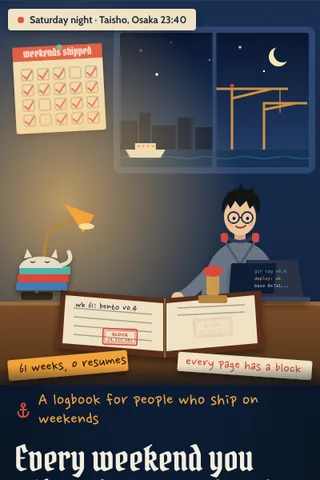
Every commit, deploy, and demo you ship becomes a signed, timestamped builder diary.
 LIVE DEMO
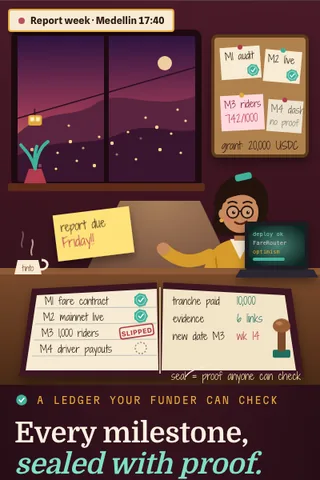
Show funders exactly what their grant built, milestone by milestone, with proof attached.
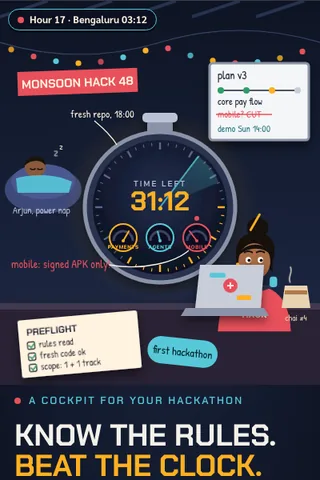 LIVE DEMO
A hackathon cockpit that plans your scope, tracks bounties, and drafts a judge-ready submission.
 LIVE DEMO
Your DePIN devices report uptime and earnings in one honest dashboard with tax-ready exports.
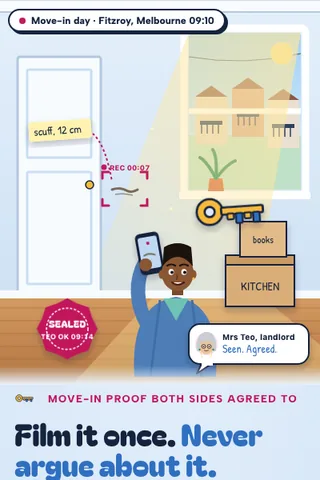 LIVE DEMO
Tenants and landlords seal move-in photos and rent receipts so deposit disputes end fast.