 LIVE DEMO
Fix Proof
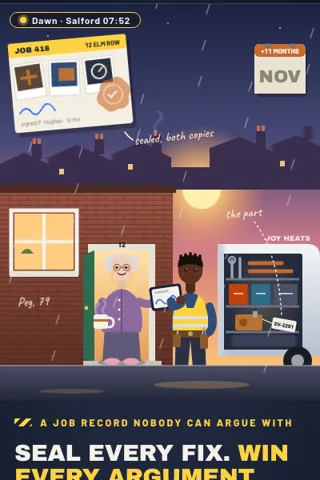
Tradespeople log each repair with photos and a customer signature, sealed onchain as a warranty.
Reserve · refundable deposit
$159Base · Polygon +1
 Try it live
Cover that switches on with you, priced and paid by the second while you work.
Try it live, freeBola rides for a delivery app in Lagos. She taps on and is covered up to $250 at $1.44 an hour, paid by the second from her own jar, and taps off when the shift ends.
The full app from Terry's Arc portfolio: live surface, contracts on Arc, about page, handover of code and deployment.
Reshape it entirely: new features, your flows, your brand end to end, integrations you need. We scope it with you.
Per second microinsurance for gig shifts was not found.
Pay per use insurance pilots off chain.
Checked with web searches in October 2026. A search is not proof that nothing similar exists, and the market moves fast, so we recheck before every build.
Answers Arc's Request for Builders; check current terms.
The complete Skim app: gig workers tap on cover when a shift starts, pay for exactly the seconds they ride from their own USDC jar on Arc, and get small claims paid the same night, with plans and a USDC checkout built in.
Every buyer gets the same finished app. Basic branding and copy changes come through a quick form.
Your admin side: revenue, paywall editor, users, rules and the agent log.
Referral and growth mechanics, switched on when you are ready to grow.
Riders pay a per second premium; the owner earns a disclosed margin inside it, agreed with a licensed underwriter partner. Riders can add Rider Plus, and fleets pay per rider seat. Claims are never behind a plan.
Owner margin set in Rules (8 to 15 percent of the premium), disclosed to riders. Network fees on Arc are paid in USDC and are cents or less per shift.
Prices are yours to set. Illustrative, not a promise of income.
Cover that switches on with you, priced and paid by the second while you work.
Problem: Delivery riders face injury and bike risk every shift, but monthly policies cost too much for irregular income, charge for hours they are asleep, and claims take weeks.
Solution: A worker owned on and off switch that streams the premium from her own USDC jar on Arc, auto pauses when idle, and pays small claims the same night with a human reviewing the rest.
Why now: Arc settles USDC in under a second with fees paid in USDC, phones already know motion and open orders, and small models can read clinic invoices for fractions of a cent.
Market: Delivery and ride riders in fast growing gig cities, starting with Lagos riders and their associations, then other shift work.
The ask: Pilot with one rider association in Lagos and a licensed underwriter partner for twelve weeks.
Funding is never guaranteed. Check each program's rules.
Many hackathons require code written at the event. See the Regatta Boardfor each race's rule.
Custom cover products, underwriter integrations, new countries, platform embeds and branded rider apps, scoped on a call from $2,500.
Delivery riders and other gig workers face real injury and equipment risk every shift, but most have no cover: monthly policies cost too much relative to irregular income, charge for hours they are not working, and claims take weeks.
Usage based and on-demand insurance exists offchain: pay per use and pay per mile pilots, per trip cover bundled by some ride and delivery platforms, and microinsurance sold through mobile money. We did not find per second microinsurance for gig shifts that the worker switches on and off herself, paid as a stream from her own USDC jar, with claim payouts settled onchain. The streaming premium and worker owned switch are new; the underlying insurance still needs a licensed underwriter.
Policy terms (limit, add-ons, idle rule), premium stream start and stop times, jar balance, claim amount and payout, and a hash of claim evidence. Route, GPS, photos, invoices and medical details stay offchain with the worker and the claim reviewer.
Make protection as flexible as gig work itself, so a rider pays for exactly the hours she is on the road and gets paid the same night when something goes wrong.
The ON switch Tapping on is a small ritual before every shift, and the ticking meter makes cover feel real.
Never pay for sleep Auto off when idle means riders see the money they did not spend.
Same night claims Small claims paid within hours become the story riders tell each other.
Wallets: Privy embedded wallets with phone login; local onramp partners or mobile money agents to top up a USDC jar.
Policy contract on Arc: A contract on Arc, where USDC pays the fees, holds the pool, the worker's policy terms and a premium stream that starts and stops on her signed tap on and tap off.
Lazy streaming: Premium owed is rate times covered seconds, settled when she taps off or tops up, so no transaction is needed per second.
Shift agent: On device rules combine motion and open order status to auto pause when idle. A small model (Claude Haiku class via OpenRouter) reads invoices and drafts claim summaries; it cannot approve payouts alone.
Claims: Evidence stays offchain; its hash goes onchain. Claims under a set amount auto pay after checks; larger ones need a human reviewer's signature.
Underwriting: The pool is backed by a licensed insurer or reinsurer partner who sets prices and limits. The app is the distribution and settlement layer.
Indexer and notifications: Convex indexes streams and claims for the Friday card; WhatsApp or SMS for claim updates.
Arc is young and fees can change; check before launch. Per shift: a tap on and a tap off settlement, expected to be cents or less in USDC. Claim review by a small model costs well under one cent per invoice; human review is the real cost, about $1 to $3 per claim over the threshold. Example: 1,000 riders, 25 shifts a month each, roughly $250 to $500 a month in gas and messaging before claims and underwriting.
Riders wait together at the same restaurants. A same night payout, the share card and pothole reports that help other riders spread it at the pickup spot.
Insurance regulation: Selling insurance requires a licensed insurer or agent in each country. Do not launch as an unlicensed pool; partner with an underwriter and follow local rules.
Fraud: Tapping on after an accident or staged claims. Require tap on before the event with motion data, invoice checks with clinics, and human review above a threshold.
Pool solvency: A cluster of claims can drain a pool. Reinsurance, limits per shift and conservative pricing are required.
Privacy: Location and medical data are sensitive. Keep them on device or with the reviewer, put only hashes onchain, and delete on schedule.
Stablecoin and chain risk: USDC issuer risk and a young chain. Keep pool reserves diversified and small at launch.
Coverage gaps: Riders may assume they are covered when the jar is empty. Warn loudly and auto pause cleanly.
Costs and tools are estimates at the time of writing. General information only, not legal or financial advice.
Nine routes from one vessel. Tap a port to open its chart.
Skim: Cover that switches on with you, priced and paid by the second while you work. Using someone else's version means their rules, their brand and their revenue. Owning Skim means it is deployed under your wallet, carries your name, and every customer, partner and result builds your track record instead of theirs.
Skim arrives deployed with a guide. Running it is settings and sharing links, not code. If you get stuck, we help you ship it.
Start with ten people you already know. The first move below takes under an hour and tells you fast whether people care.
Each step is sized in minutes. Most owners spend an hour a week, and the app does the repetitive part.
Nothing is guaranteed. The playbook gives you a clear path and honest numbers, and you decide how far to take it.
Charge the people who get the most value from Skim: a monthly plan for groups or teams, plus setup fees for anyone who wants it done for them.
Illustrative stages, not a forecast. Results depend on you and the market; nothing here is guaranteed.
A starter chart. A fuller, app-specific playbook is being written.
LIVE DEMOTradespeople log each repair with photos and a customer signature, sealed onchain as a warranty.
 LIVE DEMO
Leave clear onchain instructions so the people you trust can reach your crypto if you cannot.
 LIVE DEMO
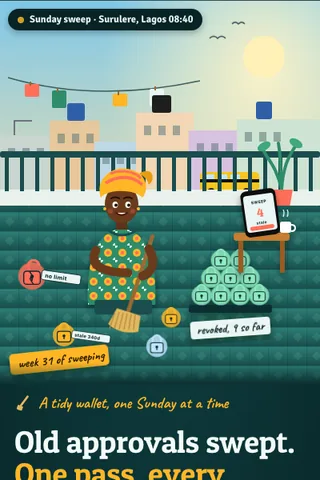
A weekly ritual that finds risky token approvals and lets you revoke them in one tidy pass.
 LIVE DEMO
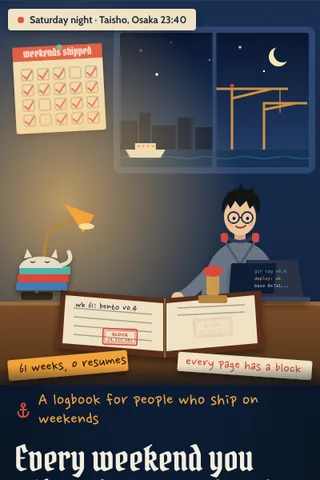
Every commit, deploy, and demo you ship becomes a signed, timestamped builder diary.
 LIVE DEMO
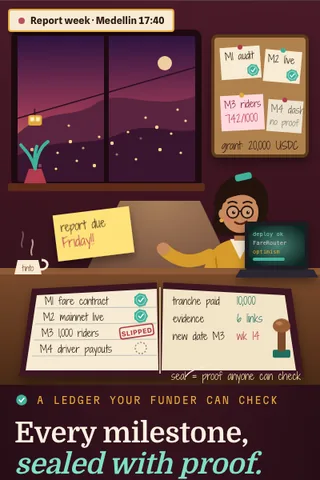
Show funders exactly what their grant built, milestone by milestone, with proof attached.
 LIVE DEMO
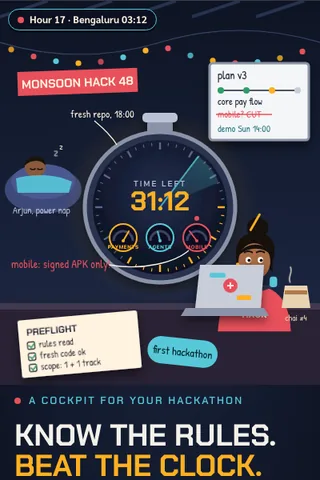
A hackathon cockpit that plans your scope, tracks bounties, and drafts a judge-ready submission.
 LIVE DEMO
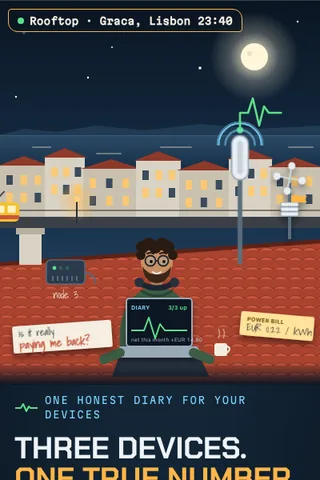
Your DePIN devices report uptime and earnings in one honest dashboard with tax-ready exports.
 LIVE DEMO
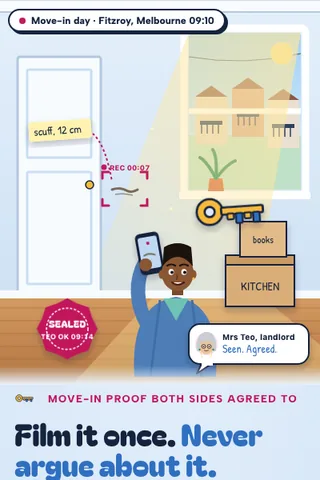
Tenants and landlords seal move-in photos and rent receipts so deposit disputes end fast.