 LIVE DEMO
Fix Proof
Tradespeople log each repair with photos and a customer signature, sealed onchain as a warranty.
Reserve · refundable deposit
$159Base · Polygon +1
 Try it live
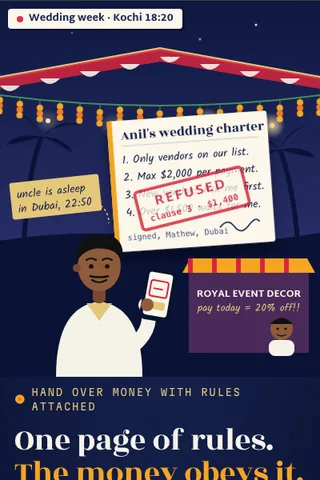
Hand someone your money with one page of rules, and the contract on Arc refuses anything the page does not allow.
Try it live, freeA brother running the shop, a nephew handling a wedding: you write the rules in plain words, the person pays from a contract with their own wallet, and a payment that breaks a clause is refused and stamped with that clause. Anything over your ask line waits for you.
The full app from Terry's Arc portfolio: live surface, contracts on Arc, about page, handover of code and deployment.
Reshape it entirely: new features, your flows, your brand end to end, integrations you need. We scope it with you.
Plain language mandates compiled into enforced spending rules with recorded refusals were not found.
Safe spending limits; Coinbase spend permissions.
Checked with web searches in October 2026. A search is not proof that nothing similar exists, and the market moves fast, so we recheck before every build.
Answers Arc's Request for Builders; check current terms.
The complete Charter app: hand someone money with one page of plain words rules, and a contract on Arc pays what the page allows and refuses the rest with the clause, with a paywall, owner console and helper agent built in.
Every buyer gets the same finished app. Basic branding and copy changes come through a quick form.
Your admin side: revenue, paywall editor, users, rules and the agent log.
Referral and growth mechanics, switched on when you are ready to grow.
One page with one spender is free. Families pay for more pages and helpers, event planners pay for every client, and the owner can add a tiny fee per payment routed.
Optional fee of a fraction of a cent per payment, set by the owner. Arc fees are around a cent per payment or refusal and can be sponsored.
Prices are yours to set. Illustrative, not a promise of income.
Hand someone your money with one page of rules, and the contract refuses anything the page does not allow.
Problem: Families abroad send large sums home for weddings, fees and repairs. Trusting a relative means trusting every vendor who pressures them, and saying no falls on the relative.
Solution: The giver writes one page in plain words. A contract on Arc pays what the page allows in a second, refuses the rest with the clause number, and holds big payments for the giver's tap.
Why now: Arc's sub second USDC settlement and cheap model compilation of plain words rules make per payment enforcement practical for a family budget.
Market: Diaspora families sending money home, event planners, and small associations funding projects in their home towns.
The ask: Pilot partners: two diaspora associations and one wedding planner, plus Arc and Circle developer programs.
Funding is never guaranteed. Check each program's rules.
Many hackathons require code written at the event. See the Regatta Boardfor each race's rule.
Custom work from $2,500: your own clause types and templates, local payout partners, extra languages, or a white label version for a planner or association. Scoped on a call.
Families and small businesses hand money to someone they trust for a job: a nephew running a wedding, a brother running a shop. Sending a lump sum means no limits; doing every payment yourself means you cannot sleep. People need to delegate spending with rules that actually hold.
Spending limits exist: Safe offers allowance and spending limit modules, and Coinbase spend permissions let an app spend within set limits. What we did not find is plain language rules compiled into enforced spending rules, read back to the owner before signing, where each refused payment is recorded onchain with the clause that refused it and big payments wait for the owner. High novelty in the packaging; the enforcement primitives are known.
The rule numbers (caps, ask line, total budget), an allowlist of vendor addresses, every payment and refusal with its clause number, owner approvals, and a hash of the plain language page. The words, names, invoices and chats stay offchain.
Let anyone hand over money with rules attached, so trust in a person does not have to mean trust in every vendor who calls them.
Refusals with a reason A no comes stamped with the clause, so it is the page saying no, not the nephew.
Sleep through it Small payments go through in a second; only the big ones wait for your tap.
The Sunday page One page back each week: paid, refused, waited, and one suggested change.
Wallets: Owner and spender sign in with passkey wallets (Privy or Circle Wallets). The charter itself is a smart contract holding USDC on Arc, where USDC is also the gas token.
Rule compiler: A model (for example a Claude Sonnet class model through OpenRouter) turns the plain words into structured rules, then runs practice payments and asks the owner when a rule reads two ways. The owner signs the structured rules, not the model's guess.
Charter contract: Enforces vendor allowlist, per payment cap, total budget and new vendor checks; payments to the same address within a window are summed so splitting does not slip under a cap.
Ask line: Payments over the ask line are queued in the contract until the owner approves with a passkey signature, or they expire.
Refusal records: Each refused payment emits an event with the clause number, indexed for the app and the Sunday page.
App and alerts: Next.js and Convex for the page, digest and push notifications; optional card or bank onramp to fund the charter with USDC.
Compiling a page with a mid tier model is a few cents per draft. Each payment or refusal on Arc is expected to cost around a cent in USDC (check current Arc fees). Example month for a family shop: 60 payments and 5 refusals is under $1 in fees plus about $0.20 of model calls.
The spender sees the page work and writes their own for the next family event. Share cards about a refused fake vendor travel in family groups.
Misread rules: The model can misread a rule, so every rule is shown back in structured form and tested with practice payments before signing.
Vendor fraud outside the rules: A listed vendor can still overcharge; caps and the ask line limit the damage, they do not remove it.
Legal: This is a spending tool, not a trust or escrow service; check local rules on holding funds for others.
Key loss: Passkey wallets with recovery; the owner can always pull unspent funds back.
Network status: Arc is new; confirm mainnet availability and fees before launch.
Costs and tools are estimates at the time of writing. General information only, not legal or financial advice.
Nine routes from one vessel. Tap a port to open its chart.
Charter: Hand someone your money with one page of rules, and the contract on Arc refuses anything the page does not allow. Using someone else's version means their rules, their brand and their revenue. Owning Charter means it is deployed under your wallet, carries your name, and every customer, partner and result builds your track record instead of theirs.
Charter arrives deployed with a guide. Running it is settings and sharing links, not code. If you get stuck, we help you ship it.
Start with ten people you already know. The first move below takes under an hour and tells you fast whether people care.
Each step is sized in minutes. Most owners spend an hour a week, and the app does the repetitive part.
Nothing is guaranteed. The playbook gives you a clear path and honest numbers, and you decide how far to take it.
Charge the people who get the most value from Charter: a monthly plan for groups or teams, plus setup fees for anyone who wants it done for them.
Illustrative stages, not a forecast. Results depend on you and the market; nothing here is guaranteed.
A starter chart. A fuller, app-specific playbook is being written.
LIVE DEMOTradespeople log each repair with photos and a customer signature, sealed onchain as a warranty.
 LIVE DEMO
Leave clear onchain instructions so the people you trust can reach your crypto if you cannot.
 LIVE DEMO
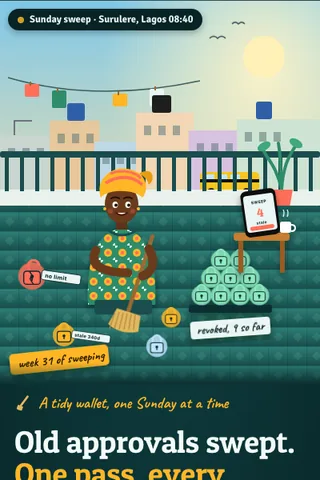
A weekly ritual that finds risky token approvals and lets you revoke them in one tidy pass.
 LIVE DEMO
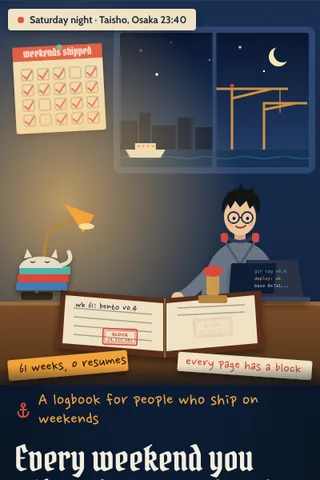
Every commit, deploy, and demo you ship becomes a signed, timestamped builder diary.
 LIVE DEMO
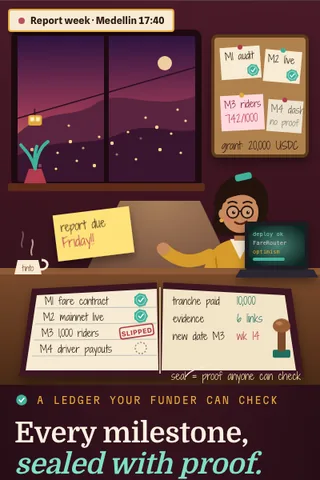
Show funders exactly what their grant built, milestone by milestone, with proof attached.
 LIVE DEMO
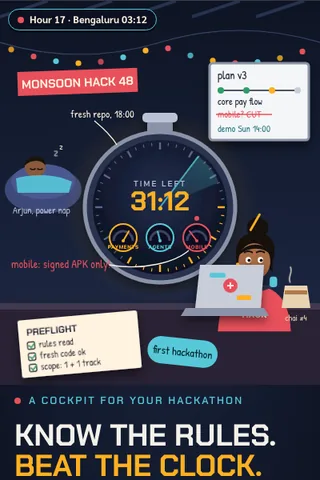
A hackathon cockpit that plans your scope, tracks bounties, and drafts a judge-ready submission.
 LIVE DEMO
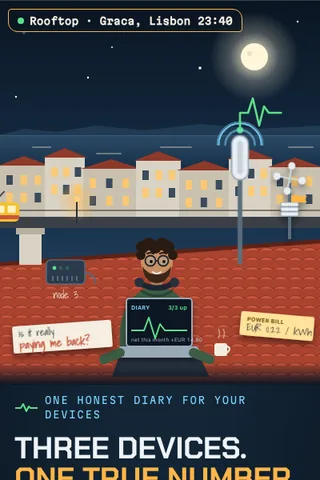
Your DePIN devices report uptime and earnings in one honest dashboard with tax-ready exports.
 LIVE DEMO
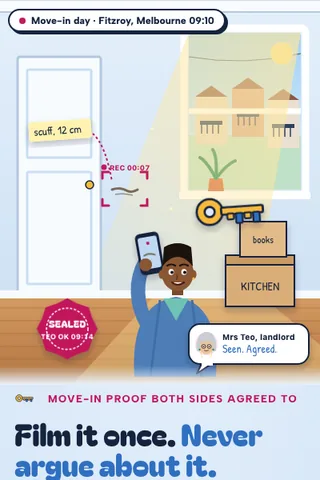
Tenants and landlords seal move-in photos and rent receipts so deposit disputes end fast.